If you are looking for a simple resistance bands set for physical therapy, stretching, yoga, or Pilates, this one is built around versatility first.
The appeal is straightforward: five color-coded levels, latex-free TPE construction, and a size that is easy to carry.
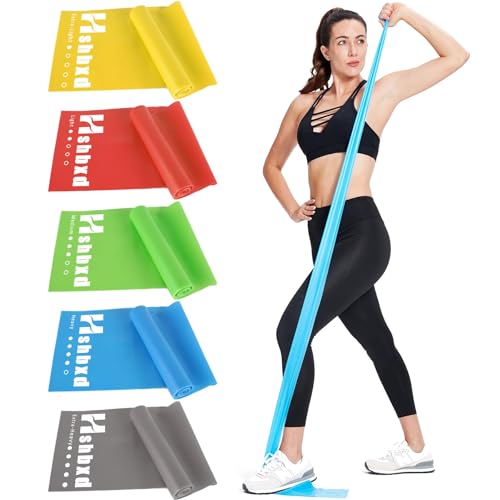
Resistance Bands Set for Physical Therapy and Rehab Review Summary
This set makes sense for buyers who want one compact tool that can handle mobility work, rehab-style exercises, and light strength training without turning into a garage full of equipment.
It is especially suitable for home users, travelers, and anyone who prefers a band-based routine that can move from warm-up to recovery to targeted muscle work.
The biggest strength here is not novelty but practicality.
The listing points to a wide use case across rehab, yoga, Pilates, gym workouts, stretching, leg work, and general home exercise, so the value comes from adaptability rather than a single specialty feature.
The latex-free and powder-free build is also a meaningful buying point for people who are avoiding common band materials.
Review Scorecard
| Category | Score | Buyer-focused rationale |
|---|---|---|
| Versatility | 9/10 | Five resistance levels and broad exercise use make it easy to slot into rehab, stretching, and light training. |
| Portability | 9/10 | The bands are compact and travel-friendly, which suits home, studio, and on-the-go workouts. |
| Material choice | 8/10 | TPE construction, plus latex-free and fragrance-free claims, fits sensitive users and clean storage preferences. |
| Progression range | 8/10 | The five listed resistance steps give useful increments for gradual training and rehab progression. |
| Ease of use | 8/10 | Color coding and simple band format lower the learning curve for beginners. |
| Comfort for mobility work | 7/10 | The broad band style is well suited to stretching and controlled movement, though strong users may outgrow it. |
| Overall buyer fit | 8/10 | A strong option for practical, low-friction band training rather than heavy resistance demands. |
Key Features and Specifications of Resistance Bands Set for Physical Therapy and Rehab
This is a five-band set made from TPE material, which the listing describes as environmentally friendly, non-toxic, and suitable for recycling after regeneration.
The product is also described as latex-free, powder-free, and fragrance-free, which is useful for buyers who are sensitive to traditional rubber band materials or want a cleaner-feeling accessory in a shared workout space.
The set includes five resistance levels:
| Band color | Resistance |
|---|---|
| Yellow | 5 lbs |
| Red | 10 lbs |
| Green | 15 lbs |
| Blue | 20 lbs |
| Gray | 30 lbs |
Each band is listed at 59 inches long and 5.9 inches wide.
That size makes the set useful for stretching, controlled mobility work, and a range of full-body exercises where a longer flat band is easier to anchor, loop, or hold than a tiny tube band.
The listing positions the bands as multi-functional equipment for:
- Resistance training
- Physical therapy exercises
- Yoga and Pilates routines
- Stretching and mobility work
- Arm, leg, butt, and abdominal exercises
- Home workouts, gym sessions, and travel use
One extra detail worth noting is the knotting suggestion.
The listing says you can knot the band to create a loop for double resistance, which adds some flexibility if you want to change how the band behaves without buying another accessory.
Pros and Cons of Resistance Bands Set for Physical Therapy and Rehab
Pros
- Five clear resistance levels make progression easier for beginners and returning exercisers.
- Latex-free and powder-free construction is a practical advantage for sensitive users.
- Compact and portable enough for travel, office use, or small home spaces.
- Broad application range covers rehab, yoga, Pilates, stretching, and general fitness.
- Simple color coding reduces guesswork when you are selecting intensity quickly.
Cons
- Not a heavy-strength solution if you need very high resistance work.
- Flat band format is best for controlled movement, not every strength-training pattern.
- The listing is broad and leans on versatility, so buyers wanting one highly specialized tool may want more niche equipment.
- No accessory bundle details are provided beyond the bands themselves.
Who Should Buy Resistance Bands Set for Physical Therapy and Rehab?
This set is a good fit for people who want a low-complexity training tool that can support multiple stages of exercise.
If you are doing rehab-style movement, rebuilding strength after time off, or adding resistance to stretching and mobility work, the gradual progression is one of the most useful parts of the package.
It also fits well for yoga and Pilates users who want a small, portable aid for resistance and positioning.
The band size and material choice suggest a tool that can be moved around easily and used in tight spaces, which matters if your workouts happen in a living room, hotel room, or studio corner.
The best buyers are likely to be:
- Beginners who want a controlled way to build resistance
- People following physical therapy or mobility routines
- Travelers who need a compact exercise option
- Yoga or Pilates users who like lightweight accessories
- Users who prefer latex-free workout gear
You should probably skip it if you want the feel of heavier gym equipment, explosive resistance training, or a system built around large handles, anchors, or specialty attachments.
The product is designed around bands and bodyweight-style movement support, not around replacing dumbbells or a full cable stack.
How the Resistance Bands Fit Rehab and Mobility Training
Gradual Resistance Progression
The five resistance steps are the most useful training feature because they let you move from lighter activation work toward more demanding exercises without a big jump in difficulty.
That matters in rehab and mobility plans, where the right band is often the one that lets you work cleanly and consistently.
Stretching and Range-of-Motion Work
The 59-inch length and flat band format make the set suitable for assisted stretching and controlled range-of-motion movements.
That is a strong use case for users who care more about smooth tension than about maximal load.
Travel and Small-Space Convenience
Because the set is compact and easy to carry, it works well for anyone who cannot justify storing bulky equipment.
That convenience is not flashy, but it is often what makes a band set actually get used week after week.
Practical Material Choice
The TPE build, plus the latex-free, powder-free, and fragrance-free claims, gives this product a clear practical angle.
For many buyers, that is not a luxury detail; it is the difference between a band they are willing to keep around and one they avoid.
Alternatives to Resistance Bands Set for Physical Therapy and Rehab
If you want a similar Amazon search path, these are credible alternatives worth comparing:
- TheraBand resistance bands
- Fit Simplify resistance bands
- Bodylastics resistance bands
- Amazon Basics resistance bands
TheraBand is often the first comparison point for rehab-minded buyers because it is closely associated with physical therapy use.
Fit Simplify is a common everyday option for home stretching and general fitness.
Bodylastics is worth checking if you want a more structured resistance system, while Amazon Basics is the simplest baseline comparison if you want to judge value and convenience.
Is Resistance Bands Set for Physical Therapy and Rehab Worth It?
Yes, if you want a simple, portable, latex-free band set for rehab, stretching, yoga, Pilates, and light resistance training.
The five resistance levels, practical material choice, and broad exercise compatibility make it a sensible buy for everyday use.
It is less compelling if you need very heavy resistance or a more specialized strength system, but that is not really the product’s lane.
For buyers who want one compact set that can handle mobility work and gradual progression without much fuss, this looks like a solid, practical choice.