A low ceiling does not have to limit your strength-training setup. The right home gym machine for low ceilings can deliver cable work, pulldowns, rows, presses, and leg exercises without overwhelming a basement, garage, or spare room.
We selected 10 compact and height-conscious options, including foldable cable machines, wall-mounted stations, and multifunction power systems. Use the guide below to match each design to your ceiling height, available wall space, training goals, and installation needs.
Best 10 Home Gym Machine for Low Ceilings Picks for 2026
Best Low-Ceiling Hybrid

- 62.99-inch frame suits 7-foot ceilings
- Combines cable training and rowing
- Folds to about 2.92 square feet
Best For: Compact garages, apartments, and basements needing both strength and cardio
Best Full-Body Station

- 79-inch height fits many home gyms
- Offers seven guided exercise stations
- Uses a quick-select 150-pound stack
Best For: Full-body training with convenient, plate-free resistance changes
Best Wall-Mounted Option

- 78.74-inch height suits many low rooms
- Offers 17 pulley positions
- Uses a compact wall-mounted footprint
Best For: Cable-focused training in garages or gyms with suitable masonry walls
Best Heavy-Duty Rack

- Combines a rack with dual cable pulleys
- Lists a 1,600-pound static capacity
- Includes extensive strength attachments
Best For: Serious strength training where ceiling height and floor space are sufficient
Best Adjustable-Fit Pick
YOLEO 2-in-1 Cable & Rowing Machine

- 73.3-inch listed height
- Folds to save floor space
- Cable training plus rowing
Best For: Flexible home gyms with lower ceilings
Best Traditional Station

- 150-pound weight stack
- Full-body exercise selection
- Adjustable seat and butterfly arms
Best For: Users wanting a seated all-in-one station
Best Floor-Saving Design
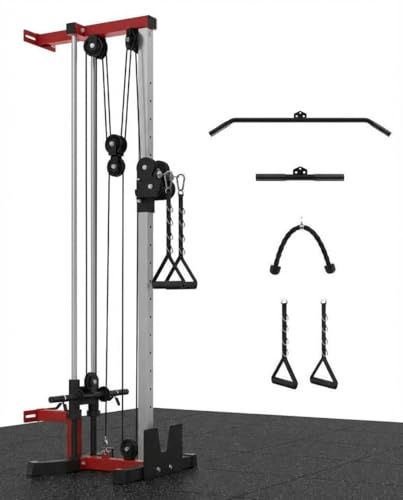
- Uses about 4.7 sq. ft.
- 19 adjustable pulley positions
- Includes crossover and row attachments
Best For: Compact garages and spare rooms
Best Compact Smith Machine
JELENS SR01 All-in-One Power Cage

- 81.5-inch overall height
- Smith bar, cables, and landmine in one frame
- 16.2-square-foot footprint
Best For: Full-body rack training in lower-ceiling home gyms
Best Wall-Mounted Trainer
Mikolo Dual Pulley Cable Station

- Wall-mounted, floor-saving design
- 118-pound built-in weight stack
- 19 adjustable pulley positions
Best For: Cable workouts where floor space is limited
Best Plate-Loaded Cable Station
Wall-Mounted 19-Position Trainer
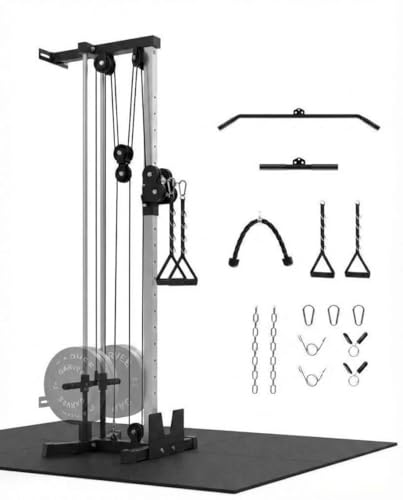
- 82.68-inch listed height
- Uses standard one- or two-inch plates
- 400-pound dynamic-load capacity
Best For: Space-conscious cable training with adjustable plate loading
Best Low-Ceiling Hybrid – Foldable Cable Rower
The TOUSAINS CR63PRO is a practical home gym machine for low ceilings, with a 62.99-inch frame that fits standard 7-foot ceilings while leaving about 21 inches of overhead clearance. It combines cable strength training and rowing cardio, then folds vertically for compact storage.
Best For: Apartment, garage, or basement users who want cable exercises and rowing in one foldable machine.
Pros:
- Combines lat pulldown, low row, cable crossover, and rowing functions.
- Supports up to 400 pounds and works with more than 90% of dumbbells and weight plates.
- Folds to about 2.92 square feet and includes transport wheels.
- Includes multiple handles, a triceps rope, straps, and spring clamps.
Cons:
- Its exercise selection depends on using compatible plates or dumbbells.
- Assembly is required, even though the manufacturer states it takes about 30 minutes without tools.
For shoppers prioritizing overhead clearance and storage, this is one of the most space-conscious options in the group. Its combination of rowing and cable work is especially useful when one machine needs to cover both conditioning and strength training.
Best Full-Body Station – 150LB Selectorized Home Gym
The JEEKEE 150LB Home Gym is a compact home gym machine for low ceilings, standing 79 inches tall and offering seven built-in exercise stations. Its selectorized weight stack makes resistance changes straightforward, without loading separate plates for each movement.
Best For: Users who want guided full-body strength training with chest, back, arm, leg, and abdominal exercises from one station.
Pros:
- Supports chest press, butterfly fly, lat pulldown, seated row, leg extension, ab crunch, and preacher curls.
- Includes a 150-pound selectorized weight stack with quick resistance selection.
- Reinforced frame uses a bottom stabilizing bar and dual angled support rods.
- Comes with a lat bar, curl bar, ab belt, preacher pad, and padded seating.
Cons:
- At 79 inches tall, it may require careful measurement in rooms with very low ceilings.
- Its 150-pound resistance capacity is lower than the capacity of several rack and plate-loaded alternatives.
- The listed dimensions require more floor space than the foldable cable machine.
This model makes sense when exercise variety and simple resistance changes matter more than maximum loading. Before buying, measure the ceiling and the machine’s 67-inch depth to confirm a comfortable installation area.
Best Wall-Mounted Option – WM1 Cable Crossover
The WM1 is a wall-mounted home gym machine for low ceilings, measuring 78.74 inches high and using a compact wall-oriented design. Its dual pulleys, 17 height positions, and included attachments support a broad range of cable exercises without taking up the footprint of a larger freestanding station.
Best For: Space-conscious garage or home gym owners who can mount equipment to a suitable concrete or masonry wall.
Pros:
- Provides 17 pulley height positions for presses, rows, flys, and pulldowns.
- Switches between 1:1 and 2:1 cable ratios for heavier or lighter training.
- Compact assembled dimensions are approximately 24.8 by 18.11 by 78.74 inches.
- Supports up to 300 pounds and includes a lat bar, T-bar, rope, and dual handles.
Cons:
- Installation is intended for concrete or masonry walls, which may limit placement options.
- It may be less suitable for renters or users who cannot modify their walls.
- Unlike a full rack, it does not provide the same integrated squat-cage functionality.
The WM1 is a strong choice when floor area is the main constraint and wall mounting is practical. Confirm the wall material and mounting location before purchase, then allow enough clearance to use the cables through their full range.
Best Heavy-Duty Rack – F22 Power Rack
The MAJOR FITNESS F22 combines a power rack, squat station, and dual-pulley system in one unit. At 82.5 inches tall, it is the tallest option here, so it can work as a home gym machine for low ceilings only after carefully checking the available overhead clearance.
Best For: Strength-focused users who need a rack, cable system, and extensive attachment setup in one heavy-duty station.
Pros:
- Combines a squat rack, weight cage, and dual cable crossover.
- Uses 2-by-3-inch, 14-gauge steel and lists a 1,600-pound static capacity.
- Dual independent pulleys allow simultaneous training and 2:1 cable operation.
- Includes J-hooks, safety arms, dip bars, landmine, T-bar, foot pedals, and storage hooks.
Cons:
- At 82.5 inches tall, it may not fit rooms with standard low ceilings.
- Its 68.9-by-55.5-inch footprint is larger than the wall-mounted and foldable options.
- The listed warranty is one year, shorter than the two-year coverage noted for several alternatives.
The F22 offers the broadest heavy-strength-training setup in this roundup, but ceiling height is its key limitation. Choose it only when the room provides sufficient overhead clearance for the rack and intended exercises.
Best Adjustable-Fit Pick – YOLEO 2-in-1 Cable & Rowing Machine
If you need a home gym machine for low ceilings, the YOLEO is worth considering because its listed height is 73.3 inches and it folds upright to reclaim more than 80% of floor space. It combines cable exercises with a sliding-seat rowing function, though you should still measure your ceiling and available depth before buying.
Best For: Home gyms that want adjustable cable training and rowing in one machine.
Pros:
- 73.3-inch listed height suits many lower-ceiling setups.
- Folds upright to reduce its floor-space footprint.
- Offers 13 height settings, 9 seat positions, and up to 450 pounds of supported resistance.
- Includes multiple bars, handles, rope, and spring clamps.
Cons:
- Its 81.5-inch depth may require substantial clearance for rowing.
- Resistance requires your own dumbbells or weight plates rather than an included weight stack.
- At 40 kg, it may take effort to position or fold.
The YOLEO stands out for combining a relatively low listed height with versatile positioning and a full rowing track. It is the strongest fit here for shoppers prioritizing adjustability and fold-away storage, provided the room can accommodate its depth.
Best Traditional Station – JELENS H11 Home Gym
For shoppers seeking a home gym machine for low ceilings, the JELENS H11 has a listed height of 79.9 inches, so it may work in rooms with standard-height ceilings but leaves less overhead margin than shorter equipment. Its built-in 150-pound weight stack and broad exercise selection make it a conventional all-in-one station.
Best For: Users who want a seated, weight-stack home gym for varied full-body exercises.
Pros:
- Combines chest, back, leg, calf, and rowing-focused movements in one station.
- Includes an 11+1 plate stack totaling 150 pounds.
- Adjustable seat, leg-extension pedal, and five-position butterfly arms support different setups.
- U-shaped base and five shock-absorbing foot pads are designed for stability and floor protection.
Cons:
- The 79.9-inch height may be tight under lower ceilings.
- Its 38.5-inch width is greater than the wall-mounted option.
- Installation arrives across four boxes and requires assembly.
The H11 is a practical choice if you prefer a familiar weight-stack format and padded seated exercises. Check ceiling height carefully, especially if the room has lighting, ductwork, or other overhead obstructions.
Best Floor-Saving Design – Wall-Mount Cable Crossover
A wall-mounted system can be a smart approach when shopping for a home gym machine for low ceilings because it keeps the main frame close to the wall and uses about 4.7 square feet of floor space. This cable station is listed at only 5.71 inches high in the supplied dimensions, but installation requirements and usable pulley clearance should be confirmed before purchase.
Best For: Garage, apartment, or spare-room gyms where preserving floor space is the priority.
Pros:
- Wall-mounted design is advertised as using 4.7 square feet of floor space.
- Dual independent pulleys provide 19 adjustable positions and unilateral or bilateral training.
- Supports cable crossover, lat pulldown, seated row, and functional-training movements.
- Includes a lat bar, straight bar, rope, D-ring handles, T-bar, and seated-row footboard.
Cons:
- Wall mounting requires a suitable, secure installation surface.
- The supplied dimensions should be verified because they do not clearly describe the full operating clearance.
- Weight plates are compatible with both 1-inch and 2-inch sizes but are not listed as included.
This is the most space-conscious option of the three and may be especially useful when ceiling and floor space are both limited. Its main trade-off is the need to plan the wall installation and confirm the complete workout envelope.
Best Compact Smith Machine – JELENS SR01 All-in-One Power Cage
If you need a home gym machine for low ceilings, the JELENS SR01 is a relatively compact option at 81.5 inches tall. Its Smith bar, cable attachments, landmine, and storage features combine several training stations in one vertical frame.
Best For: Lifters who want a versatile Smith machine for full-body training in a space with limited ceiling height.
Pros:
- Combines squats, bench presses, rows, pulldowns, curls, and pull-ups in one machine.
- Compact 81.5-inch height and 16.2-square-foot footprint suit smaller home gyms.
- Includes multiple cable and landmine attachments plus plate-storage structures.
- Solid columns, dual bearings, and safety hooks are designed for stable Smith-machine operation.
Cons:
- At 81.5 inches tall, it still requires careful measurement before installation in a low-ceiling room.
- The machine ships in three boxes and requires assembly.
- Weight plates are not listed among the included accessories.
The SR01 is the most comprehensive choice here for users who want a rack-style setup without exceeding a roughly 82-inch ceiling. Confirm both ceiling clearance and available floor space before ordering.
Best Wall-Mounted Trainer – Mikolo Dual Pulley Cable Station
For a home gym machine for low ceilings, the Mikolo wall-mount cable station keeps its footprint off the floor while reaching a listed 19-position adjustment range. It provides pulldowns, rows, crossovers, and other cable movements with a built-in 118-pound weight stack.
Best For: Home-gym users who prioritize floor savings and quick resistance changes for cable-based workouts.
Pros:
- Wall-mounted design preserves valuable floor space in garages or spare rooms.
- Built-in 118-pound selectorized stack allows fast resistance changes without loading plates.
- Dual pulleys offer 19 adjustable positions for high, middle, and low cable exercises.
- Included 2-1 cable adapter can change the pull ratio from 2:1 to 1:1.
Cons:
- Requires a suitable wall and reinforced mounting; the notes specify wall brackets but not universal wall compatibility.
- The listed 118-pound resistance may be less than some plate-loaded alternatives.
- Wall installation is necessary rather than simply placing the unit anywhere on the floor.
The Mikolo is a strong low-ceiling candidate when wall space is available and you prefer selectorized resistance. Verify stud or concrete mounting conditions and the complete installation area before purchase.
Best Plate-Loaded Cable Station – Wall-Mounted 19-Position Trainer
This wall-mounted cable station is a practical home gym machine for low ceilings, with a listed height of 82.68 inches and a low-profile frame. It supports 19 pulley positions and standard one- or two-inch plates, making it a flexible option for garage or apartment strength training.
Best For: Users who want broad cable-exercise variety and the flexibility to use existing standard weight plates.
Pros:
- Wall-mounted construction is designed to save more than 80% of floor space versus bulky cages.
- 19 positions support pulldowns, rows, crossovers, curls, pushdowns, and other movements.
- Removable sleeves accommodate standard one-inch or two-inch plates.
- Steel frame, reinforced bearings, and coated pulleys are rated for a 400-pound dynamic load.
Cons:
- At 82.68 inches tall, it may be too high for ceilings below roughly 83 inches.
- Weight plates are sold separately.
- It must be mounted to sturdy wall studs or concrete.
The station offers more loading flexibility than a built-in-stack model, but its 82.68-inch height makes precise ceiling measurement especially important. It is best suited to buyers who already own compatible plates and have a secure mounting surface.
How We Picked the Best Home Gym Machine for Low Ceilings
We focused on machines that make efficient use of vertical and floor space. That includes frames around 71 inches tall, wall-mounted cable stations, foldable designs, and systems that combine several exercises in one footprint. We also considered pulley adjustability, weight-stack or plate-loading capacity, included attachments, frame construction, and the practicality of installation in a home setting.
Because listed dimensions and usable clearance can vary, confirm the manufacturer’s measurements before ordering. Allow additional room for cable travel, bench movement, plates, and your own range of motion.
Quick Comparison
| Machine type | Best for | Main advantage | Watch for |
|---|---|---|---|
| Foldable cable machine | Small rooms and flexible layouts | Can reduce its footprint when stored | May need anchoring and setup clearance |
| Wall-mounted cable station | Low ceilings and limited floor space | Uses wall height efficiently | Requires a strong mounting surface |
| Compact home gym | Guided full-body workouts | Integrated weight stack and stations | Less adaptable than independent cables |
| Power rack or Smith machine | Heavy strength training | Supports squats, presses, and attachments | Usually needs more depth and clearance |
Key Buying Factors for a Home Gym Machine for Low Ceilings
Measure More Than the Frame Height
Check total height, ceiling obstructions, and the clearance required to load plates or perform pulldowns. A machine that technically fits may still be uncomfortable if a bar, handle, or pulley reaches the ceiling during use.
Choose the Right Installation Style
Wall-mounted models preserve floor space but depend on secure studs, masonry, or an appropriate backing structure. Freestanding units are easier to reposition, while foldable machines can be useful when the room serves multiple purposes. Do not rely on drywall alone for a heavy cable system.
Match Resistance to Your Training
Weight-stack machines offer quick, consistent adjustments and are convenient for shared households. Plate-loaded racks and cable systems can provide more progression flexibility, but they require storage space and may take longer to change between exercises.
Check Cable Positions and Attachments
Multiple height settings improve exercise variety, especially for rows, flyes, lateral work, curls, and triceps movements. Look for a lat bar, low row or footplate, handles, triceps rope, and compatible bench support if those exercises matter to you.
Who Should Buy Which Home Gym Machine for Low Ceilings?
- Choose a foldable cable machine if you need a versatile setup that can be stored or repositioned.
- Choose a wall-mounted station if ceiling height and floor space are your biggest constraints and you have a suitable wall.
- Choose a compact weight-stack gym if you want straightforward full-body workouts with minimal plate handling.
- Choose a power rack or Smith machine if progressive barbell training, squats, and heavier pressing are priorities and you can accommodate the larger footprint.
Before purchasing, verify dimensions, shipping weight, assembly requirements, warranty coverage, and the recommended anchoring method. For a low-ceiling room, those practical details are just as important as the exercise list.