Battle ropes can turn a small workout area into a versatile conditioning station for intervals, strength work, and low-impact cardio. The right rope depends on your available space, training style, anchor setup, and preferred resistance.
This roundup compares 10 battle rope options, from traditional long ropes with protective sleeves to portable cordless designs that work without an anchor point.
Best 10 Battle Ropes for Home Gym Picks for 2026
Reliable Rope Pick
Amazon Basics 30-Foot Battle Rope

- 30-foot, 1.5-inch traditional rope
- Poly dacron with protective sleeve
- Designed for cardio and full-body conditioning
Best For: Anchored home-gym workouts and CrossFit-style conditioning
Space-Saving Choice
Adjustable Cordless Battle Ropes

- Portable two-piece cordless design
- Adjustable resistance rings
- Low-noise training without an anchor
Best For: Compact home, travel, and apartment workouts
Customizable Conditioning Pick

- Multiple length options from 30 to 50 feet
- Protective sleeve limits anchor friction
- Long rubber-grip handles support secure use
Best For: Customizable strength and conditioning workouts
Guided Portable Pick

- Compact, quiet cordless construction
- Non-slip ergonomic rubber handles
- Includes poster and instruction manual
Best For: Beginner-friendly indoor, outdoor, and travel workouts
Best for Easy Setup
Adjustable Ropeless Battle Ropes
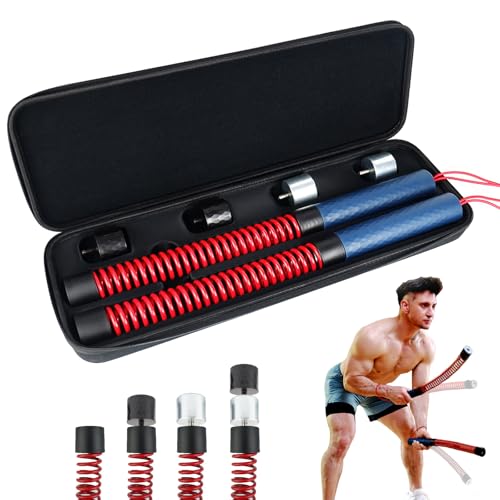
- Ropeless design saves space and reduces noise.
- Four adjustable weight settings.
- Includes a storage box for portability.
Best For: Small home gyms and boxing-style workouts
Traditional Rope Pick

- 30-foot length for conventional rope-wave training.
- 1.5-inch polyester-blend, three-strand construction.
- Rolls up for storage and portability.
Best For: Home gyms with room for a full-length rope
Portable Low-Impact Pick
Adjustable Cordless Battle Ropes

- Compact 17.1-inch cordless design.
- Adjustable rings change workout intensity.
- Quiet, floor-friendly, and includes a storage bag.
Best For: Travel, beginners, and low-impact HIIT
Best Overall 30-Foot Pick

- Protective nylon sleeve over polyester rope
- Includes handles, gloves, anchors, and straps
- 14.5-pound option for intermediate to advanced training
Best For: Intermediate to advanced users wanting a versatile 30-foot rope
Best for Extended Training Space
- Long 40-foot design for larger training areas
- 15.5-pound rope for intermediate and advanced users
- Includes protective sleeve, anchors, straps, and gloves
Best For: Larger home gyms and outdoor conditioning sessions
Best for Size Options

- Multiple diameters and lengths are available
- Protective sleeve helps limit wear and abrasion
- Includes handles and rust-resistant anchor strap kit
Best For: Beginners and buyers comparing configurations for home or outdoor use
Reliable Rope Pick – Amazon Basics 30-Foot Battle Rope
If you want traditional battle ropes for home gym training, this Amazon Basics model offers a straightforward setup with a 30-foot length and 1.5-inch diameter. Its poly dacron construction, protective sleeve, and heat-shrink end caps are practical features for repeated strength, cardio, and conditioning sessions.
Best For: Home users who want a conventional anchored battle rope for full-body workouts, CrossFit-style training, and conditioning.
Pros:
- Durable 100% poly dacron with a three-strand twisted design
- 600D Oxford waterproof sleeve helps protect against wear
- Heat-shrink end caps help prevent fraying
- Orange/yellow tracking line improves visibility for maintenance and safety
Cons:
- Requires suitable space and an anchor point for use
- At 15.8 pounds, it may be cumbersome to store or reposition
This is a practical, full-size battle rope for buyers who prefer proven rope-wave training over a compact cordless design. The 30-foot length balances workout reach with manageable home-gym requirements.
Space-Saving Choice – Adjustable Cordless Battle Ropes
These weighted cordless battle ropes are designed for battle ropes for home gym workouts where space, noise, or setup time is a concern. The two 1.44-pound ropes provide wave-based resistance without a long rope or anchor, while adjustable resistance rings let you increase the challenge as your training improves.
Best For: Apartment dwellers, travelers, and home users seeking portable, low-noise upper-body and HIIT training.
Pros:
- No anchor or dedicated floor space is required
- Adjustable resistance rings support progressive training
- Textured, sweat-resistant handles and wrist straps improve control
- Steel-core construction and reinforced springs are built for repeated swings
Cons:
- Provides a different training feel from a full-length battle rope
- Its emphasis is primarily on upper-body wave training
This is a flexible alternative to standard ropes when portability and quieter workouts matter most. The adjustable resistance makes it suitable for users who want one compact trainer that can grow with their ability.
Customizable Conditioning Pick – Perantlb Poly Battle Rope
The Perantlb poly battle rope gives home users more ways to tailor battle ropes for home gym workouts, with multiple length and diameter options. Its protective cloth sleeve and long non-slip handles support demanding waves, slams, and conditioning exercises while helping protect the rope from anchor friction.
Best For: Beginners and experienced users who want to choose rope size and adjust workout intensity through length and diameter.
Pros:
- Available in 30-, 40-, and 50-foot lengths
- Offered in 1.25- and 1.5-inch diameters according to the supplied listing
- Protective sleeve helps reduce friction, fraying, and wear
- 8.66-inch heat-shrink handles have a rubber, non-slip feel
Cons:
- Larger configurations require more training space
- Listed options and specifications may require careful selection before purchase
With several size choices and a friction-protective sleeve, this rope is a strong option for tailoring resistance and workout reach. Choose the shorter or thinner configuration for a more manageable home setup, or a larger option for greater challenge where space permits.
Guided Portable Pick – COCTN Cordless Battle Rope
This COCTN cordless model is a practical choice for battle ropes for home gym sessions when you need portable equipment with minimal setup. The weighted stainless-steel design operates silently, and its included poster and instruction manual provide guidance for cardio, HIIT, strength, and forearm exercises.
Best For: Beginners and mobile users who want a compact, quiet rope alternative for indoor or outdoor training.
Pros:
- Compact cordless design works without a long rope or anchor
- Each weighted rope is designed for controlled resistance and portability
- Ergonomic rubber handles provide a sweat-absorbing, non-slip grip
- Includes a training poster, instruction manual, safety ropes, and top nuts
Cons:
- Does not provide the same floor-slamming motion as a traditional battle rope
- Its cordless format may feel less natural to users accustomed to long ropes
The COCTN is best viewed as a quiet, portable alternative rather than a direct replacement for a full-length rope. Its guidance materials and compact design make it especially approachable for beginners training at home, in a park, or at a gym.
Best for Easy Setup – Adjustable Ropeless Battle Ropes
For shoppers comparing battle ropes for home gym use, this ropeless design is a practical choice when floor space and noise are concerns. Its detachable weights provide four resistance settings, while the included storage box makes it easy to put away or carry to another location.
Best For: Small home gyms, boxing-inspired workouts, and users who want adjustable resistance without a traditional rope.
Pros:
- Ropeless, space-friendly design intended for quieter home workouts.
- Four adjustable weight modes, with each rope ranging from 1.7 to 2.7 pounds.
- Steel construction, ergonomic nonslip rubber handles, and a safety rope.
- Storage box supports convenient organization and portability.
Cons:
- Does not provide the long, sweeping rope movement of a traditional battle rope.
- Maximum weight per rope is limited to 2.7 pounds.
This model makes the most sense for compact spaces where a conventional 30- or 40-foot rope is impractical. The adjustable setup lets you start lighter and increase the challenge as your training progresses.
Traditional Rope Pick – Fitvids 30-Foot Battle Rope
Fitvids Battle Rope 1.5Inch Diameter Poly Dacron 30 FT Length, Heavy Ropes for Home Gym and Workout
Check Price On AmazonThe Fitvids 30-foot rope is a conventional option for shoppers seeking battle ropes for home gym training. Its 1.5-inch diameter and polyester-blend construction are suited to endurance and strength sessions, while the rope rolls up for storage between workouts.
Best For: Users who want the familiar wave-based battle-rope workout and have enough room for a 30-foot rope.
Pros:
- Traditional 30-foot length supports full rope-wave exercises.
- Durable three-strand polyester-blend construction is designed to resist breaking and fraying.
- Heat-shrink ends help provide a more secure grip.
- Rolls up for compact storage and portability.
Cons:
- Requires substantially more workout and storage space than ropeless alternatives.
- The 1.5-inch rope may not feel as substantial as the available 2-inch versions.
If you prefer the movement and resistance pattern of a standard battle rope, this Fitvids model offers a straightforward setup. Measure your available space before buying, since the 30-foot length needs room to extend and move.
Portable Low-Impact Pick – Adjustable Cordless Battle Ropes
These cordless battle ropes are a convenient fit for battle ropes for home gym routines when portability and lower-impact training matter. Each pair weighs 3 pounds, and adjustable rubber rings let you change the intensity by repositioning them along the handles.
Best For: Beginners, travelers, and users seeking a compact, quiet option for adjustable strength and HIIT workouts.
Pros:
- Compact 17.1-inch ropeless design is easy to use at home, in a gym, or while traveling.
- Adjustable rings allow training intensity to be changed for different ability levels.
- High-resilience springs and an anti-rust coating are designed for durability.
- Rubber handles and a storage bag support secure handling and portability.
Cons:
- Its cordless format does not replicate the sweeping motion of a traditional rope.
- The supplied notes specify a 3-pound weight for each pair, so it may offer less load than heavier conventional ropes.
This is a strong choice when a standard rope is too bulky or potentially disruptive for your space. The adjustable ring system and quiet, floor-friendly design make it especially versatile for gradual progression and low-impact sessions.
Best Overall 30-Foot Pick – 1.5-Inch Battle Rope
For shoppers comparing battle ropes for home gym training, this 30-foot, 1.5-inch model offers a substantial middle ground between beginner-friendly and professional options. Its polyester construction, protective nylon cover, and included accessories support regular indoor or outdoor workouts.
Best For: Intermediate to advanced users who want a durable 30-foot rope for full-body conditioning.
Pros:
- Three-strand polyester construction with a protective nylon sleeve helps resist wear, loosening, and breakage.
- Heat-shrink handles provide a secure grip, and gloves are included to help reduce palm discomfort.
- Includes anchors and straps for flexible setup around a post, tree, or other fixture.
- Supports waves, pulls, climbs, and other exercises targeting the arms, shoulders, back, core, and legs.
Cons:
- The 14.5-pound weight may be demanding for beginners.
- At 30 feet, it provides less working length than the 40-foot option.
This is a well-rounded choice if you want a sturdy home-gym rope without moving to the heaviest 2-inch size. Beginners may prefer the lighter 1.26-inch version, while advanced users seeking greater resistance may want a thicker rope.
Best for Extended Training Space – 1.5-Inch 40-Foot Rope
If you have enough room for longer rope waves, this 40-foot model is a practical option among battle ropes for home gym setups. The 1.5-inch diameter and 15.5-pound weight are aimed at intermediate to advanced training, while the protective sleeve and included hardware support indoor or outdoor use.
Best For: Users with a larger workout area who want extra rope length for conditioning drills.
Pros:
- 40-foot length allows extended training space and wider rope movement.
- Durable three-strand polyester construction is covered by a nylon protective layer.
- Heat-shrink handles help maintain grip during sweaty, intense sessions.
- Includes anchors, straps, and gloves for more setup and comfort options.
Cons:
- The 15.5-pound rope can be too challenging for beginners.
- The longer length requires more available space than a 30-foot rope.
Choose this version when your home gym, garage, or outdoor training area can accommodate the added length. For compact spaces or lighter daily workouts, the included 30-foot, 1.26-inch configuration is the more approachable alternative.
Best for Size Options – Heavy-Duty Rope Kit
This model stands out for shoppers who want flexibility when choosing battle ropes for home gym or outdoor use. The listed lineup includes multiple diameters and lengths, while the supplied 1.26-inch, 30-foot version combines a protective sleeve, anchor strap kit, and a lighter 6-kilogram build for accessible conditioning work.
Best For: Beginners and households wanting a versatile rope kit with multiple size configurations.
Pros:
- Available configurations span 1.26, 1.5, and 2 inches, with lengths from 30 to 50 feet.
- Three-strand polyester rope and a nylon sleeve help protect against friction, fraying, and anchor wear.
- Thick heat-shrink handles are designed to stay secure during intense movements.
- Includes a rust-resistant anchor strap kit for garage, backyard, park, or other fixed setups.
Cons:
- The supplied 1.26-inch version may offer less resistance than the thicker options.
- The product lineup varies by size and length, so buyers should confirm the selected configuration.
The 1.26-inch, 30-foot version is a reasonable starting point for daily home workouts, while the larger configurations provide a path for users who want more demanding training. Its included anchor kit also makes changing locations straightforward.
How We Picked the Best Battle Ropes for Home Gym Workouts
We evaluated these options by looking at rope construction, diameter, length, handle design, portability, resistance adjustability, and the type of workout each product supports. Traditional ropes generally provide a familiar wave motion and require a secure anchor, while cordless models use weighted handles for smaller spaces and travel.
We also considered practical home-gym concerns, including floor space, storage, noise, durability, and setup. Because training needs vary, no single rope is ideal for every buyer.
Quick Comparison
| Type | Best For | Main Advantage | What to Check |
|---|---|---|---|
| Traditional anchored rope | Full-body conditioning | Natural wave movement and consistent feel | Anchor location, length, and floor clearance |
| Cordless battle rope | Apartments, garages, and travel | No permanent anchor required | Weight range, handle comfort, and noise |
| Sleeved rope | Frequent indoor or outdoor use | Added protection against abrasion | Sleeve quality and total rope weight |
| Adjustable weighted rope | Progressive training | Resistance can be changed over time | Adjustment method and secure attachments |
Key Buying Factors for Battle Ropes for Home Gym Use
Length and Diameter
Thirty-foot ropes are easier to manage in compact spaces, while 40- and 50-foot models create longer waves and can feel more demanding. A 1.25- to 1.5-inch diameter is a practical starting range for many home users. Thicker ropes add grip and weight but may fatigue the forearms faster.
Anchor and Available Space
Traditional battle ropes need a strong anchor point and enough clearance to move safely. Measure the distance from the anchor to where you will stand, then leave room behind and beside you. Never attach a rope to a weak fixture, railing, or furniture that can shift.
Handles and Construction
Look for handles that are long enough to control comfortably and textured enough to resist slipping. Polypropylene and similar synthetic ropes are common because they resist moisture and are relatively easy to maintain. A protective sleeve can reduce surface wear, especially on rough flooring or outdoor concrete.
Resistance, Noise, and Storage
Cordless models are useful when anchoring is impossible, but their weighted ends may produce different feedback from a traditional rope. Adjustable resistance helps accommodate beginners and progression. For shared spaces, prioritize quieter designs and a storage bag or compact form.
Who Should Buy Which Battle Ropes for Home Gym?
Choose a Traditional Rope If You Want Classic Conditioning
Anchored ropes are the best fit for users who have a secure mounting point and want broad, continuous wave movements for HIIT, circuits, and full-body conditioning.
Choose a Cordless Model for Small Spaces
Ropeless battle ropes suit apartment dwellers, renters, and travelers. They eliminate anchor installation and typically store more easily, though you should confirm that the resistance range matches your fitness level.
Choose a Sleeved Rope for Durability
If the rope will see frequent use, outdoor sessions, or contact with abrasive surfaces, a protective sleeve can help extend its service life. Still, inspect the sleeve, handles, and attachment points regularly for fraying or damage.
Choose an Adjustable Option for Shared Households
Adjustable weighted ropes make sense when multiple people train together or when you want to increase resistance gradually. Start with manageable intervals, maintain control throughout each wave, and increase duration or resistance only after your technique remains consistent.