Running sleds can add adjustable resistance to sprints, marches, pushes, pulls, and conditioning drills without requiring a complicated setup. The right model can help you train acceleration, lower-body strength, work capacity, and sport-specific power outdoors.
This roundup compares 10 sleds across resistance systems, harness designs, frame construction, portability, and training versatility so you can choose equipment that matches your surface, goals, and available load.
Best 10 Running Sleds for Outdoor Training Picks for 2026
Heavy-Duty Pick
Adjustable Football Weight Sled

- 550-pound capacity with 1- and 2-inch plate compatibility
- Five-level adjustable handles for varied training angles
- Curved runners and padded harness support outdoor use
Best For: High-load strength and speed training
Portable Pick
SKLZ SpeedSac Variable Resistance Sled

- Adjustable 10- to 30-pound sand resistance
- Multidirectional towing with a 360-degree belt ring
- Lightweight nylon design for grass, turf, or wood
Best For: Portable sprint and mobility-focused workouts
Budget Plate-Loaded Pick

- Lightweight 9-pound steel frame
- Adjustable resistance with removable plates
- Includes leash and padded shoulder harness
Best For: Beginner outdoor speed and conditioning sessions
Versatile Training Pick
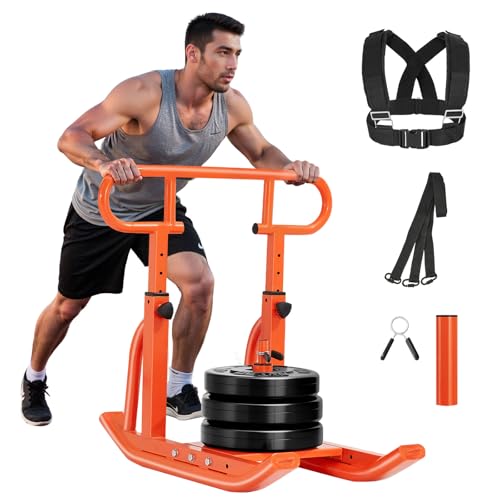
- Five-height adjustable handle for push and pull work
- Supports both 1-inch and 2-inch weight plates
- 276.6-pound capacity with padded harness
Best For: Mixed push-pull conditioning and strength training
Best Adjustable Sandbag Sled
Adjustable Resistance Running Sled

- Three fillable bags provide 10–30 pounds of adjustable resistance
- 360-degree belt loops support multidirectional drills
- PVC construction suits grass, turf, and wooden floors
Best For: Portable, adjustable training for sprinters and soccer players
Best Heavy-Duty Power Sled

- Plate-loaded design supports up to a stated 600-pound recommendation
- Handles both pushing and pulling workouts
- Built for indoor and outdoor use on multiple surfaces
Best For: High-load training in gyms, garages, and sports facilities
Best Obstacle-Friendly Sled

- Fits both 1-inch and 2-inch weight plates
- Arc bottom helps navigate uneven ground and obstacles
- Adjustable shoulder straps support speed and strength work
Best For: Outdoor athletes training on lawns and uneven sports grounds
Most Adjustable
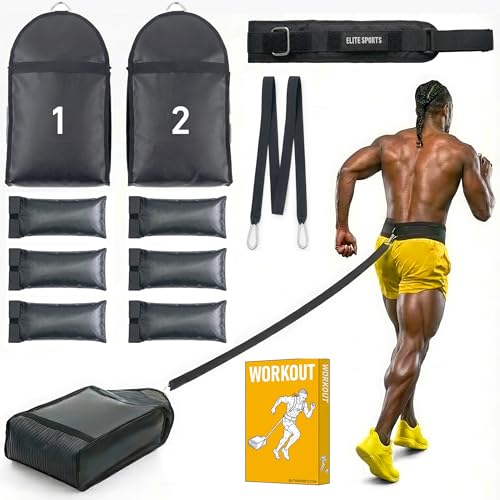
- 10–60 lb adjustable resistance
- Water-resistant coated-polyester build
- Ships unfilled; sand not included
Best For: Outdoor runners wanting sand-based resistance adjustment
Most Durable
Angled Steel Weight Training Sled
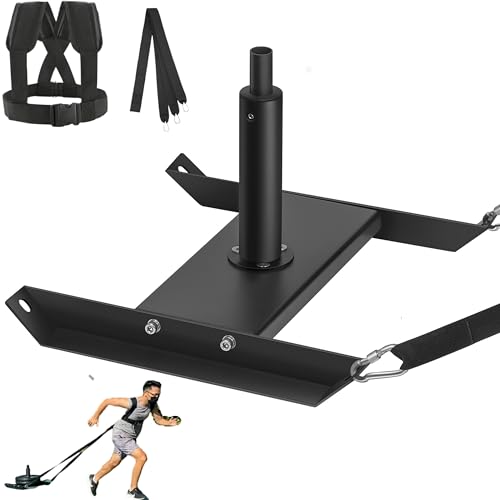
- 3mm-thick alloy steel frame
- Designed for pulls, drags, and speed drills
- Includes pull straps
Best For: Adult athletes focused on durable strength and speed equipment
Best for Olympic Plates

- Fits 2-inch Olympic plates
- Dual holders improve load balance
- Quick-switch push-pull bar
Best For: Plate owners training with pushes, pulls, and drags
Heavy-Duty Pick – Adjustable Football Weight Sled
For athletes seeking running sleds for outdoor training, this heavy-duty steel model offers substantial loading flexibility and adjustable pushing mechanics. It accepts both 1-inch and 2-inch plates, supports up to 550 pounds, and is designed to glide across grass, turf, concrete, rubber tracks, and other surfaces.
Best For: Strength-focused athletes, football and soccer players, and users who want a high-capacity sled for progressive push-and-pull training.
Pros:
- Supports up to 550 pounds and fits both standard and Olympic plates.
- Five adjustable handle positions allow different push and pull angles.
- Curved steel runners are designed for use across varied indoor and outdoor surfaces.
- Includes a reinforced, foam-padded harness for dragging sessions.
Cons:
- At 35.5 pounds, it is less convenient to transport than lightweight sleds.
- Its large capacity may be more than recreational users need.
This is the most robust option in the group for users who prioritize load capacity, adjustable positioning, and long-term progression over portability.
Portable Pick – SKLZ SpeedSac Variable Resistance Sled
The SKLZ SpeedSac is a lightweight choice for running sleds for outdoor training when portability and adjustable resistance matter. Three removable sand bags let you set the load from 10 to 30 pounds, while the 360-degree belt ring supports multidirectional towing.
Best For: Sprinters, field-sport athletes, and home users who want a compact pull sled with flexible resistance.
Pros:
- Three removable bags provide three resistance levels up to 30 pounds.
- Its nylon shell is designed for grass, turf, and wood surfaces.
- A 360-degree belt ring enables pulling in multiple directions.
- Includes an adjustable leash and waist belt.
Cons:
- Sand is not included.
- The 30-pound maximum is lower than that of plate-loaded sleds.
Choose this model if you value easy handling and variable light-to-moderate resistance more than maximum loading capacity or traditional weight plates.
Budget Plate-Loaded Pick – ECOTRIC Fitness Speed Sled
The ECOTRIC Fitness Sled is a straightforward option among running sleds for outdoor training, using removable weight plates to adjust resistance. Its steel frame weighs 9 pounds, includes a 10-foot leash and padded shoulder harness, and is intended for grass, snow, sand, turf, and some gym surfaces.
Best For: Beginners and recreational athletes who want a simple, lightweight plate-loaded sled for speed work.
Pros:
- Light 9-pound frame is relatively easy to move and store.
- Resistance can be adjusted by adding or removing plates.
- Includes a 10-foot leash and adjustable shoulder harness.
- Maximum recommended load is 100 pounds.
Cons:
- Its 100-pound capacity is lower than the heavier-duty alternatives.
- Plate fit and stacking depend on the stated size limitations.
This sled makes sense for buyers who want a basic, transportable design and moderate resistance without committing to a larger, higher-capacity frame.
Versatile Training Pick – VEVOR Adjustable Weight Sled
For buyers comparing running sleds for outdoor training, the VEVOR Weight Sled combines adjustable push handles with plate-loaded pulling. It accepts 1-inch and 2-inch plates, supports up to 276.6 pounds, and is designed to glide on gyms, artificial turf, tracks, and other surfaces.
Best For: Users who want one sled for both push and pull work, with adjustable positioning and moderate-to-high loading capacity.
Pros:
- Five-height adjustable handles support varied push and pull angles.
- Fits both 1-inch and 2-inch weight plates.
- Four pull hooks help provide stable dragging without tipping.
- Includes a thicker padded harness and corrosion-resistant outdoor coating.
Cons:
- At 38.8 pounds, it is among the heavier options to transport.
- Its 276.6-pound capacity is below the highest-capacity sled in this group.
This is a well-rounded choice for athletes who need push-and-pull versatility, but do not require the 550-pound capacity of a dedicated heavy-duty model.
Best Adjustable Sandbag Sled – Adjustable Resistance Running Sled
For athletes comparing running sleds for outdoor training, this adjustable sandbag model offers a portable way to vary resistance without buying weight plates. Its three fillable PVC bags support a combined load of 10 to 30 pounds, and the sled is designed for grass, turf, and wooden floors.
Best For: Soccer players, sprinters, and athletes who want adjustable, portable resistance training.
Pros:
- Includes three fillable sandbags with up to 30 pounds of combined capacity.
- Adjustable belt with 360-degree belt loops supports multidirectional training.
- Moisture-resistant PVC and thickened stainless steel carabiner construction.
- Can be used for drags, direction changes, and incline work.
Cons:
- Requires sand or another filler to use the included bags.
- Its 10-to-30-pound capacity may be limiting for advanced heavy-load training.
This is a practical choice when portability and quick resistance adjustments matter more than maximum loading. The included bags make it ready to customize, while the directional belt design broadens the range of drills.
Best Heavy-Duty Power Sled – Rep Fitness Push Pull Sled
For demanding running sleds for outdoor training, the Rep Fitness Power Sled is built around a steel, plate-loaded frame with a stated maximum weight recommendation of 600 pounds. It supports both pushing and pulling, making it suitable for structured strength and speed sessions on turf, grass, rubber flooring, or pavement.
Best For: Adults, home gyms, football programs, CrossFit facilities, and high-load speed training.
Pros:
- Accepts Olympic weight plates for scalable resistance.
- Supports upright pushing and pulling with a tow point.
- Heavy-duty alloy steel construction is designed for repeated high-intensity use.
- Works across indoor and outdoor training surfaces.
Cons:
- At 68 pounds, it is substantially heavier than portable sandbag-style sleds.
- Olympic weight plates are required but not listed as included.
- Its 33-by-35-inch footprint may require more storage space.
This sled is the strongest fit for buyers who need substantial, adjustable loading and both push-pull options. Its larger steel frame favors dedicated training spaces over lightweight transport.
Best Obstacle-Friendly Sled – Kipika Speed Training Sled
Among running sleds for outdoor training, the Kipika Weight Sled stands out for its arc-style bottom, which is designed to move across uneven areas and pass obstacles more easily. It accepts both 1-inch and 2-inch weight plates and includes adjustable shoulder straps for speed and strength drills.
Best For: Athletes training on lawns, sports grounds, carpets, and uneven outdoor surfaces.
Pros:
- Compatible with both 1-inch and 2-inch weight plates.
- Arc-shaped bottom is designed to help move over obstacles and protect lawns.
- Adjustable shoulder straps support dragging and speed training.
- Disassembles easily for storage and includes accessories for setup.
Cons:
- Weight plates are not listed as included.
- The product notes do not specify a maximum load.
- Shoulder-strap pulling may be less versatile than a multidirectional belt system.
This model is a sensible option for outdoor users who regularly train on grass or uneven grounds. Its dual plate compatibility also makes it easier to use with different home or gym plate collections.
Most Adjustable – Twin Sand Bag Sled Trainer
The Elite Twin Sand Bag Sled Trainer is a flexible option for anyone comparing running sleds for outdoor training. Its twin-sled setup uses removable sandbag pouches to provide resistance from 10 to 60 pounds, while the waterproof coated-polyester construction is designed for indoor or outdoor use. Note that it ships unfilled, so sand must be purchased separately.
Best For: Runners and field-sport athletes who want adjustable resistance without relying on Olympic weight plates.
Pros:
- Six resistance levels from 10 to 60 pounds.
- Water-resistant PU-PVC-coated polyester construction.
- Adjustable padded waist strap supports pulling and running drills.
- Twin-sled design helps distribute weight evenly.
Cons:
- Ships empty; sand is not included.
- Its sandbag-based setup requires filling and adjusting pouches before training.
This is a practical pick when portability and gradual resistance changes matter most. Its main limitation is the extra preparation required to source and fill the sandbags.
Most Durable – Angled Steel Weight Training Sled
For athletes who prefer a traditional metal frame, this angled steel sled is a sturdy choice among running sleds for outdoor training. It uses 3mm-thick alloy steel and is intended for pulling and dragging work, including football speed drills, strength training, and explosive conditioning.
Best For: Adult athletes seeking a durable sled for progressive strength, power, and speed training.
Pros:
- 3mm-thick solid metal construction for durability and stability.
- Angled frame is designed for resistance during dragging and pulling.
- Adjustable weight capacity supports beginner-to-advanced progression.
- Includes pull straps and a training sled.
Cons:
- The sled weighs 10 pounds before added training load.
- The warranty information varies in the supplied details: the bullets mention a lifetime warranty, while the specifications list two years.
This model suits buyers prioritizing a robust steel frame and straightforward athletic drills. Verify the current warranty terms and consider the sled’s metal construction when choosing a training surface.
Best for Olympic Plates – TE DEUM Steel Power Sled
The TE DEUM Weight Training Pull Sled is built for users who already own standard 2-inch Olympic plates. Among running sleds for outdoor training, it stands out for its dual plate holders, steel construction, nylon harness, and quick-switch push-pull bar for changing direction during sled work.
Best For: Athletes and gym users who want a plate-loaded sled for pushes, pulls, drags, and progressive conditioning.
Pros:
- Compatible with standard 2-inch Olympic weight plates.
- Dual plate holders help balance the load and reduce wobble.
- Supports sled pushes, pulls, and drags.
- Quick-switch bar allows rapid push-pull direction changes.
Cons:
- Only suitable for 2-inch weight plates.
- The listed warranty is three months.
This is the most appropriate option for plate owners who want a conventional steel power sled and quick training transitions. Buyers without Olympic plates will need to account for that additional equipment requirement.
How We Picked the Best Running Sleds for Outdoor Training
We evaluated these sleds by focusing on the features that matter during repeated outdoor workouts: frame strength, resistance capacity, attachment points, harness comfort, stability, portability, and ease of loading. We also considered whether each design supports both pushing and pulling, since two-way use makes a sled more useful for conditioning circuits and athletic drills.
Because outdoor training surfaces vary, we looked for practical differences between compact resistance sleds, sandbag-based systems, and heavier steel designs. A sled intended for turf may perform differently from one used on grass, rubber, asphalt, or a track, so construction and friction compatibility are important parts of the comparison.
Quick Comparison
- Best for adjustable resistance: Choose a sled with multiple loading options, sandbags, or a broad weight range.
- Best for sprint drills: Look for a manageable base, secure harness, and smooth resistance that will not disrupt running form.
- Best for heavy strength work: Favor angled or heavy-duty steel frames with reliable welds and reinforced attachment points.
- Best for portability: Compact models and sleds with removable bags are easier to transport and store.
- Best for mixed workouts: Select a push-pull design with both handles and a harness or strap connection.
Key Buying Factors for Running Sleds for Outdoor Training
Resistance and Loading Method
Check the sled’s stated capacity and how resistance is added. Weight plates are convenient when you already have gym equipment, while sandbags can be easier to carry and may fit better in a portable setup. A variable-load design lets beginners start with light resistance and progress gradually.
Frame and Surface Compatibility
Steel frames are generally suited to demanding strength work, but their runners can behave differently across turf, grass, concrete, and rubber. Confirm the manufacturer’s intended surface and avoid dragging a sled where it could damage the ground or wear prematurely. Angled frames may improve pushing leverage, while compact frames can be easier to control during runs.
Harness, Handles, and Attachments
A padded harness can reduce pressure during pulls, but fit and adjustability matter more than padding alone. For pushing, inspect handle height and grip position. Multiple attachment points are useful when alternating between forward pulls, backward drags, lateral work, and resisted sprints.
Portability and Storage
Consider the sled’s empty weight, whether components fold or detach, and how easily it fits in a vehicle. A highly durable sled is less useful if it is too cumbersome to bring to your training area.
Who Should Buy Which Running Sleds for Outdoor Training?
Choose a compact adjustable sled if you are new to resisted running, train in multiple locations, or need quick changes between drills. Choose a sandbag-based model if portability and flexible loading are priorities. Choose a heavy-duty steel sled if your focus is progressive strength, football conditioning, or repeated high-load pushes and pulls. Choose a harness-focused design if sprint resistance and athletic movement are more important than maximum loading. Before buying, match the sled’s capacity and attachments to your existing weights, training surface, and recovery level.