The best elastic stretching straps make flexibility work more controlled, repeatable, and easier to adjust than reaching for your foot or forcing a deep stretch.
We compared 10 popular options across loop design, resistance, comfort, portability, and usefulness for yoga, Pilates, physical therapy, and everyday mobility routines.
Best 10 Elastic Stretching Straps Picks for 2026
Best Elastic Loop Strap
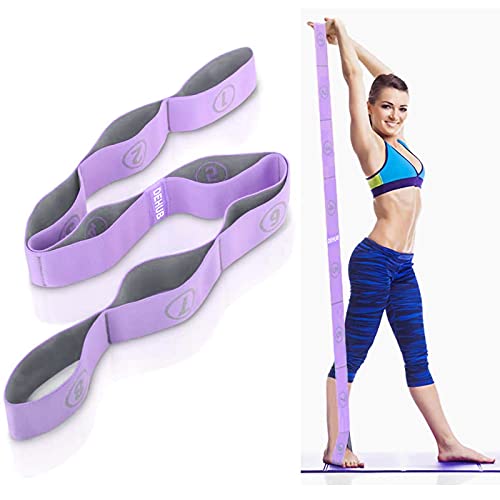
- Multi-loop design supports easier positioning
- Elastic fabric stretches up to 2.5 times
- Compact, washable, and padded for comfort
Best For: Assisted stretching, mobility, and rehabilitation routines
Best Adjustable Resistance
11-Loop Fabric Stretching Band

- Adjusts from 15 to 45 pounds
- Flat woven fabric resists rolling
- Numbered loops support consistent grip placement
Best For: Stretching combined with activation and resistance workouts
Best USA-Made Pick

- Non-elastic nylon provides steady control
- Ten loops support varied exercises
- Includes booklet and video stretching guide
Best For: Structured flexibility, mobility, and physical-therapy routines
Best Rehab Control
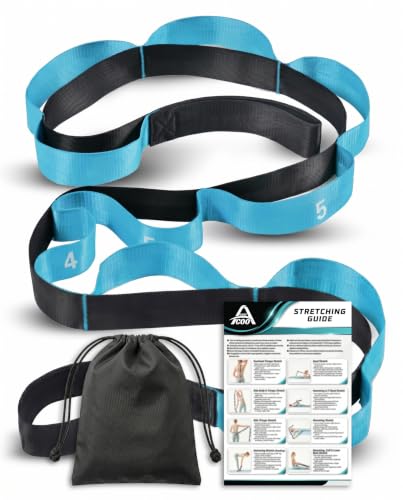
- 86-inch professional style has 10 numbered loops
- Non-elastic nylon offers stable leverage
- Pouch and exercise guide are included with the pro style
Best For: Rehabilitation, leg lifting, and controlled hamstring stretching
Best for Physical Therapy
Trideer Non-Elastic Loop Strap

- Controlled, non-elastic tension
- Multiple loops for adjustable positioning
- Durable 75-inch polypropylene webbing
Best For: Rehabilitation and gradual mobility training
Best Loop Variety

- 11 independent grip loops
- Lightweight nylon construction
- 60-day worry-free warranty
Best For: Yoga, Pilates, athletic warmups, and flexible positioning
Best Long-Term Coverage

- Stable, non-elastic nylon design
- Long 75-inch length
- 12-month warranty included
Best For: Beginner-friendly daily stretching and recovery
Best for Recovery Support

- Non-elastic for steady, controlled holds
- Multiple loops adjust stretch depth
- Can assist with bed or car leg lifting
Best For: Home PT and post-surgery mobility
Best for Versatile Training
Numbered Loop Stretching Strap

- Numbered loops support consistent placement
- Neoprene handles add comfort
- Includes guide and carry bag
Best For: Multi-sport stretching and portability
Best for Everyday Flexibility
Abiarst 10-Loop Stretching Strap
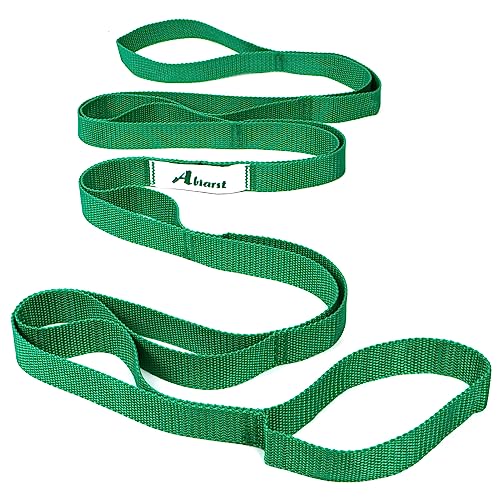
- Durable washable fabric construction
- Ten loops offer flexible positioning
- Suitable for multiple fitness activities
Best For: Daily stretching and multi-activity use
Best Elastic Loop Strap – Multi-Loop Stretch Strap
This elastic stretching strap is a versatile choice for assisted stretching, warm-ups, Pilates, yoga, dance, and rehabilitation. Its multi-loop layout helps position your hands and feet more easily, while the fabric construction and padded outer loops add comfort during repeated use.
Best For: Home stretching, mobility work, physical therapy, and recovery-focused routines.
Pros:
- Multi-loop design makes assisted stretches easier to position.
- Elastic construction can extend up to 2.5 times its length.
- Neoprene-padded outer loops improve comfort.
- Washable and compact for gym, travel, or outdoor use.
Cons:
- Elastic resistance provides less rigid control than a non-elastic strap.
- Only one strap is included.
A practical all-purpose option if you want an elastic stretching strap that supports both fitness and rehabilitation movements. Choose it for comfortable, guided positioning rather than fixed-resistance stretching.
Best Adjustable Resistance – 11-Loop Fabric Stretching Band
This elastic stretching strap combines mobility work with adjustable resistance. Its 11 reinforced loops let you change your grip for resistance from 15 to 45 pounds, making it suitable for gentle warm-ups as well as more demanding strength and stretching sessions.
Best For: Users who want one portable strap for stretching, muscle activation, and resistance training.
Pros:
- Eleven loops provide multiple grip positions and resistance levels.
- Progressive tension starts gently and increases as the band stretches.
- Woven fabric is designed to stay flat without rolling or pinching.
- Numbered position markers help with grip alignment and repeatable workouts.
Cons:
- The listed resistance range may be more than some rehabilitation users need.
- Its heavy-resistance design may feel less specialized for purely passive stretching.
This is a strong pick when an elastic stretching strap also needs to function as a compact resistance-training tool. The numbered loops make progression and consistent hand placement straightforward.
Best USA-Made Pick – OPTP Stretch Out Strap
The OPTP Stretch Out Strap is a non-elastic alternative for controlled flexibility and mobility work. Its six-foot nylon length and ten durable loops support leg, lower-body, upper-body, yoga, Pilates, and physical-therapy exercises, while the included exercise materials can help guide your routine.
Best For: Users who prefer stable, non-elastic leverage with structured stretching guidance.
Pros:
- Ten loops provide several hand and foot placement options.
- Six-foot nylon strap is designed for repeated, heavy use.
- Includes a 40-page exercise booklet and video stretching guide.
- Made in the USA and recommended in the supplied notes by physical therapists and athletic trainers.
Cons:
- Non-elastic construction does not provide spring-assisted movement.
- May be less compact than shorter elastic stretching straps.
If controlled positioning matters more than stretch rebound, this established non-elastic strap is a practical choice. The included guides are particularly useful for shoppers who want direction beyond the equipment itself.
Best Rehab Control – Acozycoo Stretching Strap
The Acozycoo Stretching Strap is a non-elastic nylon option focused on leverage and controlled positioning. The professional version measures 86 inches, includes ten numbered loops, and comes with a pouch and exercise guide, making it especially suitable for rehabilitation, hamstring work, and assisted leg positioning.
Best For: Physical therapy, post-surgery knee rehabilitation, seniors, and users who want stable leg-lifting control.
Pros:
- Professional version offers ten numbered sections for tracking flexibility progress.
- Non-elastic nylon stays stable for sustained stretches.
- 86-inch length provides useful reach for leg and hamstring exercises.
- Includes a carry pouch and guided workout booklet.
Cons:
- Non-elastic construction is not intended for spring-assisted stretching.
- The product has two style options with different lengths and features, so shoppers must select carefully.
- The professional version is less lightweight than the minimalist option.
This strap stands out for shoppers prioritizing control, reach, and rehabilitation-friendly positioning. Select the 86-inch professional style for numbered loops and accessories, or the 75-inch minimalist style for a simpler, lighter setup.
Best for Physical Therapy – Trideer Non-Elastic Loop Strap
If you want elastic stretching straps but need more controlled movement, this Trideer model uses non-elastic woven webbing instead. Its multiple loops let you adjust positioning and tension for mobility work, rehabilitation, and everyday stretching without snap-back.
Best For: Physical therapy, post-surgery range-of-motion exercises, hamstring stretching, and controlled mobility training.
Pros:
- Non-elastic design provides controlled tension without recoil.
- Multiple loops support adjustable hamstring, hip, calf, shoulder, and back stretches.
- Strong woven polypropylene construction with reinforced stitching.
- Compact 75-inch strap includes a user guide.
Cons:
- It does not provide the assisted rebound or resistance of elastic bands.
- Its 1-inch width may feel narrower than some alternatives.
This is a practical choice when stability and precise positioning matter more than elasticity. The clinic-style loop layout makes it especially suitable for recovery routines and gradual flexibility work.
Best Loop Variety – 11-Loop Stretching Strap
Among elastic stretching straps and similar flexibility tools, this nylon loop strap stands out for its 11 independent grip points. The design makes it easy to change hand or foot placement during yoga, Pilates, ballet, CrossFit, and physical therapy stretches.
Best For: Users who want many grip positions for flexibility training, assisted stretches, yoga, Pilates, or athletic warmups.
Pros:
- Eleven independent loops allow flexible positioning and length adjustment.
- Supports stretching, range-of-motion work, recovery, and unassisted poses.
- Made from lightweight nylon and sized at 55 inches long by 1.5 inches wide.
- Includes a 60-day worry-free warranty.
Cons:
- Its 55-inch length is shorter than the 75-inch options in this roundup.
- The notes do not specify that the strap itself is elastic.
The high loop count gives this strap useful versatility for users who frequently change positions. Consider it if easy grip selection is more important to you than a longer overall reach.
Best Long-Term Coverage – Oak-Sports 10-Loop Strap
If you are comparing elastic stretching straps for daily flexibility work, this Oak-Sports model offers a stable non-elastic alternative with 10 loops. Its 75-inch length and nylon construction suit stretching after exercise, yoga, Pilates, dance, gymnastics, and physical therapy.
Best For: Beginners and everyday users who want a long, stable strap for stretching, recovery, and mobility routines.
Pros:
- Non-elastic nylon provides steady resistance and stability.
- Ten loops make the strap approachable for beginners and adaptable across exercises.
- 75-inch length supports foot, waist, hand, and full-body stretches.
- Backed by a 12-month warranty and customer service.
Cons:
- Non-elastic construction will not provide elastic stretch or rebound.
- The strap is listed as 1 inch wide, which may offer less surface area than wider designs.
This model balances length, simple loop adjustment, and durability for regular home use. Its one-year warranty is an added advantage for shoppers planning to make stretching part of a consistent routine.
Best for Recovery Support – Trideer Loop Stretching Strap
If you need elastic stretching straps but prefer a steadier feel, the Trideer uses a non-elastic polyester design for controlled mobility work. Its loops support gradual stretching, range-of-motion practice, and gentle leg lifting at home.
Best For: Home physical therapy, post-surgery mobility routines, and slow stretching for legs, hips, back, ankles, and feet.
Pros:
- Non-elastic construction avoids rebound or sudden give.
- Multiple loops provide adjustable hand and foot positions.
- Can assist with lifting a leg into bed or a car.
- Useful across bedside assistance, PT stretching, and daily warm-ups.
Cons:
- It is not an elastic resistance band.
- The 1-inch width may feel less comfortable during long holds for users with sensitive hands.
Choose this strap when stability and repeatable positioning matter more than resistance. Its 75-inch length and loop layout make it practical for controlled home mobility work.
Best for Versatile Training – Numbered Loop Stretching Strap
For shoppers comparing elastic stretching straps with multipurpose mobility tools, this non-elastic nylon strap offers stable positioning across stretching, yoga, Pilates, fitness, dance, and physical therapy. Numbered loops help you monitor hand and foot placement.
Best For: Beginners and experienced users who want a versatile strap with padded-feel neoprene handles, a carry bag, and exercise guidance.
Pros:
- Numbered loops support consistent positioning and progress tracking.
- Neoprene handles are designed to improve hand and foot comfort.
- Includes a carry bag and basic stretching guide.
- Available in a 78-inch, 10-loop version or a longer 96-inch, 12-loop version.
Cons:
- The listed 10-loop version is non-elastic, so it does not provide elastic rebound.
- Buyers must select between different lengths and loop counts.
This is a well-rounded choice if you want one strap for several activities and value clear loop numbering. The included guide and carrying bag add convenience for beginners and portable routines.
Best for Everyday Flexibility – Abiarst 10-Loop Stretching Strap
The Abiarst is a practical alternative to elastic stretching straps, using a washable, non-elastic fabric construction for steady flexibility and mobility exercises. Its 10 loops and 75-inch length suit routines at home, in the gym, or during training.
Best For: Yoga, Pilates, physical therapy, dance, gymnastics, and daily stretching where a durable, skin-friendly strap is useful.
Pros:
- Durable, tight-knit fabric is designed to resist fraying and breaking.
- Washable construction uses skin-friendly fabric and eco-friendly dye.
- Ten loops provide multiple grip and positioning options.
- Works across stretching, fitness, Pilates, dance, ballet, and gymnastics.
Cons:
- It is non-elastic, so it will not supply stretch resistance or rebound.
- At 1 inch wide, it may offer less hand coverage than wider straps.
Consider this model if you want a straightforward, durable loop strap for varied routines. Its washable fabric and broad activity range make it a convenient everyday flexibility tool.
How We Picked the Best Elastic Stretching Straps
We focused on practical features that affect everyday use: the number and spacing of loops, strap material, stretch or non-stretch construction, grip comfort, length, portability, and suitability for assisted stretching. We also considered whether a strap is easy to position around a foot, ankle, or hand without slipping.
Because stretching needs vary, this list includes both elastic resistance bands and non-elastic mobility straps. Elastic models can provide gentle tension and a little give, while non-elastic straps offer more consistent positioning and precise control. Products marketed for physical therapy, yoga, Pilates, dance, gymnastics, and general flexibility training were included.
Quick Comparison
| Feature | Best For | What to Look For |
|---|---|---|
| Elastic construction | Gentle assisted stretching and resistance work | Comfortable give, secure loops, and durable stitching |
| Non-elastic construction | Precise mobility positioning and rehabilitation routines | Strong webbing, clearly spaced loops, and stable handling |
| Multiple loops | Adjustable reach and progressive stretching | Loop spacing that matches your flexibility and limb length |
| Exercise-book or guide inclusion | Beginners building a routine | Clear instructions and movement illustrations |
| Portable design | Travel, gym, studio, or therapy appointments | Lightweight construction and easy storage |
Key Buying Factors for Elastic Stretching Straps
Elastic Versus Non-Elastic Material
Choose elastic straps if you want controlled give during hamstring, shoulder, or hip stretches and may also use the product for light resistance exercises. A non-elastic strap is usually better when you need a fixed length for alignment, therapist-directed movements, or gradual positioning.
Loop Count and Spacing
More loops provide finer adjustment, which can be helpful when flexibility changes from one side of the body to the other. However, a simpler strap may be faster to use. Check that the loops are large enough for your hand or foot and that the stitching looks reinforced.
Comfort, Grip, and Durability
Look for soft fabric or smooth webbing that will not dig into your skin during longer holds. Reinforced seams matter because the strap carries repeated tension. Avoid using any strap with fraying, stretched stitching, or damaged loops.
Length and Portability
A longer strap offers more reach for tight muscles, while a compact design is easier to pack. If you plan to carry it with a yoga mat or keep it in a therapy bag, prioritize low bulk without sacrificing loop strength.
Who Should Buy Which Elastic Stretching Straps?
- Beginners: Choose a multi-loop strap with clear guidance and comfortable fabric.
- Physical therapy users: Favor a stable, non-elastic design if your clinician has prescribed precise positioning.
- Yoga and Pilates users: Select a lightweight strap with easy-to-reach loops for controlled alignment work.
- Athletes and dancers: Look for durable stitching, a longer reach, and enough adjustment points for progressive flexibility training.
- Travelers: Pick a compact strap that stores easily and can support a short mobility routine anywhere.
Whichever model you choose, stretch gradually, avoid bouncing, and stop if you feel sharp pain, numbness, or unusual joint pressure. For rehabilitation or an existing injury, follow guidance from a qualified medical professional.