The right yoga block can make flexibility work more accessible by bringing the floor closer, supporting alignment, and helping you hold stretches with less strain. Foam blocks are lightweight and forgiving, while cork models provide a firmer, more grounded feel.
We selected 10 popular options in different materials, sizes, and configurations so you can match your block to your practice, preferred stability, and budget.
Best 10 Yoga Blocks for Flexibility Picks for 2026
Soft Alignment Support
Gaiam Latex-Free EVA Yoga Blocks

- Two lightweight EVA foam blocks
- Beveled edges and nonslip grip
- Supports alignment and deeper stretches
Best For: Comfortable support for yoga, Pilates, meditation, and stretching
Firm Cork Stability

- High-density natural cork construction
- Textured, contoured surfaces aid grip
- Firm support for stretching and meditation
Best For: Practitioners who prioritize stability and resistance to distortion
Lightweight Deep Stretching

- Lightweight two-pack for easy handling
- Textured surface supports traction
- Multiple sides and angles aid pose adjustments
Best For: Portable, everyday yoga and stretching practice
Complete Stretching Kit

- Two EVA blocks plus an 8-foot strap
- Beveled edges and nonslip surface
- Instruction book included
Best For: Users wanting a flexible yoga and stretching starter set
Soft Support Pick

- Soft EVA foam cushions supported stretches
- Non-slip surface helps with stability
- Lightweight 9-by-6-by-3-inch two-pack
Best For: Comfortable alignment and flexibility practice
Portable Value Pick

- High-density EVA supports stretches and balance
- Lightweight, compact, and water-resistant
- Smooth surface wipes clean easily
Best For: Portable yoga, Pilates, and flexibility training
Firm Stability Pick

- Dense natural cork supports balance and strength
- Grippy surface suits sweaty hot-yoga sessions
- Heavy 2.3-pound blocks with 4-inch thickness
Best For: Firm support for balance and high-intensity practice
Reliable EVA Support

- High-density EVA foam supports stretches and balance
- Non-slip design for added practice stability
- Lightweight 9 x 6 x 3-inch two-block set
Best For: Versatile home, studio, Pilates, and gymnastics practice
Lightweight Stretching Aid

- High-density EVA foam balances weight and durability
- Beveled edges support comfortable gripping
- Useful for stretching, alignment, and balance
Best For: Lightweight support for beginners and varied practice levels
Strap-Ready Alignment Set
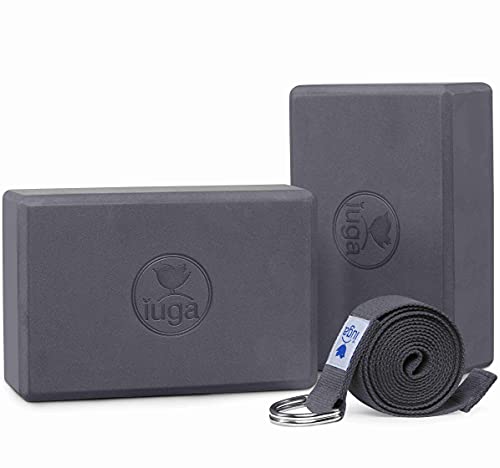
- Includes two blocks plus a 7-foot yoga strap
- Non-slip surface and beveled edges aid stability
- Closed-cell foam is designed to resist sweat absorption
Best For: Complete stretching and alignment practice at home or on the go
Soft Alignment Support – Gaiam Latex-Free EVA Yoga Blocks
For anyone comparing yoga blocks for flexibility, this two-pack offers lightweight support for modifying poses, improving alignment, and gradually deepening stretches. The dense EVA foam, beveled edges, and nonslip surface make the blocks easy to grip under your hands, feet, or seat.
Best For: Beginners and practitioners who want soft, versatile support for yoga, Pilates, meditation, and stretching.
Pros:
- Two-pack of latex-free EVA foam blocks
- Beveled edges and a nonslip surface support comfortable gripping
- 50 percent denser than standard EVA blocks, according to the supplied details
- Useful for alignment, balance, seated meditation, and deeper stretches
Cons:
- Foam may provide less firmness than high-density cork
- Spot cleaning and air drying are required for care
This is a practical choice when comfort and easy handling matter most. Its standard 4-by-6-by-9-inch size and soft foam construction make it especially useful for adjusting poses as flexibility develops.
Firm Cork Stability – Trideer Cork Yoga Blocks
These cork yoga blocks for flexibility are designed for practitioners who prefer firm, stable support while stretching or holding poses. Their high-density cork construction resists distortion under bodyweight, while the textured surface and contoured corners help with grip.
Best For: Active yoga, restorative practice, Pilates, stretching, and seated meditation where extra stability is useful.
Pros:
- Two high-density cork blocks provide firm support
- Textured surface and contoured corners promote a secure grip
- Suitable for alignment, difficult postures, restorative poses, and meditation
- Includes a visual exercise guide for beginners through advanced users
Cons:
- At 1.59 kg per listed product detail, this set is heavier than foam alternatives
- Cork is firmer and less lightweight than EVA foam
Choose this set if stability is your priority during flexibility work. The 9-by-6-by-3-inch blocks offer firm positioning without the distortion associated with softer foam blocks.
Lightweight Deep Stretching – KEEP High-Density EVA Blocks
For yoga blocks for flexibility that are easy to carry and handle, the KEEP two-pack combines lightweight EVA foam with a textured, moisture-resistant surface. The blocks help extend stretches, support challenging poses, and encourage better balance and alignment.
Best For: Home users, beginners, and anyone who wants lightweight blocks for regular stretching and yoga practice.
Pros:
- High-density EVA foam offers supportive, consistent positioning
- Lightweight design makes each block easy to pick up and move
- Closed-cell textured surface helps maintain grip during practice
- Six sides and eight angles provide multiple positioning options
Cons:
- Foam may feel less solid than cork during weight-bearing poses
- Care instructions specify wiping with a dry cloth
This set suits flexibility routines that involve frequent repositioning. Its low weight and multiple usable sides make it convenient for modifying poses without adding much bulk to your practice setup.
Complete Stretching Kit – Syntus EVA Blocks with Strap
This Syntus set combines two EVA yoga blocks with an 8-foot strap, giving flexibility-focused users more ways to control and deepen stretches. The blocks support alignment and positioning, while the strap can help guide stretches and increase range of motion.
Best For: Beginners and experienced exercisers who want blocks and a strap for yoga, Pilates, stretching, and toning.
Pros:
- Includes two 9-by-6-by-4-inch EVA foam blocks and an 8-foot strap
- Beveled edges and a nonslip surface provide a comfortable grip
- Strap has a D-ring buckle for controlled stretching
- Instruction book supports beginners and experienced users
Cons:
- Includes a strap that may be unnecessary if you only need blocks
- Foam blocks may not feel as firm as cork alternatives
This is the most versatile option in the group for flexibility training because it pairs block support with strap-assisted stretching. It is a convenient starter kit for building a broader home practice.
Soft Support Pick – Trideer EVA Foam Yoga Blocks
For anyone comparing yoga blocks for flexibility, this two-pack uses soft EVA foam to provide cushioning, stability, and support during stretches, yoga, and Pilates. The 9-by-6-by-3-inch size is lightweight and easy to carry.
Best For: Beginners and regular practitioners who want comfortable support for alignment and deeper stretches.
Pros:
- Soft foam offers comfortable cushioning and supportive stability.
- Non-slip surface helps provide a secure grip during poses.
- Useful for improving flexibility, strength, alignment, yoga, and Pilates.
- Lightweight, portable, and easy to clean with a damp cloth.
Cons:
- Foam may provide less weight and firmness than a dense cork block.
- The 3-inch thickness offers less height than thicker blocks.
This is a practical choice when comfort and portability matter most. Its cushioned EVA construction makes it especially suitable for supported flexibility work and everyday home or studio practice.
Portable Value Pick – Septo EVA Yoga Blocks
These Septo yoga blocks for flexibility combine high-density EVA construction with a lightweight, compact design. Their non-slip surface and cushioning can help support posture, stretching, balance training, and Pilates.
Best For: Home users and travelers who want portable blocks for stretching, posture adjustments, and balance practice.
Pros:
- High-density EVA foam provides cushioning and shock resistance.
- Lightweight and compact for home, outdoor, or travel use.
- Water-resistant closed-cell structure does not absorb water.
- Smooth surface repels dirt and can be wiped clean with a damp towel.
Cons:
- The smooth surface may offer less tactile grip than textured cork.
- The listed dimensions are 9 by 3 by 6 inches, with less thickness than a 4-inch block.
Septo’s two-block set is a sensible option for flexible, on-the-go practice. It emphasizes easy handling and maintenance while still providing a stable foundation for supported stretches and balance work.
Firm Stability Pick – SNAKUGA Cork Yoga Blocks
For yoga blocks for flexibility that prioritize firmness and balance support, this two-pack is made from high-density natural cork. Each 9-by-6-by-4-inch block weighs 2.3 pounds and is designed to stay stable during stretching, Pilates, meditation, and hot yoga.
Best For: Practitioners who prefer substantial, firm blocks for balance, strength work, and high-intensity sessions.
Pros:
- High-density cork provides a heavier, stable foundation for poses.
- Non-slip natural cork remains grippy when sweating.
- 4-inch thickness offers substantial support for stretches and balance.
- Durable design suits hot yoga, Pilates, meditation, fitness, and stretching.
Cons:
- At 2.3 pounds per block, these are considerably heavier than foam options.
- Cork’s firm feel provides less cushioning than soft EVA foam.
- Requires wiping with a wet cloth and air drying after use.
This set is better suited to users who value firmness over portability. The heavier cork construction can help with balance and strength-focused practice, while the grippy surface is useful for sweaty sessions.
Reliable EVA Support – Exerz Yoga Blocks 2-Pack
For anyone comparing yoga blocks for flexibility, the Exerz 2-pack offers firm EVA foam support for deeper stretches, balance work, and improved positioning. Its non-slip design and portable size make it suitable for home, studio, gym, Pilates, and gymnastics practice.
Best For: Beginners and experienced users who want versatile blocks for stretching, balance, Pilates, or handstand practice.
Pros:
- High-density EVA foam is designed for sturdy workout support.
- Non-slip surface helps limit unwanted sliding during poses and exercises.
- Standard 9 x 6 x 3-inch size supports stretching and balance work.
- Lightweight two-block set is easy to transport.
Cons:
- Foam construction may not provide the same firmness as cork blocks.
- The supplied details do not mention an included carrying strap.
The Exerz blocks are a practical all-purpose choice when you want dependable support for flexibility training without adding much bulk to your gear.
Lightweight Stretching Aid – MoKo Thin Yoga Blocks
The MoKo two-pack is a straightforward option for shoppers seeking yoga blocks for flexibility, balance, and pose support. High-density EVA foam, beveled edges, and a lightweight design help make stretches and difficult positions more comfortable to practice.
Best For: Beginners, users with physical limitations, and anyone wanting lightweight blocks for home, studio, or gym sessions.
Pros:
- High-density EVA foam is lightweight and designed for durability.
- Beveled edges provide a more comfortable grip.
- Can help deepen stretches, support alignment, and improve balance.
- Suitable for different exercise levels and practice locations.
Cons:
- The supplied details do not specify a non-slip surface.
- No strap or carrying case is listed with the two-block set.
MoKo keeps the setup simple: two compact blocks that can make stretching and pose work more accessible without weighing down a yoga bag.
Strap-Ready Alignment Set – IUGA Yoga Blocks With Strap
If you want yoga blocks for flexibility plus help holding longer stretches, the IUGA set adds a 7-foot yoga strap to two 9 x 6 x 3-inch blocks. The blocks are designed to support alignment, balance, and deeper poses, while the strap can assist with controlled stretching.
Best For: Practitioners who want an all-in-one flexibility setup for home, studio, meditation, or travel use.
Pros:
- Includes two blocks and an extra-long 7-foot yoga strap.
- Non-slip surface and beveled edges support grip and stability.
- Closed-cell EVA foam is designed not to absorb sweat.
- Blocks can be wiped clean with water or soap and water.
Cons:
- The supplied details describe the material inconsistently, so confirm the preferred block composition before buying.
- At 0.64 kg, this set may be less lightweight than some basic foam two-packs.
The included strap makes this the most complete flexibility-focused option of the three, especially for users who want assistance maintaining stretches and improving alignment.
How We Picked the Best Yoga Blocks for Flexibility
We focused on the features that matter most during stretching and mobility work: dependable grip, useful height, comfortable edges, low weight, and enough firmness to support your body without slipping or collapsing. The selection includes single blocks and two-packs, standard EVA foam and cork designs, and options with straps for added versatility.
Because flexibility practices vary, we also considered whether each style is better suited to gentle restorative poses, active yoga, Pilates, balance drills, or deeper supported stretches. Product specifications and stated materials were compared to help distinguish lightweight convenience from maximum stability.
Quick Comparison
| Block type | Best for | Main advantage | Potential trade-off |
|---|---|---|---|
| EVA foam | Beginners and everyday stretching | Lightweight and comfortable | Can compress more than cork |
| Cork | Balance and weight-bearing poses | Firm, stable support | Heavier and less cushioned |
| 3-inch blocks | Small height adjustments | Useful for subtle alignment changes | Less lift than taller blocks |
| Two-packs | Symmetrical poses and full-body support | One block for each hand or side | More storage space required |
Key Buying Factors for Yoga Blocks for Flexibility
Material and Firmness
Choose EVA foam if you want a light block with a slightly softer feel for seated stretches, restorative poses, and travel. Cork is a better fit when you need a solid base for standing balance, supported lunges, or poses where you place substantial weight on the block.
Size and Height
A standard block can usually be used at three different heights by rotating it. A thinner 3-inch design is useful when you need only a modest lift, while a taller or wider block may be more helpful if your hands do not comfortably reach the floor.
Grip and Edge Design
Look for a textured or non-slip surface, especially if your hands become sweaty or you practice on a smooth floor. Beveled edges can make transitions more comfortable and reduce pressure on the wrists or thighs.
Quantity and Extras
Two blocks are practical for symmetrical poses, supported bridges, and alignment work on both sides of the body. A included strap can also help with hamstring, shoulder, and hip stretches, but it should not replace a secure, well-sized block.
Who Should Buy Which Yoga Blocks for Flexibility?
- Beginners: Start with a lightweight EVA foam two-pack for comfortable support and easy handling.
- Advanced or balance-focused practitioners: Choose firm cork blocks for a more stable, grounded platform.
- Travelers: Look for lightweight, compact foam blocks that are easy to pack.
- Stretching and mobility users: Prioritize a two-pack with multiple usable heights and comfortable edges.
- Home practitioners seeking versatility: Consider a set that includes a strap for assisted flexibility exercises.
Whichever style you choose, use blocks to bring the floor closer rather than forcing a deeper position. Stable support should help you maintain relaxed breathing and controlled alignment throughout each stretch.