The right yoga block can make supported backbends, reclined stretches, and restorative poses more comfortable without forcing your body into a deeper range than it can manage.
These 10 picks cover firm and soft foam designs, two-block sets, oversized blocks, wedges, and bolster-style support so you can match your equipment to your practice, flexibility, and space.
Best 10 Yoga Blocks for Back Support Picks for 2026
Best Sustainable Foam Support
Manduka Recycled EVA Yoga Block

- Firm, high-density recycled EVA foam
- Contoured, slip-resistant edges
- Lightweight 0.9-pound design
Best For: Portable support for restorative yoga, Pilates, and stretching
Best Two-Block Value
Trideer Non-Slip Foam Yoga Blocks

- Includes two supportive foam blocks
- Soft, non-slip surface
- Lightweight 9 x 6 x 3-inch size
Best For: Beginners needing paired blocks for stretching and alignment
Best Extra-Firm Support
Manduka Fine-Grain Cork Yoga Block

- Super-dense 100% cork construction
- Textured, easy-grip surface
- Firm support for sustained poses
Best For: Practitioners who prefer sturdy, extra-firm alignment support
Best Lumbar Relief Bolster
NGT Rectangular Yoga Support Pillow

- Broad bolster for lumbar and joint support
- Layered recycled-foam construction
- Washable cover with carry handle
Best For: Restorative yoga, meditation, and cushioned back support
Lightweight Stability Pick
KEEP High-Density EVA Yoga Blocks, 2-Pack

- Two high-density EVA foam blocks
- Textured non-slip surface
- Lightweight and deformation-resistant
Best For: Home practitioners needing two portable blocks for supported poses and stretching
Versatile Two-Block Value
9x6x3-Inch EVA Foam Yoga Blocks

- Two high-density EVA foam blocks
- Non-slip design for stability
- Useful for yoga, Pilates, and stretching
Best For: Beginners and home users wanting versatile support for multiple exercises
Best Wrist and Lower-Back Angle Relief
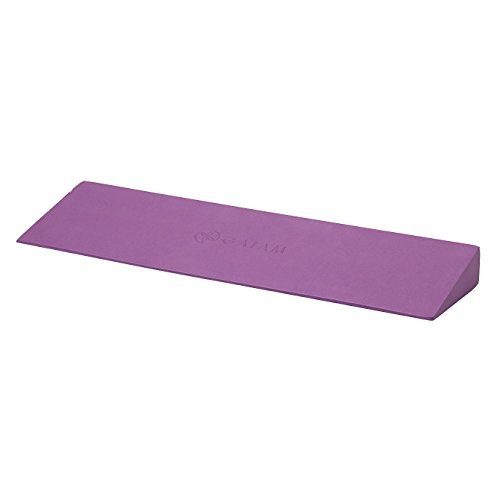
- Wedge design softens harsh angles
- Supports wrists, ankles, and lower back
- Lightweight EVA foam construction
Best For: Floor stretches needing gentle, low-profile support
Best Budget Stability Block
Supportive EVA Foam Yoga Block

- Non-slip surface with beveled edges
- Supports alignment and deeper stretches
- Lightweight, latex-free EVA foam
Best For: Everyday pose support and floor stretching
Best Full-Size Versatile Support

- Three height levels for adjustable support
- Non-slip surface with beveled edges
- Useful for back stretching and mobility
Best For: Versatile yoga, stretching, and alignment support
Best Sustainable Foam Support – Manduka Recycled EVA Yoga Block
For shoppers comparing yoga blocks for back support, the Manduka Recycled Foam Block offers firm, lightweight assistance for alignment, stretching, and supported poses. Its contoured edges and high-density EVA provide a stable, comfortable surface without the extra weight of cork.
Best For: Yogis who want firm foam support for restorative poses, stretching, Pilates, or travel.
Pros:
- High-density foam is firm and less squishy than many alternatives.
- Slip-resistant contoured edges improve comfort and stability.
- Made with 50%–75% recycled EVA foam and weighs 0.9 pounds.
- Compact 9 x 6 x 4-inch design is easy to carry and clean.
Cons:
- Sold as a single block.
- Foam may not provide the extra weight or texture of cork.
This is a practical choice when you want supportive yoga blocks for back support that are portable, firm, and made with recycled materials.
Best Two-Block Value – Trideer Non-Slip Foam Yoga Blocks
This two-pack is a useful option for anyone seeking yoga blocks for back support during stretches, alignment work, and stability-focused poses. The foam offers cushioning while the non-slip surface helps create a secure foundation at home or in the studio.
Best For: Beginners and regular practitioners who want two lightweight foam blocks for supported poses and flexibility work.
Pros:
- Two-block set supports symmetrical poses and stretching routines.
- Soft foam balances cushioning with stability.
- Non-slip surface helps maintain a secure grip.
- Lightweight 9 x 6 x 3-inch blocks are easy to transport.
Cons:
- The softer foam may feel less firm than cork or high-density blocks.
- Only the listed Mint Green color is specified.
Choose this set if having two cushioned supports matters more than maximum firmness, especially for alignment practice and deeper stretches.
Best Extra-Firm Support – Manduka Fine-Grain Cork Yoga Block
If you prefer a solid foundation for yoga blocks for back support, this Manduka cork block delivers extra-firm assistance for sustained poses, balance, and alignment. Its textured fine-grain cork surface provides a sturdy grip and more resistance than standard foam.
Best For: Experienced practitioners who prioritize maximum firmness, grip, and durable support in restorative yoga or Pilates.
Pros:
- Super-dense cork provides firm support during sustained poses.
- Textured surface offers an easy-to-grip feel.
- Made from 100% fine-grain cork sourced from renewable cork oak trees.
- Standard 9 x 6 x 4-inch format works for balance and alignment support.
Cons:
- At 2.2 pounds, it is considerably heavier than foam options.
- Sold as a single block.
- Cork may feel less cushioned than foam against sensitive areas.
This block is the stronger pick for users who want dependable, non-squishy support and do not mind carrying a heavier yoga accessory.
Best Lumbar Relief Bolster – NGT Rectangular Yoga Support Pillow
Unlike a compact block, this rectangular bolster is designed for broader cushioning and lumbar support. Its layered recycled-foam construction can help alleviate pressure on joints, support relaxation, and provide a comfortable surface for restorative yoga and meditation.
Best For: Restorative practitioners seeking broad back, lumbar, joint, or leg support rather than a small hand-placement block.
Pros:
- Designed to provide lumbar relief and reduce pressure on joints.
- Tri-layer recycled foam is intended to retain its firmness and shape.
- Washable suede pillowcase includes an invisible zipper.
- Carry handle and roughly 2-pound weight improve portability.
Cons:
- Its 25.6-inch length makes it less compact than a traditional yoga block.
- It is a bolster pillow, not a rigid block for balance-heavy poses.
- The listed care instructions do not include drying guidance.
Consider this bolster when your priority is supported relaxation and lumbar comfort; choose a conventional block instead for compact, height-adjustable hand support.
Lightweight Stability Pick – KEEP High-Density EVA Yoga Blocks, 2-Pack
If you want yoga blocks for back support that are easy to move and steady under pressure, the KEEP two-pack combines lightweight EVA foam with a textured, non-slip surface. The 3-inch thickness can help bring the floor closer during supported stretches and alignment-focused poses.
Best For: Home practitioners who want two lightweight blocks for supported poses, stretching, and balance work.
Pros:
- Two high-density EVA foam blocks provide consistent support and resist deformation.
- Closed-cell, textured surfaces help maintain grip and control.
- Lightweight design makes the blocks easy to carry and handle.
- Recyclable, non-toxic, latex-free materials are used.
Cons:
- The 3-inch thickness may provide less lift than an extra-large block.
- Care instructions specify wiping with a dry cloth.
With two blocks, a stable six-sided shape, and a supportive but portable build, this set is a practical choice for back-support routines that use paired props or symmetrical positioning.
Extra-Large Support Pick – Hugger Mugger 5-Inch Big Foam Block
For yoga blocks for back support with added height and surface area, the Hugger Mugger Big Foam Yoga Block uses dense EVA foam in an extra-large 5-inch format. Its beveled edges are designed to feel more comfortable in supported poses.
Best For: Taller practitioners or people who want a larger, higher block for supported poses and stretching.
Pros:
- Extra height, width, and depth provide substantial support.
- Dense foam offers reliable, durable support.
- Beveled edges add comfort during supported poses.
- Lightweight and recyclable EVA foam is latex-free.
Cons:
- It is sold as a single block rather than a two-block set.
- The larger format may be less convenient to transport than smaller blocks.
This block stands out when extra lift matters more than having a matching pair. Its dense foam and broad 5-inch profile can be useful for users who need more height or stability from a support prop.
Versatile Two-Block Value – 9x6x3-Inch EVA Foam Yoga Blocks
These two-block EVA foam bricks are a straightforward option for yoga blocks for back support, stretching, Pilates, and meditation. Their 9-by-6-by-3-inch dimensions provide a stable surface for balance, posture, and supported poses.
Best For: Beginners and home users seeking a versatile two-block set for yoga, Pilates, stretching, and alignment work.
Pros:
- Two high-density EVA foam blocks offer reliable support.
- Non-slip foam construction is intended to improve stability.
- Lightweight design is convenient for transport.
- Suitable for yoga, Pilates, meditation, and stretching.
Cons:
- The 3-inch height may not meet the needs of users seeking maximum lift.
- Care instructions recommend keeping the blocks away from direct sunlight and storing them dry.
This set covers common prop-based exercises without adding extra complexity. Choose it if you want two lightweight blocks for general support and alignment rather than an oversized single block.
Best Wrist and Lower-Back Angle Relief – Gaiam Yoga Block Wedge
For shoppers seeking yoga blocks for back support, this wedge is designed to soften harsh angles during floor stretches. Its elongated profile can add a gentler angle beneath sensitive joints while remaining light enough for home practice or class.
Best For: Supporting the lower back and easing wrist or ankle pressure during floor-based yoga stretches.
Pros:
- Wedge shape helps soften angles and support sensitive wrists and the lower back.
- Lightweight EVA foam is portable yet designed for repeated use.
- Long 20-inch profile provides broad contact during stretches.
Cons:
- Its wedge shape is less versatile than a standard rectangular block for three height options.
- At 2 inches thick, it offers less lift than a full-size yoga block.
This is a focused support accessory rather than an all-purpose block. Choose it when reducing joint angles and adding a low, stable surface matters more than maximum elevation.
Best Budget Stability Block – Supportive EVA Foam Yoga Block
This compact EVA block is a practical option for anyone comparing yoga blocks for back support and alignment. Use it under your hands, feet, or seat to modify poses, improve balance, and support more controlled floor stretches.
Best For: Beginners and casual practitioners who want lightweight support for alignment, balance, meditation, and back-focused stretching.
Pros:
- Beveled edges and a soft non-slip surface provide a more secure grip.
- Supports pose modification, deeper stretches, and improved alignment.
- Lightweight, latex-free EVA foam is easy to carry and clean.
- Can be used for yoga, Pilates, meditation, and general floor stretches.
Cons:
- Its 3-inch thickness provides less lift than the 4-inch Gaiam block.
- Only one block is included, so balanced two-sided support requires another purchase.
With a straightforward rectangular design and grippy finish, this block offers versatile everyday support. It is a sensible pick for modifying poses without adding much weight to a yoga bag.
Best Full-Size Versatile Support – Gaiam EVA Yoga Block
For yoga blocks for back support, this full-size EVA block combines height, grip, and multiple positioning options. It works as a stretching aid for the back, hips, and hamstrings while also supporting alignment in standing, restorative, and balance poses.
Best For: Yogis who want a versatile full-size block for back stretching, pose modification, meditation, Pilates, and mobility work.
Pros:
- Three height levels help accommodate different flexibility and support needs.
- Textured non-slip surface and beveled edges improve grip and comfort.
- Supports yoga, Pilates, meditation, stretching, mobility, and physical therapy exercises.
- Lightweight latex-free EVA foam is easy to transport and designed to retain its shape.
Cons:
- At 4 inches thick, it may feel bulkier than the smaller 3-inch block.
- Only one block is included; two may be preferable for symmetrical support.
This is the strongest all-around choice of the three for users who want adjustable height and broad versatility. Its full-size format makes it especially useful when back support is part of a wider stretching or alignment routine.
How We Picked the Best Yoga Blocks for Back Support
We compared the selected blocks and support cushions for the features that matter most in back-focused yoga: stability, firmness, surface grip, edge comfort, dimensions, weight, and ease of storage. We also considered whether each design is better suited to gentle restorative work, active practice, travel, or users who need a wider base.
For Yoga Blocks for Back Support, the best choice is not necessarily the softest or largest option. It should provide predictable lift while remaining comfortable against the spine, shoulders, hips, or hands during supported poses.
Quick Comparison
| Type | Best suited for | What to look for |
|---|---|---|
| Standard foam block | Everyday yoga and Pilates | Dense foam, beveled edges, and a non-slip surface |
| Two-block set | Symmetrical support and varied poses | Matching height, stable bases, and easy storage |
| Extra-large block | Taller users or broader support | Greater surface area and dependable firmness |
| Wedge | Wrist, ankle, or angled support | A gradual incline and secure traction |
| Bolster-style cushion | Restorative poses and meditation | Comfortable padding, washable cover, and shape retention |
Key Buying Factors for Yoga Blocks for Back Support
Firmness and Compression
Dense EVA foam generally offers more stable elevation for bridges, supported fish pose, and chest-opening work. Softer foam or a bolster can feel better for longer holds, but may compress more under body weight. Avoid using a block that feels unstable or collapses noticeably.
Size and Height
Standard blocks are versatile, while larger five-inch designs can provide a broader platform for taller users or poses requiring more surface area. A two-block set is useful when you want even support under both sides of the body or need multiple heights.
Grip and Edge Design
Non-slip textures help keep the block in place on a mat or floor. Beveled edges are typically more comfortable for hands and contact points than sharp corners, especially during supported backbends and seated stretches.
Shape and Intended Use
Traditional rectangular blocks are the most adaptable. Wedges are better for angled wrist or ankle support, while bolster-shaped cushions prioritize comfort over precise height. Check the dimensions before buying to ensure the shape fits your planned poses.
Who Should Buy Which Yoga Blocks for Back Support?
Choose a standard firm foam block if you want one versatile prop for daily yoga, Pilates, stretching, and home workouts. Choose a two-pack if balanced support, chest opening, or stacked height is important. Choose an oversized block if you are taller, prefer a wider platform, or want more room during restorative poses.
Choose a wedge for targeted wrist and ankle positioning rather than general back support. Choose a bolster-style cushion if comfort during meditation, reclined poses, and longer restorative holds matters more than compact storage. Whichever style you select, begin with the lowest comfortable height and stop if you feel pinching, numbness, or sharp pain.