Gentle stretching should feel supported, not forced. The right yoga block can bring the floor closer, improve balance, and help you hold restorative poses with better alignment and less strain.
We selected 10 foam and cork options in common sizes and firmness levels, including single blocks and two-packs. The guide below explains what to look for based on comfort, stability, portability, and the way you practice.
Best 10 Yoga Blocks for Gentle Stretching Picks for 2026
Best Overall Foam Support
Gaiam Supportive EVA Yoga Block

- Dense latex-free EVA foam
- Non-slip surface with beveled edges
- Useful for alignment and deeper stretches
Best For: Beginners, gentle stretching, and meditation seating
Best Cork Stability
Trideer Cork Yoga Blocks 2-Pack

- Dense cork resists distortion
- Textured, non-slip gripping surface
- Includes two blocks and an exercise guide
Best For: Restorative yoga, meditation, and firm stretching support
Best Lightweight Pair
KEEP High-Density EVA Yoga Blocks

- Lightweight 0.44-lb blocks
- Textured moisture-resistant surface
- High-density foam resists deformation
Best For: Portable home, beginner, and gentle stretching practice
Best Versatile EVA Set

- High-density recyclable EVA
- Lightweight, moisture-resistant design
- Works for yoga, Pilates, and therapy
Best For: All-around home practice and easy-care stretching support
Best Sustainable Foam Support

- Firm, high-density recycled EVA foam
- Contoured, slip-resistant edges
- Lightweight 0.9-pound design
Best For: Gentle stretching, restorative yoga, Pilates, and travel
Best Two-Block Value

- Includes two supportive EVA foam blocks
- Soft, cushioned feel for stretching
- Non-slip surface and portable size
Best For: Beginners, paired stretches, yoga, and Pilates
Best Firm Cork Support

- Extra-firm, dense cork construction
- Textured surface for a sturdy grip
- Made from renewable cork material
Best For: Firm-supported stretching, restorative yoga, Pilates, and sustained poses
Lightweight EVA Pick

- Two high-density EVA foam blocks
- Water-resistant and easy to clean
- Lightweight for home or travel use
Best For: Portable, cushioned support for gentle stretching and balance work
Stable Cork Support

- Dense natural cork for firm support
- Non-slip surface suited to sweaty practice
- Two substantial 4-inch blocks included
Best For: Stable balance support during stretching, Pilates, and meditation
Comfort-Grip Option
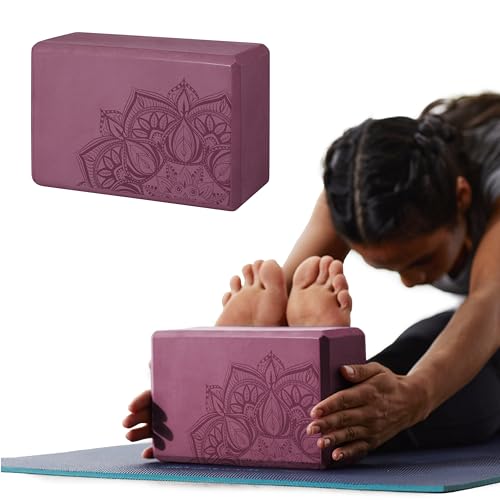
- Soft non-slip surface with beveled edges
- Three height levels from one standard block
- Lightweight latex-free EVA foam
Best For: Comfortable alignment support for gentle stretching and restorative practice
Best Overall Foam Support – Gaiam Supportive EVA Yoga Block
For yoga blocks for gentle stretching, the Gaiam block offers lightweight EVA support with a soft, non-slip surface and beveled edges. Its dense foam construction can help you modify poses, support alignment, and gradually extend your range of motion.
Best For: Beginners, gentle stretching, meditation seating, and anyone who prefers a grippable foam block.
Pros:
- Supportive, durable EVA foam is latex-free and 50% denser than standard EVA blocks.
- Non-slip surface and beveled edges make the block easier to grip.
- Can be used under the hands, feet, or seat to modify poses and support alignment.
Cons:
- This listing’s details are somewhat inconsistent about the included quantity.
- Foam may provide less rigid support than high-density cork.
This is a versatile choice when comfort and easy handling matter more than maximum firmness. The beveled design is particularly useful for supported stretches and balance work.
Best Cork Stability – Trideer Cork Yoga Blocks 2-Pack
These cork yoga blocks are a strong option for yoga blocks for gentle stretching when you want a firmer, more stable base. The textured cork surface and contoured corners support gripping, while the dense material resists distortion under bodyweight.
Best For: Restorative yoga, seated meditation, stretching, Pilates, and users who prefer firm natural-cork support.
Pros:
- High-density cork provides more stability than typical foam blocks.
- Textured surface and contoured corners support a secure grip.
- Suitable for restorative poses, relaxation, meditation, yoga, and Pilates.
- Includes two 9 x 6 x 3-inch blocks and an illustrated exercise guide.
Cons:
- At 1.59 kg for the set, these blocks are heavier than foam alternatives.
- Cork’s firmer feel may be less comfortable for users wanting soft cushioning.
Choose this pair if stability is your priority during supported stretches or meditation. The cork construction offers dependable firmness, though it is less portable than lightweight EVA.
Best Lightweight Pair – KEEP High-Density EVA Yoga Blocks
The KEEP two-pack is well suited to yoga blocks for gentle stretching if you want portable support without giving up stability. High-density EVA, a moisture-resistant textured surface, and angled edges help with balance, alignment, and supported flexibility work.
Best For: Home practice, beginners, children, travel, and gentle stretching that benefits from two lightweight blocks.
Pros:
- Each block weighs about 0.44 lb, making the pair easy to carry.
- Closed-cell, textured EVA surface helps resist moisture and slipping.
- High-density foam resists deformation and provides consistent support.
- Recyclable, non-toxic, and free from latex, chlorides, heavy metals, and phenols.
Cons:
- Foam does not offer the same rigid feel as dense cork.
- Product care instructions recommend wiping with a dry cloth, which may limit cleaning options.
This pair balances portability and supportive firmness well. It is a practical everyday option for stretching routines where having two blocks improves reach and alignment.
Best Versatile EVA Set – Gruper Yoga Blocks 2-Pack
Gruper’s two-pack fits yoga blocks for gentle stretching as well as Pilates, physical therapy, and meditation seating. The high-density EVA blocks are lightweight, moisture-resistant, and designed to maintain their shape during supported poses and flexibility work.
Best For: All-around home practice, stretching, Pilates, physical therapy, and users who want easy-care foam blocks.
Pros:
- High-density, recyclable EVA is non-toxic and free from heavy metals and latex.
- Closed-cell textured surface helps repel moisture and support grip.
- Each block weighs about 0.44 lb and is easy to carry.
- Spot cleaning with mild detergent is recommended for maintenance.
Cons:
- The supplied dimensions conflict: the listing states 9 x 6 x 3 inches, while the details list 6 inches for thickness.
- Rock-hard support may feel less cushioned for some gentle restorative poses.
- Foam is less naturally rigid than cork.
This set is a flexible choice for people who use blocks across several activities. Its low weight and moisture-resistant surface make it convenient, while the density supports alignment and deeper stretches.
Best Sustainable Foam Support – Recycled EVA Yoga Block
For yoga blocks for gentle stretching, the Manduka Recycled Foam Block offers firm, comfortable support without adding much weight to your gear. Its contoured edges and high-density EVA construction can help with alignment, balance, and controlled stretch depth.
Best For: Gentle stretching, restorative yoga, Pilates, and practitioners who want a lightweight block made with recycled materials.
Pros:
- High-density foam provides firm, stable support and is less squishy than softer blocks.
- Slip-resistant contoured edges improve comfort and grip during supported poses.
- Made with 50%–75% recycled EVA foam and weighs just 0.9 pounds.
- Compact 9 x 6 x 4-inch size is convenient for home, studio, or travel use.
Cons:
- Sold as a single block, so paired poses may require buying a second one.
- Its firm feel may be less cushioning than a softer foam block.
This is a well-rounded option when you want reliable support for gentle stretching plus easy portability. The recycled EVA construction and comfortable edges make it especially practical for regular home or studio use.
Best Two-Block Value – Soft Non-Slip Foam Pair
If you prefer using two supports during yoga blocks for gentle stretching, this Trideer two-pack provides a soft yet stable foundation. The lightweight EVA foam blocks are designed to assist alignment, cushion contact points, and support deeper stretches at home or in the studio.
Best For: Beginners, paired stretching exercises, yoga and Pilates routines, and anyone who wants softer foam support in a two-block set.
Pros:
- Two-block set supports symmetrical poses and stretches.
- Soft foam offers cushioning while maintaining supportive stability.
- Non-slip surface helps provide a secure grip during practice.
- Lightweight 9 x 6 x 3-inch blocks are easy to carry.
Cons:
- The softer foam may provide less firmness than dense cork or high-density foam.
- The 3-inch thickness offers a different level of lift than thicker blocks.
This set is a practical choice when gentle stretching calls for cushioning and two-handed or two-sided support. Its portable format and non-slip surface also make it convenient for regular home workouts.
Best Firm Cork Support – Fine-Grain Cork Yoga Block
For yoga blocks for gentle stretching when maximum firmness matters, the Manduka Cork Block delivers a sturdy, textured base. Its dense cork construction can help with balance, alignment, and sustained supported poses without the softer feel of foam.
Best For: Practitioners who prefer extra-firm support for gentle stretching, restorative yoga, Pilates, meditation, and sustained poses.
Pros:
- Super-dense cork provides firm support for sustained poses.
- Fine-grain textured surface offers a sturdy grip.
- Made from 100% cork sourced from renewable cork oak trees.
- Comfortable edges and a 9 x 4 x 6-inch format support alignment and balance.
Cons:
- At 2.2 pounds, it is substantially heavier than the recycled foam option.
- Only one block is included.
- The extra-firm cork surface may feel less cushioned than foam.
This block suits users who value stability over softness. It is a strong fit for controlled, supported stretching and poses where a firm, grippy foundation is more useful than lightweight cushioning.
Lightweight EVA Pick – Septo Foam Yoga Blocks
If you want lightweight yoga blocks for gentle stretching, the Septo two-pack offers cushioned support for adjusting posture, improving alignment, and easing into mobility work. Its 9-by-6-by-3-inch EVA foam design is compact for home practice, travel, or outdoor sessions.
Best For: Beginners and anyone who wants portable, cushioned support for stretching, balance training, and modified poses.
Pros:
- Includes two lightweight, high-density EVA foam blocks.
- Water-resistant, closed-cell material does not absorb moisture easily.
- Smooth, non-porous surface is easy to wipe clean.
- Cushioning and shock resistance provide a comfortable foundation.
Cons:
- The 3-inch thickness may provide less height than thicker blocks.
- Foam may feel less firm than a heavier cork option.
The Septo set is a practical choice when portability and comfort matter most. It provides two levels of support for gentle stretching without adding much weight to your yoga bag.
Stable Cork Support – SNAKUGA Cork Yoga Blocks
For yoga blocks for gentle stretching that prioritize stability, this two-pack uses dense natural cork with a substantial 2.3-pound weight per block. The 9-by-6-by-4-inch size offers useful height and a firm base for supported poses, Pilates, meditation, and flexibility work.
Best For: Practitioners who prefer firm, weighty blocks for balance support and controlled stretching.
Pros:
- High-density natural cork provides a firm, stable foundation.
- Non-slip surface helps maintain grip during sweaty or higher-intensity sessions.
- Two 4-inch blocks can support both sides of the body.
- Suitable for yoga, Pilates, meditation, fitness, and stretching.
Cons:
- At 2.3 pounds each, these blocks are heavier than foam alternatives.
- Cork requires wiping with a damp cloth and air drying after use.
This cork set is a strong fit when steadiness matters more than portability. Its dense construction can make balance-focused stretching feel more secure, though it is less convenient to carry than lightweight EVA foam.
Comfort-Grip Option – Gaiam EVA Yoga Block
The Gaiam block is a versatile choice among yoga blocks for gentle stretching, combining supportive latex-free EVA foam with beveled edges and a soft textured grip. Its standard 9-by-6-by-4-inch size can provide three height options for alignment, hamstring stretches, hip work, and restorative poses.
Best For: Beginners and experienced practitioners seeking a lightweight, comfortable block for stretching, mobility, Pilates, or meditation.
Pros:
- Soft, non-slip surface grips hands and feet.
- Beveled edges are comfortable to hold and easier on wrists and joints.
- Very lightweight at 4.6 ounces and easy to carry.
- Three usable sides provide different height levels.
Cons:
- This listing includes one block, so a second must be purchased separately for paired support.
- Foam may offer less weight-based stability than dense cork.
Gaiam’s block stands out for comfort and versatility. The grippy surface, rounded edges, and three height settings make it especially useful for gradual stretching adjustments and supported restorative practice.
How We Picked the Best Yoga Blocks for Gentle Stretching
We focused on blocks that provide dependable support during low-impact stretching, restorative yoga, Pilates, meditation, and mobility work. Our comparison considers material, density, surface texture, edge design, dimensions, weight, pack size, and suitability for beginners. We also looked for products that can help shorten the reach to the floor without feeling unstable under light to moderate pressure.
Foam blocks generally offer a softer, lighter feel, while cork blocks tend to provide greater firmness and a more grounded base. Neither material is automatically better; the best choice depends on whether comfort, portability, or maximum stability matters most.
Quick Comparison
| Best For | Recommended Type | Why It Works |
|---|---|---|
| Beginners and restorative poses | Soft or medium-density EVA foam | Comfortable support with a lightweight feel |
| Balance and weight-bearing poses | High-density foam or cork | Reduces wobble and feels more stable |
| Travel and home practice | Lightweight foam | Easy to carry and store |
| Two-sided stretching support | Two-block set | Helps keep hips, shoulders, or hands level |
Key Buying Factors for Yoga Blocks for Gentle Stretching
Material and Firmness
EVA foam is usually the most comfortable option for seated poses, supported bridges, and relaxed chest or hip openers. High-density foam offers a useful middle ground between cushioning and stability. Cork is firmer and often preferred when you want a block that stays planted during standing poses or deeper weight transfer.
Size and Height Options
Many blocks measure about 9 by 6 by 3 or 4 inches. Their different sides provide multiple height settings, allowing you to adjust the level of support as your flexibility changes. A taller orientation can make the floor easier to reach, while a lower orientation offers a gentler progression.
Grip and Edge Design
Look for a non-slip texture, especially if your hands may become warm or damp. Beveled edges can feel more comfortable in the hands and make transitions easier. A block should still feel secure on your mat or floor without sharp, uncomfortable corners.
Quantity and Maintenance
Two blocks are useful for symmetrical poses, supported inversions, and keeping both sides of the body aligned. Foam is generally easy to wipe clean; cork may require more careful cleaning and thorough drying. Check the product dimensions and care instructions before buying.
Who Should Buy Which Yoga Blocks for Gentle Stretching?
Choose a soft EVA block if comfort, gentle support, and low weight are your priorities. A high-density foam model is a better fit if you want one block for both restorative stretching and everyday yoga. Select cork when you prefer a firm, grounded platform or regularly place substantial weight on your hands. A two-pack is the most versatile choice for home practice, while a lightweight single block works well for travel or occasional use.
For most beginners, the best starting point is a pair of medium- or high-density foam blocks with textured surfaces and multiple height settings. They offer enough stability to support alignment while remaining comfortable for the relaxed pace that makes gentle stretching effective.