Fresh citrus juice does not require a full-size appliance or a dedicated bar setup. The best citrus juicers for small kitchens combine compact footprints, easy cleanup, and enough power to handle everything from small limes to large oranges.
This roundup compares 10 practical options, including pressure-activated electric juicers, cordless designs, adjustable-pulp models, and manual presses, so you can choose the right fit for your counter space and juicing routine.
Best 10 Citrus Juicers for Small Kitchens Picks for 2026
Best Adjustable Pulp Control

- Three pulp settings
- Auto-reversing cone with final spin
- Dishwasher-safe parts
Best For: Small kitchens needing customizable pulp and flexible fruit sizing
Best for Family-Size Batches
Proctor Silex Alex's Lemonade Stand

- 34-ounce serving pitcher
- Two nesting reamers
- Adjustable pulp-control dial
Best For: Larger lemonade and juice batches in a compact setup
Best Cordless Option
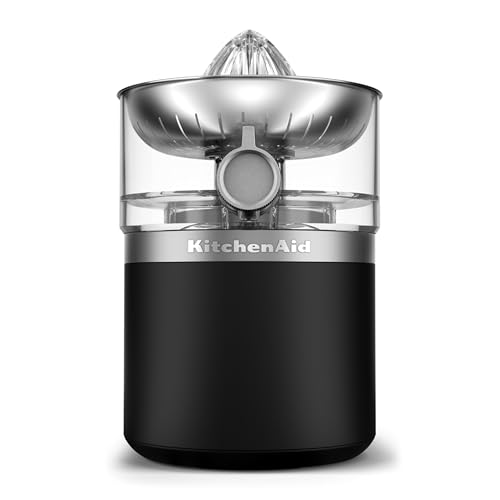
- Includes rechargeable battery
- Auto-reversing reamer
- 16-ounce reservoir with pour spout
Best For: Portable juicing away from fixed kitchen outlets
Best Quiet One-Touch Design

- One-touch hands-free operation
- Quiet 300-watt motor
- Top-rack dishwasher-safe parts
Best For: Compact, low-noise juicing of oranges, lemons, and limes
Best Electric Value
32oz BLACK+DECKER Citrus Juicer

- Auto-reversing cones support juice extraction
- Adjustable pulp control and removable pulp basket
- Clear pitcher with measurements and drip-free spout
Best For: Electric batch juicing and everyday recipe prep
Best Compact Manual Pick
Chef'n FreshForce Lemon Squeezer

- Dual-gear mechanism helps reduce hand strain
- Compact design stores in a kitchen drawer
- Basket catches pulp and pits; dishwasher safe
Best For: Lemons, limes, cocktails, and small recipe amounts
Best Small-Batch Electric
Elite Gourmet 24oz Citrus Juicer

- 40-watt motor with auto-reversing reamer
- 24-ounce capacity for two to three servings
- Compact BPA-free design with pulp and seed filter
Best For: Compact electric juicing in apartments, dorms, and RVs
Compact Electric Pick

- Two cones cover small and large citrus
- 24-ounce marked container
- Compact base with non-slip feet
Best For: Everyday electric juicing in space-conscious kitchens
Heavy-Duty Manual Pick
Zulay Kitchen Cast Iron Juicer

- Lever press needs no electricity
- 5-inch bowl handles varied citrus
- Cast iron body with stable feet
Best For: Powerful manual juicing with a sturdy countertop press
Fast Stainless-Steel Pick

- Pressure-activated 80-watt motor
- Dual cones and 24-ounce pitcher
- Top-rack dishwasher-safe removable parts
Best For: Fast, low-effort juicing with easy cleanup
Best Adjustable Pulp Control – Cuisinart CCJ-500P1
For shoppers comparing citrus juicers for small kitchens, the Cuisinart CCJ-500P1 offers a compact countertop footprint with useful control over pulp. Its universal cone handles small limes through large grapefruits, making it a flexible choice for everyday citrus prep.
Best For: Small kitchens needing adjustable pulp settings and broad fruit-size compatibility.
Pros:
- Three pulp-control settings: low, medium, and high.
- Auto-reversing cone and final-spin feature help extract more juice.
- Dishwasher-safe parts and a snap-up spout simplify cleanup and pouring.
- Handles citrus from small limes to large grapefruits.
Cons:
- The 12-ounce capacity is better suited to smaller batches.
- It requires a corded outlet.
With its 5.75-inch depth and 6.38-inch width, this Cuisinart balances versatility with counter-friendly sizing. It is a practical pick when pulp preference matters as much as juice extraction.
Best for Family-Size Batches – Proctor Silex Alex's Lemonade Stand
Among citrus juicers for small kitchens, this Proctor Silex model stands out for combining a modest footprint with a 34-ounce pitcher. It is designed for lemons, oranges, limes, and grapefruits, with the collected juice ready to serve from the detachable pitcher.
Best For: Making larger batches of lemonade, juice, dressings, or marinades in a compact kitchen.
Pros:
- Large 34-ounce pitcher includes easy-to-read measurement markings.
- Two nesting reamers accommodate small and large citrus fruit.
- Auto-reversing action supports juice extraction.
- Sliding pulp-control dial lets you adjust pulp level.
Cons:
- The plastic construction may feel less substantial than stainless-steel alternatives.
- Its 8.2-inch depth takes more counter space than the narrowest options.
The detachable serving pitcher and generous capacity make this a convenient choice for households that prepare more than one glass at a time. Its contribution to Alex’s Lemonade Stand Foundation is an added purchasing consideration.
Best Cordless Option – KitchenAid Go Citrus Juicer
For small kitchens where outlet placement is inconvenient, the KitchenAid Go cordless citrus juicer provides battery-powered portability. The included rechargeable battery lets you move the juicer around the kitchen, while the 16-ounce reservoir supports everyday servings.
Best For: Flexible countertop use without being tethered to a nearby outlet.
Pros:
- Includes a removable 12V Max battery and USB charging cable.
- Auto-reversing reamer handles grapefruits, lemons, limes, and oranges.
- Precision pour spout is designed to minimize drips.
- Several removable food-contact parts are dishwasher safe.
Cons:
- The 16-ounce reservoir is smaller than the Proctor Silex pitcher.
- At 4 pounds, it is heavier than some compact corded models.
- Battery charging is required for cordless operation.
This KitchenAid is a strong fit for kitchens where portability matters more than maximum capacity. Its compact width and cordless design make it easy to position, though the battery adds weight to the appliance.
Best Quiet One-Touch Design – Eurolux ELCJ-4800
The Eurolux ELCJ-4800 is a compact option for shoppers seeking citrus juicers for small kitchens with simple hands-free operation. Its one-touch design, stainless-steel body, and quiet 300-watt motor are aimed at convenient everyday juicing of oranges, lemons, and limes.
Best For: Users who prioritize quiet operation, one-button controls, and a compact stainless-steel design.
Pros:
- One-touch operation makes juicing straightforward.
- 300-watt motor runs at a stated 110 RPM for citrus extraction.
- Food-contact parts are top-rack dishwasher safe.
- Secure locking, rest-interval protection, and a stable base support regular use.
Cons:
- The design is intended for oranges, lemons, and limes rather than a stated grapefruit range.
- It has no listed reservoir capacity.
With a listed 22-by-19-by-31.7 cm footprint, this Eurolux is designed to fit neatly on a countertop while keeping operation simple. It makes the most sense for users who want quick, low-noise juicing without extra controls.
Best Electric Value – 32oz BLACK+DECKER Citrus Juicer
For shoppers comparing citrus juicers for small kitchens, the BLACK+DECKER CJ625 offers electric, pressure-activated juicing with a useful 32-ounce container. Its compact footprint, adjustable pulp control, and dishwasher-safe care make it practical for regular recipe prep.
Best For: Home cooks who want hands-off electric juicing and a larger pitcher for batch preparation.
Pros:
- Auto-reversing cones help extract juice efficiently.
- Adjustable pulp control and a removable pulp basket add flexibility.
- Clear measurement markings, a handle, and a drip-free pour spout support easy serving.
- Dishwasher-safe parts simplify cleanup.
Cons:
- Its 32-ounce capacity and pitcher-style container may take more storage space than a handheld press.
- It requires access to a power outlet.
The CJ625 is a practical choice when you want convenient electric extraction without giving up control over pulp. The clear container also makes it easy to monitor yield while juicing.
Best Compact Manual Pick – Chef'n FreshForce Lemon Squeezer
If counter space is limited, the Chef’n FreshForce is one of the most compact citrus juicers for small kitchens. This manual hand press uses a dual-gear mechanism to reduce squeezing effort, while its drawer-friendly design makes storage straightforward.
Best For: People who primarily juice lemons, limes, and other small citrus by hand.
Pros:
- Dual-gear action is designed to provide more juice with less hand strain.
- Non-slip ergonomic handles make pressing more comfortable.
- The basket catches pulp and pits during use.
- Top-rack dishwasher-safe construction supports easy cleanup.
Cons:
- It is designed primarily for lemons, key limes, and similar small fruit rather than larger batches.
- Manual operation requires repeated hand pressing.
The FreshForce is a strong space-saving option for cocktails, dressings, and recipes that need a lemon or lime at a time. Choose it over an electric model when simplicity and drawer storage matter most.
Best Small-Batch Electric – Elite Gourmet 24oz Citrus Juicer
The Elite Gourmet ETS623 balances a compact footprint with a 24-ounce capacity, making it a useful middle ground among citrus juicers for small kitchens. Its 40-watt motor, auto-reversing reamer, and integrated pulp and seed filter are suited to quick home batches.
Best For: Apartment, dorm, RV, and small-kitchen users who want electric juicing for roughly two to three servings.
Pros:
- 40-watt motor and auto-reversing extraction support efficient juicing.
- Three-cup capacity is suitable for small household batches.
- Integrated pulp and seed filtering and a pour spout help with serving.
- Compact BPA-free design is listed as ETL compliant and has a quiet motor.
Cons:
- Its 24-ounce capacity is smaller than the BLACK+DECKER’s 32-ounce container.
- Although removable parts are described as top-rack dishwasher safe, the care details also recommend hand washing for longer product life.
The ETS623 is a sensible fit when you want electric convenience but do not need a large pitcher. Its compact size and moderate capacity keep it practical for everyday small-batch juicing.
Compact Electric Pick – LEBENLANG Orange Juicer
For shoppers comparing citrus juicers for small kitchens, the LEBENLANG offers a space-conscious electric design with two cone sizes, a 24-ounce container, and automatic two-direction rotation. Its removable parts and non-slip feet make it practical for regular home use.
Best For: Singles or families who want hands-free juicing for lemons, limes, oranges, and grapefruits.
Pros:
- Two interchangeable cones accommodate different citrus sizes.
- Two-way rotation is designed to help maximize juice yield with light pressure.
- Removable 24-ounce container includes measurement markings.
- Compact, lightweight body has non-slip rubber feet.
Cons:
- Listed as 220 volts, so buyers should confirm compatibility with their outlet.
- Product-care details specify hand washing, despite the notes also describing dishwasher-safe individual parts.
This is a well-rounded choice when counter space matters and you want the convenience of electric juicing without moving up to a larger appliance. The 24-ounce capacity is useful for preparing multiple servings at once.
Heavy-Duty Manual Pick – Zulay Kitchen Cast Iron Juicer
Among citrus juicers for small kitchens, the Zulay Kitchen press stands out for its manual lever design and sturdy cast-iron construction. It needs no electricity, while the 5-inch bowl accommodates fruit from limes through grapefruits.
Best For: Buyers who want powerful manual pressing, durable construction, and no motor or cord on the counter.
Pros:
- Mechanical lever provides substantial pressing power with one pull.
- 5-inch bowl handles a broad range of citrus sizes.
- Cast-iron body and stainless-steel components are built for repeated use.
- Rubberized feet help keep the press stable during operation.
Cons:
- At 15.75 inches tall and 11.25 inches wide, it may be substantial for a small counter or cabinet.
- Hand washing is required.
- Manual operation requires storing and positioning a larger countertop press.
This model offers excellent leverage and avoids electrical requirements, but its heavy-duty footprint is worth measuring carefully before buying. It is best suited to kitchens with dedicated counter or storage space.
Fast Stainless-Steel Pick – Astralship Citrus Juicer
For citrus juicers for small kitchens, the Astralship combines a compact electric footprint with pressure-activated operation, dual cones, and a 24-ounce pitcher. Its stainless-steel base and dishwasher-safe removable parts make it a convenient option for quick daily juice.
Best For: Small households that want fast, low-effort juicing and easy cleanup.
Pros:
- 80-watt motor starts when fruit is pressed onto the cone.
- Two nested cones fit lemons, limes, oranges, and grapefruits.
- 24-ounce pitcher has measurement markings, a handle, and a pulp filter.
- Removable components are listed as top-rack dishwasher safe.
Cons:
- The pitcher, cones, and filter must be aligned and twisted into place before use.
- The small cone is nested inside the large cone during shipping and must be separated before use.
- It requires an AC outlet and is listed for 120 volts.
This is a strong fit for buyers who prioritize speed and straightforward cleanup in a compact footprint. The pressure activation and marked pitcher make it especially convenient for quick servings, while the dual-cone setup adds versatility.
How We Picked the Best Citrus Juicers for Small Kitchens
We focused on features that matter most when counter space and storage are limited: overall footprint, pitcher or container capacity, cone versatility, cleanup requirements, pulp control, operating noise, and ease of use. We also included both electric and manual models because the best choice depends on how often you juice, how much effort you want to use, and whether you need to work away from an outlet.
Capacity and construction were considered alongside convenience. A compact 24-ounce juicer may be ideal for daily glasses, while a larger 32- or 34-ounce model makes more sense for family breakfasts. Stainless steel components, dishwasher-safe parts, and sturdy bases can also improve long-term usability.
Quick Comparison
| Best For | What to Look For |
|---|---|
| Occasional single servings | Compact manual press or small electric juicer |
| Daily orange juice | Electric motor, larger pitcher, and multiple cones |
| Custom pulp levels | Adjustable pulp-control settings |
| Quiet operation | Stable electric base and low-noise motor design |
| Limited outlets or portable use | Battery-powered or cordless operation |
| Maximum extraction | Lever-style manual press or dual-gear hand press |
Key Buying Factors for Citrus Juicers for Small Kitchens
Counter Space and Storage
Measure the area where you plan to use and store the juicer, not just the appliance’s listed width. A tall model may fit beneath cabinets but be awkward to move, while a manual press can take more vertical storage space than a compact electric base.
Capacity and Citrus Size
Choose a smaller pitcher for one or two servings and a 32- or 34-ounce container for batch juicing. If you regularly juice lemons, limes, and oranges, look for multiple cone sizes or a design that explicitly accommodates smaller fruit.
Electric Convenience Versus Manual Control
Pressure-activated electric juicers reduce hand fatigue and are convenient for frequent use. Manual presses are quieter, do not need a power cord, and can provide strong extraction, but they require more physical effort and may be slower for large batches.
Cleanup and Pulp Control
Removable, dishwasher-safe parts simplify cleanup. Adjustable pulp settings are useful if household preferences differ, while a simple strainer may be preferable if you want fewer parts to wash.
Who Should Buy Which Citrus Juicers for Small Kitchens?
Choose a compact electric model if you want fast, repeatable juice with minimal squeezing effort. A larger electric pitcher is better for families or meal preparation, while a cordless option suits flexible placement and kitchens with limited accessible outlets.
Buy a manual hand press if you juice occasionally, want quiet operation, or prefer an appliance with no motor to maintain. For the greatest leverage and extraction, choose a sturdy lever or cast-iron press; for quick lemon and lime use, a handheld dual-gear squeezer is easier to store. Whichever style you select, prioritize a stable base, easy-to-clean parts, and a capacity that matches your typical batch size.