Choosing a balance board for elderly users requires more than finding a board that wobbles. Stability, surface grip, ease of use, and the ability to hold onto nearby support can make a major difference in comfort and safety.
This roundup compares 10 options, including rocker boards, 360-degree wobble boards, balance pads, and inflatable trainers, so you can match the design to the user’s mobility, confidence, and exercise goals.
Best 10 Balance Board for Elderly Picks for 2026
Reliable Wood Trainer
Amazon Basics Wobble Balance Board
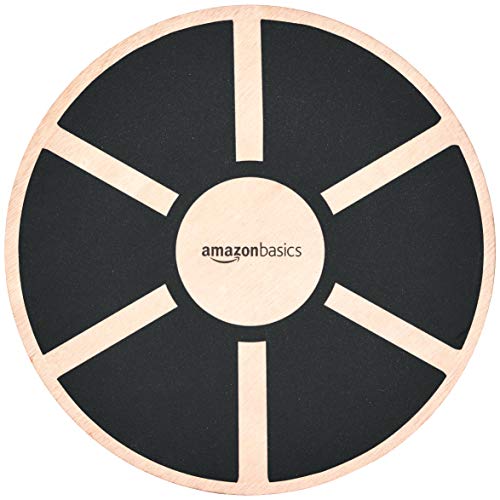
- Non-slip wood surface for controlled exercises
- Supports up to 265 pounds
- Useful for balance, posture, and core training
Best For: Adults wanting a basic home balance trainer
Adjustable Mobility Trainer
3-in-1 Slant and Balance Board
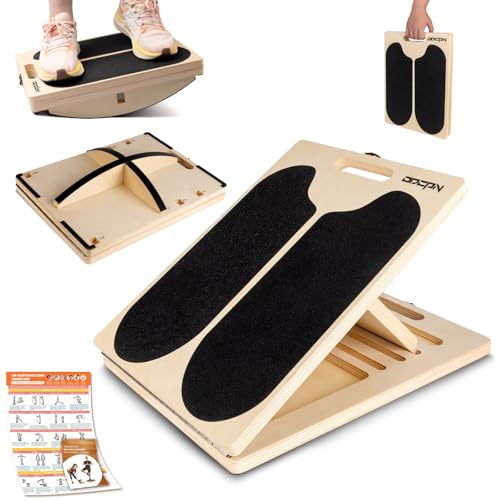
- Six incline angles for calf stretching
- Includes 180-degree and 360-degree balance modes
- Fold-flat design with non-slip surfaces
Best For: Adults combining stretching with progressive balance work
Gentle Stability Pad
ProsourceFit Exercise Balance Pad
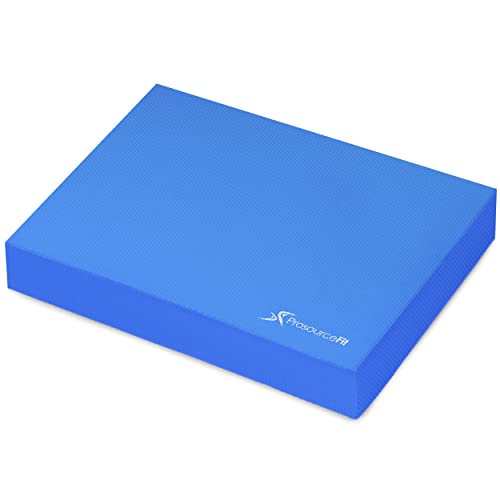
- Cushioned surface for balance and core work
- Slip-resistant TPE is easy to clean
- Lightweight and useful for therapy or yoga
Best For: Beginners and older adults wanting a softer training surface
Dual-Mode Rocker
StrongTek Wooden Balance Board
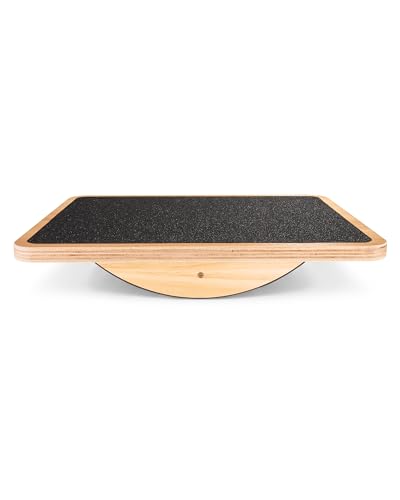
- Basic rocker and advanced 360-degree modes
- Textured slip-resistant surface
- Supports up to 350 pounds
Best For: Adults wanting progressive wooden balance training
Best Seated Balance Trainer

- Adjustable firmness with included hand pump
- Seated or standing balance training
- Lightweight 14-inch design; supports 300 lb
Best For: Seniors seeking seated balance practice and gentle core engagement
Best Progressive Wobble Challenge
StrongTek Wooden Balance Board

- 360-degree multidirectional wobble
- Cross base offers added control
- Textured surface; supports 350 lb
Best For: Users ready to progress beyond basic rocker-board movement
Best Stable Standing Option

- Reinforced design supports 350 lb
- Full-surface anti-slip grip
- Suitable for beginners and posture work
Best For: Beginners seeking a reinforced standing board for balance practice
Gentle Home Stability Pick

- Mild tilt for beginners and light therapy work
- Textured grip with a silicone non-slip edge
- 350-pound capacity and compact storage
Best For: Older adults and beginners seeking gentle home balance practice
Comfort-Focused Training Pick
Professional 360-Degree Wooden Balance Board
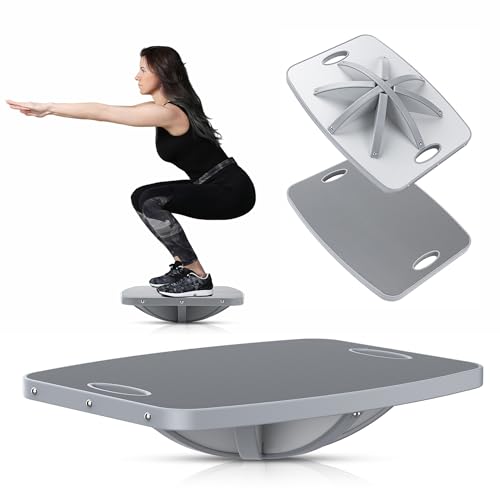
- 360-degree tilt for multidirectional exercises
- Soft silicone-covered surface and edges
- Portable handles with over-500-pound support
Best For: Adults wanting a cushioned and portable training board
Rehabilitation Versatility Pick
Professional Anti-Slip Wobble Board

- Designed for beginners and older adults
- Anti-slip surface with floor-protection pads
- Supports balance and rehabilitation exercises
Best For: Older adults beginning gradual balance and coordination practice
Reliable Wood Trainer – Amazon Basics Wobble Balance Board
If you are comparing a balance board for elderly users, this Amazon Basics model offers a straightforward way to practice standing balance, coordination, posture, and core exercises. Its textured, non-slip top and solid wood construction make it suitable for controlled home workouts, though it should be used only on a dry, non-slip surface.
Best For: Adults seeking a basic balance trainer for home exercise, rehabilitation settings, or gym use.
Pros:
- Non-slip surface supports a secure grip during exercises.
- Can be used for standing balance poses, planks, push-ups, and targeted strengthening.
- Solid wood top supports up to 265 pounds.
- Compact 15.75-by-15.75-inch design is easy to fit into a workout space.
Cons:
- It should not be used on wet or smooth surfaces.
- The fixed design does not offer adjustable difficulty levels.
- Users may need support nearby when beginning balance exercises.
This is a practical, no-frills option for supervised balance practice. Start with gentle exercises and a stable environment, especially if balance or mobility is a concern.
Adjustable Mobility Trainer – 3-in-1 Slant and Balance Board
For shoppers seeking a balance board for elderly users who also want calf and ankle mobility work, this 3-in-1 board combines slant stretching with 180-degree and 360-degree balance modes. Its six incline settings and non-slip surfaces allow users to begin with gentler movements and progress gradually.
Best For: Adults combining calf stretching, foot and ankle recovery exercises, and progressive balance training.
Pros:
- Six adjustable slant angles range from 20 to 45 degrees.
- Offers calf stretching plus 180-degree and 360-degree balance modes.
- Non-slip EVA base and PVC sandpaper surface help provide traction.
- Detachable panels and a fold-flat design make storage and transport easier.
Cons:
- The multi-part design may require more setup than a basic rocker board.
- The supplied details list both a 460-pound capacity in the product description and a 300-pound maximum in the specifications.
- Rotation-based balance work may be too challenging without support or supervision.
Its adjustable format is useful for gradual mobility work, but older adults should begin at the lowest comfortable angle and use the balance modes cautiously.
Gentle Stability Pad – ProsourceFit Exercise Balance Pad
This cushioned balance pad is a softer alternative for anyone considering a balance board for elderly users. The foam creates a mild unstable surface for balance and core exercises, while its large footprint, slip-resistant TPE material, and lightweight construction make it convenient for home physical therapy and everyday mobility practice.
Best For: Beginners and older adults who prefer a cushioned surface for body-awareness, stability, yoga, or rehabilitation exercises.
Pros:
- Cushioned foam provides a lower-impact balance-training surface.
- Slip-resistant, sweat-proof TPE is easy to clean.
- Lightweight 12-ounce design is easy to carry.
- Can also function as a knee pad, seat cushion, meditation pillow, or standing pad.
Cons:
- It is a soft foam pad rather than a rigid rocker or wobble board.
- Its unstable surface may still require nearby support for beginners.
- The supplied maximum-weight specification is listed as 340 kg, so buyers should verify the applicable capacity before use.
Choose this pad when cushioning and versatility matter more than pronounced rocking motion. It is a convenient starting point for controlled stability exercises and physical-therapy-style routines.
Dual-Mode Rocker – StrongTek Wooden Balance Board
The StrongTek Wooden Balance Board is a compact option for shoppers evaluating a balance board for elderly users who want to practice stability with either a basic rocker motion or an advanced 360-degree wobble. Its textured surface is designed for grip, while the portable size works for home, office, gym, or rehabilitation routines.
Best For: Adults who want a durable wooden board with both beginner-friendly rocking and more advanced wobble training.
Pros:
- Supports basic rocker or advanced 360-degree balance exercises.
- Textured, slip-resistant surface is intended to feel secure under bare feet.
- Supports adults and children up to 350 pounds.
- Compact 17.5-by-13.5-inch design is portable and can be used near a standing desk.
Cons:
- The 360-degree mode may be too demanding for users new to balance training.
- It does not include adjustable angles or cushioning.
- Users with limited stability may need a sturdy support surface or supervision.
This board offers useful progression from gentle rocking to more challenging wobble work. Begin with the rocker mode in a clear area, then advance only when the movement feels controlled.
Best Seated Balance Trainer – Core Balance Disc
For older adults seeking a gentle balance board for elderly users, the ProsourceFit Core Balance Disc offers a seated or low-impact way to practice stability. Its inflatable design lets you adjust firmness, while the compact size works well for home exercise, posture support, and active sitting.
Best For: Seniors who want seated balance practice, core engagement, or a portable stability cushion.
Pros:
- Dual-textured sides provide different grip and sensory feedback options.
- Can be used as a balance trainer, wobble cushion, active seat, or stretching aid.
- Includes a hand pump and supports up to 300 pounds when properly inflated.
- Lightweight 14-inch design is easy to store and transport.
Cons:
- The unstable surface may be unsuitable for users who need a fixed, highly stable platform.
- Requires inflation and careful handling of the pump needle.
This is the most approachable option of the three for seated practice and everyday movement. Its adjustable firmness and compact format make it a practical starting point, especially when standing balance work is not yet comfortable.
Best Progressive Wobble Challenge – StrongTek Wooden Balance Board
The StrongTek Wooden Balance Board is a more active balance board for elderly users who are ready for controlled standing practice. Its cross base offers a middle ground between a basic rocker and a round-base wobble board, with movement in multiple directions.
Best For: Older adults with a suitable starting level who want to progress from simple rocking to multidirectional balance training.
Pros:
- 360-degree directional wobble trains stability, coordination, ankle control, and core engagement.
- Cross base provides a larger floor contact area for more controlled movement.
- Textured non-slip top helps keep feet secure during weight shifts.
- Solid wooden construction supports up to 350 pounds.
Cons:
- The advanced version is more challenging than a basic rocker board.
- Standing use requires sufficient balance and a suitable practice area.
This board is best viewed as a progression tool rather than the gentlest introduction. The cross-base design adds control, but the 360-degree movement can still demand more coordination than a seated cushion or basic rocker.
Best Stable Standing Option – Wooden Wobble Board
This wooden wobble board is designed as a balance board for elderly beginners and people working on balance, coordination, posture, or core strength. Its reinforced construction and full-surface anti-slip pads provide a more grounded standing platform for home, gym, or standing-desk use.
Best For: Beginners and older adults who prefer a reinforced standing board with broad anti-slip coverage.
Pros:
- Full-surface anti-slip pads help improve grip during balance practice.
- Double reinforcement supports a maximum recommended weight of 350 pounds.
- Bottom and edge pads help protect floors and reduce workout noise.
- Useful for physical therapy routines, posture work, standing desks, and core training.
Cons:
- It is intended for standing practice, so it may not suit users seeking seated balance training.
- Although marketed for beginners, wobbling still requires a safe, clear practice area.
Among these options, this model offers the most directly supportive setup for standing practice, thanks to its reinforced base and anti-slip coverage. It is a practical choice for gentle balance and posture routines when used with appropriate support nearby.
Gentle Home Stability Pick – Juoe Wooden Balance Board
For shoppers seeking a balance board for elderly users, the Juoe Wooden Balance Board offers a mild tilt and a stable-feeling design for controlled, beginner-level practice. Its compact size and textured standing surface make it practical for light home balance work, though users should begin carefully and use support if needed.
Best For: Beginners, older adults doing light balance practice, and families wanting a compact board for gentle coordination and core exercises.
Pros:
- Mild tilt is designed for beginners and light physical therapy balance work.
- Textured surface and silicone non-slip edge help provide grip on multiple floor types.
- One-piece hardwood plywood construction supports up to 350 pounds without assembly.
- Compact 17.5-by-13.5-inch design stores easily and can suit home or standing-desk use.
Cons:
- Not intended for aggressive tricks or advanced balance challenges.
- The standing surface may be less comfortable during long barefoot sessions.
Overall, this is a sensible entry-level balance board for elderly users who want a gentle, space-saving option. Pairing it with a yoga mat may improve comfort during longer sessions.
Comfort-Focused Training Pick – Professional 360-Degree Wooden Balance Board
This professional balance board for elderly users combines a 360-degree range of motion with a soft silicone-covered surface and edges. It can support rehabilitation and stability exercises, but its all-direction tilt may require a cautious start, especially for anyone with significant balance limitations.
Best For: Adults who want a cushioned, portable board for controlled rehabilitation, balance training, or light-to-moderate home exercise.
Pros:
- 360-degree movement supports multidirectional balance and coordination exercises.
- Soft silicone surface and edges help improve comfort and reduce splinter concerns.
- Handles and a 5.7-pound weight make it convenient to carry between home, office, and gym.
- Hardwood plywood construction is rated to support over 500 pounds.
Cons:
- Its all-direction movement may be more challenging than a mild-tilt beginner board.
- It is designed for adults, so it may be less versatile for family use.
The cushioned finish and strong weight rating make this a well-equipped choice for users prioritizing comfort and portability. Older adults should use a stable support nearby while learning the 360-degree motion.
Rehabilitation Versatility Pick – Professional Anti-Slip Wobble Board
For those comparing a balance board for elderly users, this professional wobble board is positioned for beginners, older adults, and people working on balance or recovery. Its anti-slip surface, floor-protection pads, and compact wooden construction support controlled exercises at home, though more advanced movements should wait until the user feels stable.
Best For: Older adults and beginners seeking a compact board for balance, coordination, physical therapy, or gradual core-strength work.
Pros:
- Designed with beginners, elderly users, and people with balance issues in mind.
- Supports balance, motor coordination, weight distribution, and proprioception practice.
- Anti-slip surface and protection pads help with footing and floor care.
- Compact, portable design is suitable for home, gym, or office storage.
Cons:
- Its 350-pound capacity is lower than the 500-plus-pound rating of some alternatives.
- Advanced exercises such as push-ups and planks may be too demanding for new users.
This model stands out for its explicit focus on balance issues, rehabilitation, and beginner use. It is a practical option for gradual training, provided users progress at a comfortable pace and have support available when needed.
How We Picked the Best Balance Board for Elderly Users
We focused on designs that support controlled, low-impact balance practice at home. Key considerations included the board’s movement pattern, non-slip surface, construction, stated weight capacity, portability, and how easily a user can scale the challenge. Rocker boards generally offer more predictable front-to-back movement, while 360-degree boards demand greater control. Cushioned balance pads and discs can provide a softer starting point, but they may feel less stable for beginners.
Because balance equipment should complement—not replace—professional advice, users with recent falls, significant weakness, dizziness, or a medical condition should consult a clinician or physical therapist before training.
Quick Comparison
| Board type | Best for | Stability | Typical challenge |
|---|---|---|---|
| Rocker board | Beginners and controlled drills | More predictable | Low to moderate |
| 360-degree wobble board | Experienced users and advanced training | Less predictable | Moderate to high |
| Balance pad | Gentle stability work and rehabilitation | Soft but uneven | Low to moderate |
| Balance disc | Seated, standing, and core exercises | Adjustable | Low to moderate |
Key Buying Factors for a Balance Board for Elderly Users
Movement and Learning Curve
Look for a wide rocker base or a design with limited motion if the user is new to balance training. A full 360-degree wobble board can be useful later, but it may be unnecessarily difficult at first.
Grip and Surface Comfort
A textured, slip-resistant standing surface helps reduce foot movement. Rounded edges, a comfortable top, and adequate cushioning are also helpful for longer sessions or users with sensitive feet.
Weight Capacity and Construction
Check the manufacturer’s stated capacity rather than relying on appearance. Wood boards can feel solid and durable, while foam pads and inflatable discs are lighter and easier to store. Confirm that the product is intended for standing use if that is the goal.
Safe Setup
Use the board on a firm, level, non-slip floor with a sturdy countertop, rail, or stable chair nearby. Avoid using it on rugs that slide, and begin with short sessions while holding support. A trusted spotter may be appropriate for users with limited confidence.
Who Should Buy Which Balance Board for Elderly?
Choose a basic rocker board for a first-time user who wants predictable movement and simple standing drills. A cushioned balance pad is a practical choice for gentle stability work, physical-therapy-style exercises, or users who prefer a lower-profile surface. Consider a balance disc when adjustability, seated exercises, or compact storage matters.
More confident users who already practice balance exercises may prefer a 360-degree wooden wobble board for a broader challenge. Heavy-duty models with higher stated capacities are worth considering when durability and user weight require extra margin. If the user is unsteady without support, prioritize a stable rehabilitation plan and professional guidance over a more challenging board.