Choosing the right door alarm for dementia patients can make daily caregiving safer and less stressful. The best options alert you fast when a door opens, without adding complicated setup or confusing controls.
In this roundup, we focus on practical features that matter most: range, alert type, volume, app notifications, and ease of use for caregivers at home.
Best 10 Door Alarm for Dementia Patients Picks for 2026
Door Entry Alert
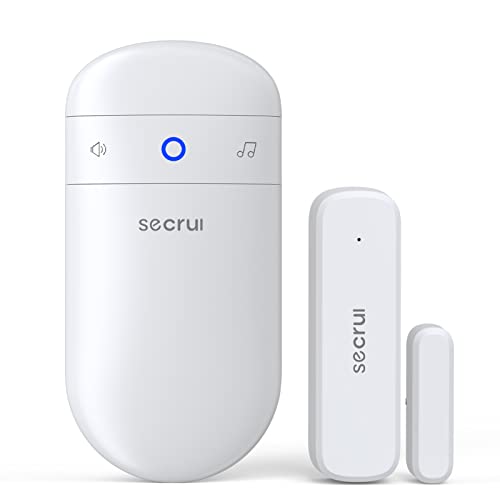
- 500FT range for wide coverage
- 58 chimes and 5 volume levels
- Pre-paired sensor and receiver
Best For: Simple plug-and-play entry alerts for caregiving
WiFi Caregiver Pager

- Sends alerts to your phone via free app
- Local receiver plus remote notifications
- Expandable with app sharing support
Best For: Remote caregiver alerts beyond the home
Dual-Door Safety Alert

- Two sensors cover two openings
- 700FT range for larger homes
- 58 chimes with 5 volume levels
Best For: Watching two entry points in a caregiving home
Multi-Receiver Caregiver Chime

- Three sensors and two receivers
- 58 ringtones with 5 volume levels
- Expandable multi-device setup
Best For: Broader home coverage with multiple alert points
Remote-Arm Door Monitor
110dB Door Chimes with Handheld Control

- Remote arm/disarm up to 164 feet
- Four volume levels and four tones
- Easy 30-second tape installation
Best For: Caregivers who want remote arming and a simple two-pack alert system
Expandable Caregiver Pager
Door Sensor Chime for Dementia Monitoring
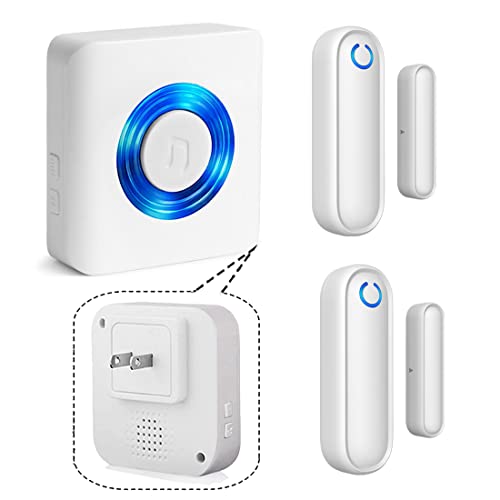
- Nearly 260-foot detection range
- 58 ringtones and 5 volume levels
- Expandable with multiple sensors and receivers
Best For: Caregivers who want broad-range monitoring with expandable pairing
Budget-Friendly Entry Alert
Wireless Door Chime for Dementia Safety
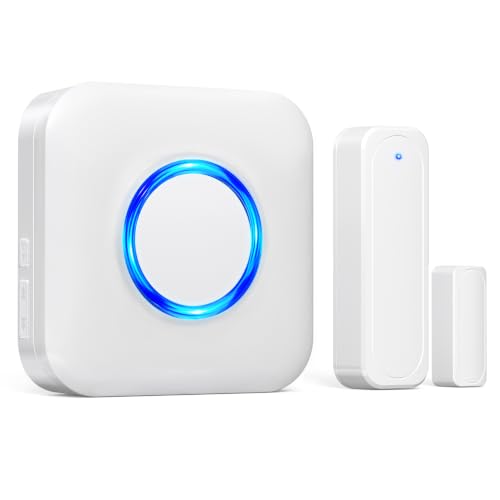
- 600 ft range helps cover larger homes
- 58 chimes and 5 volume levels
- Easy plug-and-play installation
Best For: Caregivers wanting a simple, expandable door alert
Multi-Sensor Caregiver Alert

- Includes 4 sensors and 2 receivers
- 260 ft range with 58 ringtones
- LED indicator helps with noisy environments
Best For: Households needing multiple monitored doors or windows
Door Entry Alert – 500FT Range Chime
If you want a straightforward door alarm for dementia patients, this SECRUI chime is built for simple entry alerts with a 1-sensor, 1-receiver setup. It offers a wide wireless range, multiple melodies, and adjustable volume, making it useful for monitoring doors, windows, and other entry points without complicated wiring.
Best For: Caregivers who want a plug-and-play door alert with a long range and easy setup.
Pros:
- 500FT wireless range for broader coverage
- 58 chimes and 5 volume levels for customization
- Easy setup with pre-paired sensor and receiver
- LED indicator adds a visual alert option
Cons:
- Includes only one sensor in the box
- Does not offer phone app alerts
- Best suited to basic entry notification rather than advanced monitoring
For families who mainly need an immediate sound alert when a door opens, this is a practical, low-effort option. Its long range and simple install make it a solid fit for everyday home caregiving needs.
WiFi Caregiver Pager – App-Connected Door Alarm
This door alarm for dementia patients adds remote phone alerts on top of a local chime, so caregivers can be notified even when they are away from home. With WiFi connectivity, a plug-in receiver, and app sharing support, it is aimed at families who want both on-site and remote awareness when a door or window opens.
Best For: Caregivers who need remote smartphone alerts in addition to a local door chime.
Pros:
- Free app sends alerts to your phone remotely
- Receiver and phone app both notify when entry opens
- 5 volume levels and 32 ringtones
- Expandable and supports app sharing
Cons:
- Requires WiFi for remote app alerts
- More setup involved than a basic plug-in chime
- Uses a tabletop-mount receiver rather than a simple direct outlet-only concept
If you want more than a local alarm, this model stands out for remote notification and shared alerts. It is especially practical for caregivers who may not always be in the same room or even the same location.
Dual-Door Safety Alert – 700FT Window Alarm
For households that need coverage on more than one opening, this door alarm for dementia patients includes two pre-paired sensors and one receiver. It is designed to monitor two doors or a door and window at the same time, while the long wireless range and adjustable chimes help it fit larger homes and multi-level layouts.
Best For: Families who want two-door coverage and a long-range caregiver alert system.
Pros:
- Two sensors cover two entry points at once
- 700FT range helps with multi-story homes
- 58 chimes and 5 volume levels for flexibility
- Easy setup with heavy-duty double-sided tape
Cons:
- Only one receiver is included
- No app-based remote alerts
- Best for contact-triggered entry monitoring only
This is a strong fit if you need to watch more than one vulnerable exit, such as a front door and back slider. The combination of dual sensors and long range makes it especially useful for active caregiving homes.
Multi-Receiver Caregiver Chime – 3-Sensor Alarm
This door alarm for dementia patients is built for broader coverage, with three sensors and two receivers in one kit. It is a practical choice when you want alerts in more than one room, since it can be expanded and paired across multiple devices while still keeping setup simple.
Best For: Caregivers who want multiple sensors and more than one receiver for wider home coverage.
Pros:
- Three sensors and two receivers included
- 58 ringtones and 5 volume levels
- LED indicator helps add a visual alert
- Expandable with additional sensors and receivers
Cons:
- Maximum range is shorter than some larger-range options
- No phone app or remote notification
- Still centered on basic contact-sensor alerts
If you need alerts to reach more than one spot in the house, this kit gives you more hardware out of the box. It is a good match for caregivers who want flexible placement without moving to a WiFi-based system.
Continuous Alert Door Chime – 2-in-1 Door Alarm with Adjustable Modes
If you need a door alarm for dementia patients that won’t be easy to miss, this model stands out for its continuous alert option. It can play a chime once, sound a repeating alarm until stopped, or switch to mute with LED flashing, making it useful for caregivers who want flexible door monitoring at home.
Best For: Caregivers who want a louder, more attention-grabbing alert for wandering risk or general door monitoring.
Pros:
- Three alert modes: Chime, Alarm, and Mute with LED flashing.
- Alarm mode repeats until a receiver button is pressed.
- 30 ringtones and 5 volume levels up to 110dB.
- IP55 waterproof sensor and two installation methods.
Cons:
- Not recommended for metal doors due to interference concerns.
- Sensor and magnet must stay within 1.18 inches.
Overall, this is a practical choice if you want a door alarm for dementia patients that can shift from a simple chime to a persistent warning when extra attention is needed. The customizable sound and volume options make it easier to match different rooms and caregiving situations.
Remote-Arm Door Monitor – 110dB Door Chimes with Handheld Control
This door alarm for dementia patients adds a simple remote control, which can be helpful when you want to arm or disarm the system without going back to the sensor. It uses a magnetic door/window alarm that sounds when an entry point opens, and the adjustable tones and volume make it more adaptable for home monitoring.
Best For: Caregivers who want remote arming and a straightforward two-pack door alert system.
Pros:
- Included remote lets you arm and disarm from up to 164 feet away.
- Four volume levels from 80dB to 110dB.
- Four chime options for different rooms or situations.
- Easy 30-second installation with 3M tape.
Cons:
- Remote range is listed at 164 feet, which may not suit larger layouts.
- Only two sensors are included in the pack.
For families looking for a practical door alarm for dementia patients, the remote control is the main convenience feature here. It’s a simple, battery-powered setup that focuses on fast alerts and easy operation rather than advanced features.
Expandable Caregiver Pager – Door Sensor Chime for Dementia Monitoring
If you’re comparing a door alarm for dementia patients, this one is built around wide-range monitoring and simple caregiver use. It offers a contact sensor chime with a strong range, multiple ringtones, and expandable pairing, so it can be adapted for homes, offices, or rooms where you want to hear movement quickly.
Best For: Caregivers who want an expandable door chime with broad range and hearing-assistance features.
Pros:
- Detection range of nearly 260 feet.
- 58 ringtones and 5 volume levels up to 110dB.
- LED indicator can help hearing-impaired users.
- Expandable system supports multiple sensors and receivers.
Cons:
- Uses a plug-in receiver, so it is not fully battery-free.
- Setup is simple, but it still requires pairing sensors and receivers.
This is a flexible pick if you want a door alarm for dementia patients that can grow with a larger home or caregiving setup. The combination of long range, adjustable volume, and expandable pairing makes it useful beyond a single doorway.
Budget-Friendly Entry Alert – Wireless Door Chime for Dementia Safety
If you need a simple door alarm for dementia patients, this Satisure wireless chime is built around instant open-door alerts, easy setup, and a long-range signal that can cover more of the home. It’s a practical pick for caregivers who want a low-effort way to notice wandering or unexpected exits without complicated wiring.
Best For: Caregivers who want an easy plug-in alert for doors, windows, and larger homes.
Pros:
- Up to 600 ft wireless range for broader home coverage
- 58 chimes and 5 volume levels, including silent LED flash mode
- Pre-paired receiver and adhesive sensor make installation fast
- Can pair with multiple sensors or receivers for expansion
Cons:
- Battery-powered sensor means eventual battery replacement
- Basic door chime design may not suit users wanting phone alerts
This model is a straightforward choice if you mainly want a dependable audible alert for doors opening. Its long range, flexible chimes, and simple install make it especially useful in homes where caregiving coverage needs to extend beyond one room.
Multi-Sensor Caregiver Alert – 4-Sensor Door Chime Set
This door alarm for dementia patients is aimed at homes or small businesses that need multiple entry points monitored at once. With four sensors and two receivers, it gives caregivers a more flexible setup for tracking doors and windows while still staying easy to install.
Best For: Families or caregivers who need multiple sensors and receivers in one system.
Pros:
- Includes 4 sensors and 2 receivers for wider coverage
- Up to 260 ft range for home, office, or store use
- 58 melodies and 5 volume levels up to 110 dB
- LED indicator can help hearing-impaired users notice alerts
Cons:
- Shorter range than some long-distance alternatives
- Bulky multi-piece kit may be more than needed for a single door
Overall, this set makes sense when one door alarm isn’t enough and you want a system that can scale across several openings. The included receivers and sensor-pairing flexibility add value for families managing both safety and convenience.
WiFi Smart Monitor – Door Alarm with Phone Notifications
If you want a door alarm for dementia patients that does more than sound locally, this WiFi model adds app notifications alongside a loud indoor chime. It’s useful when caregivers are away from home, asleep, or sharing monitoring duties with family members.
Best For: Caregivers who want phone alerts plus a receiver chime for home monitoring.
Pros:
- Sends app notifications in addition to local receiver alerts
- Instant and delayed alert modes for different routines
- 20 chimes and 5 volume levels up to 110 dB
- Device sharing helps multiple caregivers monitor the same door
Cons:
- SMS and phone call alerts require a paid subscription
- 2.4GHz WiFi only, so compatibility is limited
- Not recommended for metal doors
This is the most connected option in the group, making it a strong fit for caregivers who want remote awareness as well as in-home sound alerts. The app sharing feature is especially helpful when more than one person needs to respond to a door opening.
How We Picked the Best Door Alarm for Dementia Patients
We prioritized alarms that are easy to install, dependable in daily use, and useful for caregivers monitoring exits, cabinets, or room entries. For a Door Alarm for Dementia Patients, the most important factors are fast alerts, clear sound or phone notifications, and simple operation.
We also favored products with flexible alert modes, multiple volume settings, and wireless designs that reduce installation hassle.
Quick Comparison
Some models are best for basic local alerting with a loud chime, while others add caregiver convenience with remote receivers or WiFi app notifications. If you need coverage across a larger home, look for stronger wireless range. If you want offsite monitoring, smart app-connected alarms are the better fit.
Key Buying Factors for a Door Alarm for Dementia Patients
Alert Type
Choose between sound-only alarms, pager-style alerts, and WiFi-connected notifications. Sound alarms work well when someone is nearby; app alerts are better if caregivers may be in another room or away from home.
Volume and Tone Options
A good alarm should be audible without being harsh or impossible to silence. Multiple volume levels and several chime choices help you match the alarm to the home environment.
Range and Signal Reliability
If the sensor and receiver will be separated by walls or floors, check the stated range carefully. Real-world performance matters more than the biggest marketing number, especially in larger homes.
Power and Maintenance
Battery-operated systems are simple to place, but they need regular battery checks. Smart and plugged-in receivers may be easier for continuous use, depending on the layout of the home.
Setup and Placement
The best Door Alarm for Dementia Patients should be easy to mount on main exit doors, bedroom doors, or other high-risk points. Look for straightforward pairing and mounting hardware that does not require tools or permanent changes.
Who Should Buy Which Door Alarm for Dementia Patients?
Buy a basic wireless chime if you want a simple, low-cost way to hear when a door opens. Choose a louder alarm or pager system if the caregiver needs stronger alerts throughout the house. Pick a WiFi model if you want phone notifications and added flexibility when you are not near the room.
For most homes, the best choice is the one that fits the caregiver’s routine. A reliable Door Alarm for Dementia Patients is less about fancy features and more about giving you fast, clear notice when it matters most.