The best fitness trackers with GPS make it easier to record outdoor workouts, monitor daily activity, and understand your health trends without carrying your phone on every walk or run.
We compared 10 popular models across GPS capabilities, exercise tracking, battery life, comfort, smart features, and overall value to help you find the right fit.
Best 10 Fitness Trackers with Gps Picks for 2026
Best Overall

- Built-in GPS with downloadable maps
- 140+ workout modes and health tracking
- Up to 14 days of battery life
Best For: Everyday fitness and multi-sport outdoor training
Best for Runners

- GPS tracks pace and distance
- Adaptive workouts and Garmin Coach plans
- Training effect and recovery guidance
Best For: Structured running training and race preparation
Best Battery Life
GPS Smart Watch for Men and Women

- 120+ sports modes with GPS tracking
- Bluetooth calling and notifications
- Claims up to 30 days of daily use
Best For: Outdoor activities and connected everyday smartwatch use
Best Slim Fitness Band

- Phone-connected GPS tracking
- 40+ exercise modes and wellness tools
- Up to 10 days of battery life
Best For: Discreet daily activity and sleep tracking with a phone
Best for Easy Setup

- Built-in GPS and 30+ sports apps
- Up to 11 days of smartwatch battery life
- Advanced sleep, recovery, and Body Battery insights
Best For: Runners, multisport users, and detailed wellness tracking
Best for Everyday Use

- Up to 14 days of battery life
- 100+ exercise modes with auto detection
- No built-in GPS; Android-only compatibility
Best For: Android users focused on battery life and everyday activity tracking
Best Smart Features

- Built-in GPS with 40+ exercise modes
- Google Maps directions and Google Wallet
- Up to seven days of battery life
Best For: Users wanting GPS, wellness tracking, and Google features
Best with Extra Features

- Built-in GPS and 30+ sports apps
- Up to 11 days of smartwatch battery
- Detailed sleep, recovery, and Body Battery insights
Best For: Runners and active users seeking comprehensive training and health tracking
Best Feature Variety

- Independent GPS for routes, pace, and distance
- 110+ sport modes and 24/7 health tracking
- Bluetooth calls, notifications, and 200+ watch faces
Best For: Casual exercisers wanting GPS plus broad smartwatch functionality
Best Compact Tracker
- Built-in GPS and 40+ exercise modes
- Tracks readiness, sleep, stress, and heart rate
- Google Maps directions and Google Wallet support
Best For: Users wanting a compact GPS tracker with wellness and Google features
Best Overall – Amazfit Bip 6
The Amazfit Bip 6 is a strong all-around choice for shoppers comparing fitness trackers with GPS. It combines built-in GPS, downloadable maps, a bright AMOLED display, extensive workout support, and up to 14 days of battery life in a lightweight design.
Best For: Everyday fitness, multi-sport tracking, and outdoor workouts where long battery life and navigation are priorities.
Pros:
- Built-in GPS supports five satellite systems and downloadable maps with turn-by-turn directions.
- Offers 140+ workout modes, including strength training and HYROX Race.
- Up to 14 days of battery life reduces charging interruptions.
- Bright 1.97-inch AMOLED display reaches up to 2,000 nits.
Cons:
- Some coaching and health insights may depend on the Zepp app and compatible phone.
- Includes a magnetic charging base but no USB-C cable.
The Bip 6 stands out for balancing navigation, training variety, health tracking, and battery longevity. Its 50-meter water resistance and broad Android and iOS compatibility add flexibility for everyday use.
Best for Runners – Garmin Forerunner 165
Runners looking for fitness trackers with GPS should consider the Garmin Forerunner 165. It focuses on pace and distance tracking, adaptive training guidance, recovery feedback, and a lightweight 43mm design with an AMOLED touchscreen and physical buttons.
Best For: Runners who want structured training plans, recovery guidance, and dedicated running features.
Pros:
- Built-in GPS tracks running pace and distance.
- Personalized daily suggested workouts adapt to performance and recovery.
- Includes 25+ activity profiles and Garmin Coach training plans.
- Provides training effect and recovery-time guidance.
Cons:
- GPS battery life is rated at up to 19 hours, shorter than its smartwatch-mode battery life.
- Safety features require a paired compatible smartphone with network coverage.
The Forerunner 165 is more training-focused than a general activity band. Its morning report, adaptive workouts, and recovery tools make it especially useful for runners building consistency toward a specific event.
Best Battery Life – GPS Smart Watch for Men and Women
This smartwatch is a feature-heavy option among fitness trackers with GPS, pairing location tracking with calls, messaging, health monitoring, and more than 120 sports modes. Its large 2.06-inch AMOLED display and claimed long battery life suit users who want one device for workouts and daily communication.
Best For: Outdoor explorers and everyday smartwatch users who want GPS, calling, sports tracking, and extended battery life.
Pros:
- Multi-system GPS is designed for running, hiking, travel, and other outdoor activities.
- Offers 120+ sports modes plus heart rate, sleep, stress, and blood-oxygen monitoring.
- Supports Bluetooth calls, messaging notifications, and voice-control features.
- Claims up to 30 days of daily use and more than 20 hours of continuous GPS tracking.
Cons:
- The supplied details do not identify the specific satellite systems supported.
- Advanced calling and notification features require a paired Android or iOS phone.
With its communication tools, altimeter, barometer, and broad activity coverage, this model is aimed at shoppers who want more than basic step tracking. The included two-year warranty is also a notable ownership benefit.
Best Slim Fitness Band – Fitbit Inspire 3
The Fitbit Inspire 3 is a compact alternative for shoppers comparing fitness trackers with GPS, but its GPS is provided through a connected smartphone rather than built in. It emphasizes everyday activity, sleep, stress, heart-rate, and wellness tracking in a small, lightweight band.
Best For: Users who prefer a discreet fitness band and typically carry their phone during walks, runs, or workouts.
Pros:
- Tracks GPS through a connected smartphone.
- Offers 40+ exercise modes and automatic exercise tracking.
- Includes Daily Readiness, Active Zone Minutes, stress, sleep, and heart-rate features.
- Battery life is rated at up to 10 days.
Cons:
- It does not have built-in GPS, so route tracking requires a smartphone.
- The 0.76-inch display is smaller than the screens on the smartwatch options.
- Compatibility requires Apple iOS 16.4 or higher or Android OS 11.0 or higher.
The Inspire 3 makes the most sense for wellness-focused users who value comfort, sleep insights, and long battery life over standalone route tracking. Choose it only if phone-connected GPS meets your needs.
Best for Easy Setup – Garmin vívoactive 5
The Garmin vívoactive 5 is a strong choice among fitness trackers with GPS for shoppers who want detailed health insights, training tools, and smartwatch features. Its built-in GPS, AMOLED display, and up to 11 days of battery life in smartwatch mode make it practical for everyday use and outdoor workouts.
Best For: Runners, multisport users, and anyone wanting deeper recovery and sleep insights.
Pros:
- Built-in GPS with more than 30 indoor and GPS sports apps.
- Up to 11 days of battery life in smartwatch mode.
- Offers Body Battery, sleep coaching, nap detection, stress tracking, and recovery features.
- Supports music downloads from Spotify, Amazon Music, and Deezer for phone-free listening.
Cons:
- Its extensive training and health features may be more than casual users need.
- Music downloads require compatible account services and wireless headphones.
The vívoactive 5 stands out as the most capable all-around option here, combining GPS workout tracking with a broad set of wellness and training tools. It is especially appealing if you want more than basic step and heart-rate tracking.
Best for Everyday Use – Samsung Galaxy Fit3
The Samsung Galaxy Fit3 is a lightweight fitness band with a bright AMOLED display, extensive exercise modes, and battery life rated for up to 14 days. However, shoppers specifically seeking fitness trackers with GPS should note that this model does not have built-in GPS and is compatible only with Android devices.
Best For: Android users who prioritize long battery life and basic-to-intermediate activity tracking.
Pros:
- Large 1.6-inch AMOLED touchscreen with more than 100 watch faces.
- Up to 14 days of battery life from its 208mAh battery.
- Tracks more than 100 exercise modes, with automatic detection for common workouts.
- 5ATM and IP68 ratings support swimming and dust-resistant everyday use.
Cons:
- No built-in GPS, so it is not a standalone GPS fitness tracker.
- Compatible only with Android devices, not iPhone or iOS.
- The listed international model has no warranty in the United States.
The Galaxy Fit3 is attractive for its screen, battery endurance, and broad workout support, but its lack of GPS is a major limitation for this category. Choose it only if connected-phone tracking and Android compatibility meet your needs.
Best Smart Features – Fitbit Charge 6
The Fitbit Charge 6 combines built-in GPS with health tracking, exercise modes, and Google features in a compact fitness tracker. It is a useful pick among fitness trackers with GPS if you want route guidance, heart-rate tracking, and everyday wellness tools without moving to a larger smartwatch.
Best For: Users who want built-in GPS plus Fitbit health metrics and Google-connected features.
Pros:
- Built-in GPS and more than 40 exercise modes.
- Tracks heart rate, sleep, stress management, Daily Readiness, and Active Zone Minutes.
- Supports turn-by-turn Google Maps directions and Google Wallet payments.
- Battery life is rated for up to seven days.
Cons:
- Some coaching and personalized features require a separate Google Health Premium subscription after the trial.
- Battery life is shorter than the Garmin vívoactive 5 and Samsung Galaxy Fit3.
- Google Maps and Google Wallet features may depend on phone and account compatibility.
The Charge 6 is a well-rounded tracker for shoppers who value GPS, health metrics, and Google integrations. Its subscription-related extras and shorter battery rating are worth considering, but the core tracking package is versatile.
Best with Extra Features – Garmin vívoactive 5
The Garmin vívoactive 5 is a strong choice among fitness trackers with GPS for shoppers who want detailed health insights, training tools, and long battery life. Its built-in GPS, AMOLED display, and up to 11 days of smartwatch-mode battery life make it well suited to regular workouts and everyday wear.
Best For: Runners, cross-training users, and anyone who wants robust health and recovery tracking.
Pros:
- Built-in GPS with more than 30 indoor and outdoor sports apps.
- Up to 11 days of battery life in smartwatch mode.
- Detailed sleep, stress, Body Battery, recovery, and workout insights.
- Supports music downloads, Garmin Coach plans, and wheelchair-specific activity tracking.
Cons:
- Its extensive health and training features may feel more complex than those on a basic tracker.
- Some metric readings are estimates, as noted by Garmin.
The vívoactive 5 stands out for combining a colorful AMOLED screen with a broad set of training and wellness features. It is a particularly versatile pick if you want GPS workouts without giving up sleep coaching, recovery guidance, or phone-free music.
Best Feature Variety – GPS Smart Watch Rose Gold
This rose-gold smartwatch offers a broad feature list for shoppers comparing fitness trackers with GPS. It tracks routes, pace, distance, health metrics, and workouts, while also adding Bluetooth calling, notifications, customizable watch faces, and everyday utility features.
Best For: Casual outdoor exercisers who want GPS, calling, and many activity modes in one watch.
Pros:
- Independent GPS tracks routes, pace, and distance for activities such as running, hiking, and cycling.
- Offers more than 110 sport modes plus heart rate, blood oxygen, sleep, and stress tracking.
- Includes Bluetooth calling, message notifications, music controls, and more than 200 watch faces.
- Provides up to 7 days of battery life, with approximately 3 days when using calls and GPS.
Cons:
- Its 1ATM water-resistance rating is more limited than that of many swim-focused wearables.
- GPS and call use reduce the stated battery life to approximately 3 days.
- The supplied listing does not provide a complete specification set.
This model emphasizes versatility and convenience rather than specialized training analysis. It makes sense for users who want a large display, GPS workout basics, and smartwatch functions without needing a narrowly focused running watch.
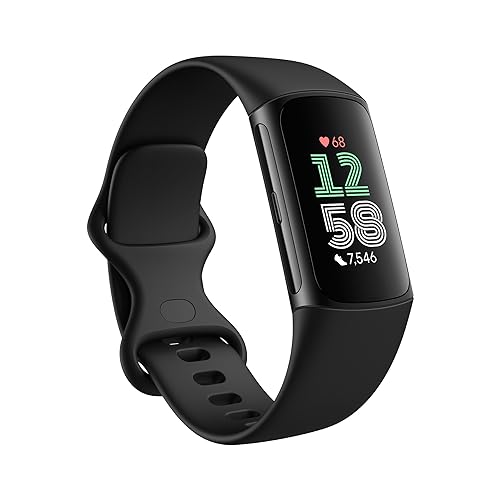
Best Compact Tracker – Fitbit Charge 6
The Fitbit Charge 6 is a compact option among fitness trackers with GPS, combining built-in GPS with activity, heart-rate, sleep, and readiness tracking. It also adds practical Google features such as Maps directions and Google Wallet, making it useful both during workouts and throughout the day.
Best For: Users who prefer a slim activity tracker with GPS, sleep insights, and Google-connected features.
Pros:
- Built-in GPS, 40+ exercise modes, all-day activity tracking, and automatic exercise detection.
- Tracks heart rate, calories, Active Zone Minutes, Daily Readiness, stress, and sleep.
- Supports turn-by-turn Google Maps directions and Google Wallet contactless payments.
- Offers up to 7 days of battery life and water resistance to 50 meters.
Cons:
- Some personalized coaching features require a separate Google Health Premium subscription after the trial.
- The 1.04-inch display is smaller than the screens on full-size smartwatches.
- It is designed as an activity tracker, so it may offer fewer smartwatch-style functions than larger models.
Charge 6 is a practical middle ground for people who want GPS and meaningful wellness data in a smaller form. Its seven-day battery estimate and Google integrations add everyday convenience, while the wide range of tracked metrics supports consistent fitness habits.
How We Picked the Best Fitness Trackers with Gps
We focused on models that offer built-in GPS or clearly support GPS-based workout tracking, then compared the features most likely to affect everyday satisfaction. Our evaluation considered activity and exercise modes, heart-rate and wellness tracking, display quality, battery expectations, phone compatibility, comfort, and smart features such as notifications or call handling.
We also included a range of designs, from lightweight bands and compact trackers to larger running watches. Because needs vary, the right choice depends less on having the longest feature list and more on how you plan to use the device.
Quick Comparison
- Best for dedicated runners: Garmin Forerunner 165, with a training-focused design and running features.
- Best for everyday health tracking: Garmin vívoactive 5, balancing wellness tools, workouts, and smartwatch functions.
- Best Fitbit options: Fitbit Charge 6 for a fuller feature set or Inspire 3 for a slimmer, simpler tracker.
- Best for long battery life: Samsung Galaxy Fit3, which emphasizes extended use and a lightweight band design.
- Best for broad sports coverage: Amazfit Bip 6 or the listed GPS smartwatches with extensive sports modes.
Key Buying Factors for Fitness Trackers with Gps
GPS Accuracy and Workout Support
Check whether GPS is built in or depends on a connected phone. Built-in GPS is more convenient for outdoor runs, hikes, and cycling. Look for the workout profiles you actually use, along with route recording, pace, distance, and interval features if training is a priority.
Battery Life and Charging
Battery claims vary depending on GPS use, screen brightness, notifications, and health sensors. A slim tracker may last longer between charges than a feature-rich smartwatch, while frequent GPS workouts can reduce runtime considerably.
Health and Fitness Features
Consider continuous heart-rate tracking, sleep insights, step counting, blood-oxygen or stress features, and recovery tools. These features are useful for spotting trends, but they are not medical diagnoses. Verify which functions work with your phone and in your region.
Comfort, Compatibility, and Durability
Choose a size and band that you can wear during sleep and exercise. Confirm iPhone or Android compatibility before buying, especially for calling and notification features. Water resistance is helpful for sweat and rain, but it does not make every device suitable for swimming or diving.
Who Should Buy Which Fitness Trackers with Gps?
Choose a running watch if structured training, pace data, GPS routes, and workout planning matter most. Choose a health-focused smartwatch if you want fitness tracking plus a larger screen, notifications, and broader daily functionality.
Choose a slim fitness band if you prefer discreet comfort, straightforward activity tracking, and fewer distractions. Choose a budget-oriented GPS smartwatch if you want a large display, many sport modes, and basic smart features at a lower price, but check software support and sensor limitations carefully.