The best functional trainers make it easier to perform cable exercises, rows, presses, pulldowns, and countless accessory movements in one versatile station. The right model can add serious training variety without requiring a room full of separate machines.
We selected 10 functional trainers spanning compact wall-mounted designs, all-in-one home gym systems, and commercial-style dual-stack machines. Use the guide below to compare layouts, resistance options, adjustability, and space requirements before choosing.
Best 10 Functional Trainers Picks for 2026
Compact Choice
Inspire Fitness FTX Functional Trainer

- Compact 40-inch-wide footprint
- Dual 165-pound weight stacks
- Includes accessories and Centr trial
Best For: Space-conscious home gyms seeking versatile cable training
Space-Saving Versatility

- Wall-mount or freestanding setup
- Dual 360-degree adjustable arms
- 33 cable height settings
Best For: Adaptable cable workouts in home, garage, or office gyms
Precision Upgrade Pick
REP Fitness Arcadia Functional Trainer
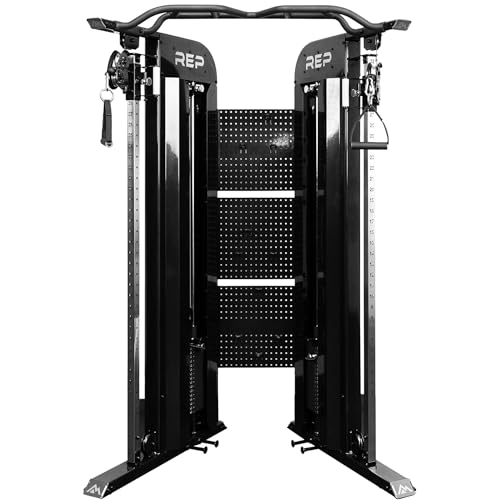
- 32 cable positions
- Optional stacks up to 220 pounds each
- Micro-adjustment weights and storage
Best For: Experienced lifters wanting a customizable cable system
All-in-One Strength Hub

- Smith machine, rack, cables, and pull-up station
- Dual 352-pound weight stacks
- Enclosed stacks and included attachments
Best For: Large home gyms needing one comprehensive strength station
Best Overall
Titan Fitness Functional Trainer

- Dual 200-lb weight stacks
- 20 adjustable pulley positions
- Includes a broad attachment set
Best For: Dedicated home or garage gyms needing a sturdy, versatile cable station
Best Space-Saving Pick
GMWD Wall-Mounted Cable Machine

- Foldable wall-mounted design
- 26 height and 13 angle settings
- Switches between 2:1 and 1:1 ratios
Best For: Compact home gyms with a compatible wall for mounting
Best Heavy-Duty Design
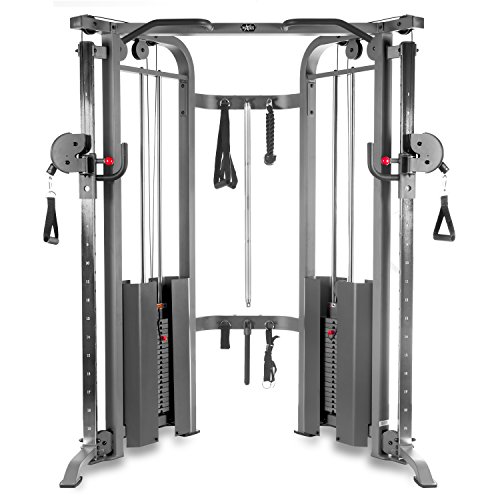
- Dual 200-lb weight stacks
- 19 cable positions
- Integrated multi-grip pull-up station
Best For: Permanent home or garage gyms with ample space and freight access
Best with Extra Features
Body-Solid Powerline Cable Crossover

- Dual independent 160-lb weight stacks
- Wide range of high- and low-pulley exercises
- Heavy-duty frame with 10-year frame warranty
Best For: Full-size home or commercial gyms seeking stack-based versatility
Best Compact Value
Mikolo Cable Crossover Machine

- 17 adjustable pulley positions per side
- 350-lb capacity in a compact design
- Includes bars, handles, and storage features
Best For: Home gyms using weight plates and limited floor space
Best Space-Saving Design

- Occupies about 12.1 square feet
- 15 pulley height adjustment levels
- Includes pulldown, rowing, pull-up, and rope attachments
Best For: Small home gyms needing broad cable-training functionality
Compact Choice – Inspire Fitness FTX Functional Trainer
The Inspire Fitness FTX is one of the more space-conscious functional trainers for home gyms, combining dual 165-pound weight stacks, sliding pulleys, a pull-up bar, and several attachments in a 40-inch-wide frame. Its smooth pulley system and built-in accessory storage make it practical for varied cable workouts without a large footprint.
Best For: Home users who want a compact, fully equipped cable machine for varied strength training.
Pros:
- Compact 54-by-40-by-82-inch design for a full functional trainer.
- Dual 165-pound weight stacks support a broad range of resistance exercises.
- Includes D handles, a tricep rope, curl bar, and chin/dip belt.
- Includes a three-month Centr subscription with workouts and nutrition tools.
Cons:
- At 544 pounds, it is very heavy to position after assembly.
- The included weight stacks top out at 165 pounds each.
The FTX stands out when floor space matters but you still want dual-stack functionality and useful accessories. Its phone or tablet space and storage rack add convenience, while the included digital training subscription may help beginners structure workouts.
Space-Saving Versatility – Eonfit E1 2.0 Cable Station
The Eonfit E1 2.0 is a flexible option among functional trainers, with wall-mount or freestanding installation, dual 3D adjustable arms, and 33 height settings. Its relatively compact dimensions and plate-storage pegs suit home, garage, or office gyms where adaptable cable positioning is important.
Best For: Lifters who want adjustable cable arms and installation flexibility in a smaller training space.
Pros:
- Dual 3D arms rotate 360 degrees and provide extensive positioning options.
- Offers 33 height settings for exercises including pulldowns, rows, flyes, and curls.
- Can be wall-mounted or used freestanding with added plate stability.
- Includes a lat pulldown bar, T-bar, handles, and tricep/bicep curl rope.
Cons:
- Wall mounting or secure floor installation may be required for maximum stability.
- Its accessory and other-parts warranty coverage is shorter than the frame warranty.
With an advertised 800-pound tower capacity and a 2:1 strength ratio, the E1 offers substantial training flexibility. Confirm your available mounting and floor space before buying, especially if you plan to use the machine freestanding.
Precision Upgrade Pick – REP Fitness Arcadia Functional Trainer
The REP Fitness Arcadia is a customizable functional trainer built around 32 cable positions and dual weight stacks. It provides 170 pounds per side in its standard configuration, optional upgrades to 220 pounds per stack, and small add-on weights for more precise resistance changes.
Best For: Experienced home-gym users who value precise adjustments, attachment compatibility, and long-term customization.
Pros:
- 32 cable positions support varied angles and natural movement patterns.
- Dual stacks provide 170 pounds per side, with optional 220-pound upgrades.
- Five-pound add-on weights enable finer resistance adjustments.
- Includes storage, integrated band pegs, and two steel D-handles.
Cons:
- Additional attachments and weight-stack upgrades are optional.
- The included package is limited to two D-handles.
The Arcadia is a strong fit for buyers who expect their cable setup to evolve. Its broad adjustment range, band compatibility, and attachment support make it more configurable than a basic functional trainer, while the limited-lifetime frame warranty adds reassurance.
All-in-One Strength Hub – DONOW Smith Machine Home Gym
The DONOW system expands beyond typical functional trainers by combining a Smith machine, power rack, dual cable crossover, and multi-grip pull-up station. Its enclosed dual weight stacks provide selectorized resistance for cable work, while the Smith bar and safety arms add options for heavier compound training.
Best For: Users building a comprehensive home gym around one large, multi-station strength system.
Pros:
- Combines a Smith machine, power rack, cable crossover, and pull-up station.
- Includes dual 352-pound weight stacks with a 2:1 cable ratio.
- Enclosed stacks help keep cables and weights contained and organized.
- Includes handles, lat bar, cable bar, bicep rope, and ankle strap.
Cons:
- Its 78.58-inch width and 88-inch height require substantial room.
- The unit arrives in eight boxes, which can complicate delivery and assembly.
- It is a larger commitment than a cable-only functional trainer.
The DONOW is best viewed as a complete strength-training station rather than a compact cable machine. Choose it if you have the room and want Smith-machine and rack functionality alongside cable exercises; otherwise, a dedicated functional trainer may be easier to accommodate.
Best Overall – Titan Fitness Functional Trainer
Titan Fitness Functional Trainer, Cable Crossover Machine, 200 LB Double Stack
Check Price On AmazonThe Titan Fitness Functional Trainer is a substantial choice for lifters who want the versatility of functional trainers with dual 200-pound weight stacks. Its adjustable pulleys, included attachments, and integrated pull-up handles support a broad range of strength exercises.
Best For: Home or garage gyms with enough room for a full-size, heavy-duty cable station.
Pros:
- Dual 200-pound stacks with 10-pound increments make resistance changes straightforward.
- Twenty numbered pulley height positions help vary angles and target muscles.
- Includes multiple handles, bars, straps, a rope, and pull-up handles.
- Heavy-duty steel construction and a wide base support stability.
Cons:
- At 672 pounds, it is difficult to move after installation.
- The 64-by-44-inch footprint requires dedicated floor space.
- Assembly requires two people.
This is a strong all-around pick among functional trainers if you prioritize substantial capacity, exercise variety, and a stable commercial-style build over portability.
Best Space-Saving Pick – GMWD Wall-Mounted Cable Machine
The GMWD wall-mounted cable machine offers functional trainers-style versatility in a foldable format. Its adjustable arms, multiple settings, and selectable 2:1 or 1:1 cable ratios make it suitable for varied full-body workouts while keeping the station relatively compact.
Best For: Home gym users who need a foldable, wall-mounted cable system and have a suitable mounting surface.
Pros:
- Supports more than 100 listed exercise options.
- Twenty-six height holes and 13 arm-angle settings provide extensive adjustability.
- Folds flat against the wall when not in use.
- Includes mounting hardware and several cable attachments.
Cons:
- Wall mounting is required, so installation depends on a suitable wood or concrete surface.
- It has a smaller maximum weight recommendation than the two full-size stack machines.
- The setup dimensions still require 77 inches of vertical clearance.
Choose this model when preserving floor space is a priority. The foldable design and cable-ratio options add flexibility, but careful installation planning is essential.
Best Heavy-Duty Design – XMARK Functional Trainer
The XMARK Functional Trainer combines dual 200-pound weight stacks with a built-in multi-grip pull-up station. Among functional trainers, its angled stack layout is especially practical for corner placement, making it a compelling option for a home or garage gym with dedicated space.
Best For: Serious home and garage gym users seeking a durable, full-size station with pull-up capability.
Pros:
- Dual 200-pound stacks provide substantial resistance capacity.
- Nineteen cable positions support varied exercise angles.
- Multi-grip pull-up bar offers wide, narrow, and angled grips.
- Angled stacks can help with corner placement.
Cons:
- The approximately 800-pound shipping weight indicates a demanding delivery and setup process.
- It requires a large footprint and 83 inches of height.
- Freight delivery requires scheduling an appointment.
The XMARK is best suited to buyers who want a robust, permanent training station. Its pull-up bar and corner-friendly layout add useful versatility, provided your room can accommodate its size.
Best with Extra Features – Body-Solid Powerline Cable Crossover
The Body-Solid Powerline is a substantial choice for shoppers comparing functional trainers for a home or commercial gym. Its dual independent 160-pound weight stacks support isolateral movements, while the high and low pulley layout opens up a broad range of full-body exercises.
Best For: Lifters who want a durable, full-size functional trainer with dedicated weight stacks and extensive exercise versatility.
Pros:
- Dual independent 160-pound weight stacks enable separate resistance on each side.
- Supports numerous high- and low-pulley movements, including rows, presses, flyes, pulldowns, and kickbacks.
- Heavy-duty steel construction, wide frame, powder-coated finish, and a 10-year frame warranty.
- Includes adjustable handles and a 476-pound overall machine weight for a substantial setup.
Cons:
- The 42.3-by-62.6-by-83-inch footprint requires considerable dedicated space.
- At 476 pounds, it is difficult to move after assembly.
- The 1:2 weight ratio provides lighter cable resistance than the full stack amount suggests.
The PFT100 stands out when stability, exercise variety, and built-in weight stacks matter more than compactness. Confirm your available floor and ceiling space before choosing this large, commercial-style trainer.
Best Compact Value – Mikolo Cable Crossover Machine
The Mikolo Cable Crossover is a practical option for home-gym owners who need functional trainers to fit into a relatively small area. It uses 17 pulley height positions, a plate-loaded design, and included bars and handles to support both upper- and lower-body training.
Best For: Home-gym users seeking a space-conscious, plate-loaded cable machine with storage and included attachments.
Pros:
- Compact design occupies about 20 square feet and measures 52 by 56 by 82 inches.
- Each side offers 17 height positions for varied cable exercises.
- 350-pound stated weight capacity with 50-by-50-millimeter, 16-gauge steel construction.
- Includes a lat pulldown bar, row bar, two strap handles, storage hooks, and weight-storage poles.
Cons:
- It is plate loaded, so weight plates are needed separately unless already owned.
- The listed warranty is two years, shorter than some heavy-duty alternatives.
- The red finish may not suit every gym setup.
With its adjustable pulleys, attachment storage, and integrated pull-up, lat-pulldown, and low-pulley functions, the Mikolo offers strong utility in a home-gym format. It is especially appealing if you already have compatible plates.
Best Space-Saving Design – CC01 Cable Crossover Machine
The CC01 is a space-efficient pick for shoppers comparing functional trainers for smaller home gyms. Its triangular frame creates a 64-inch front training area while keeping the overall footprint to about 12.1 square feet, and its 15 adjustment levels cover common cable movements.
Best For: Apartment and small-home-gym users who want pull-up, pulldown, rowing, and crossover functions in one compact frame.
Pros:
- Compact 64.17-by-53.94-by-81.89-inch design occupies about 12.1 square feet.
- Triangular structure provides a broad front training area and added stability.
- 15 height adjustment levels support rows, pulldowns, chest flyes, and other cable movements.
- Includes a pulldown bar, rowing bar, pull-up handles, triceps rope, and accessory hook.
Cons:
- The cable pulley system is rated for 210 pounds, lower than the machine’s 500-pound pull-up-bar rating.
- The one-year warranty is relatively limited.
- Assembly is recommended for two or three people.
The CC01’s main advantage is efficient use of floor space without giving up the major cable-training patterns. Its 210-pound pulley rating and compact triangular frame make it a sensible fit for moderate-to-demanding home workouts.
How We Picked These Functional Trainers
We focused on the features that most affect everyday training: cable travel, pulley adjustability, weight-stack capacity, included attachments, frame design, footprint, and installation requirements. The selection includes freestanding and wall-mounted options, compact stations for limited spaces, and heavier systems suited to garage gyms or shared home gyms.
We also considered whether each machine supports balanced two-sided exercises, independent cable work, high and low pulley movements, pull-ups, and progressive resistance. Because accessories and bundles vary, check the current listing carefully to confirm what is included.
Quick Comparison
| Best For | Look For | Typical Advantage |
|---|---|---|
| Small home gyms | Compact or wall-mounted frame | Saves floor space |
| General strength training | Dual adjustable pulleys | Supports the widest exercise range |
| Heavy training | Dual weight stacks and sturdy frame | Faster, smoother resistance changes |
| Full-body workouts | High and low pulley positions plus attachments | Reduces the need for extra machines |
Key Buying Factors for Functional Trainers
Footprint and Installation
Measure ceiling height, available floor width, and the clearance needed to move handles through their full range. Wall-mounted models can save space, but they require a suitable wall and careful anchoring. Freestanding machines may be easier to position but generally need more room and a stable, level surface.
Resistance and Pulley Design
Compare the total stack weight, ratio, and whether the two sides operate independently. A 2:1 ratio often provides smoother, longer cable travel, while a 1:1 ratio can deliver more direct resistance. Verify that the stack is sufficient for your current lifts and likely progression.
Adjustability and Attachments
More pulley positions improve exercise variety, especially for presses, flyes, rows, lateral raises, and sport-specific movements. Look for a pull-up bar, low-row or lat-pulldown capability, and useful handles or bars. Included accessories can materially change the machine’s value.
Build Quality and Usability
Prioritize a rigid frame, secure adjustment points, smooth pulleys, protective shrouds, and clear assembly instructions. Also check the warranty, replacement-part availability, delivery details, and whether professional assembly is recommended.
Who Should Buy Which Functional Trainers?
Choose a compact or wall-mounted trainer if floor space is your main limitation. A balanced dual-pulley station is the best all-purpose choice for most home lifters who want one machine for full-body training. If multiple people will use it or you train with heavier loads, favor a larger frame and dual weight stacks. For buyers building a garage gym around one centerpiece, an all-in-one system with pull-up and high/low pulley functions can provide the broadest coverage.