The right anchor can make battle-rope training safer, smoother, and more consistent. The best setup depends on where you train, how much force your workouts generate, and whether you need permanent, portable, or screw-in support.
We’ve compared 10 ground and mountable battle rope anchor options, including spiral stakes, weighted bases, strap kits, and heavy-duty wall hardware, to help you choose a secure fit for your training space.
Best 10 Ground Battle Rope Anchors Picks for 2026
Portable Strap Pick
Hoedia Battle Rope Anchor Strap Kit

- Portable setup without a wall or eye hook
- 1,700-pound stated tensile strength
- Fits many 1.5- and 2-inch battle ropes
Best For: Portable home, outdoor, and travel workouts
Heavy-Duty Ground Pick
Vortex 16-Inch Spiral Ground Anchor
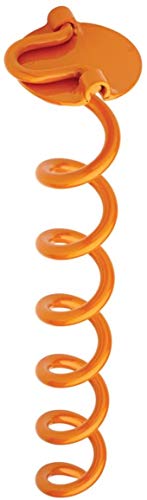
- 425-pound stated pull force
- Powder-coated alloy steel construction
- Sixteen-inch screw-in design for firm soil
Best For: Outdoor setups in compact, non-sandy soil
Permanent Mount Pick
Battle Ropes Wall and Ceiling Anchor

- Stated support up to 700 pounds
- Fits 2-inch and larger ropes
- Hardware included for wood and concrete
Best For: Fixed home or commercial gym installations
Compact Ground Pick
Vortex 10-Inch Spiral Ground Anchor

- 275-pound stated pull force
- Compact 10-inch screw-in profile
- Weather-resistant orange alloy steel
Best For: Compact outdoor tie-downs in firm soil
Best Strap Protection
Reinforced Battle Rope Anchor Strap Kit

- Fits 1.5-inch and 2-inch battle ropes
- Reinforced nylon with stainless-steel carabiners
- Rated for up to 1,700 pounds tensile strength
Best For: Quick home-gym or outdoor rope attachment
Best Screw-In Ground Set
Trampoline Stakes Anchors 4-Pack

- Includes four 15.75-inch metal anchors
- Comes with four straps, adapter, and T hook
- Works in clay, sandy soil, grass, and snow
Best For: General outdoor anchoring on suitable soil
Best Wall-Mounted Option
Heavy-Duty Battle Rope Anchor with Hook

- Steel wall anchor for most standard rope diameters
- Integrated hook stores the battle rope
- Includes screws and locking washers
Best For: Permanent home or gym training stations
Best Portable Sand-Filled Option
Portable Battle Rope Anchor Base

- No-drill setup for temporary training spaces
- Holds 60–70 pounds of sand
- Compact Oxford fabric with a non-slip base
Best For: Renters and outdoor exercisers needing a movable rope anchor
Best Permanent Wall Mount
Heavy Duty Battle Rope Anchor Kit

- Reinforced metal bracket for fixed installations
- Includes rope storage hook
- Fits 30–50-foot, 1–2.5-inch ropes
Best For: Established home gyms and studios with suitable walls
Best Two-Rope Portable Base
MEISTER Portable Battle Rope Anchor

- Fits up to two ropes of any length or diameter
- Holds 50–70 pounds of sand
- Textured rubberized base helps limit movement
Best For: Solo or group training across indoor and outdoor locations
Portable Strap Pick – Hoedia Battle Rope Anchor Strap Kit
For shoppers comparing ground battle rope anchors, the Hoedia strap kit is a portable alternative that does not require a wall or permanent eye hook. Its two reinforced nylon straps and stainless-steel carabiner are designed to connect a battle rope to a sturdy post, column, stairwell, or heavy equipment.
Best For: Home gyms, outdoor workouts, and travelers who need a compact, temporary anchoring solution.
Pros:
- Universal design fits anchor points up to 13 inches in circumference and 1.5- or 2-inch ropes.
- Reinforced nylon strap has a stated 1,700-pound tensile strength.
- Wider 1.5-inch strap helps reduce rope slip, abrasion, and uneven tension.
- Lightweight kit includes two straps and a heavy-duty carabiner.
Cons:
- Requires access to a sufficiently heavy, secure anchor point.
- It is not a permanent ground or wall-mounted anchor.
The Hoedia is the most flexible option here for users who value portability and quick setup. Check your intended anchor point and rope size before buying, since compatibility depends on both.
Heavy-Duty Ground Pick – Vortex 16-Inch Spiral Ground Anchor
Among ground battle rope anchors, this 16-inch Vortex spiral anchor is a heavy-duty outdoor option for firm, compact soil. Its screw-in steel design provides a stated 425-pound pull force, while the folding ring offers a low-profile attachment point when not in use.
Best For: Outdoor training setups where a deeper, weather-resistant ground anchor is appropriate.
Pros:
- Cold-rolled steel construction provides a stated 425-pound pull force.
- Sixteen-inch length offers a deeper screw-in profile than the 10-inch model.
- Powder coating helps resist rust and corrosion in outdoor conditions.
- Orange finish improves visibility, and the spiral shape supports easier removal.
Cons:
- Designed for firm, compact soil and should not be used in sand.
- Sold as a single anchor, so additional hardware may be needed for a complete rope setup.
- The product notes do not specifically list battle ropes among its recommended uses.
This Vortex model can suit an outdoor rope station when soil conditions are favorable, but it is a general-purpose tie-down anchor rather than a dedicated battle rope mount. Confirm that the ground and attachment method can handle your training forces.
Permanent Mount Pick – Battle Ropes Wall and Ceiling Anchor
If you prefer a fixed alternative to ground battle rope anchors, this wall and ceiling mount creates a dedicated training point for a home or commercial gym. The bracket is designed for battle ropes, suspension straps, resistance trainers, rings, yoga swings, and boxing equipment, with hardware for wood and concrete structures.
Best For: Permanent indoor or covered-gym installations on suitable wood or concrete surfaces.
Pros:
- Supports a stated maximum load of 700 pounds.
- Inner opening accommodates 2-inch and larger battle ropes.
- Includes expansion screws for concrete and self-tapping screws for wood.
- Works with several training systems beyond battle ropes.
Cons:
- Requires drilling and a suitable wall or ceiling structure.
- It is not a portable or ground-installed anchor.
- Installation quality and surface strength affect the final setup.
This bracket is the clearest choice for a repeatable training station when portability is not a priority. Measure the rope and verify the mounting surface before installation, particularly for high-intensity workouts.
Compact Ground Pick – Vortex 10-Inch Spiral Ground Anchor
This compact Vortex model is a shorter option for shoppers considering ground battle rope anchors for outdoor use. The 10-inch steel spiral anchor provides a stated 275-pound pull force and is intended for firm, compact soil rather than sand.
Best For: Lighter-duty outdoor tie-downs and compact setups where a shorter screw-in anchor is preferred.
Pros:
- Cold-rolled steel construction provides a stated 275-pound pull force.
- Ten-inch length creates a compact, removable ground anchor.
- Powder coating helps resist rust and corrosion.
- Orange finish improves visibility, while the folding ring helps reduce tripping.
Cons:
- Should not be used in sand; installation is intended for firm, compact soil.
- Lower stated pull force than the 16-inch Vortex model.
- The notes do not specifically identify it as a battle rope anchor.
The 10-inch Vortex is easier to position and remove than a larger ground anchor, but its lower pull rating makes it better suited to less demanding applications. For intense rope work, compare the required resistance with the anchor’s stated capacity and soil conditions.
Best Strap Protection – Reinforced Battle Rope Anchor Strap Kit
POWER GUIDANCE Battle Rope Anchor Strap Kit, Fit 1.5“/2" Battle Rope for Home Gym & Outdoor Workout
Check Price On AmazonFor users comparing ground battle rope anchors and attachment options, this strap kit offers a quick way to connect a 1.5-inch or 2-inch battle rope to poles, fixtures, or equipment. Its widened, reinforced nylon construction is designed to improve grip and help reduce rope fraying, tearing, and ripping during demanding workouts.
Best For: Home gyms and outdoor workouts using compatible 1.5-inch or 2-inch battle ropes.
Pros:
- Widened, non-slip design helps improve grip and protect the rope.
- Reinforced nylon webbing and stainless-steel carabiners.
- Designed with a stated tensile strength of up to 1,700 pounds.
- Attaches to poles, fixtures, and equipment in seconds.
Cons:
- This is a strap-based anchor, not a screw-in ground anchor.
- Compatibility is specified for 1.5-inch and 2-inch ropes.
This is a practical choice when fast setup and rope protection matter more than permanently anchoring equipment into the ground. Confirm your rope diameter and attachment point before buying.
Best Screw-In Ground Set – Trampoline Stakes Anchors 4-Pack
Among ground battle rope anchors and outdoor anchoring hardware, this four-pack is built for driving into soil rather than attaching directly to a wall or pole. The set includes straps, an adapter, and a T hook, with installation by hand or drill for suitable clay, sandy soil, grass, or snow.
Best For: Outdoor setups on suitable soil where a screw-in anchor and included straps are useful.
Pros:
- Four 15.75-inch metal screw-in anchors are included.
- Can be installed manually or with a drill using the removable eyebolt.
- Includes four straps, an adapter, and a T hook.
- Black anti-rust coating provides added surface protection.
Cons:
- Not suitable for rocky soil.
- Designed primarily for trampolines, tents, swings, sheds, and similar outdoor uses, not specifically battle ropes.
- Very hard ground may require watering before installation.
This set can work as a general outdoor anchoring solution, but it is not a dedicated battle rope anchor. Verify that the included straps and soil conditions provide the stability your rope workout requires.
Best Wall-Mounted Option – Heavy-Duty Battle Rope Anchor with Hook
If you are considering ground battle rope anchors but train in a home or commercial gym, this wall-mounted alternative provides a fixed attachment point without taking up floor space. The steel anchor includes an integrated storage hook and mounting hardware for organizing the rope after training.
Best For: Home and gym users who want a permanent wall-mounted battle rope anchor with built-in storage.
Pros:
- Durable steel construction is intended for intense training sessions.
- Integrated hook stores the battle rope and helps reduce floor clutter.
- Includes four fixing screws and four locking washers.
- Designed to fit most standard battle rope diameters.
Cons:
- This is a wall-mounted anchor, not a ground anchor.
- Installation requires a suitable wall or gym structure.
- The notes do not specify a load or tensile-strength rating.
For a fixed indoor training station, this is the most purpose-built option in the group. It is especially useful when storage and a tidy workout area are priorities, provided the mounting surface can accept the included hardware.
Best Portable Sand-Filled Option – Portable Battle Rope Anchor Base
If you need ground battle rope anchors without drilling or hauling a separate heavy object, this portable Oxford fabric base offers a flexible setup. Fill it with 60–70 pounds of sand, place it on a compatible training surface, and move it between home gyms, garages, parks, and driveways.
Best For: Renters, apartment users, and outdoor exercisers who want a movable anchor for rope waves, HIIT, and circuit training.
Pros:
- No-drill design works in temporary training spaces.
- Holds approximately 60–70 pounds of sand.
- Compact 1680D Oxford fabric construction with a non-slip base.
- Zippered opening makes filling and storage straightforward.
Cons:
- Sand is not included.
- Fabric construction may provide less rigid support than a fixed metal mount.
- Requires filling before use and emptying or transporting as needed.
This is a practical choice when portability matters more than permanent installation. Its flat, fillable design keeps setup simple while allowing you to train in locations where wall mounting is not possible.
Best Permanent Wall Mount – Heavy Duty Battle Rope Anchor Kit
For a fixed training station, this wall-mounted option is among the more structured ground battle rope anchors alternatives. Its reinforced metal bracket supports battle ropes while the integrated hook helps keep them off the floor between workouts.
Best For: Home gyms, garages, basements, and commercial studios with suitable wood, concrete, or brick walls.
Pros:
- Heavy-duty reinforced metal construction is designed for stable, high-intensity use.
- Includes a rope storage hook to reduce floor clutter and tripping risks.
- Fits 30–50-foot ropes measuring 1–2.5 inches in diameter.
- Can also anchor Olympic rings, yoga swings, sandbags, and suspension trainers.
Cons:
- Requires drilling and permanent wall installation.
- Compatibility depends on having an appropriate wood, concrete, or brick wall.
- It is less portable than a sand-filled base.
This kit suits users who want a dedicated, organized workout point rather than a movable anchor. The included expansion hardware and storage hook make it a convenient fit for an established fitness space.
Best Two-Rope Portable Base – MEISTER Portable Battle Rope Anchor
Meister Portable Battle Rope Anchor - Sand-Weighted Base for Rope & Fitness Training - Black
Check Price On AmazonThe MEISTER portable base is a durable choice among ground battle rope anchors for users who want to train in multiple locations. It accepts up to two battle ropes of any length or diameter and uses sand weighting, a textured rubberized base, and a reinforced shell for demanding sessions.
Best For: Solo or group training in garages, studios, parks, driveways, parking lots, and training fields.
Pros:
- Supports up to two battle ropes of any length or diameter.
- Holds approximately 50–70 pounds of sand.
- Rubberized base is designed to minimize movement during intense workouts.
- Tech-leather shell, double stitching, carrying handle, and dual-closure system add practical durability.
Cons:
- Sand is not included.
- Filled dimensions and weight make it less convenient to relocate frequently.
- Sand filling is required before training.
Choose this model if shared or dual-rope workouts are a priority. Its larger capacity, carrying strap, and grippy base make it well suited to flexible training setups where stability and rope capacity matter.
How We Picked the Best Ground Battle Rope Anchors
We evaluated these Ground Battle Rope Anchors and related mounting systems by looking at stability, construction, installation, portability, rope compatibility, and the type of training environment each design suits. Screw-in anchors were assessed for their stated pull-force ratings and holding design, while weighted bases were considered for transport, setup time, and the amount of ballast they require.
Wall and ceiling mounts are included because some users have limited outdoor space or prefer a fixed indoor station. However, they require a suitable structural surface and careful installation; they are not interchangeable with soil anchors.
Quick Comparison
| Anchor type | Best for | Main advantage | Important consideration |
|---|---|---|---|
| Screw-in ground anchor | Grass, soil, and outdoor workouts | Strong direct hold | Needs compatible ground and removal after use |
| Weighted portable base | Driveways, patios, and travel | No digging or drilling | Requires substantial sand or ballast |
| Strap anchor kit | Flexible temporary setups | Lightweight and adaptable | Must attach to a genuinely secure object |
| Wall or ceiling mount | Permanent home gyms | Compact, consistent training position | Needs structural mounting and correct hardware |
Key Buying Factors for Ground Battle Rope Anchors
Surface and Installation
Choose a screw-in model for firm soil where the helix can fully engage. Avoid relying on loose, saturated, rocky, or shallow ground. For hard surfaces, a weighted base or properly installed wall mount is usually more practical.
Stability and Load Capacity
Battle ropes create repeated pulling and lateral forces, not just a single static load. Check the manufacturer’s pull-force or weight guidance, inspect the anchor point before every session, and leave room for a safety margin. A heavier rope and more vigorous waves generally call for a stronger anchor.
Portability and Storage
Portable bases are convenient for renters, outdoor classes, and multi-use spaces, but they work only when filled with enough sand or other specified ballast. Strap systems pack easily, although the attachment point must be rated for repeated movement.
Rope and Hardware Compatibility
Confirm that the anchor accepts your rope diameter, carabiner, strap, or mounting eye. For wall and ceiling products, verify screw length, washers, surface type, and whether additional structural hardware is required.
Who Should Buy Which Ground Battle Rope Anchors?
- Outdoor users with suitable soil: Choose a steel spiral ground anchor for a direct, low-profile setup.
- Patio, driveway, and travel users: Choose a sand-weighted portable base and follow its ballast requirements closely.
- Renters or users who move locations: Choose a strap kit, provided you have a dependable post, rack, or other anchor point.
- Dedicated home-gym users: Choose a heavy-duty wall or ceiling mount installed into an appropriate structural surface.
- High-intensity trainees: Prioritize robust steel construction, a secure connection, and a load rating that exceeds your expected training forces.
Whichever design you choose, test it with gentle rope waves first, check for shifting or hardware movement, and stop using it if the anchor, strap, or mounting surface shows wear or instability.