The best lightweight fitness trackers make everyday health tracking easier without the bulk of a traditional smartwatch. This roundup compares slim bands and screenless wearables for monitoring activity, sleep, heart rate, and more.
Whether you want a discreet tracker for sleep, a simple step counter, or a feature-packed fitness band, these options cover different comfort, display, battery, and smartphone needs.
Best 10 Lightweight Fitness Trackers Picks for 2026
Best Screenless Recovery Tracker

- Recovery, fatigue, sleep, and stress tracking
- 27 sports modes with strength and HYROX support
- Up to 10-day battery life; no built-in GPS
Best For: Athletes prioritizing recovery and structured training
Best Simple No-Phone Tracker

- Basic tracking works without an app or phone
- Heart rate, sleep, steps, and nine sport modes
- Five to seven days of battery; IP68 rated
Best For: Beginners wanting uncomplicated daily tracking
Best Minimalist Premium Tracker

- Discreet screenless design for all-day wear
- Heart rate, movement, temperature, and SpO2 sensors
- Up to a week of battery with rapid charging
Best For: Users seeking comfortable Fitbit app-based tracking
Best Feature-Packed Budget Watch

- 1.1-inch AMOLED touchscreen with custom dials
- 25 sports modes and broad health monitoring
- Notifications, reminders, phone finder, and seven-day use
Best For: Shoppers wanting an interactive touchscreen tracker
Best Screen-Free Pick
MorePro Screenless Fitness Tracker

- 16 g screenless design for discreet wear
- Tracks activity, sleep, and wellness metrics
- No subscription; IP68 water resistance
Best For: Minimalist tracking without an on-wrist display
Best Battery-Life Pick
USMECBL Fitness Tracker with OLED Display

- 25 sports modes and automatic activity tracking
- 1.47-inch OLED display for metrics and alerts
- IP68 water resistance and extended battery claims
Best For: Users wanting a displayed tracker for workouts and daily notifications
Best Basic Everyday Tracker

- Tracks core activity, sleep, and wellness metrics
- Displays calls, messages, and social notifications
- IP68 rating with two included strap colors
Best For: Simple daily activity and sleep tracking with notifications
Feature-Rich Pick

- 27.22-gram design with a 1.58-inch display
- 120-plus exercise modes and all-day activity tracking
- Up to seven days of battery life with health monitoring
Best For: Users wanting broad workout coverage and a larger display
Simple Band Pick
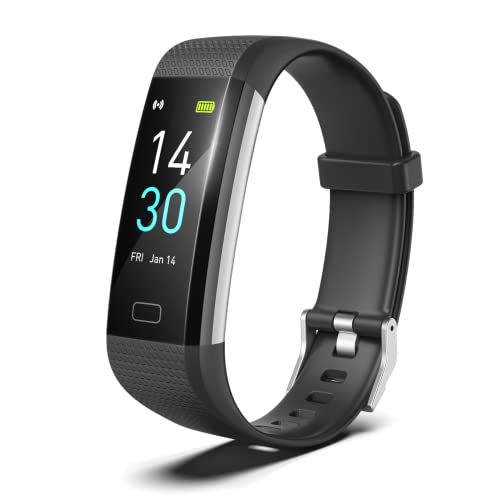
- Slim design for everyday activity tracking
- 16 sports modes plus heart-rate and sleep monitoring
- Built-in USB charging with five-to-seven-day runtime
Best For: Shoppers wanting a basic fitness band with notifications
AMOLED Value Pick

- 1.10-inch AMOLED touchscreen in a lightweight design
- 25 sports modes with connected smartphone GPS
- Up to seven days of battery life and IP68 water resistance
Best For: Users wanting a compact AMOLED tracker with daily reminders
Best Screenless Recovery Tracker – Amazfit Helio Strap
The Amazfit Helio Strap is a lightweight fitness tracker for people who want detailed recovery and workout insights without a display. It monitors heart rate, sleep, stress, blood oxygen, training load, and recovery through the Zepp App, with up to 10 days of battery life.
Best For: Athletes focused on recovery, strength training, and HYROX preparation.
Pros:
- Tracks recovery, fatigue, sleep, stress, and continuous heart rate data.
- Supports 27 sports modes plus rep, set, and rest tracking for strength workouts.
- Offers up to 10 days of battery life and 50-meter water resistance.
- Integrates with Strava, TrainingPeaks, adidas Running, and komoot.
Cons:
- Has no built-in GPS, so GPS geotagging relies on another device.
- The screenless design requires the Zepp App for reviewing data and insights.
The Helio Strap is a strong choice if recovery metrics matter more than notifications or an on-wrist display. Its specialized training features make it particularly appealing to structured gym and endurance athletes.
Best Simple No-Phone Tracker – LIVIKEY Fitness Tracker Watch
This LIVIKEY model is a lightweight fitness tracker watch designed for straightforward daily monitoring. It can operate without an app or phone connection for basic use, while optional smartphone pairing adds sleep details, notifications, and goal tracking.
Best For: Beginners and users who want simple step, heart-rate, and sleep tracking.
Pros:
- Basic fitness tracking works without requiring an app or smartphone connection.
- Monitors heart rate, sleep, steps, calories, distance, and active time.
- Includes nine sport modes, alarms, stopwatch, breathing guidance, and sedentary alerts.
- Provides five to seven days of use and an IP68 waterproof rating.
Cons:
- Smart notifications and some goal-setting features require smartphone pairing.
- It cannot make calls or send texts from the watch.
- GPS is provided through a smartphone rather than built into the tracker.
Choose this tracker if ease of use is more important than advanced training analytics. Its no-phone-required basic operation makes it approachable, while Bluetooth pairing adds useful connected features when needed.
Best Minimalist Premium Tracker – Google Fitbit Air
Google Fitbit Air is a lightweight fitness tracker with no display, making it comfortable for work, exercise, and sleep. Its sensors track heart rate, movement, skin-temperature variation, and oxygen saturation through the Google Health app, while the micro-adjustable band is designed for continuous wear.
Best For: Users who want a discreet, comfortable tracker with Fitbit ecosystem features.
Pros:
- Screenless, lightweight design is intended for quiet all-day and overnight wear.
- Tracks heart rate, movement, skin-temperature variation, and oxygen saturation.
- Battery lasts up to a week, with five minutes of charging providing up to one day of use.
- Water resistant to 50 meters and compatible with Android and iOS devices.
Cons:
- No display means data and insights must be viewed in the Google Health app.
- GPS is accessed through a smartphone rather than built into the tracker.
- Some personalized coaching features require a separately sold Google Health Premium membership.
Fitbit Air suits people who value comfort and a distraction-free design over an on-device interface. It is especially compelling for users already comfortable with Fitbit-style app-based health tracking.
Best Feature-Packed Budget Watch – Moremore Fitness Tracker
The Moremore fitness tracker combines a lightweight fitness tracker format with a 1.1-inch AMOLED touchscreen. It provides all-day heart-rate, blood-pressure, blood-oxygen, sleep, and activity monitoring, plus 25 sports modes and practical phone-connected reminders.
Best For: Users who want a color touchscreen and broad activity features at a glance.
Pros:
- Bright 1.1-inch AMOLED touchscreen supports multiple watch faces and custom dials.
- Offers 25 sports modes for activities including walking, running, swimming, yoga, and cycling.
- Tracks heart rate, blood pressure, blood oxygen, sleep, steps, distance, and calories.
- Includes notifications, sedentary and water reminders, phone finding, and remote photo control.
Cons:
- Requires Bluetooth pairing with a smartphone for notifications and connected functions.
- Its listed battery life is up to seven days of regular use, with one to two hours needed for charging.
- The supplied notes do not specify a built-in GPS system.
This is a practical pick for shoppers who prefer seeing metrics directly on the wrist. The AMOLED display and wide sports selection make it more interactive than screenless alternatives, while its connected tools extend everyday usefulness.
Best Screen-Free Pick – MorePro Screenless Fitness Tracker
If you want lightweight fitness trackers without a distracting display, the MorePro screenless band is a practical choice. At 16 g, it is designed for discreet all-day wear and tracks activity, sleep, heart rate, blood oxygen, HRV, and more through its companion app.
Best For: Shoppers who prefer a slim, screen-free tracker for background wellness and activity monitoring.
Pros:
- Very lightweight 16 g screenless design for low-distraction wear
- Tracks steps, calories, distance, sleep, heart rate, blood oxygen, and HRV
- No subscription is required, and Guest Mode supports simpler setup
- IP68 water resistance and two adjustable band sizes support everyday use
Cons:
- No on-device screen for viewing metrics or notifications
- Typical battery life is about 3–5 days with automatic monitoring enabled
- Requires an iOS or Android smartphone and is not compatible with PCs or tablets
The MorePro stands out when comfort and minimalism matter more than smartwatch-style features. Its screenless design keeps attention on your routine, while the app provides a broad set of wellness data without recurring fees.
Best Battery-Life Pick – USMECBL Fitness Tracker with OLED Display
For shoppers comparing lightweight fitness trackers with a readable display, this USMECBL band combines a 1.47-inch OLED screen with broad workout and wellness features. It supports 25 sports modes, notifications, health monitoring, and phone-control tools in a compact wrist-based design.
Best For: Active users who want an affordable tracker with an OLED display, multiple sports modes, and extended battery performance.
Pros:
- Includes 25 sports modes plus automatic step, distance, and calorie tracking
- 1.47-inch OLED touchscreen displays metrics and notifications on the wrist
- IP68 waterproof construction is designed for rain, sweat, swimming, and showering
- Advertised battery performance reaches up to 7 days of continuous use, with 10–14 days under regular use listed
Cons:
- Does not include built-in GPS
- Health readings are wellness data rather than a substitute for medical evaluation
- Some connected features depend on a Bluetooth-linked smartphone
This model is a strong fit if you want more interaction than a screenless band provides. Its sports-mode selection and longer stated battery range make it useful for routine workouts, travel, and day-to-day notification checking.
Best Basic Everyday Tracker – C68L Fitness Tracker
The C68L is a straightforward option among lightweight fitness trackers, focusing on essential activity and wellness features in a slim design. It records steps, distance, calories, heart rate, blood oxygen, and sleep while also providing phone notifications through the KuPoo app.
Best For: Everyday users who want basic activity, sleep, and notification features in a simple tracker.
Pros:
- Tracks steps, calories, distance, exercise time, heart rate, and blood oxygen
- Provides sleep-stage analysis including deep, light, REM, and awake periods
- Supports call, message, and social notification alerts
- Includes IP68 water resistance and both black and white straps
Cons:
- Listed battery life is up to 5 days per charge
- Its 0.96-inch display is smaller than the display on some competing trackers
- Water resistance is not intended for prolonged soaking, hot baths, or saunas
The C68L keeps the feature set focused and practical for daily routines. Its smaller display and modest battery life may limit it for some users, but the included sleep analysis, reminders, notifications, and interchangeable straps add useful everyday value.
Feature-Rich Pick – H32 Ultra Fitness Tracker
If you want lightweight fitness trackers with a larger, easy-to-read display and broad activity coverage, the H32 Ultra is a feature-rich option. Its 27.22-gram design combines all-day activity tracking with health, sleep, notification, and call alerts.
Best For: Users who want extensive sports tracking, a bright display, and up to seven days of battery life.
Pros:
- Lightweight 27.22-gram construction with a 1.58-inch high-resolution display.
- Offers 120-plus exercise modes and tracks steps, distance, and calories.
- Includes 24/7 heart-rate, blood oxygen, blood-pressure, and sleep monitoring.
- Supports call and message notifications, IP68 water resistance, and up to seven days of battery life.
Cons:
- The product notes do not identify the supported software update period.
- Blood-pressure and blood-oxygen readings should not be treated as medical measurements.
The H32 Ultra stands out when display size and exercise variety matter more than having a minimal band-style form. It is a practical choice for shoppers who want smartwatch-like features in a relatively light package.
Simple Band Pick – Slim Smart Bracelet
For shoppers seeking lightweight fitness trackers in a slim bracelet format, this model keeps the focus on everyday activity and notifications. It tracks steps, distance, calories, sleep, and heart rate while supporting 16 professional sports modes.
Best For: People who prefer a simple, lightweight band with basic health tracking and notification features.
Pros:
- Slim bracelet design suited to everyday wear.
- Tracks activity throughout the day and supports 16 indoor and outdoor sports modes.
- Offers heart-rate, sleep, blood-pressure, and blood-oxygen monitoring, with a reference-only disclaimer for the latter readings.
- Built-in USB charging takes about two hours and provides five to seven days of working time.
Cons:
- Sleep data is viewed in the Runmefit app rather than directly on the tracker.
- The built-in USB charging design requires careful removal and positioning of the band.
- It is not compatible with PCs, iPads, or tablets according to the supplied notes.
This bracelet is a sensible pick for straightforward activity tracking without the bulk of a full-sized smartwatch. Its direct USB charging is convenient, though the charging procedure may take some care.
AMOLED Value Pick – Compact Fitness Tracker
This compact option is among the more practical lightweight fitness trackers for users who value a colorful AMOLED screen and everyday reminders. It combines 25 sports modes with sleep tracking, connected GPS, notifications, and up to seven days of battery life.
Best For: Users who want a small AMOLED tracker with workout modes, smartphone-connected GPS, and daily wellness reminders.
Pros:
- Lightweight activity-tracker design with a 1.10-inch AMOLED touchscreen.
- Provides 24/7 heart-rate tracking, sleep monitoring, and 25 sports modes.
- Includes weather updates, hydration and sedentary reminders, remote camera control, and female health tracking.
- Offers IP68 water resistance and up to seven days of battery life.
Cons:
- GPS is provided through a connected smartphone rather than built into the tracker.
- The supplied notes list no warranty.
- Health and sleep data is for reference and does not replace medical advice.
The compact AMOLED display and useful reminder features give this tracker a balanced everyday feature set. Choose it if you are comfortable carrying a smartphone for route tracking and want a colorful, lightweight wrist device.
How We Picked These Lightweight Fitness Trackers
We focused on trackers that prioritize a slim, low-weight design while still covering the metrics most people use regularly. The selection includes screenless activity trackers, OLED and AMOLED fitness bands, and smart bracelets with varying levels of phone independence.
We compared the stated features, including heart-rate monitoring, sleep tracking, step and calorie counting, blood oxygen measurements, workout modes, water resistance, battery claims, and iOS or Android compatibility. Because specifications and accuracy can vary by model and user, treat health-related readings as wellness information rather than a medical diagnosis.
Quick Comparison
- Best for discreet wear: Screenless trackers such as the Amazfit Helio Strap and Google Fitbit Air-style options.
- Best for at-a-glance data: Models with OLED or AMOLED displays.
- Best for basic tracking: Simple bands focused on steps, distance, calories, and heart rate.
- Best for broader workout coverage: Trackers advertising multiple sports modes and continuous activity monitoring.
- Best for reduced phone use: Options designed to show or record information without requiring constant app access.
Key Buying Factors for Lightweight Fitness Trackers
Comfort and Design
Look for a slim profile, soft adjustable band, secure clasp, and low weight. If you plan to sleep in the tracker, avoid bulky cases and materials that irritate your skin.
Tracking Features
Decide which metrics matter most. Step counting and sleep tracking are common, while continuous heart rate, blood oxygen, blood pressure estimates, and workout modes may differ significantly. More sensors do not automatically guarantee better accuracy.
Display and Phone Dependence
Screenless designs are discreet and often encourage less distraction, but they usually require a phone app for detailed results. A built-in display is more convenient for checking steps or heart rate during the day.
Battery and Compatibility
Check the advertised battery duration, charging method, and whether features reduce runtime. Confirm compatibility with your phone’s operating system before buying, especially if you use an older iPhone or Android device.
Water Resistance and Durability
For workouts, showers, or swimming, verify the exact water-resistance rating rather than relying on general “waterproof” wording. Also check replacement-band availability and warranty coverage.
Who Should Buy Which Lightweight Fitness Trackers?
Choose a screenless model if you want unobtrusive sleep and activity tracking with minimal visual distraction. Pick a tracker with an OLED or AMOLED screen if you want to check progress, notifications, or workout data without reaching for your phone. A basic step-and-calorie band suits casual users who want simple motivation, while a multi-sport model is a better fit for people who regularly switch between different workouts.
For the best choice, prioritize the features you will use every day—not the longest list of advertised measurements. A comfortable tracker that stays charged and fits your routine will usually be more useful than a heavier model with advanced functions you rarely open.