The best plyometric box can make jump training, step-ups, and strength conditioning more versatile without taking over your home gym. The right choice depends on your preferred height, landing comfort, available space, and tolerance for setup.
We compared 10 popular plyo boxes across foam, wood, fixed-height, and stackable designs to help you find a stable platform that matches your workouts and experience level.
Best 10 Plyometric Boxes Picks for 2026
Soft-Impact Pick
BalanceFrom 3-in-1 Foam Plyometric Box

- Three heights: 16, 20, and 24 inches
- High-density foam with a textured non-slip surface
- Lightweight design with a 250-pound recommendation
Best For: Beginners and home users seeking softer landings
Compact Wood Pick
CAP Barbell 3-in-1 Plyometric Box

- 12-, 14-, and 16-inch height options
- Interlocking engineered-wood construction
- Textured surface and built-in carry handles
Best For: Home gyms favoring a rigid, compact training platform
High-Capacity Value
Amazon Basics 3-in-1 Wooden Plyo Box

- Three marked heights: 12, 14, and 16 inches
- Stated maximum weight capacity of 450 pounds
- Wide handles and pre-drilled holes aid setup and movement
Best For: Indoor home gyms needing capacity and versatility
High-Height Foam Pick
CAP 3-in-1 Foam Plyometric Box
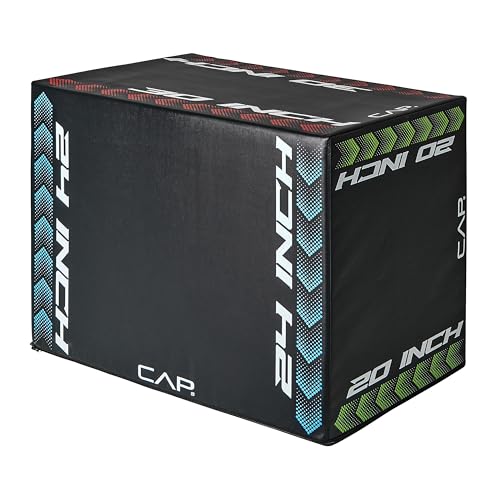
- Rotates between 20, 24, and 28 inches
- High-density foam with a durable PVC cover
- Weighted core helps improve stability
Best For: Experienced users training higher box-jump heights
Durable Wooden Pick
Fitvids Non-Slip Wooden Plyo Box

- Three height options for varied training
- Anti-slip surface and 450-pound capacity
- Plywood construction with quick assembly
Best For: Home gyms seeking a sturdy, high-capacity wooden box
Best for Everyday Use
BalanceFrom 3-in-1 Foam Plyo Box

- Rotates between 16-, 20-, and 24-inch heights
- High-density foam cushions landings
- Lightweight 10-pound design is easy to move
Best For: Beginners and home users wanting a portable foam box
Ready-to-Use Pick
NEWBULIG Cushioned 3-in-1 Jump Box

- Three rotating height options
- Cushioned foam core helps soften landings
- Lightweight and requires no assembly
Best For: Home workouts needing a portable, cushioned box
Most Adjustable
Titan Stackable Soft Foam Plyometric Box Set

- Four heights create over 20 configurations
- Soft foam and vinyl support lower-impact landings
- Supports up to 350 pounds
Best For: Home and garage gyms needing progressive height options
Best Heavy-Duty Pick

- Rotates between 16, 20, and 24 inches
- Ships fully assembled
- Supports up to 400 pounds
Best For: Compact home gyms and users wanting simple height changes
Best Modular Set
REP Fitness Stackable Soft Foam Plyo Box Set

- Multiple stackable sizes support custom heights
- Impact-absorbing foam has a non-slip vinyl cover
- Built-in handles ease transport
Best For: Functional-training spaces needing modular equipment
Soft-Impact Pick – BalanceFrom 3-in-1 Foam Plyometric Box
The BalanceFrom 3-in-1 foam plyometric box offers 16-, 20-, and 24-inch training heights in a lightweight design. Its high-density foam construction and textured surface make it a practical option for home-gym box jumps, HIIT, step-ups, and agility work.
Best For: Beginners and home users who want adjustable heights with a softer landing surface.
Pros:
- Rotates between three heights for varied training.
- High-density foam helps soften impact and minimize shin scrapes.
- Textured anti-slip surface supports secure foot placement.
- Lightweight, portable design is easy to move and store.
Cons:
- Foam construction may not provide the same rigid feel as a wooden box.
- Maximum recommended user weight is 250 pounds.
Choose this model if comfort, portability, and multiple height options matter more than a heavy-duty wood construction. The included 2-year warranty is an added benefit for regular home training.
Compact Wood Pick – CAP Barbell 3-in-1 Plyometric Box
The CAP Barbell 3-in-1 plyometric box is a compact engineered-wood option with 12-, 14-, and 16-inch heights. Interlocking panels, countersunk screws, and a textured surface make it suited to box jumps, step-ups, agility drills, and conditioning workouts.
Best For: Home-gym users who prefer a rigid wooden platform and lower training heights.
Pros:
- Three height choices support progressive plyometric training.
- Interlocking construction and countersunk screws help create a stable platform.
- Textured surface improves traction during jumps and step-ups.
- Built-in handles make repositioning easier.
Cons:
- Its 12- to 16-inch range may be limiting for users seeking higher jumps.
- Engineered wood is less forgiving than foam if a jump is missed.
With a 300-pound maximum weight recommendation and compact dimensions, this CAP Barbell box is a sensible choice for controlled, lower-height training in a home gym.
High-Capacity Value – Amazon Basics 3-in-1 Wooden Plyo Box
The Amazon Basics 3-in-1 wooden plyometric box provides 12-, 14-, and 16-inch heights with clear indicators for progressive workouts. It supports box jumps, step-ups, dips, and conditioning exercises, while wide handles and pre-drilled holes simplify moving and assembly.
Best For: Beginners through advanced users who want a versatile indoor plyometric box with a high stated weight capacity.
Pros:
- Three clearly marked heights make progression straightforward.
- Supports up to 450 pounds according to the supplied specifications.
- Sanded edges help reduce scratches during use.
- Pre-drilled holes and included instructions support easier assembly.
Cons:
- Limited to a maximum height of 16 inches.
- Wood construction provides less forgiving contact than foam.
- Designed primarily for indoor training and home-gym use.
This is a practical pick for users prioritizing capacity, clear height markings, and broad exercise versatility. Its FSC-certified sporting-goods materials may also appeal to shoppers considering sourcing standards.
High-Height Foam Pick – CAP 3-in-1 Foam Plyometric Box
The CAP 3-in-1 foam plyometric box is built for higher-intensity training, rotating between 20-, 24-, and 28-inch heights. Its high-density foam, PVC cover, and weighted core combine a forgiving landing surface with added stability for jumps, step-ups, squats, and conditioning work.
Best For: Experienced users seeking higher box-jump heights with a softer contact surface.
Pros:
- 20-, 24-, and 28-inch settings support progressive, higher jumps.
- High-density foam is more forgiving than rigid wood or steel.
- Weighted core helps reduce tipping and unwanted movement.
- PVC cover is durable and easy to maintain.
Cons:
- Maximum recommended user weight is 250 pounds.
- Higher starting height may be unsuitable for beginners.
- At 16.5 pounds, it is heavier than a lightweight foam alternative.
For athletes who have progressed beyond low box heights, this CAP model offers a useful combination of height, cushioning, and stability. Its 28-inch maximum is the standout feature, while the weighted core helps support dynamic movements.
Durable Wooden Pick – Fitvids Non-Slip Wooden Plyo Box
If you want a sturdy option for plyometric boxes, the Fitvids wooden model combines three height settings with a slip-resistant jumping surface. Its plywood construction and 450-pound capacity make it suited to structured home-gym training.
Best For: Home-gym users who prioritize a durable wooden build, multiple height options, and a high weight capacity.
Pros:
- Three height options support varied jump training.
- Anti-slip surface helps provide stability during jumps.
- Plywood construction supports up to 450 pounds.
- Assembly takes about 10 minutes and includes a two-year manufacturer warranty.
Cons:
- Requires assembly before use.
- The wooden design is heavier than the listed foam alternatives.
Choose this Fitvids box if a firm, durable platform matters more to you than lightweight portability. Its three-level design also gives you room to progress or vary workouts.
Best for Everyday Use – BalanceFrom 3-in-1 Foam Plyo Box
The BalanceFrom 3-in-1 is a practical choice among plyometric boxes for users who want adjustable heights without a rigid wooden landing. Rotate the foam box to select 16-, 20-, or 24-inch training heights for jumps, HIIT, step-ups, and agility drills.
Best For: Beginners, home exercisers, and anyone who prefers a lightweight foam box with softer impact.
Pros:
- Three height settings are available by rotating the box.
- High-density foam offers softer impact and can help minimize shin scrapes.
- Textured surface helps maintain grip during jumps and step-ups.
- At 10 pounds, it is easy to move and store.
Cons:
- Foam may not provide the same rigid feel as a wooden box.
- The supplied dimensions are listed as 30 by 24 by 30 inches, so storage space should be checked.
This BalanceFrom model stands out for accessible home training: it is portable, cushioned, and offers three useful heights. It is a strong fit when landing comfort and easy repositioning are priorities.
Ready-to-Use Pick – NEWBULIG Cushioned 3-in-1 Jump Box
For shoppers comparing plyometric boxes, the NEWBULIG 3-in-1 model offers rotating height adjustment, a cushioned core, and no assembly. Its textured Oxford cloth cover is designed to add grip, while the lightweight format makes it easy to move around a home gym.
Best For: Home users who want a cushioned, portable jump box that is ready to use immediately.
Pros:
- Three jump heights support explosive training, HIIT, and step-ups.
- Foam and pearl cotton cushioning help reduce landing impact.
- Raised woven texture on the cover increases surface friction.
- No assembly is required, and the small size weighs 10 pounds.
Cons:
- The supplied notes list two size options, so buyers should confirm the desired size.
- The cushioned construction may feel less rigid than a wooden platform.
NEWBULIG is a convenient option for indoor conditioning when portability and landing cushioning matter. Its three rotating heights add versatility without requiring setup time.
Most Adjustable – Titan Stackable Soft Foam Plyometric Box Set
For athletes who want flexible progression, these plyometric boxes combine four heights—6, 12, 20, and 24 inches—into more than 20 stackable configurations, reaching up to 62 inches when fully stacked. High-density EPE foam, a grippy vinyl cover, and Velcro flaps support varied jump, step-up, and bodyweight training.
Best For: Home and garage gym users who want adjustable training heights and softer landings.
Pros:
- Four boxes create over 20 height combinations from 6 to 62 inches.
- High-density foam supports up to 350 pounds while absorbing impact.
- Built-in handles, height indicators, tuck-away zippers, and Velcro flaps add convenience and stability.
- Works for box jumps, step-ups, push-ups, dips, and box squats.
Cons:
- The complete set weighs 74 pounds.
- Its 28-by-28-inch footprint may require dedicated storage space.
- Safe use requires landing centrally and placing the box on non-slip flooring.
This is a versatile choice when one fixed-height box would feel limiting. Its broad adjustment range suits progressive training, though the full set is better suited to users with enough room to store and position all four pieces.
Best Heavy-Duty Pick – REP 3-in-1 Soft Plyo Box
This REP 3-in-1 box offers 16-, 20-, and 24-inch training heights by rotating the same platform, making it a straightforward option for plyometric boxes in a home gym or studio. Its dense foam core and textured vinyl cover are designed for stable, softer landings without assembly.
Best For: Beginners, athletes, and compact gyms wanting three heights in one assembled box.
Pros:
- Three height options—16, 20, and 24 inches—come from one platform.
- Dense foam and an anti-slip vinyl cover help resist tipping and sliding.
- Ships fully assembled and is easy to move, store, and stack.
- Supports jumps, step-ups, squats, glute thrusts, push-ups, and balance work.
Cons:
- The maximum height is 24 inches.
- It offers fewer height choices than a multi-box stackable set.
- Its PVC shell may not suit shoppers specifically seeking a different cover material.
Choose this model for simple setup and practical versatility. Rotating the box changes the height quickly, while the soft construction and 400-pound stated capacity make it suitable for a wide range of home and functional-fitness routines.
Best Modular Set – REP Fitness Stackable Soft Foam Plyo Box Set
This REP Fitness set is built for modular workouts, using stackable foam boxes in multiple sizes to create custom training heights. Heavy-duty Velcro flaps, impact-absorbing foam, and non-slip vinyl make it suitable for step training, HIIT, CrossFit, jumps, and bodyweight exercises.
Best For: Lifters and functional-training spaces that want stackable equipment for varied workouts.
Pros:
- Stackable 4-, 6-, 12-, 20-, and 24-inch options allow customized height training.
- Dense foam helps absorb impact and protect shins and joints.
- Durable, wipe-clean vinyl covers resist tears and moisture.
- Built-in handles and securing Velcro flaps support transport and stacking.
Cons:
- The supplied configuration details list 6-, 12-, and 20-inch boxes, so included pieces should be verified before purchase.
- The set weighs 146 pounds according to the supplied details.
- The listed configuration has a maximum height of 20 inches.
This set stands out for users who value modularity and REP Fitness construction. It can function as a stepper, bench, or jump box, but its substantial weight and configuration details make it worth checking the exact package contents and storage requirements first.
How We Picked the Best Plyometric Boxes
We focused on boxes suited to home-gym use and compared the features that most affect everyday training: height options, construction, landing surface, stability, portability, storage, assembly, and overall versatility. The selection includes soft foam models for more forgiving landings, wooden boxes for a firm and responsive platform, and stackable systems for users who want adjustable training heights.
We also considered whether each design supports more than box jumps. A useful plyo box should work for step-ups, elevated push-ups, Bulgarian split squats, calf raises, and other conditioning movements when appropriate.
Quick Comparison
- Best for softer landings: Foam boxes with dense cores and padded covers.
- Best for a firm jumping surface: Wooden boxes with textured, non-slip tops.
- Best for adjustable training: Stackable sets or true 3-in-1 boxes.
- Best for small spaces: A single lightweight box with multiple usable heights.
- Best for beginners: A stable, lower-height foam box with clearly marked sides.
Key Buying Factors for Plyometric Boxes
Height and Adjustability
Choose a height that lets you land in a controlled position rather than forcing you to tuck excessively or sacrifice form. Three-sided boxes provide multiple heights by rotating the unit, while stackable sets offer more gradual progression. Beginners should prioritize a lower platform and increase height only after consistent, quiet landings.
Construction and Landing Comfort
Wood is rigid, durable, and often relatively affordable, but a missed jump can be unforgiving. Foam boxes reduce the impact of contacting an edge and are generally more comfortable for beginners or high-volume workouts. Look for dense foam that does not collapse under body weight and a cover with durable, non-slip material.
Stability and Surface Grip
A box should remain planted on the floor during takeoff and landing. Check for a broad base, reinforced construction, rubberized feet, or a textured bottom. The top should provide traction without feeling excessively abrasive. Use the box on a level, clean surface and leave adequate clearance around it.
Size, Storage, and Versatility
Measure your available floor and storage space before buying. Larger boxes can feel more stable but are harder to move. Consider handles, weight, and whether the box can be stored vertically. If you plan to use it for step-ups or strength exercises, confirm that the dimensions are comfortable for those movements.
Who Should Buy Which Plyometric Boxes?
Beginners and cautious jumpers should start with a soft foam option at a manageable height. It provides a more forgiving surface while technique develops.
Experienced athletes who want a firm, responsive platform may prefer a wooden box, provided they have reliable landing mechanics and enough surrounding space.
Families or shared home gyms can benefit from a 3-in-1 design because different users can select different heights without buying multiple boxes. Progress-focused trainees should consider a stackable set, which allows smaller height increases and more flexible programming.
Whichever model you choose, begin with controlled step-ups or low jumps, inspect the box regularly, and stop using it if the cover, seams, core, or base become damaged.