Choosing the right pressure relief mattress topper for hospital bed use can make a major difference in comfort, skin protection, and sleep quality.
Below, we’ve focused on practical features that matter most for patients, caregivers, and home care setups in 2026.
Best 10 Pressure Relief Mattress Topper for Hospital Bed Picks for 2026
Alternating Pressure Relief
Vive Air Mattress Pad for Bed Sore Care

- 130 alternating air cells
- Quiet 22 dBA pump
- Waterproof vinyl, up to 300 lbs
Best For: Bedridden adults needing active air-cell pressure relief
Foam & Gel Support

- 3-layer foam and gel construction
- Helps reduce soreness at hips, heels, shoulders
- Fluid-resistant wipe-clean cover
Best For: Hospital or homecare users wanting stable foam-and-gel support
Whisper Quiet Air Therapy
Vaunn Cloud Air Mattress Topper

- 130-cell alternating air design
- Adjustable pump for firmness control
- Waterproof vinyl; supports up to 300 lbs
Best For: Adults on extended bed rest who want adjustable air pressure relief
Egg Crate Foam Relief
Foam Global Hospital Mattress Pad

- Convoluted foam aids pressure distribution
- CertiPUR-US certified, latex-free foam
- Lightweight hospital-size pad made in USA
Best For: Users wanting a basic foam-only hospital-size topper
Alternating Pressure Care
Glory Medical MT-01 Air Cycle Topper

- 130-cell alternating pressure design
- 12-minute cycles for circulation support
- Waterproof vinyl with pump included
Best For: Bedridden adults needing pressure relief on hospital or home care beds
Quiet Air Pressure Relief
MedVance Premium Air Pressure Pad

- Under-20 dB digital pump for quieter use
- 6-minute alternating pressure cycles
- Waterproof, easy-clean medical-grade vinyl
Best For: People needing a quiet air pad for bed sore prevention and recovery
Comfort-first alternating support
Lunderg PressuRelief Alternating Air Pressure Mattress Pad

- Snap-2-Pad layer adds softness and a more familiar feel.
- 23 dBA pump with soft-to-firm control and static mode.
- Supports up to 300 lbs for home or facility use.
Best For: Users who want pressure therapy with added comfort for long-term bed rest.
Medical-grade pressure care
SereneLife Air Pressure Mattress Pad

- Breathable air channels and micro holes help reduce sweat and pressure.
- Supports up to 330 lbs with medical-grade PVC construction.
- Includes a 110/220V pump and repair kit.
Best For: Bedridden users who need a durable, medical-grade alternating air mattress pad.
Quiet waterproof daily care
KEKOY Alternating Air Pressure Mattress Pad
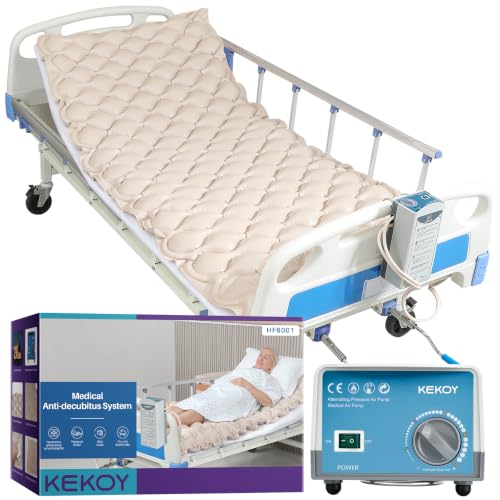
- 130 air cells help redistribute pressure during prolonged bed rest.
- Quiet pump runs below 28 dBA with 5 pressure levels.
- Waterproof surface simplifies cleanup for caregivers.
Best For: Quiet, waterproof pressure support for elderly or bedridden users.
Alternating Pressure Relief – Vive Air Mattress Pad for Bed Sore Care
If you need a pressure relief mattress topper for hospital bed use, this alternating air pad is built for bedridden patients who need help reducing sore spots and improving circulation. The 130 air cells cycle through wave-like inflation and deflation to spread weight more evenly, while the whisper-quiet pump is designed to keep sleep interruptions to a minimum.
Best For: Bedridden adults, caregivers, and home users looking for an air-based bed sore prevention topper with customizable pressure settings.
Pros:
- 130 alternating air cells help redistribute weight and reduce pressure points.
- Quiet pump runs at 22 dBA and offers multiple pressure levels.
- Waterproof vinyl construction and secure tuck-in flaps support stable setup.
- Rated to support up to 300 lbs.
Cons:
- Air system setup is more involved than a simple foam topper.
- Requires continuous pump operation.
- Hand wash care is less convenient than wipe-clean surfaces.
This is a strong choice if your priority is active pressure management rather than passive cushioning. Its alternating air design and low-noise pump make it especially practical for long-term use where pressure relief matters most.
Foam & Gel Support – Lumex Pressure Relief Overlay
This pressure relief mattress topper for hospital bed settings combines foam and gel into a three-layer overlay designed for comfort and stability. The convoluted foam top, visco-elastic gel core, and high-density foam base work together to distribute pressure across high-risk areas like hips, heels, and shoulders.
Best For: Hospital, rehab, or homecare users who want a foam-and-gel overlay with a stable feel and easy-clean cover.
Pros:
- Three-layer design blends convoluted foam, gel, and dense foam support.
- Gel core helps redistribute pressure at sore-prone areas.
- Leak-proof, non-aqueous gel is built for consistent performance.
- Fluid-resistant cover wipes clean easily.
Cons:
- Heavier than basic foam pads at 16.5 pounds.
- No pump or adjustable air settings.
- Fit is geared to standard and extended-length medical mattresses, so sizing should be checked carefully.
For shoppers who prefer a non-inflatable option, this overlay offers a more traditional medical mattress feel with added gel-based pressure distribution. It is a practical pick when durability and simple maintenance matter more than active air therapy.
Whisper Quiet Air Therapy – Vaunn Cloud Air Mattress Topper
For buyers comparing a pressure relief mattress topper for hospital bed comfort, this alternating air model focuses on circulation and pressure spot relief. Its 130 pre-programmed air cells and adjustable pump settings are intended to provide a cool, wave-like sleep surface for people on extended bed rest.
Best For: Adults needing a waterproof alternating-air topper with adjustable firmness and a pump designed for continuous use.
Pros:
- 130 air cells use wave therapy to distribute pressure and support circulation.
- Whisper-quiet pump is rated for continuous 24-hour use.
- Adjustable pressure settings help caregivers tailor firmness.
- Medical-grade vinyl is waterproof and supports up to 300 lbs.
Cons:
- Requires a pump and regular setup unlike a foam topper.
- Only works with U.S. 110V outlets.
- Hand wash care is less convenient for daily cleaning needs.
This topper stands out if you want air-based pressure management with more control over firmness. The waterproof build and included setup guidance make it a workable option for home or care settings where consistent support is important.
Egg Crate Foam Relief – Foam Global Hospital Mattress Pad
If you want a straightforward pressure relief mattress topper for hospital bed use, this egg crate foam pad offers simple cushioning and airflow without any pump or electronics. The convoluted foam design is made to help with weight distribution and to support comfort for users trying to reduce pressure sores and related discomfort.
Best For: Buyers who prefer a lightweight, foam-only hospital-size topper made in the USA.
Pros:
- Convoluted foam shape helps with pressure distribution and air circulation.
- CertiPUR-US certified foam and latex-free, hypoallergenic construction.
- Lightweight and easy to handle at 1.39 kg.
- Made in the USA in a hospital size of 2″ x 33″ x 72″.
Cons:
- No cover included.
- Spot clean only.
- Less specialized than air or gel systems for active pressure management.
This is the simplest option in the group and makes sense when you want low-maintenance foam support rather than an alternating air system. It is a practical choice for basic comfort, weight distribution, and easy handling.
Alternating Pressure Care – Glory Medical MT-01 Air Cycle Topper
If you need a pressure relief mattress topper for hospital bed use, this alternating-air model is built for bedridden or immobile patients who need steady redistribution of pressure. The 130-cell design cycles every 12 minutes, helping support circulation while the waterproof vinyl surface makes daily care simpler in both home and hospital settings.
Best For: Bedridden adults who need a waterproof, alternating-pressure topper for hospital or home care beds.
Pros:
- 130 alternating air cells help spread body weight across sensitive areas.
- 12-minute air cycles are designed to support circulation and reduce sore spots.
- Waterproof medical-grade vinyl is easy to clean and made for long-term use.
- Includes a pump and hose for quicker setup on standard hospital frames.
Cons:
- Requires an air pump, so it is less simple than a foam topper.
- Vinyl construction may feel firmer than plush foam options.
- Best suited to hospital-style beds and care frames rather than casual guest use.
This is a practical choice if pressure management is the priority and you want a topper designed specifically for care settings. The secure, non-slip design and 300 lb support limit add to its appeal for routine patient use.
Quiet Air Pressure Relief – MedVance Premium Air Pressure Pad
For shoppers comparing a pressure relief mattress topper for hospital bed use, this alternating-air pad stands out for its under-20 dB digital pump and 6-minute pressure cycles. It is built to help reduce pressure buildup, support circulation, and provide a practical bed sore prevention option for home care or facility use.
Best For: Adults who want a quiet alternating-air mattress pad for bed sore prevention and everyday care.
Pros:
- Ultra-quiet digital pump is rated under 20 dB for less disruption during rest.
- 6-minute alternating cycles help redistribute weight more frequently.
- Waterproof, medical-grade vinyl is easy to wipe clean.
- Universal hospital-bed fit makes it useful in home or care settings.
Cons:
- As an air system, it requires setup and power for use.
- Water-resistant construction still needs careful handling around sharp objects.
- Digital controls may be more involved than a basic foam topper.
This is a strong option if you want active pressure relief with a quieter pump than many comparable systems. Its balance of adjustability, waterproof materials, and short cycle timing makes it a sensible pick for long-term patient care.
Foam Pressure Relief – Vaunn Egg Crate Mattress Topper
If you prefer a simpler pressure relief mattress topper for hospital bed comfort, this convoluted foam option uses an egg-crate design instead of an air pump. The open-cell structure is meant to improve airflow, reduce heat and moisture buildup, and add pressure relief for common sore spots on an existing mattress.
Best For: Adults who want a low-maintenance foam topper for added comfort and pressure sore relief.
Pros:
- Medical-grade urethane foam is designed to relieve pressure on the neck, back, hips, and legs.
- Convoluted open-cell design promotes airflow and helps reduce heat buildup.
- Dye-free and fragrance-free materials may suit sensitive users.
- Ships compressed and rolled for easier setup.
Cons:
- Foam design does not provide active alternating pressure like air systems.
- Expansion can take 3-5 days after unboxing.
- Only water-resistant, so it is not as protective as a waterproof vinyl topper.
This is the easiest option here if you want pressure relief without a pump or ongoing maintenance. It is especially appealing as a lower-cost comfort upgrade for a bed that feels too firm or too hot.
Comfort-first alternating support – Lunderg PressuRelief Alternating Air Pressure Mattress Pad
If you need a pressure relief mattress topper for hospital bed use but worry about comfort, this Lunderg system stands out for adding a soft comfort layer to alternating air therapy. It uses a gentle wave-like pressure pattern to help relieve pressure on skin and bony areas, while the included Snap-2-Pad layer makes the surface feel more familiar for everyday rest.
Best For: Caregivers and patients who want alternating pressure support with a softer, more comfortable feel for long-term bed use.
Pros:
- Includes a Snap-2-Pad comfort layer to address the common complaint that pressure pads feel uncomfortable.
- Quiet pump runs at 23 dBA and offers soft-to-firm pressure control.
- Static mode lets all cells stay inflated for a more stable resting surface.
- Supports up to 300 lbs and is designed for home, hospital, or nursing home use.
Cons:
- Setup requires inflation time of about 20 minutes.
- Best results depend on adjusting the pressure knob to the user’s comfort level.
Overall, this is a strong pick if comfort is your main concern and you still want the benefits of alternating pressure therapy. The added comfort layer and static mode make it especially practical for longer stretches in bed.
Medical-grade pressure care – SereneLife Air Pressure Mattress Pad
This pressure relief mattress topper for hospital bed care is built like a medical-grade alternating air pad, with breathable air channels and micro air circulation holes aimed at reducing pressure and sweat buildup. It is designed for bedridden patients who spend long hours in bed and need steady support from an electric pump system.
Best For: Bedridden adults and caregivers looking for a durable, medical-grade air mattress pad with basic setup and strong weight support.
Pros:
- Medical-grade PVC construction with a heavy-duty feel and up to 330 lbs capacity.
- Breathable air channels and micro air circulation holes help improve back comfort.
- Includes a 110/220V electric pump for quick inflation and deflation.
- Comes with a puncture repair kit for added convenience.
Cons:
- It is not water resistant.
- Product care instructions call for professional cleaning.
For buyers prioritizing medical-grade materials and dependable pressure support, this SereneLife option offers a straightforward no-frills solution. Its larger capacity and breathable design make it a practical choice for extended bed use.
Quiet waterproof daily care – KEKOY Alternating Air Pressure Mattress Pad
For shoppers comparing a pressure relief mattress topper for hospital bed use, this KEKOY model focuses on quiet daily operation, pressure redistribution, and easy cleanup. Its 130 bubble air cells alternate to help spread body weight more evenly, while the waterproof surface is designed to make caregiving simpler in home or facility settings.
Best For: Elderly, bedridden, and post-surgery users who need quiet alternating pressure support with waterproof daily-care convenience.
Pros:
- 130 bubble air cells alternate to help redistribute pressure across vulnerable areas.
- Ultra-quiet pump runs below 28 dBA with 5 adjustable pressure levels.
- Waterproof surface helps protect against spills, sweat, and incontinence.
- Includes pump, hoses, repair patch kit, and user manual; supports up to 300 lbs.
Cons:
- The pump must stay plugged in during use.
- Best suited for pressure sore prevention support, especially early-stage needs.
This KEKOY topper is a practical everyday option when noise, maintenance, and pressure redistribution all matter. It balances quiet operation with useful caregiving features that can make long-term bed rest easier to manage.
How We Picked the Best Pressure Relief Mattress Topper for Hospital Bed
We prioritized pressure redistribution, support consistency, ease of setup, noise level, cleaning, and compatibility with standard hospital beds. For a Pressure Relief Mattress Topper for Hospital Bed use, the best choice is usually the one that matches the patient’s mobility, risk level, and comfort preferences.
Quick Comparison
Air-powered alternating systems are generally better for higher pressure-sore risk and more active pressure relief. Foam and gel styles tend to be simpler, quieter, and easier to manage, making them a good fit for lighter support needs or users who prefer a steadier feel.
Key Buying Factors for a Pressure Relief Mattress Topper for Hospital Bed
Pressure Redistribution Method
Alternating air models use changing inflation patterns to help reduce prolonged pressure on one area. Foam overlays distribute weight more passively and can still help with comfort, especially when paired with a supportive mattress.
Noise, Pump Quality, and Adjustability
If the topper uses a pump, look for quiet operation and adjustable settings. A calmer pump matters for overnight comfort, while adjustability helps fine-tune firmness for different body weights and care needs.
Material, Hygiene, and Durability
Waterproof covers, latex-free materials, and easy-to-clean surfaces are especially useful in care settings. Ventilated foam can improve airflow, while sturdy air cells and reinforced seams improve long-term reliability.
Bed Fit and User Needs
Check size carefully, including length, width, and topper height, to ensure a secure fit on the mattress. For users at higher risk of pressure injuries, an alternating system may be the better investment; for lower-risk users, a foam or gel topper may be sufficient.
Who Should Buy Which Pressure Relief Mattress Topper for Hospital Bed?
If you’re caring for someone who is mostly bedbound or has a higher risk of sores, choose an alternating air model with strong pressure redistribution. If comfort, simplicity, and low maintenance matter more, a foam or gel Pressure Relief Mattress Topper for Hospital Bed use may be the better fit. For shared or clinical settings, prioritize quiet operation, easy cleaning, and dependable sizing.