A low ceiling does not have to limit your pull-up setup. The right ceiling- or joist-mounted bar can provide dependable upper-body training while preserving headroom and valuable floor space.
We compared 10 pull-up bars for low ceilings by mounting style, height flexibility, grip design, weight capacity, installation needs, and overall suitability for home gyms, garages, beams, and exposed joists.
Best 10 Pull Up Bar for Low Ceilings Picks for 2026
Best Overall
AmStaff Fitness Joist Mount Pull-Up Bar

- 12-inch supports maximize head clearance
- 42-inch multi-grip bar with parallel grips
- Heavy-duty steel rated for 400 pounds
Best For: Low-ceiling home gyms needing a wide, sturdy bar
Most Adjustable
HWOOUSA Adjustable Ceiling Pull-Up Bar
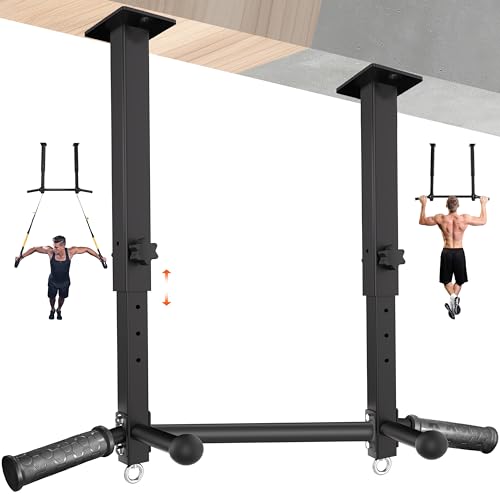
- Five height settings from 21.6 to 29.5 inches
- Fits 24-inch joists and concrete ceilings
- 800-pound rating with ball grips and TRX anchors
Best For: Versatile low-clearance setups and advanced training
Best for Joist Flexibility
Ultimate Body Press Ceiling Pull-Up Bar

- Reversible risers fit 16- or 24-inch joists
- Four angled, foam-covered grip positions
- Includes installation template and 10-year warranty
Best For: Flexible ceiling placement in home gyms
Best Value
Shnlie Joist-Mounted Pull-Up Bar

- 42-inch bar rated for up to 440 pounds
- Six foam-padded grip sections
- Includes hardware, instructions, and videos
Best For: Simple, padded pull-up training on wood joists
Best for 8-Foot Rooms
48-Inch Ceiling Mount Pull-Up Bar
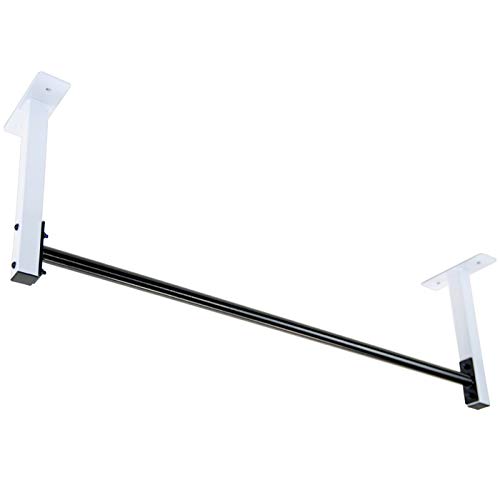
- Designed for 8-foot ceilings with 14-inch risers
- 48-inch bar supports full-range movements
- Fits typical 16-inch and 24-inch joist layouts
Best For: Home gyms with 8-foot ceilings
Most Versatile Mounting
Reversible-Riser Ceiling Pull-Up Bar

- Risers flip for ceiling, beam, wall, or doorway mounting
- 400-pound stated weight capacity
- Includes hardware, tools, and installation instructions
Best For: Flexible home-gym installations
Highest Weight Capacity
Heavy-Duty Joist-Mount Pull-Up Bar

- 600-pound stated weight capacity
- Reinforced steel plates and pipe construction
- Three padded grip positions for varied workouts
Best For: Strength-focused home gyms
Heavy-Duty Pick
Titan Fitness Ceiling & Wall-Mount Pull-Up Bar
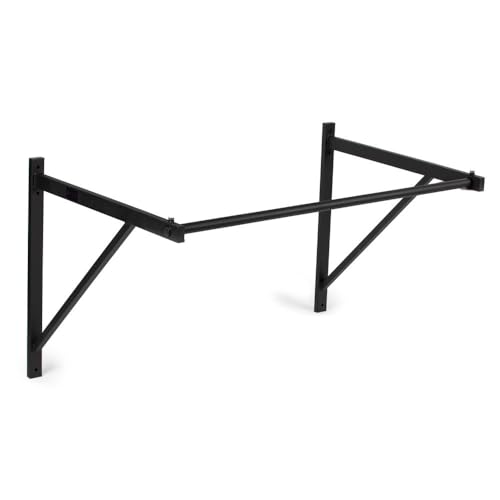
- 500-pound maximum capacity
- Wall- or ceiling-mount design
- 11-gauge steel construction
Best For: High-capacity home and garage gym training
Best Simple Pick
SELEWARE Welded Wall, Joist & Ceiling Pull-Up Bar

- Four adjustable height settings
- Four grip positions plus accessory rings
- 400-pound maximum capacity
Best For: Compact gyms needing flexible, multi-exercise training
Low-Clearance Training Pick
Joist-Mounted Adjustable Pull-Up Bar

- Two adjustable height settings
- Four non-slip grip positions
- 350-pound maximum capacity
Best For: Home gyms and CrossFit-style overhead training
Best Overall – AmStaff Fitness Joist Mount Pull-Up Bar
If you need a pull up bar for low ceilings, the AmStaff Fitness Joist Mount model is designed to maximize overhead clearance with 12-inch vertical supports. Its 42-inch width, multi-grip layout, and heavy-duty steel construction make it a practical choice for home gyms, beams, and rafters.
Best For: Home-gym users who want a wide, compact ceiling-mounted bar with extra head clearance.
Pros:
- 12-inch vertical supports help provide generous head clearance.
- Extra-wide 42-inch bar with padded 1.25-inch diameter grip.
- Includes 5-inch parallel grips for additional hand positions.
- Rated for up to 400 pounds and includes mounting hardware.
Cons:
- Requires a suitable joist, beam, or rafter for installation.
- Its 42-inch width may be more than some compact spaces need.
With its low-profile vertical design and broad grip selection, this bar is a strong fit when overhead space is limited. Verify your mounting surface and available width before installation.
Most Adjustable – HWOOUSA Adjustable Ceiling Pull-Up Bar
For a pull up bar for low ceilings that can adapt to different installations, this adjustable ceiling model offers five height positions from 21.6 to 29.5 inches. It fits 24-inch studs or concrete ceilings and adds multiple grips, ball handles, and built-in suspension anchors.
Best For: Users who need adjustable clearance and want one ceiling station for pull-ups, grip training, and suspension exercises.
Pros:
- Five-level height adjustment helps accommodate low or high ceilings.
- Designed for 24-inch wood joists or concrete ceilings.
- Offers wide, narrow, neutral, and ball-grip options.
- Supports up to 800 pounds and includes two integrated TRX anchors.
Cons:
- Its maximum 29.5-inch height may require more overhead space than fixed low-profile bars.
- Installation hardware differs for wood and concrete, so the ceiling type must be confirmed.
This is the most flexible option in the group for managing clearance and workout variety. Its substantial weight rating and adjustable arms are especially useful for weighted training, provided the mounting surface is appropriate.
Best for Joist Flexibility – Ultimate Body Press Ceiling Pull-Up Bar
The Ultimate Body Press ceiling bar is a practical pull up bar for low ceilings when joist placement is the main concern. Its reversible risers can mount below either 16-inch floor joists or 24-inch ceiling joists, while four angled grip positions support varied pull-up and chin-up training.
Best For: Home-gym owners who want flexible joist placement and ergonomic grip options.
Pros:
- Reversible risers accommodate 16-inch and 24-inch joist spacing.
- Four angled grip positions help vary training and hand placement.
- Includes a mounting template, hardware, instructions, and USA technical support.
- Comes with a 10-year limited warranty and an anchor for optional resistance trainers.
Cons:
- Its 14-inch height may provide less clearance than shorter-support designs.
- Maximum weight recommendation is 300 pounds.
- Optional bodyweight resistance trainers are sold separately.
The reversible risers make this a useful choice for installations where joist spacing may vary. Measure both the joists and available overhead clearance before choosing this model.
Best Value – Shnlie Joist-Mounted Pull-Up Bar
The Shnlie joist-mounted bar is a straightforward pull up bar for low ceilings, beams, and rafters. Its compact 42-inch design uses a sprayed protective coating and six foam-padded handle sections, while the included instructions, accessories, and installation videos simplify setup.
Best For: Budget-conscious home-gym users who want a basic, wide joist-mounted bar with padded grips.
Pros:
- Heavy-duty steel construction supports up to 440 pounds.
- Six foam pads provide multiple comfortable grip areas.
- Protective coating helps resist rust and corrosion.
- Includes installation accessories, instructions, and helpful videos.
Cons:
- The product details identify it as a wall-mount model requiring drilling, so verify the intended ceiling or joist installation.
- Its 13-inch height may offer less clearance than the AmStaff model.
- The supplied notes specifically describe installation on wood.
Shnlie offers a solid combination of width, padding, and weight capacity for a simple home setup. Because the mounting information is described inconsistently, confirm the installation surface and hardware requirements before buying.
Best for 8-Foot Rooms – 48-Inch Ceiling Mount Pull-Up Bar
If you need a pull up bar for low ceilings, this Ultimate Body Press model is specifically designed for rooms with 8-foot ceilings. Its 14-inch risers and 48-inch straight bar provide useful clearance and ample width for full-range upper-body exercises.
Best For: Home gyms with 8-foot ceilings and users who want a wide, stable ceiling-mounted bar.
Pros:
- Designed for 8-foot ceilings with 14-inch risers.
- 48-inch bar offers generous room for different grips and exercises.
- 48-inch mounting plates fit typical 16-inch and 24-inch joist layouts.
- Through-bolted steel risers help prevent bar rotation, and the stated capacity is 450 pounds.
Cons:
- Accessories such as ab straps and gymnastic rings are sold separately.
- Its fixed 48-inch width may be more than some compact spaces require.
This is a purpose-built option for low-ceiling rooms, combining the specified 8-foot fit with a wide bar and reinforced riser connection. Confirm your joist layout and available overhead clearance before installation.
Most Versatile Mounting – Reversible-Riser Ceiling Pull-Up Bar
For shoppers comparing a pull up bar for low ceilings, the ATENTO stands out for its reversible risers. The risers can flip 90 degrees for ceiling, joist, beam, wall, or doorway installation, giving you more flexibility when overhead space or mounting options are limited.
Best For: Users who need flexible installation options and padded grips in a compact home-gym setup.
Pros:
- Reversible risers support several mounting configurations.
- Heavy-duty steel construction is rated for up to 400 pounds.
- Foam-covered grips are designed for comfort and slip resistance.
- Installation hardware, tools, and instructions are included.
Cons:
- The 40-inch bar is narrower than some 48-inch alternatives.
- Multiple mounting options require careful planning for the chosen surface.
Its main advantage is adaptability: you can orient the risers to suit the available structure rather than committing to a single mounting position. The lifetime warranty also adds reassurance for long-term home use.
Highest Weight Capacity – Heavy-Duty Joist-Mount Pull-Up Bar
This heavy-duty ceiling-mounted bar is worth considering if you want a pull up bar for low ceilings with a strong stated load rating. Its solid steel construction, reinforced mounting plates, and multiple padded grip positions are suited to users prioritizing stability and exercise variety.
Best For: Strength-focused users who want a highly rated steel bar with wide, narrow, and parallel grips.
Pros:
- Supports up to 600 pounds according to the supplied specifications.
- 6mm-thick mounting plates and 1.5mm steel pipe are built for rigidity.
- Three padded grip positions support parallel, narrow, and wide hand placement.
- Includes wood lag bolts and concrete anchors for applicable mounting surfaces.
Cons:
- Installation requires a drill, and concrete mounting also calls for a 12mm bit and hammer.
- The listed dimensions are 37 inches wide by 29.5 inches high, so clearance should be measured carefully.
With the highest stated capacity in this selection and three grip choices, this bar emphasizes strength and stability. Measure both ceiling height and mounting structure before choosing it for a low-clearance room.
Heavy-Duty Pick – Titan Fitness Ceiling & Wall-Mount Pull-Up Bar
If you need a pull up bar for low ceilings, the Titan Fitness model offers flexible ceiling or wall mounting while maintaining a strong, commercial-style build. Its 500-pound capacity and 32mm powder-coated bar suit demanding home or garage gym workouts.
Best For: Athletes wanting a high-capacity, permanently mounted pull-up bar with wall or ceiling installation flexibility.
Pros:
- Supports up to 500 pounds.
- Can mount to a wall or ceiling.
- Heavy-duty 11-gauge steel construction.
- Designed for wood studs or concrete with standard 16-inch stud spacing.
Cons:
- Its 31-inch height may require careful clearance planning in low-ceiling rooms.
- Installation requires suitable studs or concrete and secure mounting.
The Titan is a strong choice when stability and load capacity matter most. Measure your available clearance and confirm the mounting surface before installation.
Best Simple Pick – SELEWARE Welded Wall, Joist & Ceiling Pull-Up Bar
For shoppers comparing a pull up bar for low ceilings, the SELEWARE stands out for its four height settings. The ceiling-mount design, multiple grips, and included accessory rings support varied upper-body and suspension-style workouts.
Best For: Users who want adjustable height, multiple grip options, and attachment points for resistance or suspension accessories.
Pros:
- Offers four adjustable height positions.
- Includes four grip positions and non-slip end handles.
- Supports up to 400 pounds.
- Mounting hardware is provided for wood and concrete, with 12- or 24-inch stud spacing compatibility.
Cons:
- Its 400-pound capacity is lower than the Titan Fitness option.
- Height and mounting compatibility should be checked carefully before installation.
The SELEWARE is a versatile option for compact training areas where changing bar height can help manage clearance and accommodate different exercises. Verify your ceiling structure and available space before mounting.
Low-Clearance Training Pick – Joist-Mounted Adjustable Pull-Up Bar
This joist-mounted option is a practical pull up bar for low ceilings because its two height settings let you position the bar for different exercises and users. The 42-inch-wide frame supports several grips and can mount to overhead joists, ceiling beams, or a wall.
Best For: Home gym and CrossFit users who need adjustable overhead training with multiple grip positions.
Pros:
- Supports up to 350 pounds.
- Provides low and high height settings.
- Includes wide, narrow, parallel, and opposite grip options.
- Can be installed on solid wood, concrete, steel structures, overhead joists, ceiling beams, or walls with the appropriate setup.
Cons:
- 350-pound capacity is the lowest of these three options.
- Only two height settings are available.
- Installation requires a solid structural mounting surface.
The adjustable height and 42-inch width make this a flexible choice for varied hanging exercises in a home gym. Confirm the ceiling or joist structure and select the setting that preserves safe movement clearance.
How We Picked the Best Pull Up Bar for Low Ceilings
We focused on the factors that matter most when overhead clearance is limited: mounting depth, riser height, bar width, grip configuration, construction, and installation flexibility. The selection includes joist-mounted and ceiling-mounted designs, plus models that can also work on suitable walls or beams. We also considered whether each bar supports basic pull-ups and chin-ups only or offers useful grip variety for wider training options.
Because installation quality affects safety as much as the bar itself, buyers should verify joist spacing, ceiling structure, fastener requirements, and the manufacturer’s stated weight limit before purchasing. Product capacity is not a substitute for properly securing the mount to structural lumber or another approved surface.
Quick Comparison
- Best for adjustable clearance: Choose a model with reversible risers, adjustable height, or multiple mounting positions.
- Best for compact installations: A straight, low-profile bar is usually easier to fit beneath a low ceiling.
- Best for varied grips: Multi-grip bars or ball-grip designs offer more hand positions but may require additional overhead room.
- Best for high-capacity training: Look for clearly stated load ratings and heavy-duty steel construction.
- Best for exposed joists: Joist-mounted bars simplify placement when solid ceiling framing is accessible.
Key Buying Factors for a Pull-Up Bar for Low Ceilings
Available Headroom
Measure from the floor to the ceiling, then account for the bar, risers, mounting hardware, and your head position during the movement. A lower bar may be more comfortable for strict pull-ups, while a higher placement can reduce knee interference but may not suit a low room.
Mounting Surface and Joist Spacing
Confirm whether the bar fits 16-inch or 24-inch joist layouts, or whether its mounting plates can span your framing. Never rely on drywall, thin paneling, or an unverified ceiling surface alone. When in doubt, consult a qualified installer.
Bar Width and Grip Design
A 42-inch or 48-inch bar can provide a comfortable standard grip without consuming excessive space. Wider or multi-grip models may be useful for training variety, but they can be less practical in cramped rooms. Foam or textured grips may improve comfort, while smooth steel is often easier to clean and maintain.
Capacity and Construction
Compare the rated capacity with your body weight, added weight, and dynamic forces from kipping or swinging. Welded steel construction, substantial mounting plates, and appropriate hardware are important indicators of a durable setup.
Who Should Buy Which Pull Up Bar for Low Ceilings?
Apartment and basement users should prioritize low-profile bars and adjustable or reversible risers. Garage-gym owners with exposed framing can choose a heavy-duty joist-mounted model with a wider bar or multiple grips. Beginners may prefer a straightforward straight bar that is easy to install and use. Advanced trainees should look for a clearly documented capacity, rigid construction, and mounting geometry compatible with weighted pull-ups or other controlled progressions. Whichever model you choose, measure first and treat structural installation as part of the product decision.