The best quiet window fans can bring in cooler outdoor air, exhaust stale heat, and improve circulation without becoming a constant background distraction. The right choice depends on more than advertised speed settings: window fit, airflow direction, controls, and weather protection all matter.
We compared 10 popular models across those practical factors to help you choose a fan that matches your room, window, noise tolerance, and ventilation needs.
Best 10 Quiet Window Fans Picks for 2026
Smart Reversible Cooling

- Reversible intake, exhaust, and exchange airflow
- Programmable thermostat with LED display
- Remote control and 24–36-inch window fit
Best For: Bedrooms and offices needing automated airflow control
Compact Quiet Pick

- Below-40 dB listed noise level
- Three speeds and an 8-hour timer
- Lightweight design with USB-C cord support
Best For: Small rooms, desks, RVs, and portable cooling
High-Velocity Window Cooling
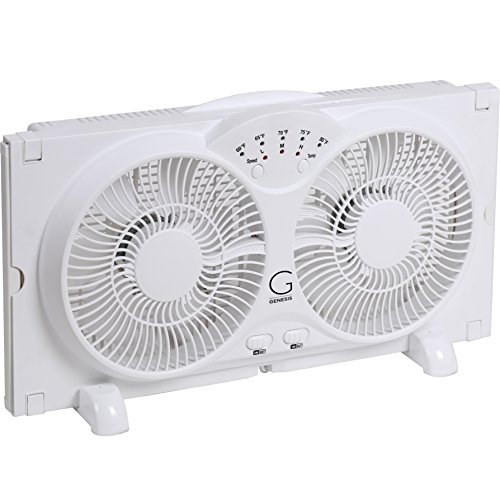
- Dual 9-inch fan heads with 706.21 CFM listed capacity
- Reversible intake and exhaust airflow
- 60–80°F thermostat with LED indicators
Best For: Window ventilation requiring stronger airflow
Versatile Bedroom Ventilation

- Cooling, circulation, and exhaust modes
- Remote control with three speeds
- Auto-locking expanders fit 23.5–37-inch windows
Best For: Bedrooms needing flexible remote-controlled ventilation
Flexible Quiet Airflow

- Three intake, exhaust, and circulation modes
- Expandable 23.5–37-inch panel
- Remote, covers, bug screen, and foam seal included
Best For: Flexible room ventilation and larger window openings
Simple Quiet Remote Control

- Three reversible airflow modes
- 23.5–37-inch expandable window fit
- Portable design with remote and foam seal
Best For: Affordable-feeling everyday cooling and ventilation flexibility
Best Value Basic

- Two speeds with reversible intake and exhaust airflow
- Expandable panels fit 25- to 32-inch windows
- Manual push-button controls and copper motor
Best For: Simple bedroom or small-room ventilation
Best Features

- Four speeds with remote thermostat and timer
- Quiet 47 dB operation with concealed blades
- Spacer blocks fit 26- to 39.7-inch windows
Best For: Feature-rich cooling in bedrooms, kitchens, or offices
Smart Reversible Cooling – Bionaire Window Fan
For shoppers comparing quiet window fans, the Bionaire offers flexible airflow control with three speeds, reversible operation, and a listed 47 dB noise level. Its thermostat, LED display, remote, and expandable panels make it a practical choice for bedrooms and other rooms where convenient temperature control matters.
Best For: Bedrooms, home offices, and standard windows needing adjustable intake, exhaust, or air exchange.
Pros:
- Reversible blades can draw in fresh air, exhaust warm air, or exchange airflow.
- Programmable thermostat and LED temperature display support automatic operation.
- Remote control, three speeds, and panels that fit 24–36-inch windows add convenience.
Cons:
- At 47 dB, it may not be the quietest option for especially noise-sensitive sleepers.
- It requires a standard 120V outlet and is designed for window mounting.
Choose this model when you want more automation and airflow flexibility than a basic window fan. The included remote and thermostat are particularly useful when the fan will run in a bedroom or office.
Compact Quiet Pick – JUMXION 10-Inch Box Fan
This compact JUMXION fan is a flexible alternative for shoppers seeking quiet window fans in a small space. It is rated below 40 dB at maximum, offers three speeds and an 8-hour timer, and can run from its DC adapter or a USB-C cord connected to compatible equipment.
Best For: Bedrooms, desks, RVs, camping, and small rooms where portability matters.
Pros:
- Compact two-pound design can sit on a table, floor, sill, or other flat surface.
- Quiet operation is listed below 40 dB at maximum.
- Three speeds, 2-to-8-hour timer settings, and USB-C connectivity offer flexibility.
Cons:
- It is a tabletop fan rather than a dedicated window-mounted model.
- Its 6-watt motor is intended for compact air circulation, not high-capacity room ventilation.
This is a strong fit when low noise, portability, and convenient power options matter more than a built-in window installation. Its small footprint also makes storage and room-to-room moving simple.
High-Velocity Window Cooling – Genesis Twin Fan
The Genesis Twin Fan combines two 9-inch fan heads with reversible airflow and a listed capacity of 706.21 CFM. For shoppers considering quiet window fans, it provides three speed settings and a thermostat with LED indicators, though the supplied notes do not specify a noise rating.
Best For: Bedrooms and windows where strong airflow, exhaust, and temperature adjustment are priorities.
Pros:
- Dual fan heads and high-velocity airflow support cooling and ventilation.
- Reversible operation can bring in air or exhaust it from the room.
- Adjustable 60–80°F thermostat and expandable side panels simplify operation and fitting.
Cons:
- No specific noise-level rating is provided, so quietness is harder to compare.
- The 8.4-pound unit may be less convenient to move than compact tabletop fans.
Consider this model when airflow capacity and reversible window ventilation are more important than a documented quietness rating. Its thermostat and expandable panels add useful practicality for regular bedroom use.
Versatile Bedroom Ventilation – Comfort Zone Twin Fan
The Comfort Zone Twin Fan suits shoppers seeking quiet window fans with more than one ventilation mode. It offers three speeds, cooling, circulation, and exhaust settings, plus a remote control and adjustable expanders for windows from 23.5 to 37 inches. Its listed noise level is 52 dB.
Best For: Bedrooms and living spaces needing remote-controlled cooling, circulation, or exhaust.
Pros:
- Three modes support cooling, opposing-blade circulation, and exhaust ventilation.
- Remote control adjusts speed, functions, and power from across the room.
- Auto-locking expanders fit a broad 23.5–37-inch window range.
Cons:
- Its listed 52 dB noise level is higher than some compact quiet-fan options.
- The supplied notes do not specify the complete included accessory details beyond the remote and window features.
This fan is best when ventilation flexibility is the priority. The fabric cover and bug screen mentioned in the title may also be useful for seasonal window installation, while the remote simplifies nighttime adjustments.
Flexible Quiet Airflow – shinic 9" Twin Window Fan
The shinic 9-inch twin fan is a practical choice among quiet window fans when you want flexible ventilation across different window sizes. Its three airflow modes support intake, exhaust, or circulation, while three speeds and a remote help tailor comfort.
Best For: Bedrooms and other rooms needing adjustable cooling, exhaust, or whole-room air circulation.
Pros:
- Three modes provide inward cooling, outward exhaust, or opposing-blade circulation.
- Expandable panel fits windows from 23.5 to 37 inches and locks into position.
- Includes covers, a bug screen, standing feet, and foam sealing tape.
- Remote control and three speeds make operation convenient.
Cons:
- At 49 dB, it may not be the quietest option for especially noise-sensitive sleepers.
- The remote requires two AAA batteries, which are not included.
- Its 70-watt motor uses more power than the lower-wattage Vornado option.
Choose this model if broad window compatibility and versatile airflow matter most. The included sealing materials and bug screen add practical value for seasonal ventilation, while the removable feet allow tabletop use when window mounting is not needed.
Low-Profile Premium Pick – Vornado TRANSOM Window Fan
The Vornado TRANSOM is a strong pick among quiet window fans for buyers who want a low-profile installation and electronically reversible airflow. Its 45 dB noise rating, four speeds, remote, and automatic temperature control support comfortable everyday use.
Best For: Single- or double-hung windows 26 to 40 inches wide in bedrooms, living rooms, home offices, and other indoor spaces.
Pros:
- 45 dB operation is quieter than the two 49 dB Shinic models listed here.
- Electronically switches between fresh-air intake and exhaust with one button.
- Four speeds, remote control, and auto temperature control offer detailed adjustment.
- Weather-resistant case and Soft-fit foam blocks help create a secure fit.
Cons:
- It fits windows 26 to 40 inches wide, so it is less suitable for narrower openings.
- Window screen removal may be necessary depending on window depth.
- It can only be installed horizontally and is intended for U.S. voltage requirements.
This is the most refined option for shoppers prioritizing lower noise, efficient controls, and a compact profile. Its 185 CFM airflow is lower than the Shinic models’ listed 450 CFM, so it favors controlled comfort and fit over maximum stated airflow.
Simple Quiet Remote Control – shinic 9" Window Fan
The shinic 9-inch window fan is a straightforward option for shoppers comparing quiet window fans with remote control. It provides intake, exhaust, and circulation modes, three speeds, and an expandable panel that works in windows from 23.5 to 37 inches.
Best For: Bedrooms, living rooms, kids’ rooms, and other spaces needing portable window or tabletop airflow.
Pros:
- Three airflow modes cover cooling, exhaust, and fresh-air circulation.
- Expandable, lockable panel accommodates windows from 23.5 to 37 inches.
- Handles and removable feet support portability and free-standing use.
- Includes remote control and foam sealing tape for a tighter installation.
Cons:
- Its listed 49 dB noise level is higher than the Vornado TRANSOM’s 45 dB rating.
- Only three speed settings are provided.
- Remote batteries are not included.
This model makes sense when you want the core features of a reversible window fan without a more complex control system. Its 450 CFM listed airflow, broad expandable fit, and tabletop feet make it versatile, though noise-sensitive users may prefer the quieter-rated Vornado.
Best Value Basic – Amazon Basics Twin Window Fan
For shoppers seeking quiet window fans with straightforward controls, the Amazon Basics Twin Window Fan offers a simple setup for small to medium rooms. Its two speeds, reversible airflow, and expandable side panels cover the essentials without adding remote-control complexity.
Best For: Bedrooms and other small to medium indoor spaces where manual operation and basic ventilation are priorities.
Pros:
- Two speed settings provide basic comfort adjustment.
- Reversible airflow supports both intake and exhaust use.
- Expandable panels fit standard windows 25 to 32 inches wide.
- Copper motor is designed for consistent operation.
Cons:
- Uses manual push-button controls rather than a remote.
- Offers fewer speed settings than the other listed options.
- Its listed 68-watt power draw is higher than the Nexair model.
This is a practical choice if you want an uncomplicated window fan with adjustable width and reversible operation. Choose it when basic controls matter more than remote access or advanced temperature features.
Best Remote-Controlled Pick – Nexair 9-Inch Twin Window Fan
The Nexair is one of the more versatile quiet window fans for bedrooms and other spaces where convenience matters. It combines three speeds, reversible intake and exhaust airflow, and remote control, while its built-in panels accommodate a broad range of window widths.
Best For: Bedrooms, nurseries, dorm rooms, and home offices where quiet operation and remote adjustments are useful.
Pros:
- Remote control lets you adjust settings from across the room.
- Three speeds offer more flexibility than a basic two-speed fan.
- Reversible airflow supports fresh-air intake or stale-air exhaust.
- Built-in panels extend from 24 to 37 inches for flexible installation.
Cons:
- The stated noise level is 50 dB, higher than the Shinic model’s listed 47 dB.
- Its 660 CFM airflow capacity is specified, but actual room results can vary with installation.
- Remote operation requires keeping the included remote accessible.
With feet included for table or floor use, this model is more flexible than a window-only design. It is a strong fit for shoppers who want quiet operation and remote convenience without giving up reversible ventilation.
Best Features – Shinic Reversible Window Fan
The Shinic combines quiet window-fan operation with four speeds, a thermostat, and a timer-controlled remote. Its reversible airflow helps manage heat and odors, while the included spacer blocks support installation in wider windows from 26 to 39.7 inches.
Best For: Bedrooms, kitchens, offices, and larger windows where adjustable airflow and thermostat-based control are valuable.
Pros:
- Four speeds make it easy to tailor airflow for rest, work, or heat removal.
- Remote control, LED thermostat, and timer support convenient operation.
- Listed noise level of 47 dB is the lowest among these three models.
- Six spacer blocks fit windows from 26 to 39.7 inches wide.
Cons:
- Installation is horizontal only and requires an opening at least 8 inches tall.
- The included remote requires two AAA batteries, which are not included.
- Its listed airflow capacity is 450 CFM, lower than the Nexair’s 660 CFM rating.
This model stands out for shoppers who want more than simple on-off ventilation. The thermostat and four speed levels add control, while the low-profile, blade-concealing design suits rooms where a discreet appearance matters.
How We Picked the Best Quiet Window Fans
We focused on features that make a window fan useful in everyday rooms: reversible intake and exhaust airflow, multiple speed settings, low-noise operation, adjustable side panels or spacers, remote controls, thermostats, timers, and weather-resistant construction. We also considered the range of window widths each model can accommodate and whether its controls are convenient for bedrooms, offices, kitchens, and living areas.
Because product specifications can vary by seller and production run, check the current listing for exact dimensions, electrical requirements, included accessories, and warranty details before ordering.
Quick Comparison
| Feature | What to look for | Best suited to |
|---|---|---|
| Single fan | Compact size and straightforward airflow | Small rooms and personal cooling |
| Twin fan | Separate or combined intake and exhaust | Flexible room ventilation |
| Remote control | Speed, mode, timer, or thermostat adjustment from across the room | Bedrooms and hard-to-reach windows |
| Expandable panels | Adjustable fit around the window opening | Windows with variable widths |
| Weather-resistant case | Added protection from incidental moisture | Windows exposed to changing conditions |
Key Buying Factors for Quiet Window Fans
Noise and Speed Control
Look for several speed levels rather than relying only on a “quiet” label. A lower setting is generally better for sleeping, calls, and focused work, while higher speeds help clear heat quickly. Fan placement, window sealing, and the condition of the blades can also affect perceived noise.
Airflow Direction
Reversible models are more versatile. Intake mode pulls cooler outdoor air inside, while exhaust mode pushes warm or stale air out. Twin-fan designs may support more flexible ventilation, but confirm how their modes operate before buying.
Fit and Installation
Measure the actual window opening, not just the frame’s nominal size. Check minimum and maximum widths, fan height, depth, included expanders, and whether the window can close securely around the unit. A snug fit reduces drafts and vibration.
Controls and Convenience
Remote controls, programmable thermostats, LED displays, and timers can make overnight use easier. A timer is especially useful if you want ventilation without leaving the fan running continuously.
Who Should Buy Which Quiet Window Fans?
Choose a compact single-fan model for a small bedroom, office, RV, or occasional personal cooling. A twin reversible fan is a better fit when you want to switch between bringing in fresh air and exhausting heat. For bedrooms, prioritize low-speed noise, a remote, and a timer. For kitchens or hot living spaces, prioritize stronger airflow and exhaust capability. If your window is exposed to weather, choose a weather-resistant design and still remove or protect the fan during severe conditions.