Running parachutes can add controlled resistance to sprint drills, helping young athletes practice acceleration, drive, and power without bulky equipment. The right chute should match the athlete’s size, experience, and training surface.
We compared these 10 options by canopy size, adjustability, intended use, portability, and value so coaches and parents can choose a practical speed-training aid for youth soccer, football, track, and general athletic development.
Best 10 Running Parachutes for Young Athletes Picks for 2026
Dual-Chute Speed Builder
Kbands Dual 54-Inch Speed Parachutes
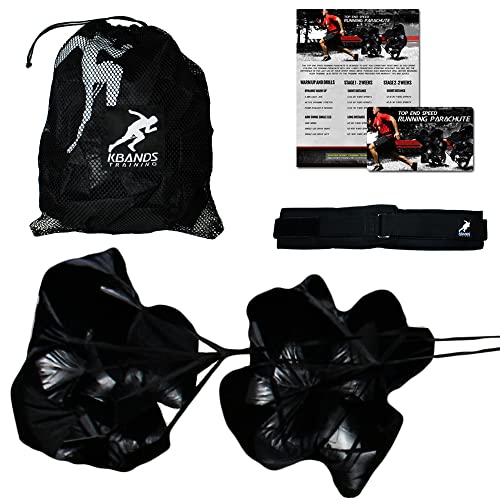
- Two 54-inch chutes for flexible resistance
- Use one or both chutes with an adjustable belt
- Includes travel bag and digital trainer
Best For: Young athletes progressing from single- to dual-chute training
All-Direction Acceleration Trainer
SKLZ Speed Chute Resistance Parachute

- 360-degree belt supports multidirectional drills
- Quick-release buckle for acceleration bursts
- Mesh panels help stabilize and prevent tangling
Best For: Young athletes training acceleration across multiple sports
Simple Sprint Resistance
ND Sports 48-Inch Sprint Chute

- 48-inch chute adds wind resistance while running
- Medium resistance for sprint and fitness drills
- Adjustable design with two listed resistance levels
Best For: Young sprinters wanting a basic resistance-training setup
Explosive Speed Trainer
JAWKU Speed Parachute Resistance Training Chute

- Rotating belt supports multidirectional sprinting
- Quick-release buckle for acceleration bursts
- Mesh panels help stabilize the chute
Best For: Serious young athletes training explosive speed and agility
Compact Training Pick
48-Inch Speed Resistance Parachute

- 48-inch medium training diameter
- Supports speed, stamina, strength, and acceleration
- Includes a carrying bag
Best For: Young runners and multi-sport athletes wanting portable resistance training
Adjustable Youth-Friendly Choice
56-Inch Resistance Speed Chute

- Adjustable 20- to 42-inch waist belt
- Stated 12–33 pounds of resistance
- 360-degree rotating metal D-ring
Best For: Youth teams needing adjustable fit and multidirectional sprint work
Heavy-Resistance Option
56-Inch Adjustable Speed Chute

- 56-inch chute with stated 25–50-pound resistance range
- Heavy-duty adjustable belt with quick release
- 360-degree directional training ring
Best For: Supervised advanced speed and explosive-power sessions
Best Compact Kids’ Chute
48-Inch Speed Training Parachute

- Lightweight, foldable design with carrying bag
- Rotating belt supports multidirectional sprints
- Waterproof fabric and stabilizing mesh
Best For: Kids’ soccer, football, and general speed training
Best Colorful Youth Option
Multicolor 43-Inch Resistance Chute

- Ultra-lightweight and easy to carry
- Adjustable strap helps vary resistance
- Bright design suits team and school workouts
Best For: Youth acceleration and endurance training across multiple sports
Best Larger Resistance Chute

- Approximately 15–30 pounds of resistance
- Adjustable belt fits almost any athlete
- Included bag and stabilizing mesh panel
Best For: Experienced youth athletes developing explosive speed and endurance
Dual-Chute Speed Builder – Kbands Dual 54-Inch Speed Parachutes
For young athletes comparing running parachutes for young athletes, the Kbands Training Dual setup stands out for its flexibility. It includes two 54-inch chutes that can be used together or separately, allowing athletes to adjust the challenge during speed and endurance workouts.
Best For: Multi-sport families and developing athletes who want adjustable one- or two-chute resistance for indoor or outdoor training.
Pros:
- Includes two 54-inch resistance parachutes.
- Adjustable belt and detachable chutes support varied training setups.
- Includes a travel bag and a digital running progression trainer.
Cons:
- Offers one listed resistance level.
- Using two chutes may be more demanding for younger or less experienced athletes.
The ability to run with one or two chutes makes this a practical choice for athletes progressing through resistance training. Its adjustable belt and broad multi-sport compatibility add everyday versatility.
All-Direction Acceleration Trainer – SKLZ Speed Chute Resistance Parachute
SKLZ Speed Chute Resistance Parachute for Speed and Acceleration Training Grey / Black, 54-Inch
Check Price On AmazonThe SKLZ Speed Chute is a straightforward option for running parachutes for young athletes who need acceleration and top-speed drills. Its rotating belt, free-motion ring, and quick-release buckle are designed to support movement in different directions and short acceleration bursts.
Best For: Young multi-sport athletes practicing directional movement, acceleration, and resistance-based speed work.
Pros:
- 360-degree rotation belt allows movement in any direction.
- Quick-release buckle supports acceleration-burst training.
- Adjustable belt fits most athletes, while mesh panels help reduce tangling.
Cons:
- Provides one listed resistance level of 15 pounds.
- Sold as a single chute.
- No warranty is listed in the supplied details.
For athletes whose drills include starts, cuts, and directional movement, the free-motion belt is a useful feature. The single-chute design keeps the setup simple, though resistance options are limited.
Simple Sprint Resistance – ND Sports 48-Inch Sprint Chute
ND Sports 48" Sprint Chute - Running Drill Parachute - Medium Resistance - Black - 1 Pack
Check Price On AmazonFor buyers seeking uncomplicated running parachutes for young athletes, the ND Sports 48-inch Sprint Chute provides a basic resistance-training setup. It opens behind the runner to create wind resistance and is intended to support speed and strength drills.
Best For: Young sprinters and recreational athletes who want a compact, medium-resistance chute for straightforward outdoor workouts.
Pros:
- 48-by-48-inch chute creates resistance as the athlete runs.
- Medium resistance is suited to general sprint and fitness drills.
- Adjustable design with two listed resistance levels.
Cons:
- No additional components are listed as included.
- Designed primarily for workout use rather than a broad multi-sport package.
This is a practical, minimal-equipment choice for sprint sessions where the main goal is adding resistance to running. Buyers should plan to work with the included chute itself, since no extra components are specified.
Explosive Speed Trainer – JAWKU Speed Parachute Resistance Training Chute
The JAWKU Speed Parachute is built for young athletes working on explosive speed, stamina, and acceleration. Its adjustable heavy-duty nylon belt rotates 360 degrees, while the quick-release buckle supports acceleration bursts and the chute can release during overspeed training.
Best For: Serious young athletes in track, football, soccer, basketball, and other sports who want directional and acceleration-focused resistance drills.
Pros:
- 360-degree rotating belt and free-motion ring support multidirectional sprinting.
- Quick-release buckle allows acceleration-burst training.
- Built-in mesh panels help stabilize the chute and reduce string tangling.
- Adjustable 2-inch heavy-duty nylon belt fits almost any athlete.
Cons:
- The supplied notes do not specify a resistance rating or number of levels.
- It is presented as a single resistance chute.
- Intended for outdoor fitness and running drills, so suitable open space is needed.
With its flexible belt movement and release feature, the JAWKU is a strong fit for athletes whose programs combine straight-line sprints, directional drills, and overspeed work. It offers more training versatility than a basic fixed-belt design.
Compact Training Pick – 48-Inch Speed Resistance Parachute
For young athletes looking for running parachutes for young athletes, this 48-inch LucaSng model offers a compact way to add resistance to speed, stamina, strength, and acceleration sessions. Its included carrying bag also makes it convenient to take to practice.
Best For: Young runners and multi-sport athletes who want a straightforward, portable resistance chute.
Pros:
- 48-inch diameter provides a medium-sized training target.
- Designed to support speed, stamina, strength, and acceleration work.
- Made from parachute cloth and netting.
- Includes a carrying bag.
Cons:
- The supplied notes do not specify an adjustable waist belt.
- Resistance level details are not provided.
This is a simple option for athletes who value portability and basic resistance training. Coaches may want to confirm fit and setup details before using it with younger athletes.
Adjustable Youth-Friendly Choice – 56-Inch Resistance Speed Chute
This 56-inch Bfsmile chute is a flexible choice among running parachutes for young athletes, with an adjustable nylon belt sized for 20- to 42-inch waists. It is designed for speed, acceleration, and explosive-force training across several sports.
Best For: Youth teams and developing athletes who need an adjustable belt and directional sprint training.
Pros:
- 56-inch parachute can produce a stated 12–33 pounds of resistance, depending on speed.
- Adjustable belt fits 20- to 42-inch waists.
- 360-degree rotating metal D-ring supports sprints in different directions.
- Lightweight design includes a carrying bag.
Cons:
- The product listing identifies the target audience as adults, despite mentioning children in the belt description.
- Adding multiple chutes may be inappropriate for younger athletes without qualified supervision.
Its adjustable fit and rotating connection make this one of the more adaptable options in the group. For young athletes, start with the single chute and match training intensity to their size and experience.
Heavy-Resistance Option – 56-Inch Adjustable Speed Chute
For stronger young athletes progressing into more demanding running parachutes for young athletes, this KUYOU 56-inch model emphasizes resistance and acceleration work. Its adjustable heavy-duty belt, quick-release buckle, and rotating ring support varied sprint drills.
Best For: Supervised speed and explosive-power sessions for athletes who need a sturdier adjustable setup.
Pros:
- 56-inch chute is listed with 25–50 pounds of resistance in the product bullets.
- Adjustable 2-inch heavy-duty nylon belt has a quick-release buckle.
- 360-degree rotating belt and free-motion ring allow directional training.
- Includes a carrying bag and a one-year warranty description.
Cons:
- The supplied details give different resistance figures, including 25–35 pounds in the specifications.
- Its higher stated resistance may be more suitable for advanced or closely supervised training.
- The notes do not provide a specific youth waist range.
This model offers the most substantial stated resistance range in the roundup, along with useful belt hardware. Because the specifications vary, verify the expected resistance and fit before selecting it for a young athlete.
Best Compact Kids’ Chute – 48-Inch Speed Training Parachute
For young athletes who need a simple, portable option, this 48-inch chute is a practical pick among running parachutes for young athletes. Its lightweight polyester design folds into the included carrying bag, while the rotating belt supports sprinting in different directions.
Best For: Kids’ soccer, football, and general speed-and-strength training.
Pros:
- Lightweight and easy to carry or set up.
- 360-degree rotating belt allows multidirectional sprints.
- Combines resistance and speed training as running speed increases.
- Waterproof, sun-blocking, quick-drying fabric with stabilizing mesh.
Cons:
- The listed maximum weight recommendation is 20 pounds, so sizing and suitability should be checked carefully.
- Its 48-inch size may provide less resistance than larger chutes.
This is a convenient youth-focused trainer for outdoor sessions where portability and straightforward setup matter. The option to connect multiple chutes may also appeal to athletes seeking progressively greater resistance.
Best Colorful Youth Option – Multicolor 43-Inch Resistance Chute
This multicolor 43-inch model is a lightweight choice for running parachutes for young athletes. The adjustable waist strap lets users tailor the resistance, and its bright design is easy to spot during school, club, or team workouts.
Best For: Youth athletes training acceleration, core strength, and muscle endurance across multiple sports.
Pros:
- Ultra-lightweight and easy to carry.
- Adjustable resistance supports progression in training.
- Bright multicolor design is easy to locate outdoors.
- Suitable for track, football, soccer, basketball, tennis, and other activities.
Cons:
- The supplied notes do not specify an included carrying bag.
- At 43 inches, it is smaller than some available resistance chutes.
Choose this chute when visibility, portability, and adjustable resistance are higher priorities than maximum size. Its broad sport compatibility makes it useful for shared school or club equipment.
Best Larger Resistance Chute – 56-Inch Powerchute
For athletes ready for a larger drag chute, this 56-inch model offers approximately 15–30 pounds of resistance. It is a versatile option among running parachutes for young athletes, with an adjustable belt, included storage bag, and a stabilizing mesh panel designed to reduce cord tangling.
Best For: Older or more experienced youth athletes working on explosive speed, stride frequency, and muscular endurance.
Pros:
- Provides approximately 15–30 pounds of resistance.
- Adjustable belt with extended hook-and-loop fastening.
- Supports speed and strength work across several sports.
- Soft, waterproof, sun-blocking, quick-drying polyester with stabilizing mesh.
Cons:
- The larger 56-inch design may be more resistance than beginners need.
- The listed resistance range may require age- and ability-appropriate supervision.
This is the strongest choice of the three for athletes who need a more substantial training load. Its larger canopy and stated resistance range make it better suited to progressive sprint work than very young beginners.
How We Picked the Best Running Parachutes for Young Athletes
We focused on the features that matter most during youth speed training: canopy size, resistance potential, waist-belt adjustability, durability, portability, and stated intended use. We also considered whether each chute is sold individually or as a multi-pack, since that can affect partner drills and overall value.
Because wind resistance varies with running speed and conditions, product size alone does not determine difficulty. Adjustable straps and a comfortable, secure belt are especially important for younger athletes, who should be able to sprint naturally without the equipment slipping or restricting movement.
Quick Comparison
Use the product listings above to compare the main differences at a glance. The 43- to 48-inch models may suit younger or less experienced athletes who need a manageable starting point, while 54- to 56-inch chutes can provide more drag for stronger runners. Dual-chute packs are useful for team sessions or paired drills, but a single chute may be the simpler choice for individual practice.
Key Buying Factors for Running Parachutes for Young Athletes
Canopy Size and Resistance
Larger canopies generally create more air resistance, particularly when the athlete reaches higher speed. Choose a moderate size for beginners and younger children, then progress gradually as technique improves. Resistance should challenge acceleration without causing the athlete to lean excessively or shorten their stride.
Fit and Adjustability
Look for a waist belt that adjusts securely over athletic clothing. A stable belt helps keep the chute centered and reduces distractions during starts, sprints, and change-of-direction drills. Check the listed waist range before buying, especially for children who are still growing.
Construction and Portability
Reinforced attachment points, durable fabric, and strong connecting lines can improve longevity when the chute is used regularly. A carry bag is helpful for teams traveling to fields or tracks, while compact storage makes home use easier.
Training Setup and Safety
Use parachutes in an open, obstruction-free area with adequate spacing. Begin with short efforts, inspect the belt and lines before each session, and stop if the athlete loses form or experiences discomfort. Young athletes should be supervised by a qualified adult and should not use resistance equipment as a substitute for warm-ups or coaching.
Who Should Buy Which Running Parachutes for Young Athletes?
Beginners and smaller athletes: Start with a smaller or medium-resistance chute and prioritize a comfortable adjustable belt. Experienced youth sprinters: Consider a 54- or 56-inch model when the athlete can maintain sound mechanics under resistance. Team coaches: A two-pack can support partner work and reduce waiting time. Traveling athletes: Choose a lightweight design with a storage bag. For most families, the best option is the model that fits securely, matches the athlete’s current strength, and allows gradual progression rather than simply offering the largest canopy.