Running sleds can make speed workouts more measurable by adding controlled resistance to acceleration drills, loaded marches, pushes, and pulls. The right model should challenge your drive phase without forcing poor sprint mechanics.
This roundup compares 10 options across resistance capacity, adjustment range, harness design, construction, portability, and training versatility so you can choose a sled that matches your goals and available space.
Best 10 Running Sleds for Speed Training Picks for 2026
Most Adjustable
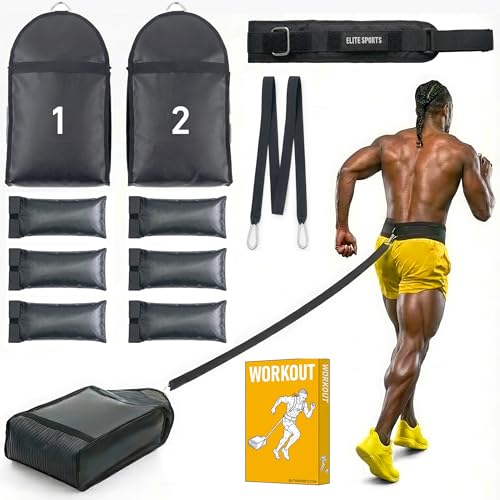
- Six resistance levels from 10–60 lb
- Water-resistant twin-sled construction
- Ships unfilled; sand sold separately
Best For: Progressive outdoor running and agility workouts
Best Harness Setup

- Uses Olympic plates for resistance
- Padded shoulder harness and waist belt
- Works across grass, snow, sand, and turf
Best For: Field-sport sprint and multidirectional drag drills
Best for Uneven Ground

- Accepts 1-inch and 2-inch plates
- Arc base helps clear obstacles
- Disassembles for easier storage
Best For: Lawn and uneven-surface speed training
Best Heavy-Duty Capacity
Titan Fitness Power Speed Sled

- Rated for up to 150 lb
- Supports pushing, pulling, and dragging
- Includes padded vest and push handles
Best For: Advanced athletes needing versatile high-load training
Versatile Outdoor Pick

- 500-pound steel capacity
- Fits 1-inch and 2-inch plates
- Designed for varied surfaces
Best For: Adjustable indoor and outdoor speed training
Premium Harness Choice

- Padded full-body harness
- 8-foot heavy-duty pull strap
- Quick no-hardware setup
Best For: Comfort-focused sled pulls and football training
Push-Pull Training Value

- Supports push, pull, and drag modes
- Fits 1-inch and 2-inch plates
- 276.6-pound stated capacity
Best For: Versatile full-body conditioning and speed work
Adjustable Sandbag Sled
Flexible Resistance for Sprint Work

- Three inner bags support adjustable sand loading.
- Adjustable waist belt fits different body types.
- Portable drag-bag design for sprint and strength work.
Best For: Athletes wanting customizable, portable resistance
Steel Plate Sled
Durable Training Across Multiple Surfaces

- Compatible with 1-inch and 2-inch weight plates.
- Curved base is designed for varied surfaces.
- Adjustable belt includes soft shoulder pads.
Best For: Plate-loaded speed and strength training
Gray Power Sled
Adjustable Plate-Loaded Speed Training

- Supports 1-inch and 2-inch weight plates.
- Steel frame has a smooth, rust-resistant surface.
- Adjustable belt uses a buckle closure and shoulder pads.
Best For: Progressive plate-loaded athletic training
Most Adjustable – Twin Sand Bag Sled Trainer
If you want running sleds for speed training with flexible resistance, this twin-sled design offers six selectable levels from 10 to 60 pounds. Its waterproof polyester construction and padded waist strap make it suited to outdoor running, sprinting, and agility work. Note that it ships unfilled, so sand must be purchased separately.
Best For: Runners and field-sport athletes who want adjustable waist-towed resistance for outdoor speed, endurance, and agility sessions.
Pros:
- Adjustable resistance from 10 to 60 pounds using removable sandbags.
- Twin-sled design helps balance the load during training.
- Water-resistant PU-PVC-coated polyester is suitable for varied weather and surfaces.
- Padded adjustable waist straps support hands-free pulling drills.
Cons:
- Ships empty; sand is not included.
- Requires access to a suitable surface and separate filling material.
This is a practical choice when progression matters, since you can increase resistance as your conditioning improves. Verify that the waist-based pulling format matches your preferred running drills.
Best Harness Setup – ECOTRIC Power Speed Sled
For running sleds for speed training that emphasize sprint resistance, the ECOTRIC Power Speed Sled combines a 10-foot leash with an adjustable shoulder harness and waist belt. It is designed for Olympic plates and supports forward drags for posterior-chain work or backward drags for quadriceps-focused training.
Best For: Football, soccer, tennis, and general sprint athletes who want a harness-based sled with changeable plate loading.
Pros:
- Supports Olympic weight plates for adjustable resistance.
- Includes an adjustable padded shoulder harness and stabilizing waist belt.
- Can be used for forward or backward drags.
- Designed for grass, snow, sand, and sports turf.
Cons:
- Weight plates are not listed as included.
- Some assembly is required.
- The 9-pound sled may not be the best choice for users seeking a heavier built-in base.
Its broad surface compatibility and harness system make it versatile for field training. Choose it if you value multiple dragging directions and easy resistance changes with compatible plates.
Best for Uneven Ground – Kipika Weight Sled
The Kipika Weight Sled is a useful option among running sleds for speed training when your workouts take place on lawns or uneven sports grounds. Its arc-style bottom is designed to move through obstacles while protecting the training surface, and it accepts both 1-inch and 2-inch weight plates.
Best For: Athletes training on lawns, carpets, and sports grounds who need a disassemblable sled for speed and power work.
Pros:
- Compatible with both 1-inch and 2-inch weight plates.
- Arc-shaped bottom is designed to clear obstacles and protect surfaces.
- Includes adjustable shoulder straps for resisted dragging.
- Easy to disassemble and store.
Cons:
- Weight plates are not listed as included.
- The shoulder-strap design may be less convenient than a waist-only setup for some runners.
The obstacle-clearing base gives this model a practical edge for less-than-perfect training areas. It is a solid fit for athletes who want plate flexibility without limiting workouts to smooth turf.
Best Heavy-Duty Capacity – Titan Fitness Power Speed Sled
For athletes looking for running sleds for speed training with a higher stated load rating, the Titan Fitness Power Speed Sled is rated for up to 150 pounds. It supports pushing, pulling, or dragging and includes a deluxe padded vest, durable straps, and proprietary handles for push work.
Best For: Adult athletes who want one sled for resisted sprints, agility drills, and both push and pull training.
Pros:
- Rated for loads up to 150 pounds.
- Supports pushing, pulling, and dragging.
- Includes a padded vest and high-durability straps.
- Usable on grass or carpet, with push handles included.
Cons:
- Minor assembly is required.
- Weight plates are not listed as included.
- Its 150-pound capacity may be more than beginners need.
This model stands out for training versatility and its substantial load rating. It makes the most sense for experienced users who want to combine resisted running with dedicated sled pushes and pulls.
Versatile Outdoor Pick – SELEWARE Weight Sled
For athletes comparing running sleds for speed training, the SELEWARE Weight Sled offers adjustable resistance, broad surface compatibility, and a design suited to both speed and strength work. Its support bars accept standard and Olympic plates, while the curved frame is designed to handle uneven terrain.
Best For: Athletes who want a durable, adjustable sled for indoor and outdoor speed development.
Pros:
- Supports up to 500 pounds and uses a rust-resistant powder-coated steel frame.
- Includes 1-inch and 2-inch support bars for standard and Olympic plates.
- Works on grass, artificial turf, tracks, concrete, asphalt, and gym surfaces.
- Adjustable shoulder straps and flat elliptical tubes add comfort and surface protection.
Cons:
- The notes do not specify included weight plates.
- A 500-pound capacity may be more than needed for beginners.
Choose this model if you value flexibility across training surfaces and want one sled for progressive resistance, speed work, and conditioning. Its compact, disassemblable design also makes storage more manageable.
Premium Harness Choice – miR Power Speed Sled
The miR Power Speed Sled is a practical option among running sleds for speed training when harness comfort and quick setup matter. It uses a full-body padded harness, an 8-foot pull strap, and a pole that screws in without requiring additional screws, bolts, or nuts.
Best For: Home, gym, and football training sessions that prioritize comfortable pulling and straightforward setup.
Pros:
- Full-body harness has side padding and front and rear clips for multiple exercises.
- Heavy-duty 8-foot nylon pull strap supports steady or explosive movements.
- One-step assembly requires no screws, bolts, or nuts.
- Flat metal frame is designed to glide across most surfaces.
Cons:
- The pull strap is described as designed to drag up to 300 pounds, while the listing title states a maximum of 500 pounds.
- The notes do not identify specific surface limitations or include weight plates.
This sled stands out for athletes who want a pull-focused setup with a more substantial harness. Confirm the intended load for your training plan, particularly if you expect to approach the higher advertised capacity.
Push-Pull Training Value – VEVOR Weight Sled
For runners seeking running sleds for speed training with multiple exercise options, the VEVOR Weight Sled supports pushing, pulling, and dragging. Its steel construction, dual plate compatibility, and four-corner pull hooks make it suitable for full-body power and explosiveness work.
Best For: Beginners and experienced athletes who want compact equipment for varied push-pull conditioning.
Pros:
- Supports pushing, pulling, and dragging for full-body training.
- Fits both 1-inch and 2-inch weight plates with double metal sleeves.
- Powder-coated steel frame has a stated load capacity of 276.6 pounds.
- Thick padded harness, adjustable straps, and upgraded carabiner improve pulling comfort and security.
Cons:
- Its stated 276.6-pound capacity is lower than some heavier-duty sleds.
- The notes do not specify whether weight plates are included.
Consider the VEVOR if exercise variety and portability are higher priorities than maximum loading. It is compact, easy to disassemble, and designed to glide across gyms, artificial turf, tracks, and other outdoor surfaces.
Adjustable Sandbag Sled – Flexible Resistance for Sprint Work
This adjustable running weight bag is a practical option for running sleds for speed training when you want portable, customizable resistance. Its three inner bags can each hold about 10 pounds of sand, allowing you to adjust the load for sprinting, leg-strength, explosive-power, and endurance work.
Best For: Sprinters and athletes who want adjustable sand resistance in a carry-friendly sled bag.
Pros:
- Three fillable inner bags let you customize the training load.
- Adjustable waist belt accommodates different body types.
- Webbing handle and hook-and-loop closure make it easier to carry and secure.
Cons:
- Sand is not included and must be added separately.
- As a drag bag, it may be less suitable for users specifically seeking a rigid push sled.
Choose this model if convenient load adjustment matters more than a traditional metal sled frame. The sand-filled design offers a simple way to scale resistance for speed-focused sessions.
Steel Plate Sled – Durable Training Across Multiple Surfaces
For athletes comparing running sleds for speed training, this steel workout sled provides a durable platform for adding resistance with either 1-inch or 2-inch weight plates. Its curved bottom and flat oval tubes are designed to move across runways, gym floors, and lawns while limiting venue damage.
Best For: Athletes who want a sturdy, plate-loaded sled for speed and strength sessions on varied training surfaces.
Pros:
- Accepts both 1-inch and 2-inch weight plates.
- Curved-bottom design is intended for runways, gyms, and lawns.
- Adjustable safety belt includes soft shoulder pads for added comfort.
- Includes assembly tools and instructions, with setup taking about 10 minutes.
Cons:
- Weight plates are not listed among the included components.
- Steel construction may be less convenient to transport than a soft drag bag.
This is a strong fit for structured resistance training where you want to change the load using plates. Its rust-resistant surface and straightforward assembly also support regular gym or outdoor use.
Gray Power Sled – Adjustable Plate-Loaded Speed Training
This gray steel sled is another practical choice among running sleds for speed training, especially for users who prefer a plate-loaded setup. It supports 1-inch and 2-inch plates, uses a curved-bottom frame for different venues, and includes an adjustable belt with soft shoulder pads.
Best For: Athletes seeking a gray, plate-compatible sled with a secure buckle closure for speed and strength work.
Pros:
- Works with both 1-inch and 2-inch weight plates.
- Curved bottom and flat oval tubes are designed for runways, gyms, and lawns.
- Steel construction uses multiple bolts for a firm, durable setup.
- Smooth, rust-resistant surface is easy to clean and store.
Cons:
- Weight plates are not specified as included.
- Assembly is required, although tools and instructions are provided.
- The steel frame is less compact than a soft resistance bag.
Select this version if you value a durable steel frame, plate versatility, and a buckle-style closure. It offers adjustable resistance for progressive speed and athletic-strength training.
How We Picked the Best Running Sleds for Speed Training
We focused on the features that matter most during resisted sprint and athletic conditioning sessions: usable weight capacity, smooth resistance adjustment, attachment quality, harness comfort, construction, and ease of storage. We also considered whether each sled supports more than one movement, such as pushing, pulling, dragging, or loaded strength work.
Because product specifications vary, verify the listed capacity, included accessories, dimensions, and weight plates or sandbag requirements before ordering. A sled’s maximum load is not necessarily the ideal load for speed training.
Quick Comparison
- Best for adjustable resistance: Choose a model with clearly defined load settings or a flexible sandbag system.
- Best for heavier strength work: Look for a reinforced frame and a high maximum capacity, such as heavy-duty options rated for several hundred pounds.
- Best for versatility: Select a push-pull sled with a harness and multiple attachment points.
- Best for home users: Prioritize a compact design, manageable storage, and compatibility with the surface where you train.
- Best for budget-conscious buyers: Compare what is included; a low-priced sled may require separate harnesses, straps, or loading bags.
Key Buying Factors for Running Sleds for Speed Training
Resistance and Load Capacity
Speed work generally benefits from light to moderate resistance that preserves sprint posture and stride rhythm. Heavy loads can be useful for strength-focused drags, but they should not replace fast, technically sound repetitions. Adjustable systems offer more room to progress than fixed-load designs.
Harness, Straps, and Attachment Points
A secure harness distributes force more comfortably than a narrow strap. Check whether the harness is included, whether it adjusts to different users, and whether the sled supports both forward and backward work. Strong connectors and replaceable straps are especially useful for frequent training.
Surface Compatibility and Durability
Steel skids, wheels, and contact surfaces behave differently on turf, grass, track surfaces, concrete, and rubber flooring. Confirm that the sled is intended for your training area. Look for durable welds, corrosion-resistant finishes, reinforced connection points, and a design that will not snag or damage the surface unnecessarily.
Portability and Storage
Consider the sled’s empty weight, folded or removable components, and how easily it fits in a vehicle or home gym. A very high-capacity sled may be overkill if you need to carry it to a field regularly.
Who Should Buy Which Running Sleds for Speed Training?
Sprinters and field-sport athletes should favor adjustable, harness-compatible sleds that allow short, fast resisted runs. Strength-focused users may prefer a reinforced high-capacity model for pushes, drags, and progressive loading. Home-gym users should choose a compact sled that works safely on their available surface and does not require excessive plate storage. Teams or shared gyms benefit from durable frames, broad adjustment ranges, and comfortable harnesses that accommodate multiple athletes.
Whichever model you choose, begin with a conservative load, keep sprint distances controlled, and increase resistance only when you can maintain efficient mechanics and consistent acceleration.