Running sleds can make sprint work, acceleration drills, and lower-body strength training more demanding without requiring a large home-gym setup.
This roundup compares 10 options across adjustable resistance, harness systems, portability, construction, and overall training versatility so you can choose the right sled for your workouts.
Best 10 Running Sleds Picks for 2026
Best Overall Heavy-Duty Pick

- Fits 1-inch and 2-inch weight plates
- Arc base helps handle uneven surfaces
- Includes adjustable shoulder straps
Best For: Plate-loaded speed and strength training
Best Plate-Loaded Field Option

- Uses Olympic weight plates
- Supports forward and backward drags
- Includes padded harness and 10-foot leash
Best For: Multi-sport sprint work on outdoor surfaces
Best Lightweight Variable-Load Pick

- Adjusts from 10 to 30 pounds
- 360-degree ring enables multidirectional work
- Includes three sandbags and a waist belt
Best For: Portable sprint and lower-body resistance training
Best Higher-Capacity Sandbag Pick

- Four bags adjust resistance up to 40 pounds
- 360-degree ring supports multidirectional drills
- PVC shell suits grass, turf, and wood floors
Best For: Adjustable sand resistance without weight plates
Obstacle-Ready Power

- Curved design for runways, gyms, and lawns
- Fits 1-inch and 2-inch weight plates
- Adjustable belt with soft shoulder pads
Best For: Plate-loaded speed and strength training across multiple surfaces
Adjustable Sandbag Resistance
Weight Sled Trainer with 3 Sandbags

- Three fillable bags provide 10–30 pounds of load
- 360-degree belt ring supports multidirectional work
- Suitable for grass, turf, and wooden floors
Best For: Portable resistance training for sprinters and field-sport athletes
Olympic Plate Control
TE DEUM Weight Training Pull Sled

- Extra-thick alloy-steel frame for heavy training
- Dual holders support balanced 2-inch plate loading
- Quick-switch bar supports fast direction changes
Best For: Olympic-plate users training with pushes, pulls, and drags
Heavy-Duty Pick

- Supports 1-inch and 2-inch plates
- Built for push, pull, and drag training
- 276.6-pound stated load capacity
Best For: Heavier, versatile strength and conditioning workouts
Surface-Friendly Pick

- Arc bottom helps clear uneven areas
- Works with 1-inch and 2-inch plates
- Compact and easy to store
Best For: Speed and resistance training across varied surfaces
Adjustable Running Pick
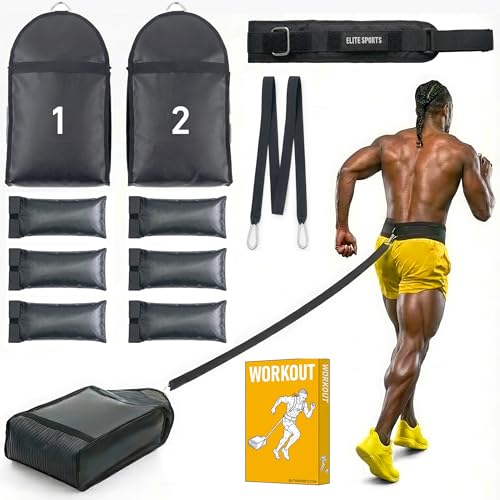
- Six resistance levels from 10 to 60 pounds
- Twin design helps balance the load
- Ships empty; sand is not included
Best For: Waist-mounted resistance for running and agility work
Best Overall Heavy-Duty Pick – Kipika Workout Weight Sled
The Kipika Workout Weight Sled is a practical choice for athletes who want running sleds with substantial loading capacity and a durable steel frame. Its arc-shaped base is designed to move across uneven surfaces and help protect lawns during resistance training.
Best For: Football, agility, and speed-strength training with 1-inch or 2-inch weight plates.
Pros:
- Supports both 1-inch and 2-inch weight plates.
- Steel buckles and a sturdy metal framework support demanding workouts.
- Arc-shaped bottom helps the sled pass over obstacles and avoid scratching surfaces.
- Includes adjustable shoulder straps and is designed for use on lawns, carpets, and sports grounds.
Cons:
- Weight plates are not listed among the included components.
- Its maximum 226.8-kilogram recommended load may be more than casual users need.
Choose this model if you want a plate-loaded sled with broad venue compatibility and a higher stated load recommendation. Its compact design also makes disassembly and storage more manageable.
Best Plate-Loaded Field Option – ECOTRIC Power Speed Sled
The ECOTRIC Power Speed Sled is one of the more straightforward running sleds for sprint resistance, using Olympic plates to increase towing demands. Its harness, waist belt, and dual leads are intended to provide stability during forward or backward drags.
Best For: Football, soccer, tennis, and general sprint training on grass, snow, sand, or sports turf.
Pros:
- Designed for use with Olympic weight plates.
- Supports forward drags for speed development and backward drags for quadriceps work.
- Adjustable shoulder harness has soft mesh padding to help reduce chafing.
- Compact 15-inch by 20-inch steel sled requires little assembly.
Cons:
- Weight plates are not included.
- The product is listed at 9 pounds, which may not suit shoppers seeking the lightest setup.
This is a useful option for users who already own Olympic plates and want a compact sled for varied field drills. The included 10-foot leash and adjustable harness add flexibility for different athletes.
Best Lightweight Variable-Load Pick – SKLZ SpeedSac Training Sled
The SKLZ SpeedSac is a lightweight alternative to plate-based running sleds, using three removable sandbags to create adjustable towing resistance. It is a convenient fit for athletes who want to change training loads without carrying metal plates.
Best For: Sprinters, football players, and athletes developing lower-body strength and explosiveness with loads from 10 to 30 pounds.
Pros:
- Three removable bags allow resistance to be adjusted up to 30 pounds.
- 360-degree belt ring supports multi-directional training.
- Durable nylon shell is designed for grass, turf, or wood surfaces.
- Includes the sled shell, sandbags, adjustable leash, and waist belt.
Cons:
- Sand is not included.
- Its 30-pound supported tension is lower than that of heavier plate-loaded sleds.
The SpeedSac makes sense for beginners, travel setups, or anyone who prefers compact resistance equipment. Its adjustable load range and multidirectional belt ring provide useful training variety without requiring Olympic plates.
Best Higher-Capacity Sandbag Pick – NAIZEA Adjustable Weight Sled
The NAIZEA Adjustable Weight Sled is a sandbag-based option for shoppers comparing running sleds that do not require weight plates. Four removable bags let you set resistance from 10 to 40 pounds, while the PVC outer shell is intended for grass, turf, or wood floors.
Best For: Athletes who want adjustable sand resistance for sprint, football, and multidirectional training indoors or outdoors.
Pros:
- Four bags provide adjustable loading up to 40 pounds.
- 360-degree belt ring supports movement in multiple directions.
- Velcro-secured straps help hold the bags in place.
- Includes an adjustable leash, waist belt, and one-year warranty.
Cons:
- Sand is not included.
- PVC construction may be less rigid than a steel plate sled.
Pick the NAIZEA if you want more adjustable sand capacity than a three-bag system and plan to train across several surfaces. Its 40-pound limit offers a moderate progression range for speed and strength work.
Obstacle-Ready Power – GanFindX Workout Weight Sled
For runners comparing running sleds, the GanFindX stands out for its curved bottom and flat oval tubes, designed to move across runways, gym floors, and lawns. It accepts both 1-inch and 2-inch weight plates, giving you a straightforward way to add resistance for speed and strength work.
Best For: Athletes who want a steel sled for plate-loaded speed and strength training across multiple surfaces.
Pros:
- Curved-bottom design is intended to navigate different venues without harming the surface.
- Accepts both 1-inch and 2-inch weight plates.
- Adjustable safety belt includes soft shoulder pads for a more comfortable pull.
- Includes assembly tools and instructions, with a stated assembly time of about 10 minutes.
Cons:
- Plate weights are not included in the supplied details.
- The one-size belt may offer less individualized fit adjustment than a specialized harness.
The GanFindX is a versatile choice when surface compatibility and plate flexibility matter. Its steel construction, rust-resistant finish, and included two-year manufacturer warranty add practical appeal for regular training.
Adjustable Sandbag Resistance – Weight Sled Trainer with 3 Sandbags
This weight sled trainer offers a flexible approach to running sleds by using three fillable PVC sandbags instead of weight plates. Each bag holds up to 10 pounds, allowing a total listed load of 10 to 30 pounds for adjustable resistance on grass, turf, or wooden floors.
Best For: Soccer players, sprinters, and athletes seeking portable, adjustable resistance for drags and multidirectional training.
Pros:
- Includes three fillable sandbags with a listed total capacity of 10 to 30 pounds.
- Adjustable belt fits a range of users from older children to adults.
- 360-degree belt rings support multidirectional training.
- Moisture-resistant PVC and secured straps are designed for use on grass, turf, and wooden floors.
Cons:
- Sand or another filler must be added separately.
- Its listed resistance range is limited to 30 pounds of sandbag load.
The sandbag format makes this sled easy to scale and potentially more portable than a plate-based model. Its belt-ring design is particularly useful if your training includes direction changes, inclines, and varied drags.
Olympic Plate Control – TE DEUM Weight Training Pull Sled
For shoppers seeking running sleds built around Olympic plates, the TE DEUM Weight Training Pull Sled uses extra-thick steel and dual plate holders for a more balanced load. It supports sled pushes, pulls, and drags, while its quick-switch bar is designed to change direction with minimal interruption.
Best For: Athletes and gym users who already train with 2-inch Olympic weight plates and want a sturdy push-pull sled.
Pros:
- Extra-thick alloy-steel construction is designed for heavy training loads.
- Dual plate holders help distribute weight and reduce wobble or tipping.
- Supports pushes, pulls, and drags for varied strength and conditioning work.
- Quick-switch bar allows side changes without stopping for a lengthy adjustment.
Cons:
- Only suitable for 2-inch Olympic weight plates.
- Plates are not included in the supplied details.
- The listed warranty is three months.
The TE DEUM is the most specialized option here, favoring users with existing Olympic plates and a preference for a stable rectangular frame. Its dual holders and quick-switch bar make it well suited to structured push-pull sessions.
Heavy-Duty Pick – VEVOR Weight Sled
For shoppers comparing running sleds for versatile strength and conditioning work, the VEVOR Weight Sled is built for pushing, pulling, and dragging. It supports standard 1-inch and 2-inch weight plates, glides across surfaces such as turf and tracks, and has a stated load capacity of up to 276.6 pounds.
Best For: Athletes and home-gym users who want a durable, multi-mode sled for heavier resistance training.
Pros:
- Supports both 1-inch and 2-inch weight plates.
- Offers push, pull, and drag training modes with four-corner hooks and a Y-shaped drag setup.
- Includes a padded, adjustable harness and reinforced stitching for improved comfort.
- Powder-coated steel construction and fully welded components support outdoor durability.
Cons:
- At 19 pounds, it is heavier than the other options in this roundup.
- Its larger 29.33-by-17.32-inch footprint may require more storage space.
The VEVOR is a strong choice when load capacity, plate compatibility, and training versatility matter most. Its compact, disassemblable design helps offset the heavier construction when transporting or storing it.
Surface-Friendly Pick – Kipika Weight Sled
The Kipika Weight Sled is a practical option among running sleds for speed development, resistance training, and agility work. Its arc-shaped bottom is designed to move over uneven areas and help protect lawns, carpets, and sports surfaces from scratching.
Best For: Runners, field-sport athletes, and fitness users who need a compact sled for turf, lawn, carpet, or other sports surfaces.
Pros:
- Accepts both 1-inch and 2-inch weight plates.
- Arc-shaped bottom helps it pass over obstacles and protect training surfaces.
- Adjustable shoulder straps support pulling-based speed and strength training.
- Compact design is easy to disassemble and store.
Cons:
- The supplied notes do not specify a maximum load capacity.
- It does not list included accessories, so the package contents may be limited.
Choose the Kipika if surface protection and portability are higher priorities than a published load rating. Its smaller dimensions and one-year warranty add practical appeal for regular recreational or athletic training.
Adjustable Running Pick – Elite Twin Sand Bag Sled
For runners who prefer waist-led resistance rather than a traditional plate-loaded frame, the Elite Twin Sand Bag Sled offers six adjustable resistance levels from 10 to 60 pounds. The twin-sled design uses removable sandbag compartments, but the product ships empty, so sand must be supplied separately.
Best For: Outdoor runners and field-sport athletes seeking adjustable, waist-mounted resistance for speed, endurance, and agility sessions.
Pros:
- Provides six resistance levels from 10 to 60 pounds.
- Twin-sled layout and three 10-pound pouches per sled support adjustable weight distribution.
- Water-resistant PU-PVC-coated polyester construction is suited to indoor and outdoor use.
- Padded waist and pull straps support running, sprinting, and jogging workouts.
Cons:
- Ships unfilled; sand is not included.
- Requires filling and adjusting sandbags instead of using standard weight plates.
The Elite Twin stands out for runners who want fine resistance control and a wearable setup. Its waterproof material and balanced twin design add flexibility, while the need to source sand is an important setup consideration.
How We Picked the Best Running Sleds
We focused on the features that matter most during resisted running and push-pull training: useful resistance ranges, construction quality, attachment hardware, portability, and setup simplicity. We also considered whether each sled is better suited to sprint drills, general conditioning, field-sport training, or strength work.
Because product configurations can vary, check the current listing for included sandbags, harnesses, straps, weight limits, and dimensions before ordering. A sled that appears inexpensive may require additional plates, filler bags, or a separate harness.
Quick Comparison
| Best For | Look For | Why It Matters |
|---|---|---|
| Speed and acceleration | Low-friction base and secure harness | Helps maintain consistent resistance during sprints |
| Adjustable home workouts | Sandbags or plate-loading capability | Lets you progress gradually without replacing the sled |
| Field-sport conditioning | Long straps and durable attachment points | Supports repeated changes in direction and distance |
| Strength-focused training | Sturdy steel frame and higher capacity | Handles heavier push and pull sessions |
Key Buying Factors for Running Sleds
Resistance and Loading
Choose a resistance system that matches your training surface and goals. Sandbags are convenient and portable, while weight plates can offer more precise loading if the sled supports them. Adjustable options are usually the best choice for users who want to progress from technique work to demanding strength sessions.
Harness, Straps, and Attachments
A comfortable harness helps distribute force across the torso during sprints. Look for adjustable webbing, secure clips, and attachment points that do not loosen under repeated pulls. If a harness is not included, factor its cost into the total price.
Surface Compatibility and Portability
Most sleds perform best on turf, grass, rubber flooring, or other suitable training surfaces. Hard, abrasive pavement can accelerate wear and may produce inconsistent resistance. Compact frames and removable bags are useful if you train in multiple locations or need to store the sled at home.
Build Quality and Safety
Inspect the frame, welds, handles, straps, and connection hardware before each workout. Start with light resistance, maintain good sprint mechanics, and use enough clear space to avoid tripping or sudden stops.
Who Should Buy Which Running Sleds?
Beginners and home users: Choose an adjustable sled with manageable resistance, included bags, and straightforward setup. A lighter system is easier to control while learning proper sled technique.
Sprinters and field-sport athletes: Prioritize a comfortable harness, smooth tracking, and a resistance range that supports both light acceleration work and harder conditioning intervals.
Strength-focused athletes: Look for a steel sled with sturdy push handles, reliable loading capacity, and hardware designed for repeated heavy use.
Traveling or space-conscious users: Favor compact designs with removable sandbags or a foldable storage profile. Before buying, confirm the packed dimensions and whether the listed weight includes accessories.