Finding the right treadmill is easier when you know whether you want resistance-driven manual training, incline walking, or a compact machine for everyday home use. This roundup compares 10 options across those categories, with attention to adjustability, footprint, comfort, and practical features.
Use the buying guide below to narrow your choices by workout style, available space, user weight, and budget before selecting a model.
Best 10 Treadmills with Adjustable Resistance Picks for 2026
Best Commercial-Style Pick
Heavy-Duty Curved Resistance Treadmill

- Self-powered curved belt
- Metal adjustable resistance
- Wide belt and LED display
Best For: Serious home users, athletes, and commercial-style training
Best Incline Alternative
Foldable 20% Incline Treadmill

- 20% auto incline
- Up to 8.7 MPH
- Foldable, shock-absorbing deck
Best For: Home users wanting incline training and easy storage
Best Foldable Manual Pick
Adjustable-Resistance Curved Treadmill

- Eight resistance levels
- No motor speed limit
- Foldable with transport wheels
Best For: Home users seeking manual control and compact storage
Best Small-Space Electric Pick

- Detachable handlebar
- Up to 5% incline
- Stores under furniture
Best For: Apartment, office, and under-desk walking
Best Heavy-Duty Pick
8Levels Curved Manual Treadmill

- Eight iron resistance levels
- 440-pound weight capacity
- LCD workout tracking
Best For: Heavy-duty home or gym cardio and interval training
Best for Everyday Use
TOPUTURE Adjustable Walking Pad
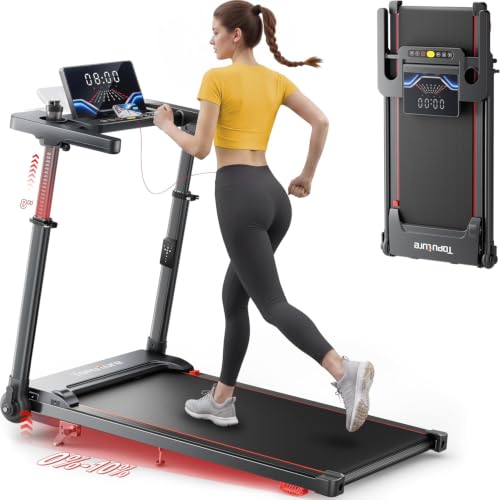
- Three manual incline levels
- Folds for compact storage
- Quiet motor and adjustable handlebar
Best For: Small-space walking, office use, and incline-focused workouts
Best Compact Manual Option
AKLUER Dual Flywheel Treadmill

- Dual flywheel resistance
- Fixed incline boosts intensity
- Foldable and non-electric
Best For: Compact home walking and gentle jogging workouts
Best Manual-Incline Pick
LONTEK 15% Incline Walking Pad
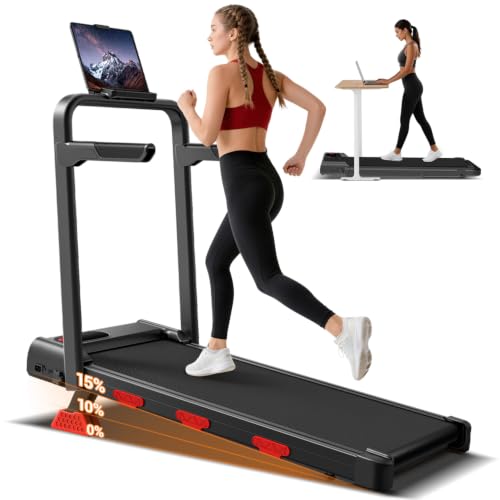
- Manual flat, 10%, and 15% incline options
- Quiet 3.0HP motor with speeds to 6.2 MPH
- 350-pound capacity with compact storage design
Best For: Compact incline walking and light jogging
Best Versatile Home Option

- 0.6–10 MPH range for walking through running
- Foldable frame with handle bar and transport wheels
- Heart-rate sensors, Bluetooth speaker, and shock absorption
Best For: Multi-purpose home or office workouts
Best Small-Space Budget Pick

- Manual four-degree incline with supportive handle bar
- Quiet operation rated at 45 dB
- Folding design for under-bed or upright storage
Best For: Low-speed incline walking in compact spaces
Best Commercial-Style Pick – Heavy-Duty Curved Resistance Treadmill
If you want treadmills with adjustable resistance and a self-powered running experience, this curved manual treadmill is built for demanding cardio sessions. Its curved belt, metal resistance system, wide running area, and heavy-duty frame suit walking, jogging, sprinting, and interval training without requiring an electrical outlet.
Best For: Athletes, runners, commercial gyms, and home users who want a sturdy non-electric treadmill with customizable intensity.
Pros:
- Self-powered curved design supports natural pacing and interval workouts.
- Adjustable resistance system uses a durable metal structure for repeated use.
- Wide 27.2-inch belt, LED workout display, and transport wheels add practicality.
- Heavy-duty construction is listed with a 660-pound maximum weight recommendation.
Cons:
- It is not foldable and has a substantial footprint.
- Its heavy-duty construction may make repositioning more difficult despite the transport wheels.
This is the strongest choice here for users prioritizing commercial-style stability and resistance control over compact storage. Confirm the listed dimensions and capacity before purchase, since the supplied specifications include differing measurements.
Best Incline Alternative – Foldable 20% Incline Treadmill
This electric treadmill is a practical alternative to treadmills with adjustable resistance if your priority is changing workout difficulty through incline and speed. It combines a 20% auto incline, speeds up to 8.7 MPH, a foldable frame, handrail controls, and shock absorption for home cardio.
Best For: Home users who want incline-based intensity, app connectivity, and a foldable treadmill for apartments, dorms, or compact workout areas.
Pros:
- 20% auto incline and one-touch controls provide quick intensity changes.
- 3.5 HP motor supports speeds up to 8.7 MPH.
- Foldable design and adjustable-height bar help with storage.
- Extra-wide deck and four shock absorbers provide cushioning during workouts.
Cons:
- This is a corded electric treadmill, not a manual resistance treadmill.
- The supplied warranty description is limited to 90 days.
Choose this model when incline training and convenience matter more than manual resistance. Its connected features and foldable design make it more approachable for everyday home workouts than a large curved commercial treadmill.
Best Foldable Manual Pick – Adjustable-Resistance Curved Treadmill
Rongle Manual Treadmill, Adjustable Resistance, Foldable, LED Display, Supports up to 350 lbs
Check Price On AmazonFor shoppers specifically comparing treadmills with adjustable resistance, this non-powered curved model offers eight resistance levels and no motor-imposed speed limit. Its zoned belt design supports acceleration, steady pacing, and deceleration, while the foldable frame helps conserve storage space.
Best For: Adults who want a manual treadmill for walking, jogging, or sprinting with adjustable resistance and more convenient storage.
Pros:
- Eight resistance settings allow users to tailor workout difficulty.
- Non-powered design lets users control their own pace without a motor speed limit.
- Curved, non-slip rubber belt is designed to encourage a natural running posture.
- Foldable frame and transport wheels support easier storage and movement.
Cons:
- The supplied specifications list conflicting maximum weight figures of 300 and 350 pounds.
- No warranty service is listed.
- The 15.7-inch belt is narrower than the wide-belt option in this roundup.
This model is a compelling middle ground for buyers who want genuine manual resistance without committing to a larger commercial-style unit. Verify the capacity and folded dimensions with the seller before ordering.
Best Small-Space Electric Pick – Compact Incline Walking Pad
This compact electric walking pad is not a resistance treadmill, but it is worth considering alongside treadmills with adjustable resistance when space and everyday convenience are the main priorities. It offers a detachable handlebar, incline support up to 5%, speeds from 0.6 to 7.6 MPH, and a cushioned belt for home or office use.
Best For: Apartment and office users who need a portable treadmill that can switch between handlebar-supported workouts and under-desk walking.
Pros:
- Detachable handlebar supports both treadmill and under-desk walking modes.
- Compact design and built-in wheels simplify storage under furniture.
- Incline support, 350-pound capacity, and speeds up to 7.6 MPH broaden its use.
- Multi-layer cushioned anti-slip belt is designed for quieter, joint-friendly walking.
Cons:
- It uses electric power and does not provide adjustable running resistance.
- Its 5% maximum incline is less substantial than the 20% option in this roundup.
- The supplied details do not specify a full incline adjustment range or exact deck dimensions.
Consider this option when portability, handlebar support, and workday walking are more important than resistance-based training. It is especially suited to small spaces, but dedicated runners may prefer a larger manual treadmill.
Best Heavy-Duty Pick – 8Levels Curved Manual Treadmill
For shoppers comparing treadmills with adjustable resistance, the 8Levels Curved Manual Treadmill stands out with an iron resistance system offering eight settings. Its curved, self-powered design supports walking, running, and higher-intensity training without requiring an outlet.
Best For: Home or gym users who want heavy-duty construction, customizable resistance, and a high weight capacity.
Pros:
- Eight adjustable resistance levels support varied workout intensities.
- 440-pound maximum weight capacity and a wide running belt suit many adult users.
- LCD monitor tracks time, distance, pace, speed, calories, and heart rate.
- Curved frame, shock-absorbing belt, and transport wheels add practicality.
Cons:
- Its 77-inch length requires substantial floor space.
- As a manual treadmill, workout intensity depends on the user’s effort.
This is the strongest match for buyers prioritizing adjustable resistance and durability over compact storage. The plug-free operation also makes it useful in spaces without convenient power access.
Best for Everyday Use – TOPUTURE Adjustable Walking Pad
The TOPUTURE Walking Pad is not a manual resistance treadmill, but its three-position manual incline provides a practical way to increase workout difficulty. It combines a foldable frame, adjustable handlebar, and desk-style surface for walking and light running at home or in an office.
Best For: Apartment residents, office workers, and families seeking compact incline training rather than belt resistance.
Pros:
- Three manual incline levels—0%, 5%, and 10%—add challenge to walks.
- Adjustable handlebar accommodates different user heights.
- Foldable, 53-pound design with transport wheels suits smaller spaces.
- Quiet operation below 45 decibels and app, Bluetooth, console, and remote controls add convenience.
Cons:
- It uses a corded electric motor rather than adjustable belt resistance.
- The 40-by-16-inch belt is better suited to walking and light running than expansive running strides.
Choose this model if space, quiet operation, and incline options matter more than manual resistance. It is a versatile small-space treadmill, but shoppers specifically seeking treadmills with adjustable resistance should consider the manual options in this roundup first.
Best Compact Manual Option – AKLUER Dual Flywheel Treadmill
The AKLUER Dual Flywheel Manual Treadmill is a compact option for shoppers seeking treadmills with adjustable resistance in a simple, non-electric format. Its dual flywheel system increases resistance as users apply more speed and power, while the fixed incline adds another layer of workout intensity.
Best For: Users who want a foldable manual treadmill for brisk walking, gentle jogging, and space-conscious home workouts.
Pros:
- Dual flywheels provide naturally responsive resistance as effort increases.
- Fixed incline helps elevate workout intensity and calorie burn.
- Foldable, cordless design is convenient for smaller spaces.
- LCD display tracks workout time, pace, distance, and calories.
Cons:
- Resistance is effort-responsive rather than offered through clearly numbered adjustment levels.
- The 36-by-15-inch deck is relatively compact for running.
- Users are advised to hold the handrails and begin slowly while learning the belt rhythm.
This model makes sense when portability and straightforward manual training are priorities. Its dual-flywheel resistance is useful for progressive effort, though the fixed incline and compact deck make it better suited to walking and gentle jogging than full-speed running.
Best Manual-Incline Pick – LONTEK 15% Incline Walking Pad
The LONTEK is a practical choice for shoppers comparing treadmills with adjustable resistance, using three manually changeable walking levels: flat, 10% incline, and 15% incline. Its quiet brushless motor, compact profile, and 350-pound capacity make it well suited to home walking and light jogging.
Best For: Users who want a compact walking pad with the steepest manual incline in this lineup.
Pros:
- Three incline options, including a 15% hill setting, can target the glutes and hamstrings.
- Quiet 3.0HP brushless motor operates below 45 dB and supports speeds up to 6.2 MPH.
- Low-profile, portable design stores under furniture or upright against a wall.
- Supports up to 350 pounds and includes a cushioned belt with side impact strips.
Cons:
- Incline changes are manual rather than controlled from the console.
- The 37.4-by-15-inch belt is narrower than the running surface on some full-size treadmills.
- Its maximum speed of 6.2 MPH is better suited to walking and light jogging than fast running.
Choose this model if manual incline variety and weight capacity matter more than running speed. The removable device holder and onboard LED metrics add useful convenience for daily workouts.
Best Versatile Home Option – Acezoe Foldable Walking Pad
The Acezoe combines a foldable frame, handle bar, and 10 MPH top speed for shoppers seeking treadmills with adjustable resistance for walking, jogging, or running. Its eight shock-absorbing pads, heart-rate sensors, and Bluetooth speaker add useful features for home or office workouts.
Best For: Households wanting one compact treadmill for under-desk walking, jogging, and faster workouts.
Pros:
- Supports walking, jogging, running, and under-desk use with speeds from 0.6 to 10 MPH.
- Foldable frame and transport wheels simplify storage in smaller spaces.
- Handle sensors track heart rate while the LED display shows key workout metrics.
- Built-in Bluetooth speaker and eight shock-absorbing pads add workout convenience and cushioning.
Cons:
- Its 300-pound weight recommendation is lower than the LONTEK model’s capacity.
- The listed incline reaches 10%, but the supplied notes do not specify how incline adjustments are made.
- At 78 pounds, it may be less convenient to move than a lighter walking pad.
This is the most flexible pick of the three for users who want more speed range and a wider belt. It also arrives without assembly, which can make setup easier for home and office use.
Best Small-Space Budget Pick – Walking Pad with 4° Incline
This compact walking pad offers a simple manual incline for shoppers comparing treadmills with adjustable resistance in small homes or offices. Its four-degree incline, handle bar, quiet brushless motor, and 3.8 MPH maximum speed make it focused on supported walking rather than intense running.
Best For: Users who want an uncomplicated, space-saving incline walker for low-speed exercise.
Pros:
- Four-degree adjustable incline can increase walking effort without complex settings.
- Folding design stores against a wall or under a bed or sofa.
- Brushless motor and noise reduction technology operate at a listed 45 dB.
- LED display tracks time, distance, speed, and calories, with a remote included.
Cons:
- The 3.8 MPH maximum speed is intended primarily for walking.
- Its 265-pound weight recommendation is the lowest among these three models.
- The listed frame material is plastic, which may feel less substantial than an alloy-steel frame.
Consider this model when storage space and quiet operation are priorities. Its modest incline and speed range keep the design straightforward, while the handle bar provides additional support during exercise.
How We Picked These Treadmills with Adjustable Resistance
We selected models that offer a meaningful way to increase workout demand, whether through manually adjustable resistance, a curved self-powered belt, incline settings, or a combination of incline and speed control. We also considered the features that matter in real homes: folding designs, handlebar stability, display visibility, portability, noise, stated user capacity, and the amount of space needed around the machine.
Because “adjustable resistance” is used differently across treadmill categories, check the individual specifications carefully. A curved manual treadmill typically creates resistance through your stride and a resistance selector, while an electric walking pad generally changes intensity through incline and speed rather than a traditional resistance mechanism.
Quick Comparison
| Best For | Look For | Most Suitable Type |
|---|---|---|
| Intervals and conditioning | Multiple resistance levels and a curved belt | Manual curved treadmill |
| Incline walking | Powered incline and a secure handlebar | Incline walking pad |
| Small rooms or offices | Foldable frame, transport wheels, and a low profile | Compact electric walking pad |
| Heavier users | Verified weight capacity and a stable deck | Heavy-duty manual or full-frame treadmill |
Key Buying Factors for Treadmills with Adjustable Resistance
Resistance and Workout Control
Choose a manual model if you want direct control over effort and a more demanding push-focused workout. Count the available resistance levels, confirm how they are adjusted, and look for a belt that starts smoothly. For electric models, compare incline range, speed range, and whether adjustments can be made from the console or handlebar.
Deck, Belt, and Stability
A wider, longer belt feels more secure, especially for running or users with a longer stride. Curved belts should move consistently without excessive drag. For walking pads, prioritize a rigid frame, dependable side rails or handlebars, and a deck that does not flex noticeably under load.
Size, Storage, and Noise
Measure both the operating footprint and the folded or stored dimensions. Leave clearance around the machine and verify that the unit can be moved safely. Manual treadmills are often simpler and quieter mechanically, while electric walking pads may produce motor noise that matters in an office or apartment.
Capacity and Everyday Features
Use the manufacturer’s stated weight limit as a firm guideline rather than an estimate. A readable LED or LCD display, preset programs, Bluetooth audio, remote controls, and a phone or desk-friendly design can improve convenience, but they should not outweigh belt stability and construction quality.
Who Should Buy Which Treadmills with Adjustable Resistance?
Choose a curved manual treadmill if you want adjustable effort, short interval sessions, and a more active running or walking technique. These are best for users who do not mind powering the belt themselves and want fewer motor-related components.
Choose an incline walking pad if your priority is steady walking, calorie-burning incline sessions, or working out at home without the footprint of a traditional treadmill. A handlebar is especially useful when incline or pace increases.
Choose a foldable compact treadmill if storage and portability matter most. Confirm that its speed and incline range match your routine, and avoid treating a small walking pad as a substitute for a full running deck.
Choose a heavy-duty model if stability, a higher user capacity, and a more substantial frame are essential. Before ordering, verify assembly requirements, warranty coverage, return terms, and whether the dimensions fit your intended room.