The Cooling hydration vest is a niche but useful answer to hot-weather endurance days.
If you want a single vest that combines cooling, hydration, and carry space, this Cooling vest review is for you.
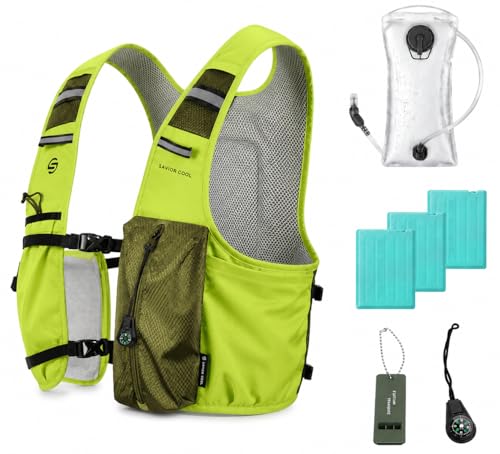
Cooling Vest Review Summary
Cooling’s vest is best understood as a hybrid tool: part cooling vest, part hydration vest, part light daypack.
That makes it a strong fit for runners, hikers, cyclists, and marathon walkers who care more about staying functional in heat than about shaving every ounce from their gear.
The listing is not trying to be minimalist.
It is trying to solve a real problem for long days outside: heat, dehydration, and the need to carry essentials without juggling multiple items.
Verdict: this is a practical buy for buyers who want cooling support, hands-free drinking, and enough storage for a long outing.
It is less appealing if you want a bare-bones race vest with the lightest possible footprint.
Review Scorecard
| Category | Score | Buyer-focused rationale |
|---|---|---|
| Cooling support | 8/10 | The vest includes 3 reusable cold sources and claims up to 3 hours of cooling, which is the key draw. |
| Hydration utility | 9/10 | The included 2L BPA-free bladder and quick-access tube make hands-free hydration straightforward. |
| Carry capacity | 8/10 | A 22L layout is generous for essentials, snacks, and small layers without becoming a full backpack. |
| Fit and stability | 8/10 | Adjustable chest straps and a 1.52 lb design suggest a secure carry with less bounce. |
| Breathability and comfort | 7/10 | Breathable mesh is a plus, but the vest still combines several functions, so comfort will depend on load and heat. |
| Safety and visibility | 8/10 | Reflective strips, whistle, and compass add useful outdoor safety value. |
Key Features and Specifications of Cooling Vest
This product is built around a specific use case: staying cooler while moving in hot conditions.
The listing emphasizes three reusable cold sources that can provide up to 3 hours of cooling, a 2L BPA-free water bladder, and a 22L storage layout.
That combination is unusual because it merges hydration vest, cooling vest, and small storage pack into one piece of gear.
Other key listed details:
- Weight: 1.52 lb
- Dimensions: 16.1″ x 7.9″
- Straps: adjustable chest straps from 31.5″ to 53.1″
- Material: water-resistant ripstop polyester
- Ventilation: breathable mesh
- Visibility: reflective strips
- Safety extras: built-in whistle and compass
The feature set makes the product feel intentionally overbuilt for summer endurance use.
That is not a flaw if you are the buyer it targets.
It does mean you should expect a multi-purpose vest rather than a stripped-down running pack.
The biggest practical advantage is that the cooling and hydration functions are built in.
You are not being asked to buy separate accessories and improvise a solution.
The likely tradeoff is bulk and complexity compared with a standard vest.
Pros and Cons of Cooling Vest
Pros
- Combines cooling and hydration in one vest, which is the core reason to consider it.
- 2L BPA-free bladder supports hands-free drinking on long runs, hikes, and rides.
- 22L storage gives you room for basics, snacks, and other small essentials.
- Adjustable chest straps help the vest stay secure across a wide range of body sizes.
- Reflective strips, whistle, and compass add real outdoor utility.
- Water-resistant ripstop polyester is better suited to active outdoor use than flimsy fabric.
Cons
- Not the lightest conceptually, because it is doing three jobs at once.
- Cooling duration is limited to the listing claim of up to 3 hours, so it is not an all-day cold solution.
- The product is specialized, which may be unnecessary if you only want a simple hydration vest.
- Storage volume can be a double-edged sword if you prefer a very compact, race-oriented feel.
The pros outweigh the cons when heat management is the priority.
If speed and ultra-light race efficiency matter most, some buyers will prefer a more minimal vest.
Who Should Buy Cooling Vest?
Buy this if you spend serious time outdoors in warm weather and want one piece of gear that handles several problems at once.
It makes the most sense for runners, hikers, cyclists, and marathon participants who want hydration plus cooling support plus enough room for essentials.
It also fits buyers who like practical safety features.
The reflective strips, whistle, and compass are not flashy, but they are genuinely useful for trail days, early starts, and late finishes.
You should probably skip it if:
- you want the lightest possible running vest,
- you do not care about cooling packs,
- you already carry hydration another way,
- or you only need a small storage vest for short sessions.
In other words, this is for buyers solving a heat problem, not for buyers looking for a generic pack.
Cooling Vest for Hot-Weather Endurance
Cooling Performance
The main selling point is the built-in cooling system.
The listing says the vest includes 3 reusable cold sources and can keep you cool for up to 3 hours.
That is a meaningful window for a training run, a long hike, or a cycling session in the heat.
It is not presented as a substitute for shade, pacing, or hydration strategy, but it can make a hot outing more manageable.
Hydration and Carry Setup
The included 2L BPA-free bladder is the practical backbone of the vest.
It lets you drink without stopping or reaching for a bottle, which matters when you are moving quickly or carrying trekking poles, a leash, or other gear.
The 22L storage also moves this beyond a simple hydration vest and into small-daypack territory, which is useful if you carry snacks, keys, phone, layers, or a compact first-aid kit.
Fit, Weight, and Stability
At 1.52 lb, the vest is not a featherweight, but the weight is understandable given the cooling components and bladder.
The adjustable chest straps should help distribute that load, and the listing’s emphasis on a secure fit suggests the design aims to reduce bounce.
For a vest with this many features, fit will matter more than raw capacity, because comfort depends on how well the pack stays stable while you move.
Safety and Trail Utility
The reflective strips, whistle, and compass are the kind of extras that are easy to ignore until you need them.
They make sense for trail use, low-light starts, or long routes where simple navigation and visibility matter.
The water-resistant ripstop polyester also supports the idea that this vest is meant for real outdoor abuse, not just gym use.
Alternatives to Cooling Vest
If you want a more traditional hydration-first option, consider a Nathan hydration vest.
Nathan is a common reference point for running packs and may fit buyers who care more about race-style carry comfort than cooling packs.
If you want a simpler outdoor hydration setup, look at a CamelBak hydration vest.
CamelBak is a familiar choice for hands-free hydration without the extra cooling layer.
If your priority is trail utility and storage, a SALOMON hydration vest is worth comparing.
That type of vest usually appeals to buyers who want a more performance-oriented fit.
If you want a basic hiking pack with hydration compatibility, search for a hydration backpack for hiking.
That route makes sense if you want carry space first and cooling second.
Is Cooling Vest Worth It?
Yes, if your main problem is hot-weather exertion and you want one vest that addresses cooling, hydration, and storage together.
The listed feature set is coherent, and the blend of 3 cooling packs, a 2L bladder, 22L storage, and safety extras makes this a strong utility buy for active outdoor use.
It is worth it for buyers who will use the cooling function regularly.
It is probably not worth it if you only need a standard hydration vest, because the extra capability only matters when heat is part of the problem.
If you are shopping for a multi-purpose summer endurance vest, this one is easy to justify.
If not, a lighter hydration vest will likely be the better fit.