The HANDBODE 3-in-1 Plyometric Box is a focused answer for home lifters who want one training tool that can cover jumps, step-ups, and basic strength work.
If you are comparing the 3-in-1 Plyometric Box review to wood or metal boxes, the main appeal is clear: more cushioning, easier handling, and multiple heights in one unit.
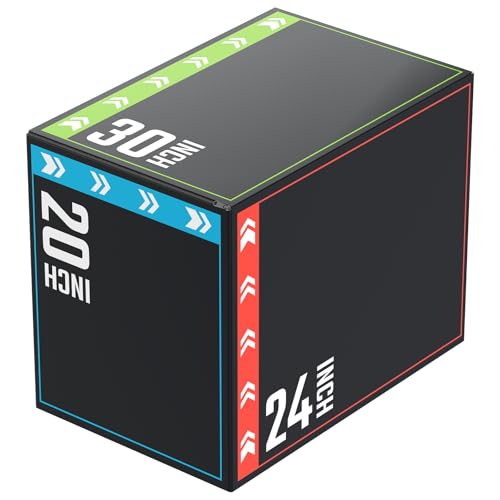
HANDBODE 3-in-1 Plyometric Box Review Summary
This box makes the most sense for buyers who want a safer-feeling jump platform without giving up workout variety.
The listing positions it as a versatile home-gym tool that supports explosive power work, step-ups, squats, hip thrusts, push-ups, and even Pilates-style movement, so it is not just a one-trick jump box.
If you want a compact training accessory that can stay in a home gym and be moved around without much hassle, it is a sensible fit.
The strongest case for it is the adjustable 3-in-1 design.
Rotating the box gives you 20-inch, 24-inch, or 30-inch use heights, which gives beginners, intermediates, and advanced users different progression options.
The high-density foam core and textured PVC cover are also aimed at reducing the harsh feel that can come with rigid plyo boxes.
That matters if your main concern is repeat landings, shin contact, or simply feeling more confident during fast-paced training.
Review Scorecard
| Category | Score | Rationale |
|---|---|---|
| Versatility | 9/10 | Three heights and multiple exercise uses make it useful beyond box jumps. |
| Safety feel | 8/10 | Foam construction and cushioned landing surface should feel friendlier than wood or metal. |
| Progression range | 8/10 | 20, 24, and 30 inches cover a broad set of skill levels. |
| Home-gym convenience | 8/10 | About 16 lbs and a single-box footprint make it easier to move and store. |
| Surface control | 8/10 | Textured, slip-resistant PVC is built for sweaty sessions. |
| Durability confidence | 7/10 | The listing promises support up to 350 lbs, but long-term wear still depends on use. |
Key Features and Specifications of HANDBODE 3-in-1 Plyometric Box
The core selling point is the three-height design.
You can rotate the box to work at 20 inches, 24 inches, or 30 inches, which means the product can serve beginners learning step-ups and advanced users doing more demanding jumps.
For a home gym, that reduces the need to buy multiple platforms.
Construction is centered on high-density foam rather than rigid wood or metal.
According to the listing, that helps absorb impact on landings and makes the box easier on the shins, knees, and joints.
The outer layer is a rugged PVC cover with a textured finish, which is meant to resist slipping and wipe clean quickly after sweaty sessions.
The listing also says the box weighs about 16 lbs, which is light enough to reposition without much effort.
It is described as supporting up to 350 lbs.
That is not a guarantee for every training style, but it does signal that the product is designed for adult fitness use rather than light decorative storage or casual stepping only.
Useful listed details:
- 3-in-1 adjustable heights: 20 inches, 24 inches, 30 inches
- High-density foam construction
- Textured PVC outer cover
- Approximate weight: 16 lbs
- Listed load support: up to 350 lbs
- Designed for jumps, step-ups, squats, hip thrusts, push-ups, and Pilates-style exercises
Pros and Cons of HANDBODE 3-in-1 Plyometric Box
Pros
- Three height settings give you a built-in progression path without buying a second or third box.
- Foam construction should feel more forgiving than hard-surface boxes for repeated training.
- Slip-resistant cover is useful when workouts get sweaty or when you are training quickly between sets.
- Lightweight enough to move makes it easier to rearrange a garage gym or spare room setup.
- Broader exercise use means the box can support more than jumps alone.
Cons
- Foam is not the same as a rigid platform; some buyers will still prefer the solid feel of wood.
- Large jumps still require good technique because cushioning does not remove the need for control.
- One product cannot fit every athlete; 30 inches may be too aggressive for some users, while 20 inches may be too low for others.
- Soft construction can show wear over time if it is dragged, stored poorly, or used heavily.
Who Should Buy HANDBODE 3-in-1 Plyometric Box?
This is a strong fit for home-gym users who want a safer-feeling plyo box with multiple training heights in one product.
It also makes sense for people building explosive power, conditioning, or general athleticism in a limited space.
If you want one platform for jump training, step-ups, incline push-ups, and similar movements, the design is practical.
It is also a good match for buyers who want to ease into box work.
The 20-inch setting gives a more approachable entry point, and the foam build can reduce the psychological barrier that hard boxes create for some users.
If you are coming from bodyweight training and want a step up that still feels controlled, this style of box is easy to understand.
You may want to skip it if you specifically want a very rigid competition-style platform or if you prefer the absolute firmness of wood for training feedback.
It is also less compelling if you already own multiple plyo boxes and do not need the three-height convenience.
In short, buy it for versatility and comfort, not for a maximalist heavy-duty gym-floor feel.
How the HANDBODE 3-in-1 Plyometric Box Works in Training
20-Inch Position for Entry-Level Work
The 20-inch setting is the most approachable of the three and is the best place to start for many buyers.
It can work well for step-ups, lower-intensity jumps, and movement practice when you want consistency more than maximum height.
24-Inch Position for Standard Plyometrics
The 24-inch setting is the middle ground and will probably be the most useful for regular training.
It gives enough challenge to support explosive reps while staying more manageable than the tallest option.
30-Inch Position for Advanced Effort
The 30-inch setup is the performance-oriented side of the product.
That height is better suited to athletes with solid technique and confidence, since the point of a higher box is usually more demanding power output rather than just novelty.
Foam Build for Mixed-Use Sessions
Because the box is foam-based, it can also support non-jump drills such as elevated push-ups, hip thrusts, or controlled step work.
That makes it useful when you want one compact prop that can cover both conditioning and basic strength accessory work.
Alternatives to HANDBODE 3-in-1 Plyometric Box
If you want a firmer feel, look at a wood plyo box from brands that sell classic box-jump platforms on Amazon, such as Rep Fitness wood plyo box, Titan Fitness plyo box, or Rogue plyo box.
Those are better if you want a rigid surface and do not care about cushioning.
If you want a softer training block but a different brand style, you can also compare foam options like Yes4All plyometric box or BalanceFrom plyo box.
Those are the closest category alternatives when the main priority is landing comfort and home-gym flexibility.
Is HANDBODE 3-in-1 Plyometric Box Worth It?
Yes, if you want a versatile, cushioned, home-gym-friendly plyometric box that can cover multiple heights and more than one exercise type.
The three-in-one design is the reason to buy it, and the foam build is a real advantage if you value a softer landing surface and easier handling.
It is less ideal if you want the rigid feel of a traditional wooden box or if your training style demands a hard, competition-like platform.
But for most people building a practical home setup, this is a sensible choice that balances function, comfort, and simplicity.