Mikolo Lateral Raise Attachment review is best understood as a compact, rack-mounted shoulder specialization tool rather than a general home gym accessory.
If your goal is cleaner lateral delt work with less setup drift than dumbbells, this style makes a strong case.
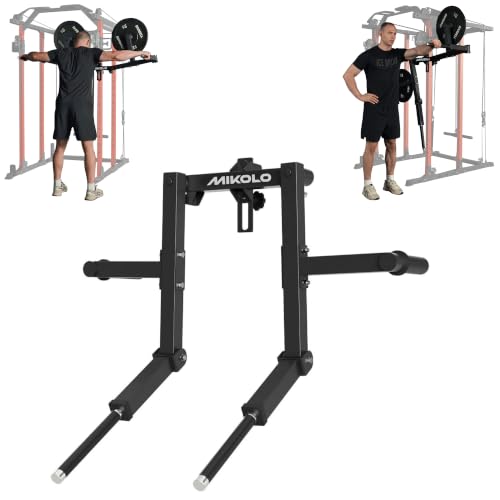
Lateral Raise Attachment Review Summary
This Mikolo Lateral Raise Attachment suits buyers who want to isolate the lateral deltoids more deliberately, keep movements controlled, and add a shoulder-focused station without dedicating extra floor space.
The listing’s emphasis on ball-bearing rotation, solid steel construction, and non-slip grips points to a machine built around repeatable form, not flashy extras.
Verdict: A practical choice for home gym owners who already have a compatible rack and want more controlled shoulder work. It is most compelling when you value movement consistency, space efficiency, and a dedicated upper-body accessory over versatility.
Review Scorecard
| Category | Score | Buyer-focused rationale |
|---|---|---|
| Lateral delt isolation | 9/10 | The product is explicitly designed to target the lateral deltoids with a more controlled motion than free weights. |
| Rack compatibility | 8/10 | It is built for squat racks and cages with 1-inch holes, which narrows fit but gives a clear use case. |
| Build confidence | 8/10 | Premium solid steel and a black powder-coated finish suggest durability for repeated use. |
| Movement feel | 8/10 | Ball bearings in the grip are meant to reduce friction and create smoother rotation. |
| Comfort and grip | 7/10 | Non-slip rubber handles should help secure hand placement and reduce fatigue. |
| Space efficiency | 9/10 | It adds a shoulder station without taking over the room, which matters in home gyms. |
| Overall versatility | 6/10 | It is specialized by design, so it is better as a focused add-on than an all-purpose machine. |
Key Features and Specifications of Lateral Raise Attachment
The core appeal is straightforward: this is a rack attachment made for standing lateral raise work.
Instead of handling dumbbells or a large standalone machine, you mount it to a compatible squat rack or cage and use the attachment as a dedicated shoulder station.
The listing specifically highlights:
- Isolation of lateral deltoids for targeted shoulder development.
- Ball-bearing handle rotation intended to keep motion smooth and friction light.
- Solid steel construction with a black powder-coated finish for durability and rust resistance.
- Non-slip rubber handles for a more secure grip and less hand fatigue.
- Space-saving design for home gyms that need focused function without extra bulk.
- Compatibility with 1-inch holes, which is the most important fit detail in the provided evidence.
For a buyer, the practical takeaway is that this product is about control and consistency.
The controlled movement path can be helpful if you struggle to keep dumbbell raises strict, swing-free, and shoulder-driven.
It also appears designed for repeat use in upper-body training blocks.
That matters because a specialized accessory is only worth the rack space if it feels stable enough to become part of a regular program.
The materials and bearing-based handle design are the main signals here.
Pros and Cons of Lateral Raise Attachment
Pros
- Strong shoulder focus. The product is purpose-built for lateral deltoid isolation rather than general training.
- Smooth handle action. Ball bearings are a meaningful feature for a movement that benefits from consistency.
- Space-conscious. It expands a rack’s function without requiring another full-size machine.
- Grippy handles. Non-slip rubber can matter more than people expect once sets get longer or sweat builds up.
- Durable-feeling build. Steel construction and powder coating are sensible choices for a home gym attachment.
Cons
- Requires the right rack. If your rack does not have 1-inch holes, this may not be the right fit.
- Specialized use. Buyers wanting a multi-exercise attachment will likely outgrow it quickly.
- Less portable than dumbbells. It is a mounted setup, so it favors permanence over flexibility.
- Not a full shoulder system. It addresses one movement pattern well, but it does not replace a broader training plan.
The biggest tradeoff is clear: you are paying for focus.
That is good if you want better lateral raise execution, but it is not the right purchase if you expect the attachment to behave like a general-purpose shoulder machine.
Who Should Buy Lateral Raise Attachment?
This product makes the most sense for lifters who already train in a squat rack or power cage and want a more deliberate way to work the side delts.
It is especially relevant if you have been using dumbbell raises but want a setup that encourages a steadier path and less cheating.
It should also appeal to home gym owners who are short on space.
A compact accessory that adds one useful station can be smarter than buying another stand-alone machine, provided the attachment fits the rack and your training style.
Good fit for:
- Home gym users with a compatible 1-inch-hole rack.
- Lifters prioritizing shoulder isolation work.
- People who value controlled, repeatable motion.
- Buyers who want more utility from an existing cage or rack.
Probably skip if:
- You do not own a compatible rack.
- You want a machine for several different exercises.
- You prefer free-weight shoulder work and do not want a mounted station.
- You need a portable tool rather than a semi-permanent gym add-on.
In other words, this is not a universal home gym purchase.
It is a targeted accessory for someone who already knows they want dedicated lateral raise work and has the setup to support it.
Shoulder Isolation and Rack Fit of Lateral Raise Attachment
Controlled Lateral Raise Path
The central value proposition is cleaner shoulder isolation.
Because the listing emphasizes machine-like control and reduced cheating, this attachment should appeal to buyers who want their lateral raises to feel more structured than the free-weight version.
Ball Bearings and Handle Feel
The ball-bearing design is not just a comfort detail.
In a movement where tiny changes in friction can affect how smooth the repetition feels, lower resistance at the handle can make the motion more consistent and less awkward through the working range.
Steel Build and Grip Security
The premium steel frame and powder-coated finish are the kind of features that matter after the novelty wears off.
You want an attachment like this to feel solid during repeated sets, and the non-slip rubber grips are a sensible complement to the heavier-duty frame.
Rack Compatibility and Space Use
The 1-inch-hole requirement is the detail that will decide the purchase for many buyers.
If your rack matches, the space-saving design becomes a real advantage.
If it does not, the product loses much of its appeal because its strength is tied to integration with the rack.
Alternatives to Lateral Raise Attachment
If you want a more general dumbbell-based shoulder option, a pair of adjustable dumbbells is the obvious alternative.
If you want a dedicated machine feel, look at commercial-style shoulder stations from brands such as Titan Fitness shoulder machines, Body-Solid shoulder machines, or Valor Fitness shoulder equipment.
For buyers who want to stay within rack-based training, search for rack attachments for shoulder raises and compare compatibility details carefully.
The best substitute is usually the one that fits your rack, your space, and how often you actually train shoulders.
The reason to compare alternatives is not just price or brand.
It is whether you want a standalone machine, a dumbbell solution, or a rack-mounted accessory.
Those are meaningfully different buying paths.
Is Lateral Raise Attachment Worth It?
Yes, if you already have a compatible rack and want a focused shoulder-isolation tool.
The Mikolo Lateral Raise Attachment looks worthwhile for home gym buyers who value controlled motion, space savings, and a sturdy mounted setup more than broad exercise variety.
It is less compelling for anyone who lacks the right rack, wants portability, or prefers one piece of equipment to cover many movements.
For the right buyer, though, this is a sensible specialization purchase: targeted, practical, and easy to justify as a shoulder-day upgrade.