RAD Rod Deep Tissue Massage Roller Stick review is for buyers who want a simple, portable way to work on tight muscles without relying on a larger roller.
This RAD Rod review focuses on where the stick format helps most, and where a more specialized recovery tool may be better.
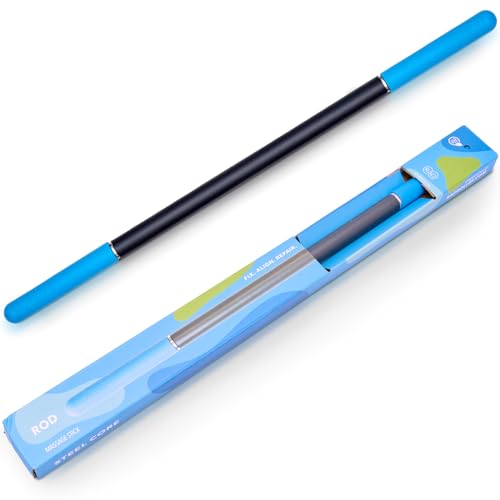
RAD Rod Review Summary
The RAD Rod Deep Tissue Massage Roller Stick makes sense for people who want a compact self-myofascial release tool that can move from the gym bag to the office to home without much fuss.
Based on the listing, its biggest strengths are the steel-core build, high-density EVA foam surface, and the ability to target a long list of common problem areas, including legs, back, neck, arms, shoulders, calves, hamstrings, glutes, and forearms.
That makes it a strong fit for buyers who want a versatile muscle recovery tool rather than a large foam roller that stays in one place.
It should also appeal to people who travel, commute, or train regularly and want something easy to carry.
If you mainly want broad, floor-based rolling or very intense pressure from bodyweight, this style may feel less useful than a full-size roller or a massage gun.
Review Scorecard
| Category | Score | Rationale |
|---|---|---|
| Portability | 10/10 | Slim, lightweight design is easy to carry and store. |
| Build Quality | 9/10 | Steel core and EVA foam suggest durability and easy cleaning. |
| Targeting Precision | 9/10 | Stick format is well suited to specific muscle groups and trigger points. |
| Full-Body Use | 8/10 | Listing supports many areas, from quads to neck to forearms. |
| Recovery Convenience | 9/10 | Useful at home, at the gym, or on the go. |
| Pressure Versatility | 7/10 | Effective for targeted work, but not as immersive as larger tools. |
| Everyday Value | 8/10 | Practical for regular mobility work if you will actually carry it and use it. |
Key Features and Specifications of RAD Rod
The RAD Rod is a deep tissue massage roller stick built around a steel core with high-density EVA foam wrapped around it.
The listing emphasizes a durable structure that will not bend easily and a surface that grips the skin while also wiping clean effortlessly.
From a buyer’s perspective, the appeal is straightforward.
This is not trying to be a bulky recovery station.
It is a slim, handheld tool designed for daily fascia massage, trigger point relief, and general mobility work.
Key listing facts:
| Feature | What the listing supports |
|---|---|
| Product type | Deep tissue massage roller stick |
| Core material | Steel core |
| Outer material | High-density EVA foam |
| Intended use | Self-myofascial release, mobility, recovery |
| Coverage | Legs, back, neck, arms, shoulders, quads, IT bands, calves, glutes, hamstrings, forearms, psoas, triceps, SCM |
| Portability | Slim and lightweight for home, gym, or travel use |
The most useful thing about this design is that it combines reach and control.
A massage stick can work areas that are awkward to address with a floor roller, especially around the neck, arms, calves, and upper back.
The product also appears aimed at daily use, not just post-workout recovery.
The broad muscle list matters because it signals a general-purpose recovery tool rather than a single-use accessory.
If you have multiple tight spots, a single stick that can handle different zones is usually easier to keep in rotation than a collection of narrow-purpose devices.
Pros and Cons of RAD Rod
Pros
- Portable and easy to store. The slim, lightweight format is the clearest selling point.
- Broad target coverage. The listing calls out many major muscle groups and problem areas.
- Durable-looking construction. A steel core and EVA foam are practical choices for a handheld tool.
- Easy maintenance. The foam surface is described as easy to wipe clean.
- Simple daily use. The design suits quick mobility sessions rather than a complicated routine.
Cons
- Less bodyweight leverage. A stick cannot always match the intensity of a full-size foam roller.
- Not a passive recovery tool. You still need to work the tool by hand, which may not suit everyone.
- Best for targeted work, not everything. Buyers seeking a complete recovery system may want multiple tools.
- Pressure feel depends on preference. Some people will want a softer or more aggressive texture than this listing suggests.
The balance here is sensible.
The RAD Rod does not try to be everything.
It is strongest when you value control, reach, and convenience over maximum pressure.
Who Should Buy RAD Rod?
The RAD Rod Deep Tissue Massage Roller Stick is a good fit for active people who want a practical way to manage tight muscles between workouts, after long days at a desk, or while traveling.
It is especially relevant if your recovery routine includes frequent work on quads, calves, hamstrings, glutes, forearms, shoulders, or the neck.
It also fits buyers who dislike large foam rollers because they take up space or feel awkward to use on certain body parts.
A handheld stick is usually easier to use in short sessions, and that makes it more likely to become part of a real routine.
This is probably not the best choice for someone who wants a passive tool that does most of the work for them.
If you prefer lying on a roller and using bodyweight to drive deep compression, a traditional foam roller may be a better match.
It is also not the first tool I would suggest for buyers who want highly automated recovery or very intense percussion-style treatment.
How the RAD Rod Fits a Recovery Routine
For lower-body tightness
The listing explicitly points to legs, quads, hamstrings, calves, glutes, and IT bands, which is where a massage stick often earns its keep.
Those are common areas where a portable tool can be used quickly before a workout, after a run, or after a long workday.
For upper-body mobility
The inclusion of the back, neck, shoulders, arms, triceps, forearms, and SCM suggests the RAD Rod is not limited to leg work.
That is important because handheld sticks are often most valuable when they can move across both upper and lower body without changing tools.
For travel and on-the-go use
The lightweight, compact format is a major advantage if you want to keep recovery gear in a bag, locker, or car.
That portability can matter more than any single material detail because a tool that is easier to carry is also easier to use consistently.
For daily maintenance
The listing frames the RAD Rod as a daily fascia massage tool.
That positioning makes sense: this kind of stick is usually best as a regular maintenance item, not a once-a-month deep recovery device.
If your goal is consistency, the form factor is a strong point.
Alternatives to RAD Rod
If you want to compare the RAD Rod with other well-known Amazon options, the most relevant alternatives are tools in the same recovery category:
- Tiger Tail massage stick
- TriggerPoint GRID foam roller
- TheraBand roller massager
- Hyperice Hypersphere
The best alternative depends on what you want from recovery.
Tiger Tail is a close conceptual comparison if you like the idea of a handheld massage stick.
TriggerPoint is better if you prefer floor-based rolling and broader compression.
TheraBand’s roller-style tools may appeal if you want another handheld option with a similar use case.
Hyperice is worth a look if you want a more premium recovery approach and are comparing different kinds of targeted muscle tools.
When choosing among them, focus on format first, not brand name alone.
A stick is best for portability and precision.
A foam roller is better for bodyweight-driven rolling.
A different handheld tool may suit buyers who want a softer or more compact feel.
Is RAD Rod Worth It?
Yes, the RAD Rod Deep Tissue Massage Roller Stick looks worth considering if you want a portable, durable, and versatile muscle relief tool for regular use.
Its steel core, EVA foam build, and broad muscle coverage make it a practical pick for buyers who care about convenience and targeted recovery.
If you need the simplest way to handle tight spots across the legs, back, neck, arms, and shoulders, this is a sensible option.
If you want the deepest possible pressure or a fully passive recovery experience, look at a larger roller or a different recovery category instead.