If you want a foam roller review that goes beyond generic cylinders, the Rollga PRO Foam Roller is worth a close look.
Its selling point is the contoured groove design, which aims to protect the spine while still letting you dig into tight muscles.
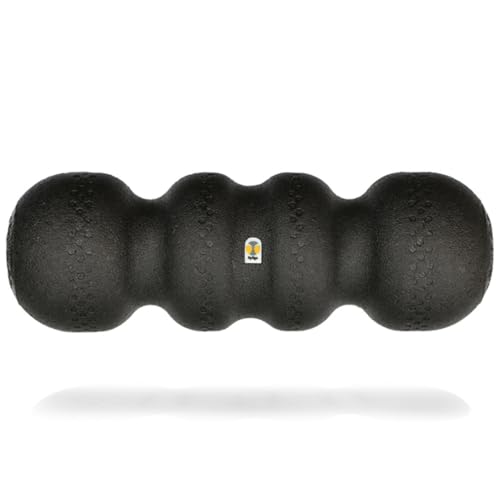
Rollga PRO Review Summary
The Rollga PRO Foam Roller is best for buyers who want a firmer, more targeted rolling surface than a standard smooth roller can provide.
Based on the listing, it is built for deep tissue-style pressure, improved flexibility, and use across the back, shoulders, legs, arms, neck, and feet, so it suits people who already know they like a strong rolling feel and want a shape that is easier to work around the spine and shoulder blades.
Verdict: this is a specialized roller, not a soft recovery tool.
If you want something that mimics hands-on massage more closely and you are comfortable with a 20% harder feel than the standard Rollga version, the Rollga PRO Foam Roller makes sense.
If you are new to foam rolling or prefer a gentler experience, the firmness may be too much.
Review Scorecard
| Category | Score | Why it scores this way |
|---|---|---|
| Spine-friendly design | 9/10 | The patented grooves are specifically meant to support the spine and shoulder blades. |
| Deep pressure | 9/10 | The listing emphasizes deeper muscle release and a harder PRO feel. |
| Flexibility and warm-up use | 8/10 | It is positioned for mobility work, yoga, Pilates, and pre-workout use. |
| Recovery versatility | 8/10 | The roller is meant for back, legs, arms, neck, and feet, not just one zone. |
| Travel and portability | 8/10 | Lightweight and durable construction makes it easy to move between home, gym, and travel. |
| Beginner friendliness | 5/10 | The harder surface and deeper pressure are better for experienced users than first-timers. |
Key Features and Specifications of Rollga PRO
The core feature here is the patented contoured shape.
According to the listing, the grooves are designed to protect the spine and bone while still letting the raised sections reach deeper into muscle tissue.
That is the defining difference between this and a plain cylindrical roller.
The Rollga PRO is also built around firmness.
The listing says it is 20% harder than the standard Rollga version and is intended for users with some foam rolling or deep tissue massage experience.
That tells you a lot about the intended audience: people who want pressure, not cushioning.
The brand positions it as a recovery and mobility tool, not just a post-workout accessory.
It is described as useful before workouts for warming up, after workouts for soreness relief, and in routines like yoga, Pilates, and physical therapy-style mobility work.
Helpful facts from the record:
| Feature | Evidence from the listing |
|---|---|
| Brand | Rollga |
| Model | PRO |
| Length | 18 inches |
| Design | Patented grooves and contoured profile |
| Feel | 20% harder than the standard Rollga version |
| Intended use | Back pain relief, muscle recovery, flexibility, warm-up, massage-style work |
| Target areas | Neck, back, legs, arms, feet, shoulders |
| Portability | Lightweight and durable |
Two other details matter for buyers.
First, the product is explicitly framed as being better for those who already have foam rolling experience.
Second, the listing claims the design can increase flexibility by 22%, but that should be treated as a manufacturer claim rather than a measured promise.
Pros and Cons of Rollga PRO
Pros
- The contoured groove design is more purposeful than a basic smooth roller.
- The listing makes a clear case for spine and shoulder-blade comfort.
- Firmness should appeal to people who want deeper pressure and stronger release.
- The 18-inch size is a practical middle ground for home, gym, and travel use.
- It is not limited to one body area; the listing covers multiple recovery zones.
Cons
- The firmer PRO feel is likely too aggressive for beginners.
- Buyers who want a soft, broad compression feel may prefer a standard roller instead.
- The marketing leans on several performance claims, including flexibility improvement, that are not independently verified in the listing.
- The shape is specialized enough that it may not replace every massage or mobility tool in a home setup.
The key tradeoff is simple: more targeted pressure and better spinal clearance, but less forgiving comfort.
That is a good trade if your main complaint with ordinary rollers is that they feel blunt, unstable, or awkward around the back.
Who Should Buy Rollga PRO?
This is a strong fit for people who already know they respond well to firm rolling.
If you use a foam roller regularly, want something that targets pressure points more aggressively, and like the idea of a shape that avoids direct spine pressure, the Rollga PRO is aimed at you.
It also makes sense for buyers who split time between recovery and warm-up work.
The listing positions it for post-workout soreness relief and pre-workout mobility, so it is not just a one-note recovery product.
Good buyers
- Experienced foam roller users
- People who prefer deep tissue-style pressure
- Buyers looking for a roller that is easier to work around the spine
- Anyone wanting a portable recovery tool for home, gym, or travel
- Users who want one tool for back, legs, arms, and feet
Who should skip it
- Complete beginners who need a gentler roller
- Anyone who wants soft compression over intense pressure
- Buyers who only want a simple, standard cylinder
- People who dislike firm self-massage tools
For most buyers, the deciding question is not whether it works in theory.
It is whether you actually want the harder, more focused feel the PRO model is built around.
How the Rollga PRO Feels in Use
Groove Design and Spine Clearance
The grooves are the main reason to choose this roller.
Instead of pressing the full body weight of a smooth tube into your back, the contoured shape is supposed to leave room for the spine and shoulder blades while the raised edges do the work on surrounding muscles.
Firmness and Pressure Depth
The listing says the PRO version is 20% harder than the standard Rollga.
That matters because firmness changes the whole experience: you get more focused pressure, but also more discomfort if you are not used to it.
Recovery Versus Warm-Up
This looks more like a dual-purpose mobility tool than a single-use recovery gadget.
The brand claims it works for pre-workout warm-ups, post-workout recovery, and flexibility routines, which makes it appealing if you want one roller that stays useful across different training days.
Portability and Everyday Use
The 18-inch format and lightweight build should make it easy to keep nearby.
For many buyers, that is what determines whether a roller actually gets used: if it is easy to grab between sets or pack for a trip, it becomes part of a routine instead of living in a closet.
Alternatives to Rollga PRO
If you want a comparable roller but with a different feel, shape, or brand reputation, a few Amazon search options are worth considering:
These are the most credible comparison points because they cover the main decision paths: standard high-density rollers, textured rollers, and alternative deep-pressure designs.
If you want the most straightforward and forgiving option, a basic high-density roller may be enough.
If you want more aggressive pressure, the textured and specialty-shaped alternatives are closer to what the Rollga PRO is trying to do.
Is Rollga PRO Worth It?
Yes, if you want a firm, targeted foam roller with a spine-conscious shape. The Rollga PRO Foam Roller is a good buy for experienced users who want deeper pressure, better shoulder-blade and spine clearance, and a roller that can serve both recovery and warm-up work.
No, if you are new to foam rolling or want something gentle. In that case, the harder feel is more likely to punish sensitive spots than help them.
For the right buyer, though, this is a focused and well-defined tool rather than a generic cylinder trying to do everything.