The best fitness trackers with heart rate monitoring make it easier to understand workouts, daily movement, sleep, and recovery without carrying a dedicated health device.
This roundup compares 10 options across Fitbit, Xiaomi, and other popular brands, including full-featured smartwatches, slim activity bands, and simple trackers for everyday use.
Best 10 Fitness Trackers with Heart Rate Picks for 2026
Best Overall
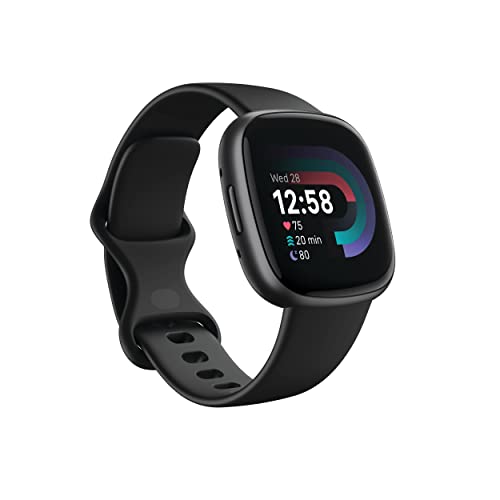
- 24/7 heart rate with built-in GPS
- 40+ exercise modes and recovery tools
- 6+ days of battery plus smartwatch features
Best For: Feature-rich fitness and everyday smartwatch use
Best Battery Life

- Up to 21 days of battery life
- Large, bright 1.72-inch AMOLED display
- Heart rate, sleep, blood oxygen, and swim tracking
Best For: Long-lasting everyday fitness and wellness tracking
Best Compact Tracker

- 24/7 heart rate with built-in GPS
- 40+ exercise modes and sleep insights
- Google Maps, Wallet, and exercise-machine pairing
Best For: Compact workout tracking with smart features
Best Budget Smartwatch

- 140+ sports modes with heart-rate tracking
- Bluetooth calls and notification syncing
- IP68 rating and 5–7 days of stated use
Best For: Casual fitness tracking and everyday smartwatch functions
Best Lightweight Pick

- 24/7 heart-rate and activity tracking
- Sleep, stress, and readiness insights
- Up to 10-day battery life
Best For: Everyday wellness and sleep tracking
Best Feature-Packed Value
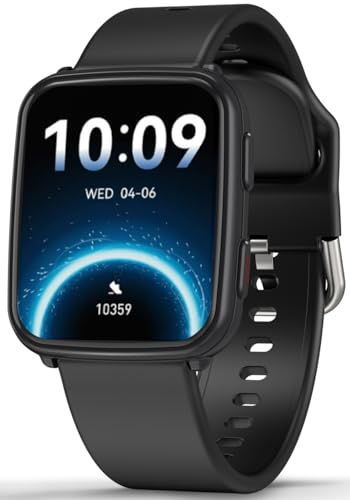
- 24/7 heart rate and 120+ sport modes
- Blood oxygen, sleep, and cycle tracking
- Calls, messages, and up to 7-day battery
Best For: Broad activity and lifestyle tracking
Best for GPS Workouts

- 24/7 heart rate with ECG capability
- Built-in GPS and 40+ exercise modes
- Google Maps and Wallet integration
Best For: Runners and cyclists needing built-in GPS
Best All-Around AMOLED Pick

- 24/7 heart-rate and sleep tracking
- 1.10-inch AMOLED display
- Up to 7 days of battery life
Best For: Feature-rich everyday activity tracking
Best Phone-Free Option
Simple Heart Rate Fitness Watch

- Basic use needs no app or phone
- Tracks heart rate, sleep, and activity
- IP68 water resistance
Best For: Simple, low-hassle daily tracking
Best Health Metrics Value
S5 Heart Rate Activity Tracker
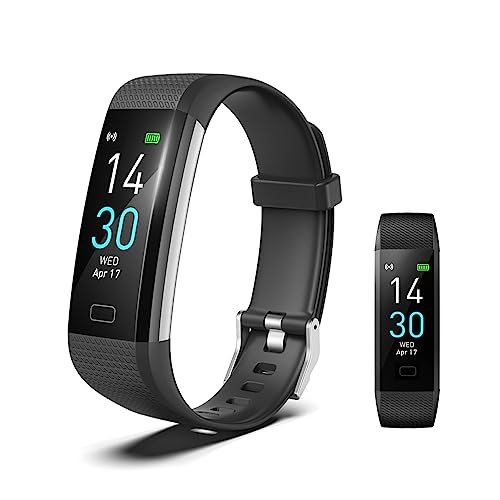
- Tracks heart rate, blood pressure, and SpO2
- 17 sports modes and sleep analysis
- IP68 water resistance
Best For: Broad wellness metrics and notifications
Best Overall – Fitbit Versa 4
For shoppers seeking fitness trackers with heart rate features plus smartwatch capabilities, the Fitbit Versa 4 offers a well-rounded option. It combines 24/7 heart-rate tracking with built-in GPS, workout tools, sleep insights, stress features, and more than six days of battery life.
Best For: Users who want a feature-rich fitness smartwatch for workouts, sleep tracking, and everyday notifications.
Pros:
- Includes 24/7 heart-rate tracking, built-in GPS, Active Zone Minutes, and 40+ exercise modes.
- Provides Daily Readiness, sleep stages, Sleep Score, stress management, and SpO2-related insights.
- Offers Bluetooth calls, notifications, Google Wallet, Google Maps, Alexa, and 6+ days of battery life.
Cons:
- Some advanced coaching and analytics require the included three-month premium membership and later subscription.
- It is larger and more smartwatch-oriented than a minimalist fitness band.
The Versa 4 is a strong all-around pick when heart-rate monitoring is only one part of the buying decision. Its GPS, recovery guidance, sleep tools, and smart features make it versatile for both training and daily wear.
Best Battery Life – Xiaomi Smart Band 10
The Xiaomi Smart Band 10 is a slim, display-focused choice among fitness trackers with heart rate monitoring. Its standout feature is up to 21 days of battery life, while the large AMOLED screen, sleep tracking, multi-sport tools, and 5ATM water resistance support everyday activity and training.
Best For: Buyers prioritizing long battery life, a bright display, and basic fitness and wellness tracking.
Pros:
- Delivers up to 21 days of battery life and fast charging in about an hour.
- Uses a large 1.72-inch AMOLED display with up to 1500 nits HBM brightness.
- Tracks heart rate, sleep, blood oxygen, swimming direction, and multiple sports.
Cons:
- No built-in GPS; it does not provide standalone GPS tracking.
- The Xiaomi Fit app supports metric measurements directly, with third-party connections needed for imperial units.
Choose the Smart Band 10 if charging convenience matters more than standalone navigation. It covers core heart-rate, sleep, and activity needs, but runners and cyclists who want phone-free route tracking should consider a device with built-in GPS.
Best Compact Tracker – Fitbit Charge 6
The Fitbit Charge 6 packs heart-rate monitoring and workout features into a compact activity tracker. It includes built-in GPS, 40+ exercise modes, sleep and stress insights, and the ability to share heart-rate data with compatible exercise machines.
Best For: Exercisers who want a smaller tracker with GPS, heart-rate features, and useful Google integrations.
Pros:
- Tracks 24/7 heart rate, Active Zone Minutes, calories, sleep, stress, and Daily Readiness.
- Includes built-in GPS and more than 40 exercise modes with automatic exercise tracking.
- Supports compatible exercise-machine heart-rate connections, Google Maps directions, Google Wallet, and YouTube Music controls.
Cons:
- Some personalized coaching and premium features require a Google Health Premium subscription after the trial.
- The smaller 1.04-inch display may be less convenient for viewing detailed information than a smartwatch screen.
The Charge 6 is a practical middle ground between a basic band and a full smartwatch. Its compact design, built-in GPS, and broad health metrics make it especially suitable for structured workouts and daily activity tracking.
Best Budget Smartwatch – 140+ Sport Mode Fitness Watch
This budget-oriented smartwatch covers the basics for shoppers comparing fitness trackers with heart rate monitoring. It offers real-time heart-rate detection, sleep analysis, 140+ sport modes, Bluetooth calling, notifications, and IP68 water resistance, with GPS supplied through a connected smartphone.
Best For: Casual users who want broad sport-mode coverage, smartwatch notifications, and basic health tracking at an accessible price.
Pros:
- Offers 140+ sports modes along with heart-rate, sleep, and step tracking.
- Includes Bluetooth calling, music controls, notifications, camera control, and customizable watch faces.
- Provides a 1.83-inch HD display, IP68 protection, and a stated 5–7 days of typical battery life.
Cons:
- GPS works through a smartphone rather than from the watch itself.
- Messages can be viewed, but the supplied notes state that replies are not supported.
- Health and activity features are less comprehensive than those on the Fitbit models in this roundup.
This watch makes sense for everyday notifications and casual exercise tracking rather than advanced training analysis. Its large screen and calling features add convenience, while phone-dependent GPS limits its usefulness for phone-free outdoor workouts.
Best Lightweight Pick – Fitbit Inspire 3
If you want fitness trackers with heart rate monitoring in a slim, uncomplicated design, the Fitbit Inspire 3 is a practical choice. It provides 24/7 heart-rate tracking, activity and sleep insights, 40+ exercise modes, and up to 10 days of battery life. GPS is provided through a connected smartphone rather than built in.
Best For: Everyday wellness tracking, sleep monitoring, and users who prefer a lightweight band.
Pros:
- 24/7 heart-rate tracking with resting heart rate and irregular heart rhythm notifications
- Daily Readiness, Stress Management, Sleep Score, and automatic exercise tracking
- Up to 10 days of battery life and water resistance to 50 meters
- Compatible with Apple iOS 16.4 or higher and Android OS 11.0 or higher
Cons:
- GPS requires a connected smartphone
- Limited to 40+ exercise modes, fewer than some competing trackers
The Inspire 3 focuses on essential health, activity, and sleep feedback without adding smartwatch-style complexity. It is a strong fit for consistent daily wear, though runners who want phone-free route tracking should consider a model with built-in GPS.
Best Feature-Packed Value – MorePro Fitness Tracker
For shoppers comparing fitness trackers with heart rate monitoring and a broad selection of extras, the MorePro combines 24/7 heart rate, blood pressure, blood oxygen checks, sleep tracking, and 120+ sport modes. It also adds call and message notifications, cycle tracking, and up to seven days of normal-use battery life.
Best For: Users who want extensive activity modes, lifestyle reminders, and smartphone notifications in one affordable tracker.
Pros:
- 24/7 heart-rate and blood-pressure monitoring, plus on-demand blood oxygen checks
- 120+ sport modes with steps, distance, calories, training time, and heart rate
- Cycle tracking, sleep details, sedentary and hydration reminders, and notification support
- IP68 waterproof design and up to seven days of normal use per charge
Cons:
- Health measurements are intended to inspire healthier habits, not for medical use
- Does not support PCs or tablets
- Battery life is shorter than the longest-lasting option in this roundup
The MorePro stands out for breadth: it offers many sports and everyday smart features while covering core health trends. Its extensive feature set makes it versatile, but shoppers seeking a simpler, more established ecosystem may prefer Fitbit.
Best for GPS Workouts – Fitbit Charge 6
The Fitbit Charge 6 is a strong option among fitness trackers with heart rate monitoring for users who want more workout-focused features. It includes 24/7 heart rate, built-in GPS, 40+ exercise modes, exercise-machine heart-rate pairing, sleep and stress insights, and Google Maps directions.
Best For: Runners, cyclists, and active users who want built-in GPS plus Fitbit health and workout metrics.
Pros:
- 24/7 heart-rate tracking with ECG capability and real-time exercise-machine pairing
- Built-in GPS for runs and rides, along with 40+ exercise modes
- Sleep Score, stress management, Daily Readiness, and Smart Wake features
- Google Maps turn-by-turn directions and Google Wallet contactless payments
Cons:
- Battery life is up to seven days, shorter than the Inspire 3
- Some personalized coaching features require a separate Google Health Premium subscription after the trial
- Requires a compatible smartphone for its connected features
Charge 6 is the most workout-oriented Fitbit in this selection, adding built-in GPS and Google services to dependable heart-rate and recovery tracking. Choose it over the Inspire 3 if phone-free route tracking matters more than maximum battery life.
Best All-Around AMOLED Pick – 25-Sport Heart Rate Tracker
If you want fitness trackers with heart rate monitoring plus a bright display, this model combines 24/7 heart-rate tracking with a 1.10-inch AMOLED screen, sleep insights, and 25 sports modes. Its connected GPS can record workout routes when paired with a compatible smartphone.
Best For: Shoppers who want a feature-rich tracker with an AMOLED display, broad activity tracking, and long battery life.
Pros:
- Offers continuous heart-rate tracking alongside breathing rate and heart-rate variability data.
- Includes sleep tracking, 25 sports modes, connected GPS, and IP68 water resistance.
- Provides call and message notifications, health reminders, custom watch faces, and up to seven days of battery life.
Cons:
- Requires the Keep Health app and a compatible Android or iOS smartphone for the full feature set.
- Blood pressure and other health readings are for reference and should not replace medical advice.
This is a strong value-oriented choice for everyday wellness tracking, especially if you prefer a more polished screen and more workout profiles than basic pedometers provide.
Best Phone-Free Option – Simple Heart Rate Fitness Watch
Among fitness trackers with heart rate monitoring, this model stands out for its simple setup: the watch does not require an app or smartphone connection for basic use. It tracks heart rate, sleep, steps, calories, distance, and active time, while offering nine sport modes.
Best For: Users who want straightforward activity and heart-rate tracking without depending on a phone or app.
Pros:
- Can be used as a fitness tracker watch without requiring an app or smartphone connection.
- Tracks automatic heart rate, sleep stages, steps, calories, distance, and active time.
- Includes nine sport modes, IP68 water resistance, and five to seven days of continuous use per charge.
Cons:
- It cannot make calls or send texts; notifications are limited to alerts from a connected phone.
- GPS is provided through a smartphone rather than built into the watch.
- The full listed compatibility requires a smartphone for notifications and app-based features.
This is a practical pick for people who dislike complicated wearable setups. Choose it for independent day-to-day tracking, but expect fewer advanced workout features than larger app-dependent smartwatches.
Best Health Metrics Value – S5 Heart Rate Activity Tracker
This S5 is one of the more comprehensive fitness trackers with heart rate monitoring, adding blood pressure, blood oxygen, sleep, calorie, and step measurements. It also includes 17 sports modes, smart notifications, and IP68 water resistance for everyday wear.
Best For: Users who want a broad set of wellness metrics and smartphone notifications in one affordable tracker.
Pros:
- Measures heart rate, blood pressure, blood oxygen, sleep duration, calories, and steps.
- Includes 17 sports modes, female health features, sedentary and hydration reminders, and Google Fit support.
- Offers call and message notifications, adjustable sizing, IP68 water resistance, and five to seven days of battery life.
Cons:
- Requires an iOS or Android smartphone and Bluetooth connection; it is not compatible with tablets, iPads, or PCs.
- It has no built-in GPS, according to the supplied product details.
- Charging requires removing the band and using the correct side of the watch body.
The S5 makes sense if you value a wide range of health and activity readings more than standalone operation. Its charging process is less intuitive, but the feature list is extensive for a general-purpose tracker.
How We Picked the Best Fitness Trackers with Heart Rate
We focused on the features that matter most for daily health and activity tracking: heart-rate monitoring, workout modes, step and calorie tracking, sleep features, water resistance, battery life, display quality, and smartphone connectivity. We also considered whether each device suits a specific type of user, from casual walkers to people who want more detailed training data.
Heart-rate readings on consumer wearables are useful for identifying trends and monitoring workout intensity, but they are not a substitute for medical equipment. Blood-pressure and blood-oxygen features should be treated as wellness tools unless the manufacturer and local regulators specifically approve them for medical use.
Quick Comparison
| Best For | Look For |
|---|---|
| All-around smartwatch | Fitbit Versa 4 or a similar model with notifications, workouts, and health insights |
| Detailed fitness tracking | Fitbit Charge 6 with a compact design and broad activity features |
| Long battery life | Xiaomi Smart Band 10, rated for up to 21 days under suitable conditions |
| Simple everyday tracking | A basic tracker with heart rate, steps, sleep, and a readable display |
| Budget-friendly features | Third-party trackers offering multiple sport modes and basic wellness metrics |
Key Buying Factors for Fitness Trackers with Heart Rate
Heart-Rate Accuracy and Tracking Frequency
Look for continuous or frequent heart-rate readings if you want to monitor resting trends, exercise intensity, or recovery. A secure fit and clean sensor are important because loose bands, sweat, tattoos, and motion can affect readings.
Battery Life and Charging
Longer battery life means fewer interruptions, especially when tracking sleep. Smartwatches with bright displays, calls, GPS, and frequent notifications usually need charging more often than simpler bands.
Workout and Health Features
Check whether the device supports your activities rather than choosing solely by the number of sport modes. Sleep tracking, step counting, calorie estimates, blood-oxygen readings, and reminders can be useful, but feature availability may vary by phone, region, and subscription.
Compatibility and Comfort
Confirm Android or iPhone compatibility before buying. Consider band size, screen readability, button controls, app quality, and water resistance for your routine. IP ratings help describe protection from dust and water, but they do not always mean a device is suitable for swimming.
Who Should Buy Which Fitness Trackers with Heart Rate?
Choose a Fitbit Versa 4 if you want a smartwatch-style experience with a larger screen and everyday notifications. The Fitbit Charge 6 is a stronger fit for people who prioritize fitness insights in a slimmer tracker format, while the Inspire 3 suits users who want lightweight, uncomplicated monitoring. Xiaomi’s Smart Band 10 is appealing if battery life and value are more important than a full smartwatch interface.
Budget third-party models can work well for step counting, basic heart-rate checks, sleep estimates, and casual workouts. They are best for shoppers who accept less established app ecosystems and potentially less consistent sensor performance. If you need dependable medical measurements, consult a clinician and choose equipment designed and cleared for that purpose.