Patient Transfer Chair review buyers usually want one thing: a safer, simpler way to move someone without overcomplicating home care.
This model is aimed at exactly that use case, with reinforced handles, straps, and a stated 260 lb support limit.
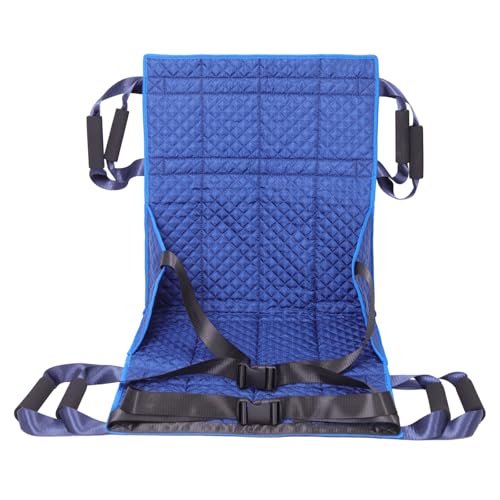
Patient Transfer Chair Review Summary
Patient Transfer Chair makes sense for caregivers who need a manual transfer aid for short, controlled moves between a wheelchair, bed, car, or chair, and for emergency evacuation support on stairs.
It is not trying to replace powered mobility equipment or a full lifting system.
Instead, it focuses on being a lightweight, portable, and easier-to-grip handling aid that can reduce strain during routine transfers.
The main appeal is the combination of broad use cases and simple construction.
The listing describes Oxford fabric, reinforced cross stitching, eight thickened sponge handles, two reinforcing straps, and a 260 lb weight-bearing limit.
That is a practical feature set for families, home care situations, rehabilitation settings, and caregivers who want a low-complexity product that can be stored and deployed quickly.
For the right buyer, this is a useful support tool rather than a specialized medical machine.
If you need a device for short-distance transfers, basic stair evacuation planning, or emergency backup, the value proposition is clear.
If you need frequent heavy lifting, complex positioning, or solo operation in difficult environments, the limitations matter more.
Review Scorecard
| Category | Score | Why it matters |
|---|---|---|
| Transfer versatility | 8/10 | Listed for bed, car, chair, and stair evacuation use cases. |
| Caregiver handling | 8/10 | Eight sponge handles and straps are designed for easier gripping. |
| Everyday practicality | 7/10 | Lightweight manual aid fits home care and short moves well. |
| Build confidence | 7/10 | Oxford fabric and reinforced stitching point to a durable design. |
| Safety mindset | 7/10 | Handles, straps, and stated load limit support controlled transfers. |
| Heavy-duty suitability | 5/10 | Best as an assist tool, not a full replacement for advanced lift systems. |
| Value for niche use | 8/10 | Strong fit if you need a basic transfer and evacuation aid. |
Key Features and Specifications of Patient Transfer Chair
The product is described as a wheelchair handling mat and transfer cushion meant for moving a patient from a wheelchair to a bed, car, or chair.
The listing also says it can be used for emergency evacuation on stairs, which broadens it beyond a simple bedside aid.
Key stated details include:
- Material: Oxford fabric with breathable construction
- Handles: 8 thickened sponge handles
- Straps: 2 reinforcing straps
- Load limit: Up to 260 lbs
- Intended users: Wheelchair users, elderly people, disabled or handicapped users, and people who cannot move their lower limbs independently
- Use cases: Daily home care, mobility support, short-distance transfers, and emergency evacuation
- Durability claims: Cross-reinforced stitching and heavy-duty materials
- Support: 2-year warranty
That specification set tells you a lot about the intended role.
This is not a complex platform lift or powered stair solution.
It is a manual assistance product with a focus on grip points, portability, and controlled movement.
The 260 lb support figure is important because it narrows the buyer pool.
It should be treated as a practical ceiling for the listed design, not as a reason to push the product into scenarios where more robust equipment would be the safer choice.
Pros and Cons of Patient Transfer Chair
Pros
- The listed use cases are broad enough to cover both routine transfers and emergency evacuation planning.
- Eight sponge handles give caregivers multiple grip positions, which is useful when adjusting body position during a move.
- Two reinforcing straps and cross stitching suggest the product is designed with stability in mind.
- Oxford fabric is a sensible choice for a portable care aid because it is commonly used for durable, lightweight gear.
- The 2-year warranty adds some reassurance for a product that will likely see repeated handling.
Cons
- It is still a manual aid, so the caregiver does the work; it does not eliminate lifting effort.
- The product is aimed at short transfers and support, not at replacing a dedicated lift system.
- The 260 lb limit may exclude some users or make caregivers cautious in borderline situations.
- The listing language is broad, which means shoppers should verify that this form factor fits their real transfer workflow.
Overall, the pros favor convenience and flexibility, while the cons mainly reflect the limits of the category rather than a flaw in the concept.
Who Should Buy Patient Transfer Chair?
This is a good match for family caregivers, home health helpers, and facilities that want a straightforward manual transfer aid for short moves.
It also makes sense for people building an emergency evacuation plan for a mobility-impaired household member, especially if stair movement is part of the concern.
It is also a reasonable option if you need a tool that can move between settings.
The listing points to use in the home, car, chair, and stair contexts, so the product appears to be designed around flexibility rather than one fixed application.
You should probably skip it if you need frequent heavy transfers, if the patient’s weight or mobility situation is near the edge of the stated limit, or if a single caregiver must perform transfers without help.
In those cases, a different class of equipment is usually the safer buy.
If your needs are occasional, short-distance, and caregiver-assisted, this product fits the job well.
If your needs are intensive or medically complex, it is better treated as a backup aid than a primary solution.
How Patient Transfer Chair Fits Real Care Work
For Bed-To-Chair Moves
The listing’s main strength is basic transfer support from a wheelchair to a bed, car, or chair.
That is where a product like this earns its keep.
Multiple handles can help caregivers coordinate a steady move rather than grabbing awkwardly at the person or the fabric.
For Stair Evacuation Planning
The emergency evacuation language matters because it changes how shoppers should think about the product.
This is not just a comfort accessory.
It is meant to be part of a contingency plan when stairs become unavoidable, so the strap-and-handle layout is more relevant than cosmetic features.
For Home Care Durability
The reinforced cross stitching, Oxford fabric, and heavy-duty material claims point toward repeated use in a home or rehab setting.
That does not guarantee indestructibility, but it does suggest the product was built to be handled often, folded away, and brought back into service as needed.
For Caregiver Grip and Control
The handle count is one of the best signs here.
Eight sponge handles give more options for hand placement and sharing load during a move.
In a manual transfer product, that kind of detail can matter more than flashy design because better grip usually means better control.
Alternatives to Patient Transfer Chair
If you are comparing options, start with other established transfer and evacuation categories rather than jumping straight to powered equipment.
Each of these serves a slightly different buyer need.
A transfer board is usually better for seated lateral moves.
A patient lift is the more obvious choice when you need substantial lift assistance.
Transfer sheets are useful when repositioning rather than moving between devices.
Mangar-style lifting cushions are worth comparing if the emergency evacuation angle is your priority.
Is Patient Transfer Chair Worth It?
Yes, if you need a manual transfer aid for short moves, home care support, or emergency evacuation planning and you understand that this is an assisted-use product, not a powered lifting system.
The listed handles, straps, fabric construction, and 260 lb support limit all point to a practical, focused tool.
If your real need is routine heavy lifting or solo transfers, look elsewhere.
If your need is controlled caregiver-assisted movement with a simple portable aid, Patient Transfer Chair is worth considering.