Choosing among fruit juicer presses for small businesses means balancing output, labor, counter space, cleanup, and the type of produce you serve. A compact manual press may suit a café with occasional citrus orders, while a hydraulic or electric machine can better support steady production.
This roundup covers manual citrus presses, hydraulic fruit equipment, slow juicers, and commercial electric options. Use the guide below to match capacity and operating style with your menu and expected daily demand.
Best 10 Fruit Juicer Presses for Small Businesses Picks for 2026
Best Manual Citrus Press

- Cast-iron body with 304 stainless steel strainer
- No electricity required for citrus pressing
- Removable parts simplify cleanup
Best For: Small businesses serving fresh citrus juice at moderate volume
Best High-Capacity Fruit Press

- 30-liter capacity for batch processing
- Applies up to 3 tons of pressure
- Juice-contact parts use AISI 304 stainless steel
Best For: Cideries, wineries, farm shops, and batch juice production
Best High-Output Electric Juicer

- Processes a stated 60–80 kg of citrus per hour
- Adjustable fitting handles different fruit sizes
- Separate filtration and peel collection design
Best For: High-volume restaurants, beverage shops, and fruit stores
High-Volume Citrus Workhorse

- Up to 20 oranges per minute
- Automatic peeling, juicing, and filtering
- 304 stainless steel construction
Best For: High-volume citrus service in shops, restaurants, and bars
Compact Manual Crusher
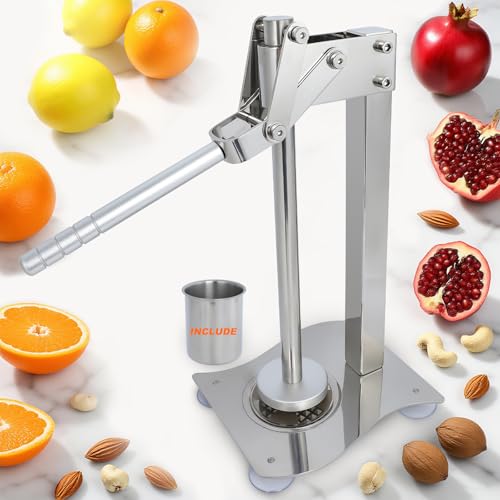
- Power-free desktop operation
- Stainless steel and dishwasher safe
- Handles citrus, fruit, and nuts
Best For: Small counters and versatile low-volume prep
Ergonomic Countertop Press

- Extended lever reduces hand strain
- 4.3-inch bowl for common citrus sizes
- Dishwasher-safe fruit-contact parts
Best For: Cafés, bars, and moderate-volume citrus prep
Countertop Workhorse
Heavy-Duty Cast Iron Citrus Press

- 304 stainless-steel and cast iron construction
- Stable rubber feet and ergonomic lever
- Dishwasher-safe removable strainer and funnel
Best For: Small commercial counters needing a sturdy manual fruit press
Measured Service Press
Commercial Lever Citrus Juicer

- 15-pound cast iron body for stability
- Includes a 15-ounce stainless-steel cup
- Removable dishwasher-safe cone and strainer
Best For: Bars and restaurants needing measured manual citrus service
High-Yield Counter Press
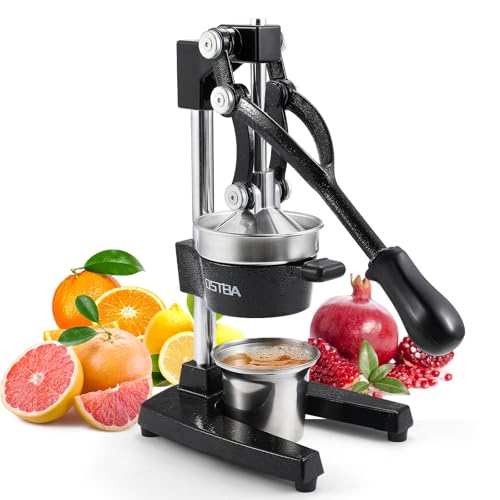
- Weighted cast iron frame for stable pressing
- Long lever helps reduce hand strain
- Includes stainless-steel cup and built-in strainer
Best For: Small juice bars and cafes serving fresh citrus juice
Best Manual Citrus Press – Commercial Hand Press
For small businesses seeking fruit juicer presses for small businesses without relying on electricity, this ROVSUN manual citrus press offers a straightforward way to prepare fresh juice. Its cast-iron body, stainless steel strainer, long handle, and compact cabinet-friendly design suit moderate-volume citrus service.
Best For: Restaurants, bars, markets, parties, and other operations that primarily juice oranges, lemons, limes, grapefruits, or pomegranates.
Pros:
- Manual operation requires no electrical outlet and avoids rubbing the rind, helping reduce bitter rind taste.
- Heavy-duty cast iron construction and a 304 stainless steel strainer support regular commercial use.
- Removable strainer cone and funnel make hand washing and cleanup simpler.
- Safety hat helps lock the handle in position when stored.
Cons:
- Manual pressing is less suitable than an electric machine for very high-volume service.
- Designed for citrus fruits rather than general fruit processing.
- Hand-wash-only care requires manual cleanup.
The ROVSUN is a practical pick when portability, simple operation, and rind-free citrus extraction matter more than automation. Its 6.1 kg frame and 14.57-inch height provide a sturdy workstation presence while remaining suitable for lower-cabinet storage.
Best High-Capacity Fruit Press – 30L Hydraulic Press
Businesses processing larger batches of fruit, cider, wine, or grape juice may prefer this 30-liter hydraulic press. Among fruit juicer presses for small businesses, it stands out for its 3-ton pressure capacity and stainless steel juice-contact components.
Best For: Small cideries, wineries, farm shops, and batch-processing operations working with apples, grapes, and other pressed fruit.
Pros:
- 30-liter, or 7.93-gallon, capacity supports larger batch pressing.
- Up to 3 tons of pressure is designed to maximize juice extraction.
- AISI 304 stainless steel is used for the drain pan, basket, and pressing plate that contact juice.
- Powder-coated frame provides a durable protective covering, while the solid structure is designed for long-term use.
Cons:
- At 66 pounds and 30 inches tall, it is less portable than a compact countertop press.
- Its batch-oriented design may be excessive for a business serving only occasional individual drinks.
- The supplied details do not identify an electric motor or automatic feeding system.
This Mosakar press is best evaluated as a batch-processing tool rather than a quick-service citrus squeezer. Its large capacity and hydraulic pressure make it a strong fit where throughput comes from processing substantial loads at once.
Best High-Output Electric Juicer – Commercial Citrus Extractor
For businesses that need faster citrus service, this VEVOR electric extractor is a compelling option among fruit juicer presses for small businesses. Its four rotating shaft assemblies, adjustable fitting knob, and 60–80 kg-per-hour stated processing range are designed for continuous commercial use.
Best For: Restaurants, beverage shops, supermarkets, fruit stores, and amusement parks serving substantial volumes of orange, lemon, or other citrus juice.
Pros:
- Stated processing capacity of 132–176 pounds, or 60–80 kg, of citrus per hour.
- Pure physical pressing and a stated juice yield of over 80% support efficient extraction.
- Large fruit basket allows refilling during operation, reducing frequent loading.
- Built-in filtration separates pulp, while peel and juice outlets support separate collection.
Cons:
- Fruit must be washed, peeled, pitted, and cut to suitable sizes before processing.
- The 16.93-by-14.17-by-21.65-inch footprint requires dedicated counter or floor space.
- Hand-wash-only care means cleanup remains a manual task.
The VEVOR is the strongest throughput choice in this group for citrus-focused businesses. Its 100W motor, 120V power source, peel collection bucket, and PC cover add commercial convenience, though operators should plan for preparation and cleaning time.
Best Versatile Cold-Press Juicer – Whole-Fruit Slow Juicer
Small businesses with a broader menu may value this AMZCHEF slow juicer as one of the more versatile fruit juicer presses for small businesses. Its 6.5-inch self-feeding chute, 3-in-1 functionality, reverse function, and 100-ounce capacity support juice, nut milk, and frozen-fruit sorbet preparation.
Best For: Juice bars, cafés, and specialty drink businesses that want one machine for whole-fruit juice plus additional menu items.
Pros:
- Wide chute with built-in cutting blades reduces extensive chopping for larger ingredients.
- 3-in-1 design supports fresh juice, homemade nut milk, and frozen fruit sorbet.
- Slow cold-press system and large auger are designed to maximize juice yield.
- Detachable body, simple locking design, reverse function, and included brush support easier cleanup and clog control.
Cons:
- Its 600W DC motor and slow-processing design may not match the stated throughput of a commercial citrus extractor.
- Hand-wash-only care still requires disassembly after use.
- Its 3-in-1 features may be unnecessary for businesses offering only standard juice.
The AMZCHEF makes the most sense when menu flexibility matters as much as juice extraction. The 6.5-inch feed chute and self-feeding design reduce preparation work, while the interchangeable juice and sorbet filters help expand offerings without adding another appliance.
High-Volume Citrus Workhorse – Commercial Orange Juicer
For small businesses seeking fruit juicer presses for small businesses, the VEVOR Commercial Orange Juicer is built for steady citrus production. Its semi-automatic system handles peeling, juicing, and filtering, with a 120W motor rated for up to 20 oranges per minute.
Best For: Grocery stores, juice shops, restaurants, bars, and other commercial settings that need high-volume citrus service.
Pros:
- Processes up to 20 oranges per minute.
- Accepts oranges, lemons, grapefruits, and pomegranates measuring 55–80 mm.
- Food-grade 304 stainless steel and detachable parts support cleaning.
- Automatic stop activates when the transparent cover is opened.
Cons:
- At 86.2 pounds, it is substantially less portable than manual presses.
- Its 30.71-inch height requires dedicated counter or floor space.
- Hand washing is recommended in the care instructions.
This is the strongest choice here for businesses prioritizing throughput and automated citrus preparation. Its larger footprint and weight make it better suited to a permanent service area than occasional or mobile use.
Compact Manual Crusher – Heavy-Duty Citrus Smasher
For small businesses comparing fruit juicer presses for small businesses, this manual desktop smasher offers a compact, power-free approach to citrus and food preparation. Its stainless steel construction, non-slip handle, and quick 3-to-5-second crushing cycle suit lower-volume service.
Best For: Small counters, juice stands, cocktail stations, and businesses that want portable manual citrus pressing with added crushing versatility.
Pros:
- Hand-powered operation requires no electrical outlet.
- Stainless steel construction is durable and dishwasher safe.
- Teeth on the indenter help crush fruit, nuts, and other foods.
- Compact 0.85-liter capacity suits desktop use.
Cons:
- Manual operation is less suitable for sustained high-volume juicing.
- Its crushing design may be less specialized for smooth juice extraction than a dedicated citrus press.
- Supplied notes do not list included components.
This WN014 is a practical option when space, portability, and simple manual operation matter more than automated throughput. Its ability to handle nuts and other foods adds flexibility for small prep stations.
Ergonomic Countertop Press – Stainless Steel Citrus Juicer
For operators evaluating fruit juicer presses for small businesses, this manual stainless steel press combines an extended lever with a wide 4.3-inch bowl for comfortable batch squeezing. It is designed for oranges and other citrus, with a cone that strains seeds and excess pulp.
Best For: Cafés, cocktail bars, party-service prep, and small commercial counters needing portable, easy-to-clean manual citrus pressing.
Pros:
- Extended ergonomic handle helps reduce hand strain.
- 4.3-inch bowl accommodates most commercial oranges and several citrus fruits.
- Food-contact parts are dishwasher safe stainless steel.
- Sturdy base, non-slip grip, and handle lock support stable operation.
Cons:
- Manual pressing requires operator effort and is not intended for automated high-volume production.
- It is primarily designed for citrus rather than broad fruit processing.
- The supplied details do not provide complete product dimensions.
This press offers a useful middle ground for small businesses: more ergonomic and commercial-friendly than a basic handheld squeezer, while remaining portable and simple to maintain. Choose it for fresh citrus service where moderate output is sufficient.
Countertop Workhorse – Heavy-Duty Cast Iron Citrus Press
For small businesses comparing fruit juicer presses for small businesses, this fully assembled cast iron model offers a straightforward manual setup for citrus and several other fruits. Its stainless-steel strainer, stable rubber base, and tall but compact countertop profile make it practical for juice stands, bars, restaurants, and grocery settings.
Best For: Small commercial counters that need a sturdy, electricity-free press for citrus, pomegranates, and similar fruits.
Pros:
- Heavy-duty cast iron construction with 304 food-grade stainless-steel components.
- Long ergonomic handle and rubber feet support controlled, low-effort pressing.
- Removable strainer and funnel are dishwasher safe for easier cleanup.
- Built-in straining helps keep seeds and pulp out of the serving cup.
Cons:
- Its approximately 14.4-pound build is substantial to move between work areas.
- Manual operation requires staff to press each fruit individually.
This is a sensible choice when durability, simple operation, and easy cleanup matter more than automated throughput. The 15.5-inch height should also be checked against the available counter or cabinet space.
Measured Service Press – Commercial Lever Citrus Juicer
This lever press is a practical option for fruit juicer presses for small businesses where repeatable manual service and easy cleanup are priorities. The heavy cast iron body, stainless-steel fruit-contact parts, and included 15-ounce measuring cup suit bars, restaurants, outdoor setups, and compact juice operations.
Best For: Businesses that want a stable citrus press with a serving cup and a lever designed for one-handed operation.
Pros:
- 15-pound cast iron body provides substantial stability during pressing.
- Soft-grip handle and balanced lever help reduce operating effort.
- Stainless-steel cone and strainer are removable and dishwasher safe.
- Included 15-ounce stainless-steel measuring cup supports direct collection.
Cons:
- It is a manual press, so output depends on staff speed and effort.
- The design is intended primarily for citrus and similar fruits rather than broad automated juicing.
- At roughly 15.3 inches tall, it needs adequate vertical clearance.
Choose this model if a measuring cup and safety-focused removable cone are useful in your workflow. Its cast iron stability is well suited to regular service, while the manual format keeps operation simple and cordless.
High-Yield Counter Press – OSTBA Cast Iron Citrus Juicer
For fruit juicer presses for small businesses, the OSTBA combines a weighted cast iron frame with a long lever and stainless-steel collection cup and strainer. It is designed for daily manual use in juice bars, cafes, restaurants, and other small commercial settings without cords, motors, or complex setup.
Best For: Small juice-service operations that need a stable press for oranges, lemons, limes, grapefruits, and pomegranates.
Pros:
- Cast iron frame and stainless-steel food-contact parts support regular use.
- Long lever helps apply even pressure with less hand strain.
- Includes a stainless-steel cup and built-in strainer for cleaner collection.
- Removable stainless-steel parts rinse quickly and are dishwasher safe.
Cons:
- Manual pressing is slower than using a powered commercial juicer for high-volume service.
- Its approximately 15.5-inch height and nearly 14-pound weight require a dedicated counter position.
- The supplied notes focus on citrus fruits rather than a wider range of produce.
This model fits operators who value a controlled, low-complexity workflow and want the collection cup included. Its 0.5-liter capacity is useful for individual servings, though larger-volume operations may need more frequent emptying.
How We Picked the Best Fruit Juicer Presses for Small Businesses
We focused on the practical requirements of small commercial operations: juice yield, operating speed, construction, ease of use, cleaning, footprint, and flexibility across citrus and other fruits. The selection includes manual lever presses for low-to-moderate volume, electric machines for faster service, slow or cold-press designs for broader produce compatibility, and a hydraulic press for larger batch work.
Because product specifications can vary by seller and configuration, confirm dimensions, included components, food-contact materials, warranty coverage, and electrical requirements before ordering. For any commercial setting, prioritize equipment with stable bases, accessible parts, and materials suitable for repeated food contact.
Quick Comparison
| Best suited to | Recommended equipment type | Main advantage | Trade-off |
|---|---|---|---|
| Occasional citrus orders | Compact manual press | Low cost and minimal maintenance | Slower and more labor-intensive |
| Busy café or juice counter | Electric citrus juicer | Consistent output with less hand effort | Requires power and more cleaning |
| Mixed fruits and vegetables | Slow or cold-press juicer | Greater ingredient versatility | More parts and preparation |
| Batch pressing | Hydraulic fruit press | High pressure and large capacity | Larger footprint and setup needs |
Key Buying Factors for Fruit Juicer Presses for Small Businesses
Capacity and Daily Volume
Estimate your busiest hour rather than your average day. Manual citrus presses work well when orders are intermittent, but electric equipment is usually more practical when staff must produce repeated drinks quickly. Large hydraulic presses make more sense for batch processing than made-to-order service.
Produce Compatibility
Check whether the machine is designed for lemons, limes, oranges, grapefruit, and pomegranates, or whether it can also process softer fruit and vegetables. Citrus presses typically deliver simpler operation, while slow juicers offer broader use but may require cutting and more frequent pulp removal.
Build Quality and Food Safety
Look for sturdy frames, stable feet, corrosion-resistant parts, and clearly identified food-contact surfaces. Stainless steel components are useful in wet commercial environments, but construction quality matters as much as the material label. Avoid designs with difficult-to-reach crevices.
Speed, Labor, and Cleanup
Consider who will operate the press during rush periods. Lever presses reduce squeezing effort but still require manual loading and unloading. Electric models can improve consistency, while removable cones, strainers, and juice cups make end-of-shift cleaning easier.
Who Should Buy Which Fruit Juicer Presses for Small Businesses?
Choose a compact manual press if you run a small café, bar, market stall, or restaurant with modest citrus demand and want low operating costs.
Choose a heavy-duty cast-iron lever press if durability and dependable hand-powered operation matter more than maximum speed.
Choose an electric citrus machine if your business serves frequent orange, lemon, lime, or pomegranate drinks and staff time is limited.
Choose a slow or cold-press juicer if your menu includes varied fruits, vegetables, wellness shots, or bottled juices rather than citrus alone.
Choose a hydraulic fruit press if you process larger batches and have the room, preparation workflow, and cleaning capacity required for commercial pressing.