Finding the right GPS watch for mountain biking means balancing trail navigation, battery endurance, durability, and everyday comfort. The best choice depends on whether you need dedicated cycling metrics, multisport training tools, or a rugged smartwatch for backcountry adventures.
We compared 10 GPS-enabled watches and bike computers across mapping features, satellite support, sensors, battery claims, water resistance, and ease of use to help you choose confidently.
Best 10 Gps Watches for Mountain Biking Picks for 2026
Best Solar Pick

- Multi-band GPS with SatIQ
- Solar charging for extended battery life
- Rugged 45 mm, 10 ATM design
Best For: Long rides and demanding outdoor conditions
Best Battery Flexibility

- Up to 300 hours in tour mode
- Four satellite systems for difficult terrain
- Sapphire glass and 100 m water resistance
Best For: Long-distance rides and mountain adventures
Best Lightweight Training Option

- Cycling profile and built-in GPS
- AMOLED display with button controls
- Up to 19 hours in GPS mode
Best For: Mixed cycling, running, and fitness training
Best MTB-Specific Features

- Includes MTB Dynamics and TracBack routing
- Up to 30 hours in GPS mode
- Rugged 100 m water-resistant construction
Best For: Technical trail riding and off-road navigation
Best Everyday Training Pick

- Built-in GPS with route recording and trackback
- 100+ sports modes with full-cycle training insights
- Up to 15 days of light-use battery life
Best For: Casual riders wanting broad fitness and outdoor tracking
Best Dedicated MTB Computer

- Purpose-built enduro and downhill ride profiles
- Trailforks and TopoActive maps with Forksight mode
- Tracks Grit, Flow, jumps, and split times
Best For: Technical trail riders needing dedicated navigation and MTB metrics
Best Offline Navigation Features
GPS AI Smartwatch with Offline Maps

- Multi-system GPS with offline maps and waypoint marking
- Compass, altimeter, and barometer for outdoor use
- 5ATM waterproofing and 100+ sports modes
Best For: Riders wanting offline routes and smartwatch communication tools
Rugged Trail Navigator
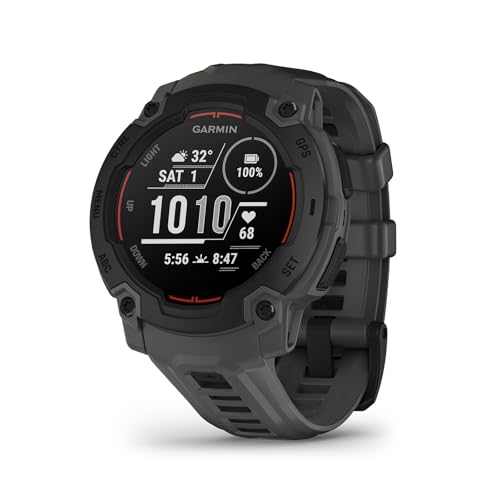
- Up to 16 days of battery life
- Compass, altimeter, and multi-GNSS navigation
- 10 ATM and MIL-STD-810 rugged design
Best For: Durability-focused mountain bikers and long outdoor rides
Training-Focused Ride Tracker

- Cycling activity profile with built-in GPS
- Up to 20 hours in GPS mode
- Suggested workouts and race-planning tools
Best For: Cyclists who combine riding with structured fitness training
Everyday Fitness Companion

- Built-in GPS with cycling and 30-plus sports apps
- Bright AMOLED touchscreen
- Up to 11 days of smartwatch battery life
Best For: Riders wanting an everyday smartwatch with fitness and wellness features
Best Solar Pick – Garmin Instinct 3 Solar
For riders comparing gps watches for mountain biking, the Garmin Instinct 3 Solar stands out as a rugged, navigation-focused option with multi-band GPS, an altimeter, and a compass. Its solar charging lens can support unlimited battery life under Garmin’s stated usage conditions, making it well suited to long days outdoors.
Best For: Mountain bikers who prioritize rugged construction, navigation, and extended battery performance.
Pros:
- Multi-band GPS with SatIQ technology helps balance positioning accuracy and battery life.
- Solar charging lens can provide unlimited battery life under specified conditions.
- 45 mm fiber-reinforced polymer case, metal-reinforced bezel, and 10 ATM water rating suit demanding outdoor use.
- Built-in flashlight and safety features add practical value on remote rides.
Cons:
- Solar battery claims depend on all-day wear and strong outdoor light exposure.
- Incident detection and Assistance require a paired smartphone and network coverage.
The Instinct 3 Solar is a strong choice when durability and battery longevity matter more than a lightweight, minimalist design. Its physical-button control and outdoor sensors are especially practical on rough trails.
Best Battery Flexibility – Suunto 9 Peak Pro
The Suunto 9 Peak Pro is a compelling choice among gps watches for mountain biking, particularly for riders who need reliable tracking across mountainous terrain. It offers multiple GPS modes, fast charging, turn-by-turn navigation, and a durable titanium, stainless steel, and sapphire-glass construction.
Best For: Performance-focused riders planning long adventures in challenging terrain.
Pros:
- Provides up to 40 hours in best GPS mode, 70 hours in endurance mode, or 300 hours in tour mode.
- Uses four satellite systems for tracking in mountainous terrain and steep canyons.
- Military-grade durability, sapphire glass, and 100-meter water resistance support demanding use.
- Includes 97 sport modes, turn-by-turn navigation, weather alerts, and avalanche maps.
Cons:
- The feature set may be more extensive than casual riders need.
- Some connected features require pairing with a smartphone.
With several battery profiles and a 10-minute quick-charge option that provides two hours of GPS training, the 9 Peak Pro is well suited to riders who want flexibility between daily training and extended bikepacking-style adventures.
Best Lightweight Training Option – Garmin Forerunner 165
The Garmin Forerunner 165 offers a lighter, training-oriented approach to gps watches for mountain biking. Its built-in GPS, cycling activity profile, bright AMOLED touchscreen, and traditional button controls make it useful for riders who also want structured fitness guidance and everyday smartwatch features.
Best For: Casual to serious riders who want cycling tracking alongside running and training tools.
Pros:
- Built-in GPS tracks pace and distance, with cycling included among 25-plus activity profiles.
- AMOLED touchscreen combines with physical buttons for flexible control.
- Offers up to 11 days of smartwatch battery life and up to 19 hours in GPS mode.
- Personalized workouts, recovery time, Garmin Coach, and safety features support training.
Cons:
- Its 50-meter water resistance is lower than the 100-meter rating of the other rugged options here.
- It is designed primarily as a running smartwatch rather than a dedicated rugged outdoor watch.
The Forerunner 165 is a practical pick if mountain biking is part of a broader training routine. Choose it for its display, lighter design, and coaching features rather than for maximum trail durability or advanced navigation sensors.
Best MTB-Specific Features – Garmin Instinct 2 Camo
The Garmin Instinct 2 Camo is built for riders seeking gps watches for mountain biking with dedicated off-road functionality. It combines multi-GNSS tracking, TracBack routing, an altimeter, a compass, and MTB Dynamics with a rugged case designed for thermal and shock resistance.
Best For: Trail riders who want rugged navigation and mountain-bike-specific activity features.
Pros:
- Includes MTB Dynamics, a built-in biking profile, multi-GNSS support, and TracBack routing.
- Up to 28 days of smartwatch battery life and up to 30 hours in GPS mode.
- 100-meter water resistance, Gorilla Glass, and a fiber-reinforced polymer case suit outdoor use.
- Three-axis compass and barometric altimeter help with orientation and elevation tracking.
Cons:
- The non-solar model does not offer the solar charging feature found on the Instinct 3 Solar.
- Its monochrome-style display is less visually vivid than an AMOLED screen.
The Instinct 2 Camo is a focused trail companion for riders who value MTB-specific metrics, dependable battery life, and physical-button operation. It is especially appealing when ruggedness and navigation are more important than a high-resolution display.
Best Everyday Training Pick – Fit Pro GPS Sports Smartwatch
For riders seeking gps watches for mountain biking with broad fitness tracking, the Fit Pro combines built-in GPS, route recording, and a trackback feature with more than 100 sports modes. Its long battery life and physical buttons make it practical for training, travel, and everyday outdoor use.
Best For: Casual mountain bikers who want a versatile GPS fitness watch for rides, hikes, and general health tracking.
Pros:
- Built-in GPS records outdoor routes and supports trackback navigation.
- Full-cycle training tools cover readiness, live workout data, and post-session insights.
- Battery lasts up to 15 days in light use or 48 hours under heavy load.
- Tracks more than 100 activities and includes heart rate, SpO2, and sleep monitoring.
Cons:
- Its 3ATM rating is suited to sweat, showers, and general activity rather than deep-water use.
- The supplied notes do not identify mountain-bike-specific metrics or trail maps.
The Fit Pro is a strong all-purpose option when you want GPS route recording alongside wellness and training features. Riders who need detailed trail navigation or MTB-specific performance data may prefer a dedicated bike computer.
Best Dedicated MTB Computer – Garmin Edge MTB
The Garmin Edge MTB is purpose-built for riders comparing gps watches for mountain biking but who prefer a handlebar-mounted computer. It pairs rugged construction and multi-band GPS with trail maps, enduro and downhill profiles, and metrics designed specifically for technical riding.
Best For: Mountain bikers who prioritize trail navigation, downhill tracking, and MTB-specific ride analysis.
Pros:
- Rugged, compact design with a scratch-resistant Gorilla Glass display and seven-button control.
- Multi-band GPS and automatic 5 Hz recording support accurate tracking during descents.
- Preloaded Trailforks and TopoActive maps show trail details, forks, elevation, and routes.
- Tracks Grit, Flow, jump speed, hang time, split times, and other MTB-focused data.
Cons:
- Battery life is up to 14 hours in demanding use or 26 hours in battery-saver mode.
- Some training and connected safety features require compatible sensors or a smartphone.
- It is a bike computer rather than a wristwatch.
For serious trail riding, the Edge MTB is the most specialized choice in this group. Its dedicated maps and MTB dynamics offer substantially more riding detail than a general-purpose smartwatch, though the handlebar format may not suit shoppers specifically seeking wrist-based tracking.
Best Offline Navigation Features – GPS AI Smartwatch with Offline Maps
This GPS smartwatch is a versatile option among gps watches for mountain biking, especially for riders who want offline route viewing and outdoor sensors in addition to health and smart features. It supports multiple satellite systems and includes a compass, altimeter, and barometer for route and elevation context.
Best For: Outdoor riders who want offline maps, waypoint marking, GPS tools, and smartwatch communication features.
Pros:
- Supports GPS, GLONASS, Galileo, and QZSS for multi-system positioning.
- Offline Maps mode can display downloaded routes and mark waypoints without cellular service.
- Built-in compass, altimeter, and barometer add useful outdoor information.
- 5ATM waterproofing, 100+ sports modes, and a 550mAh battery support active use.
Cons:
- The supplied notes do not specify mountain-bike-specific metrics or battery life in GPS mode.
- Offline maps require routes or maps to be downloaded in advance.
- Some messaging and reply features depend on phone compatibility and connection.
The watch stands out for combining multi-system GPS with offline maps and outdoor sensors in a wrist-based design. It is a good fit for riders who value route access away from cellular coverage, while dedicated MTB competitors may still offer more specialized ride analytics.
Rugged Trail Navigator – Garmin Instinct E 45mm
For riders comparing GPS watches for mountain biking, the Garmin Instinct E emphasizes durability, long battery life, and navigation basics. Its 3-axis compass, barometric altimeter, and multi-GNSS support are useful for outdoor riding, while the 10 ATM water rating and MIL-STD-810 engineering suit demanding conditions.
Best For: Mountain bikers who prioritize rugged construction, long battery life, and dependable outdoor navigation.
Pros:
- Up to 16 days of battery life in smartwatch mode.
- 3-axis compass, barometric altimeter, and multi-GNSS support.
- 10 ATM water rating and thermal- and shock-resistant MIL-STD-810 design.
- Sunlight-visible monochrome MIP display with button controls.
Cons:
- Monochrome 0.9-inch display is less vibrant than an AMOLED screen.
- Built-in storage is limited to 128 MB.
- Health metrics are estimates and are not intended as medical measurements.
The Instinct E is the strongest choice here for riders who expect mud, rain, impacts, and extended trips away from a charger. It focuses on outdoor toughness and navigation rather than a colorful touchscreen experience.
Training-Focused Ride Tracker – Garmin Forerunner 55
The Garmin Forerunner 55 is a practical option among GPS watches for mountain biking when training data matters more than rugged trail navigation. Its built-in cycling profile, wrist-based heart-rate monitoring, GPS tracking, and up to 20 hours of GPS-mode battery life support regular rides and fitness sessions.
Best For: Fitness-oriented cyclists who want simple GPS ride tracking and structured training tools.
Pros:
- Built-in cycling activity profile alongside running and other sports modes.
- Up to 20 hours of battery life in GPS mode.
- Suggested workouts, race predictions, and finish-time estimates support training.
- Sunlight-visible MIP display and push-button controls are easy to use.
Cons:
- Designed primarily as a running watch rather than a dedicated mountain-bike watch.
- PacePro is not compatible with on-device courses.
- Navigation support is listed as GPS, without the compass and barometric altimeter found on the Instinct E.
The Forerunner 55 makes sense for riders who also run and want an accessible training watch. It tracks cycling, but its feature set is better aligned with workout planning than technical-trail navigation.
Everyday Fitness Companion – Garmin vívoactive 5
For riders seeking GPS watches for mountain biking that also work well away from the trail, the Garmin vívoactive 5 combines built-in GPS cycling support with a bright AMOLED touchscreen and broad wellness features. Its battery lasts up to 11 days in smartwatch mode, and more than 30 sports apps make it suitable for varied training.
Best For: Mountain bikers who want a colorful everyday smartwatch with cycling, wellness, and music features.
Pros:
- Built-in GPS and a cycling activity profile among more than 30 sports apps.
- Bright 390-by-390 AMOLED touchscreen.
- Up to 11 days of battery life in smartwatch mode.
- Includes recovery time, workout benefit, sleep coaching, and Body Battery insights.
Cons:
- Shorter stated smartwatch battery life than the Instinct E and Forerunner 55.
- The supplied notes do not list a barometric altimeter, compass, or rugged MIL-STD-810 construction.
- Health and wellness data are estimates and are not intended as medical measurements.
The vívoactive 5 is the most lifestyle-oriented pick in this group. Choose it if a vivid screen, broad fitness tracking, music support, and everyday comfort matter as much as recording cycling activity.
How We Picked the Best Gps Watches for Mountain Biking
We focused on features that matter on wooded, uneven, and remote trails: reliable GPS or multi-GNSS tracking, route guidance, durable construction, readable displays, useful battery life, and controls that are practical while riding. We also considered training tools, heart-rate and health sensors, smartphone connectivity, water resistance, and whether each device is better suited to cycling or broader outdoor use.
Not every product here is a dedicated cycling computer. Some are multisport watches, while the Garmin Edge MTB is designed specifically for mountain biking. That distinction is important when comparing navigation detail, handlebar visibility, and ride-specific metrics.
Quick Comparison
- Best for rugged all-around use: Garmin Instinct 3 Solar or Instinct 2.
- Best for dedicated mountain-bike data: Garmin Edge MTB.
- Best for performance-focused athletes: Suunto 9 Peak Pro.
- Best for running and mixed training: Garmin Forerunner 165 or Forerunner 55.
- Best for health and daily smartwatch features: Garmin vívoactive 5.
- Best for budget-conscious buyers: Fit Pro or the generic GPS smartwatch, after verifying app and navigation compatibility.
Key Buying Factors for Gps Watches for Mountain Biking
Navigation and GPS Accuracy
Look for multi-GNSS support, breadcrumb or map-based routing, saved courses, back-to-start guidance, and dependable tracking under tree cover. A dedicated bike computer may offer clearer cycling navigation, while a watch is easier to wear off the bike.
Battery Life and Charging
Choose based on your longest typical ride, not the advertised maximum alone. GPS use, navigation, sensors, music, notifications, and frequent screen activity can shorten runtime. Solar charging can help during extended outdoor use but does not eliminate the need to recharge.
Trail Durability and Controls
Prioritize water resistance, a tough case, scratch-resistant glass, physical buttons, and a readable screen. Buttons are often more dependable than touch controls when your hands are wet, gloved, or covered in mud.
Mountain-Bike Metrics and Sensors
Advanced riders may benefit from elevation data, ascent and descent totals, recovery metrics, training load, heart-rate support, cadence compatibility, and route analysis. Confirm compatibility with external sensors before buying.
Who Should Buy Which Gps Watches for Mountain Biking?
Choose a rugged Garmin Instinct model if you want strong outdoor durability, long battery life, and navigation in a watch format. Pick the Edge MTB if cycling-specific metrics and handlebar-mounted route visibility matter most. The Suunto 9 Peak Pro suits athletes who prioritize demanding multisport and adventure training.
Forerunner models are sensible for runners who also ride, while vívoactive 5 is better for buyers seeking balanced fitness and everyday smartwatch functions. Budget models can work for basic tracking and notifications, but verify GPS accuracy, companion-app quality, route support, and water-resistance claims before relying on one for remote rides.