The best plyometric boxes for seniors can support controlled step-ups, balance practice, lower-body strengthening, and low-impact conditioning—not just jumping. The right model should feel stable, provide a comfortable stepping surface, and match your mobility and fitness level.
We selected 10 options ranging from soft foam boxes and adjustable step platforms to wooden and steel designs. Use the guide below to compare safety, height flexibility, construction, and ease of use before choosing one for home workouts.
Best 10 Plyometric Boxes for Seniors Picks for 2026
Best Adjustable Foam Pick
BalanceFrom 3-in-1 Foam Plyometric Box

- Three rotating height options
- Soft foam with textured anti-slip surface
- Lightweight for easy repositioning
Best For: Gradual step-ups and adaptable home workouts
Best Cushioned Stability
Yes4All 3-in-1 Soft-Padded Plyo Box

- Padded surface over a wooden core
- Three adjustable height options
- Traction-focused PVC exterior
Best For: Comfortable, controlled step-ups and strength work
Best Low-Step Platform
The Original STEP Exercise Stepper

- Starts at a manageable 4-inch height
- Wide 43-by-16-inch stepping surface
- Cushioned nonslip top with stackable risers
Best For: Low-impact step-ups and balance-focused routines
Best Compact Foam Option
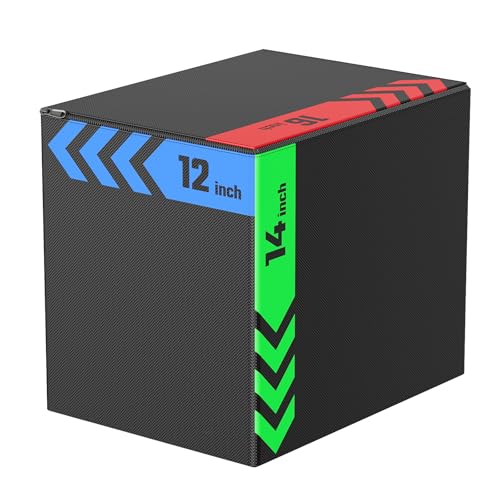
- Compact rotating three-height design
- Heavy foam cushions impact
- Anti-slip, sweat-proof outer surface
Best For: Portable step-ups in smaller home workout spaces
Adjustable Wood Pick

- Three low training heights: 12, 14, and 16 inches
- Wood construction with a smooth, sanded surface
- 400-pound maximum weight capacity
Best For: Controlled step-ups, squats, and gradual progression
Beginner-Friendly Choice
Amazon Basics 3-in-1 Wooden Plyo Box

- 12-, 14-, and 16-inch height options
- Built-in handles simplify repositioning
- 450-pound maximum weight capacity
Best For: Indoor home workouts and beginner step-ups
Stable Steel Option
VEVOR 12-Inch Plyometric Platform

- Low 12-inch fixed training height
- Rubber feet and textured silicone top
- Steel frame supports up to 500 pounds
Best For: Stable, controlled step-ups on a fixed-height platform
Soft-Step Safety Pick

- Padded foam core helps cushion landings
- Three heights: 16, 20, and 24 inches
- Non-slip cover for step-ups and balance work
Best For: Seniors seeking a cushioned, multi-height training platform
Lightweight Conditioning Option

- Three flip-adjustable heights
- Impact-reducing EPE foam construction
- 7-pound design is easy to carry
Best For: Seniors wanting a portable box for controlled step-ups
Low-Height Stability Choice

- 12-, 14-, and 16-inch height options
- Firm wood construction with non-slip surface
- Compact design for home-gym storage
Best For: Seniors preferring lower heights and a rigid platform
Best Adjustable Foam Pick – BalanceFrom 3-in-1 Foam Plyometric Box
For seniors looking at plyometric boxes for seniors, the BalanceFrom 3-in-1 foam box offers three height options for gradual step-up and balance-focused training. Its softer foam construction and textured surface may feel more approachable than a rigid box, though users should begin at the lowest comfortable height.
Best For: Beginners and seniors who want adjustable-height step-ups, low-impact conditioning, and a lightweight box for home workouts.
Pros:
- Rotates between 16-, 20-, and 24-inch heights.
- High-density foam helps soften impact and reduce shin scrapes.
- Textured anti-slip surface supports step-ups and landings.
- Lightweight design is easy to move and store.
Cons:
- The listed maximum weight recommendation is 250 pounds.
- The 16-inch lowest setting may still be high for some seniors.
Its adjustable design makes it one of the more adaptable options here, but senior users should prioritize controlled step-ups over jumping and confirm that the box height feels manageable.
Best Cushioned Stability – Yes4All 3-in-1 Soft-Padded Plyo Box
Among plyometric boxes for seniors, the Yes4All combines a wooden core with EVA foam padding and a vinyl cover. The cushioned exterior can make step-ups more comfortable, while its three height options and high stated weight capacity provide flexibility for strength and balance routines.
Best For: Seniors who want a padded, supportive platform for controlled step-ups and low-impact fitness exercises.
Pros:
- Three height options support progressive workouts.
- Wooden core adds structure beneath EVA foam and vinyl.
- PVC surface provides traction and is waterproof.
- Stated weight capacity reaches up to 440 pounds, with product details listing 450 pounds.
Cons:
- At 13.2 pounds, it is less lightweight than foam-only alternatives.
- Its compact 16-by-14-inch footprint may provide less landing area.
- Warranty coverage is listed as a 30-day return period and one-year warranty.
The padded construction and sturdy core make this a practical choice for step-ups, but seniors should use the lowest setting first and ensure the compact surface provides enough room for secure footing.
Best Low-Step Platform – The Original STEP Exercise Stepper
For seniors comparing plyometric boxes for seniors, The Original STEP platform stands out with a 4-inch base and additional risers for 6- and 8-inch configurations. Its wide 43-by-16-inch surface, nonslip top, and cushioned finish make it particularly suited to controlled step-ups rather than high box jumps.
Best For: Seniors seeking a broad, low-height platform for aerobic routines, balance practice, and gradual step-up training.
Pros:
- Low 4-inch starting height supports gradual progression.
- Wide platform provides a generous stepping surface.
- Nonslip cushioned top is designed to be easier on hands, feet, and back.
- Four stackable risers create 4-, 6-, and 8-inch height options.
Cons:
- The plastic platform is heavier than the foam boxes listed.
- It is a step platform rather than a conventional tall plyometric box.
- Maximum height is limited to 8 inches.
This is the most senior-friendly option for starting low and building confidence. Its broad surface and modest height favor steady movement, while the risers allow limited progression as comfort improves.
Best Compact Foam Option – papababe 3-in-1 Jump Box
The papababe 3-in-1 is a compact choice among plyometric boxes for seniors, measuring 12 by 14 by 16 inches and changing height when rotated. Its heavy foam filling, shock absorption, and sweat-resistant anti-slip cover suit cautious step-ups, provided the 200-pound load limit and relatively small surface are appropriate.
Best For: Seniors who need a portable foam box for compact home spaces and low-impact step-up practice.
Pros:
- Three height positions come from rotating the box.
- Heavy foam offers cushioning and shock absorption.
- Anti-slip, sweat-proof 1000D Oxford surface is designed for traction.
- Compact 15-pound design is easy to reposition.
Cons:
- Its maximum load capacity is 200 pounds.
- The 12-by-14-inch footprint is smaller than some alternatives.
- The listed size may offer less landing space for users needing a broad platform.
Its portability and cushioned construction are useful in smaller homes, but the compact dimensions make careful, controlled stepping especially important for seniors.
Adjustable Wood Pick – Rep 3-in-1 Plyometric Box
For seniors seeking plyometric boxes for seniors, this Rep wooden box is most practical when used for controlled step-ups, squats, and low-height training rather than jumping. Its small version provides 12-, 14-, and 16-inch sides, allowing gradual progression.
Best For: Seniors who want a sturdy, height-adjustable wooden platform for step-ups, squats, and physical therapy-style exercises.
Pros:
- Three usable heights from 12 to 16 inches in the small version.
- Heavy-duty wood construction with a smooth, sanded surface.
- Supports up to 400 pounds and has clearly marked dimensions.
Cons:
- The wooden design requires assembly.
- At 16 pounds, it may be less convenient to move frequently.
- The product is designed for training but does not include handrails or other balance aids.
The multiple low-height options make this a flexible choice for gradual exercise progression. Seniors should begin with the lowest side and prioritize stable, controlled movements.
Beginner-Friendly Choice – Amazon Basics 3-in-1 Wooden Plyo Box
Among plyometric boxes for seniors, this Amazon Basics model offers three clearly marked heights—12, 14, and 16 inches—for adjusting exercise intensity. It is suited to low-impact step-ups and conditioning when assembled and positioned securely.
Best For: Beginners and seniors who want a straightforward home-gym box with low height settings and easy repositioning.
Pros:
- Three heights support gradual changes in training difficulty.
- Wide built-in handles make the box easier to move.
- Sanded edges help reduce scratches, and the box supports up to 450 pounds.
Cons:
- Assembly is required.
- It is intended primarily for indoor training.
- There are no integrated balance supports or handrails.
Its clear height indicators and carry handles make setup uncomplicated for home use. For senior users, the lowest 12-inch position is the sensible starting point for step-ups and similar exercises.
Stable Steel Option – VEVOR 12-Inch Plyometric Platform
This VEVOR platform is a 12-inch steel option for shoppers comparing plyometric boxes for seniors. Its trapezoidal frame, rubber feet, and textured silicone top are designed to provide stability for step-ups, squats, and other controlled exercises.
Best For: Seniors who prefer a single low-height, steel platform with a grippy surface for home-gym conditioning.
Pros:
- Low 12-inch height is suitable for beginner-level step-up work.
- Rubber feet and a textured silicone top help with grip.
- Steel construction supports up to 500 pounds.
Cons:
- It offers one height rather than adjustable levels.
- Assembly is required.
- The steel platform weighs 11.7 pounds and has no handrails for balance support.
The fixed height keeps the setup simple, while the wide, trapezoidal structure and anti-slip features support controlled use. It is a better fit for seniors who already know the 12-inch height is appropriate for them.
Soft-Step Safety Pick – REP Soft Plyo Box
For seniors comparing plyometric boxes for seniors, the REP Soft Plyo Box is a practical choice for controlled step-ups, box squats, balance work, and other low-impact exercises. Its foam construction and three height options provide flexibility while reducing the concern of hard wooden edges.
Best For: Seniors who want a padded, adjustable platform for step-ups, strength work, balance exercises, and gentle conditioning.
Pros:
- Three height options—16, 20, and 24 inches—support different exercises and ability levels.
- Dense foam core and textured, non-slip vinyl cover help cushion landings and resist sliding.
- Useful for step-ups, box squats, glute work, push-ups, balance training, and other full-body movements.
- Lightweight, stackable design is convenient for home gyms and storage.
Cons:
- The available heights may still be higher than some beginners prefer for initial step-up practice.
- Its soft design is better suited to controlled training than to users specifically seeking a rigid wooden platform.
The REP box stands out for senior-friendly cushioning and versatility. Start with the lowest comfortable height and use the non-slip surface for steady, controlled repetitions.
Lightweight Conditioning Option – Goplus 3-in-1 Soft Plyo Box
Among plyometric boxes for seniors, the Goplus 3-in-1 Soft Plyo Box offers a portable format for low-impact step-ups, split squats, and strength routines. Its three heights and impact-reducing foam make it adaptable for home workouts, while the wipe-clean cover simplifies maintenance.
Best For: Seniors who value a lightweight, easy-to-move box for step-ups, lower-body strength exercises, and occasional conditioning work.
Pros:
- Flips between 16, 20, and 24 inches without tools or assembly.
- Dense EPE foam helps cushion landings and reduce impact during exercise.
- PU cover is tear-resistant, water- and sweat-resistant, and easy to wipe clean.
- Weighs 7 pounds, making it convenient to carry between rooms or classes.
Cons:
- The 16-inch minimum height may not be low enough for every senior beginning step-up training.
- The lightweight design may require extra attention to positioning before each exercise.
Goplus is appealing when portability matters. Its soft construction and adjustable orientation support a broad range of exercises, but users should select the height that allows stable, controlled movement.
Low-Height Stability Choice – Fitvids Wooden Plyo Box
Fitvids 3 in 1 Non-Slip Wooden Plyo Box Plyometric Box Jumping Exercise, 12x14x16 Inches, Wood
Check Price On AmazonFor seniors shopping for plyometric boxes for seniors, the Fitvids Wooden Plyo Box offers lower height settings than the foam alternatives in this roundup. Its non-slip surface and rigid wood construction suit controlled step-ups, supported strength exercises, and compact home-gym setups.
Best For: Seniors who prefer a firm wooden platform and want 12-, 14-, or 16-inch height options for step-ups and strength training.
Pros:
- Three relatively low height settings—12, 14, and 16 inches—can suit gradual step-up progression.
- Wood construction provides a durable, rigid training platform.
- Non-slip surface is designed to improve stability during exercises.
- Compact and portable for convenient home-gym storage.
Cons:
- Wood does not provide the impact cushioning of a foam box.
- The 16-pound weight is less convenient to move than the lighter foam options.
- Rigid construction may be less forgiving if a foot misses the platform.
The Fitvids box is the strongest fit for users who prioritize lower starting heights and a firm surface. Because it lacks foam cushioning, careful placement and controlled step-ups are especially important.
How We Picked the Best Plyometric Boxes for Seniors
For this roundup, we prioritized features that matter during controlled, low-impact exercise: stable construction, useful height options, slip-resistant surfaces, edge protection, and practical home-gym sizing. Soft foam models can be more forgiving if a shin contacts the box, while wood and steel platforms typically provide a firmer, more rigid stepping surface.
We also considered versatility. A box that supports low step-ups, supported balance drills, incline movements, and strength exercises may be more useful than one designed primarily for jumps. Adjustable or 3-in-1 designs earned attention because they can accommodate changing ability levels and exercise goals.
Quick Comparison
| Type | Best For | Main Advantage | Potential Trade-Off |
|---|---|---|---|
| Soft foam | Confidence and lower-impact training | Cushioned, forgiving sides | May compress or feel less rigid |
| Wooden 3-in-1 | Stable home workouts | Multiple heights and solid support | Harder edges and heavier handling |
| Exercise step platform | Beginner step-ups and aerobic routines | Low-profile adjustability | Usually less suitable for advanced box work |
| Steel platform | Heavy-duty stability | Rigid, durable construction | Can be heavy and less forgiving |
Key Buying Factors for Plyometric Boxes for Seniors
Height and Adjustability
Choose a height that lets you place one foot on the box without leaning, twisting, or lifting the knee excessively. A 3-in-1 box can offer useful flexibility, but the lowest orientation is often the best starting point. An adjustable step platform may be preferable for beginners or anyone rebuilding strength.
Surface Grip and Stability
Look for a non-slip top, rubber feet, or a textured cover. The box should stay planted on the intended floor surface and should not rock when you transfer weight. Place it on a clear, level area and avoid rugs that slide.
Construction and Padding
Foam boxes such as the BalanceFrom, Yes4All, papababe, REP, and Goplus options offer padded exterior surfaces that may reduce impact from an accidental contact. Wooden models from Rep, Amazon Basics, and Fitvids provide firm support, while the VEVOR steel design emphasizes rigid construction. Padding does not replace careful technique or supervision.
Size, Storage, and User Support
A wider platform can make foot placement easier, but it also requires more storage space. Check the product dimensions, weight, and whether you can move it safely. If balance is limited, position the box near a sturdy support such as a countertop or rail, while following guidance from a clinician or trainer.
Who Should Buy Which Plyometric Boxes for Seniors?
Choose a soft foam box if cushioning and confidence are your priorities, especially for controlled step-ups and light conditioning. Choose a wooden 3-in-1 box if you want a firm, versatile platform for regular strength training and have enough room to store it securely. Choose an exercise step platform if you are new to this type of training or need a lower, more approachable starting height. Choose a steel platform when maximum rigidity and heavy-duty construction matter more than portability or cushioning.
For most seniors, start with slow step-ups rather than jumps. Wear supportive shoes, keep the box against a wall only if that improves stability without creating a trip hazard, and stop if you feel pain, dizziness, or unusual shortness of breath. Anyone with balance concerns, joint limitations, or a recent injury should ask a qualified healthcare professional which exercises and heights are appropriate.