The right plyo box can add explosive jumps, step-ups, split squats, and conditioning work to a home workout without requiring a full-size gym. For smaller rooms, however, footprint, storage, stability, and landing comfort matter as much as height options.
We’ve rounded up 10 options in wood, foam, and steel, including 3-in-1 designs and compact fixed-height platforms. Use the guide below to match the box to your available floor space, training style, and comfort preferences.
Best 10 Plyometric Boxes for Small Spaces Picks for 2026
Compact Wood Pick
Amazon Basics 3-in-1 Wooden Plyo Box

- Three heights: 12, 14, and 16 inches
- 450-pound maximum capacity
- Compact 14 by 12-inch footprint with handles
Best For: Small home gyms needing an adjustable wooden box
Stable Budget Option
CAP Barbell 3-in-1 Plyometric Box
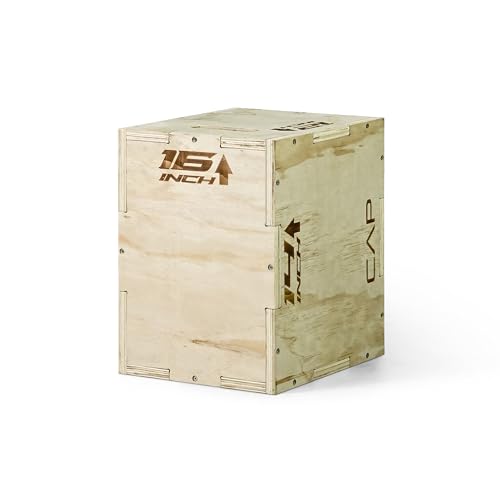
- Three heights: 12, 14, and 16 inches
- Interlocking engineered-wood construction
- Compact 14 by 12 by 16-inch dimensions
Best For: Home and garage gyms wanting a rigid compact box
Soft-Surface Pick
Yes4All 3-in-1 Soft-Padded Plyo Box

- Three height options in a compact design
- Foam-cushioned wooden core
- Non-slip, waterproof PVC surface
Best For: Home workouts favoring cushioning and secure traction
High-Height Foam Pick
BalanceFrom 3-in-1 Foam Plyo Box

- 16-, 20-, and 24-inch height options
- Lightweight high-density foam construction
- Textured anti-slip surface and softer impact
Best For: Portable home training with higher jump-height choices
Compact Steel Pick
Rage Fitness 12-Inch Steel Plyo Box

- Compact 12-inch platform for tight spaces
- Pre-assembled heavy-gauge steel design
- Rubber surfaces help prevent slips and tipping
Best For: Beginners, step-ups, and compact home gyms
Adjustable Wood Pick

- Offers 12-, 14-, and 16-inch heights
- Flat-packed design supports compact storage
- Wood structure supports up to 450 pounds
Best For: Progressive home workouts with limited storage
Soft Foam Pick

- Flips between 16-, 20-, and 24-inch heights
- 7-pound foam design is easy to move
- Soft EPE core cushions landings
Best For: Portable home workouts and lower-impact training
Compact Adjustable Pick
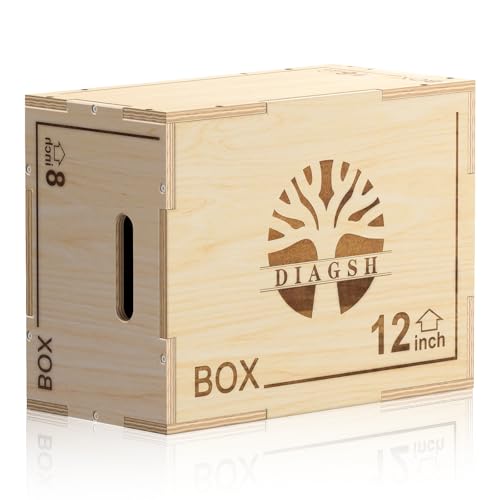
- Three heights: 8, 12, and 16 inches
- 400-pound maximum weight capacity
- Compact design for home workouts
Best For: Adjustable home training in limited space
Soft-Landing Choice

- Three heights with a simple flip
- High-density foam and non-slip cover
- No assembly and easy to move
Best For: Portable home workouts with softer landings
Heavy-Duty Stability Pick

- 500-pound maximum weight capacity
- Anti-slip top and rubber feet
- Fixed 12-inch height for stable training
Best For: High-capacity jumps and strength conditioning
Compact Wood Pick – Amazon Basics 3-in-1 Wooden Plyo Box
For shoppers comparing plyometric boxes for small spaces, this Amazon Basics model keeps its footprint compact at 14 by 12 inches while offering three heights. Its wooden construction, carry handles, and indoor-focused design make it practical for home-gym workouts.
Best For: Home users who want a compact, adjustable box for jumps, step-ups, dips, and conditioning exercises.
Pros:
- Three training heights: 12, 14, and 16 inches
- Supports up to 450 pounds
- Built-in handles and smooth, sanded edges
- Pre-drilled and pilot holes simplify assembly
Cons:
- Assembly is required
- Designed primarily for indoor training
Its small footprint and high stated weight capacity make it a versatile choice when storage space is limited. The three orientations also let beginners and experienced users adjust workout intensity without needing multiple boxes.
Stable Budget Option – CAP Barbell 3-in-1 Plyometric Box
The CAP Barbell 3-in-1 is a compact option among plyometric boxes for small spaces, measuring 14 by 12 by 16 inches. Its interlocking engineered-wood panels, recessed hardware, and carry handles are suited to repeated home- or garage-gym training.
Best For: Adults seeking a compact wooden box for progressive jumps, step-ups, agility drills, and HIIT.
Pros:
- Rotates to 12-, 14-, and 16-inch heights
- Interlocking construction with countersunk screws
- Smooth edges and recessed hardware
- Integrated carry handles improve portability
Cons:
- Maximum weight recommendation is 300 pounds
- Assembly is implied by the assembled-panel construction
This box emphasizes a secure, rigid platform in a space-conscious size. It is a reasonable fit for buyers who prioritize manageable storage and straightforward height changes, provided the 300-pound recommendation suits their training needs.
Soft-Surface Pick – Yes4All 3-in-1 Soft-Padded Plyo Box
For small-space training areas where a softer landing surface is appealing, the Yes4All 3-in-1 combines a wooden core with EVA foam and a vinyl cover. Its 16 by 14 by 12-inch size and three height options support varied home workouts without requiring multiple platforms.
Best For: Home users who want cushioned step-ups and jumps with a non-slip, waterproof PVC surface.
Pros:
- Three height options in a 16/14/12-inch configuration
- Wooden core with EVA foam cushioning
- Non-slip, waterproof PVC surface
- Stated capacity of up to 440 pounds
Cons:
- Only a 30-day return period and one-year warranty are listed
- The padded surface may not suit users seeking a hard wooden landing platform
This model balances compact storage with a more forgiving padded exterior. It is especially practical for mixed step-up and plyometric routines where grip and impact comfort matter as much as platform rigidity.
High-Height Foam Pick – BalanceFrom 3-in-1 Foam Plyo Box
The BalanceFrom foam box offers a different approach to plyometric boxes for small spaces: one lightweight unit rotates among 16-, 20-, and 24-inch heights. Its high-density foam body and textured surface are designed for home or gym use, while the 10-pound listed weight makes repositioning simple.
Best For: Users wanting lightweight portability, softer impact, and higher jump-height options for HIIT and agility work.
Pros:
- Three heights: 16, 20, and 24 inches
- High-density foam helps soften impact
- Textured anti-slip surface
- Lightweight and covered by a two-year warranty
Cons:
- Maximum weight recommendation is 250 pounds
- Foam construction may provide less rigidity than wood
- Its listed dimensions are larger than the compact wooden options
This is the most portable choice in the group and provides the tallest height range. Check the available floor area and the 250-pound recommendation before choosing it for a small room or demanding training routine.
Compact Steel Pick – Rage Fitness 12-Inch Steel Plyo Box
For shoppers comparing plyometric boxes for small spaces, this compact steel platform is a straightforward option that arrives ready to use. Its 12-inch height, 15-by-15-inch base, and rubberized contact points make it practical for step-ups, conditioning, and lower-height box jumps in a home gym.
Best For: Beginners, step-ups, conditioning drills, and small workout areas needing a pre-assembled platform.
Pros:
- Compact footprint with a 12-inch training height.
- Pre-assembled and ready to use.
- Heavy-gauge steel frame supports up to 560 pounds.
- Rubber top and bottom help reduce slipping and tipping.
Cons:
- Only one fixed height is available.
- The steel design weighs 12 pounds, so it is less portable than foam alternatives.
This Rage Fitness box is a strong fit when stability and minimal setup matter more than adjustable height. Its small footprint suits cramped rooms, though users seeking more challenging jumps or easier carrying may prefer a different design.
Adjustable Wood Pick – VEVOR 3-in-1 Wooden Plyo Box
This VEVOR model gives small-space home gyms three training heights without requiring multiple boxes. The puzzle-style wooden construction offers 12-, 14-, and 16-inch configurations, while its flat-packed design can be disassembled or stacked for storage.
Best For: Home users who want adjustable jump heights and a box that can be stored compactly between workouts.
Pros:
- Three height options: 12, 14, and 16 inches.
- Flat-packed, pre-cut, and pre-drilled for assembly.
- Portable handles make repositioning easier.
- Rated for up to 450 pounds.
Cons:
- Requires assembly, even though setup is designed to take less than five minutes.
- Wood construction is heavier than the listed foam alternative.
- Disassembly may be needed for the most compact storage.
Among plyometric boxes for small spaces, this is a versatile choice for households sharing one workout area. Its adjustable heights support progression, while the ability to stack or disassemble helps manage storage when floor space is limited.
Soft Foam Pick – Goplus 3-in-1 Foam Plyo Box
For small spaces where easy movement and forgiving landings are priorities, the Goplus soft plyo box is a lightweight option. Flip it to choose 16-, 20-, or 24-inch heights, then move it between rooms or store it without the weight of a steel or wood box.
Best For: Home users who want adjustable heights, lighter carrying weight, and impact-reducing foam for varied workouts.
Pros:
- Three heights are available by flipping the box.
- Dense EPE foam helps cushion landings.
- Lightweight 7-pound design is easy to carry.
- PU cover is tear-resistant, water-resistant, and easy to clean.
Cons:
- Its 16-by-20-by-24-inch form is larger than the compact steel platform.
- The maximum supported weight is 352 pounds, lower than the steel and wood options.
- Soft foam may provide less rigid support than a wood or steel box for some exercises.
This Goplus box is a convenient pick for multipurpose home training, especially when portability and softer landings matter. Check the larger footprint before buying, since its lightweight construction does not necessarily make it the smallest option when stored.
Compact Adjustable Pick – 3-in-1 Wood Plyo Box
If you need plyometric boxes for small spaces, this wood model offers three training heights—8, 12, and 16 inches—in one compact platform. Its plywood construction supports up to 400 pounds, while pre-drilled holes are intended to simplify assembly.
Best For: Home users who want adjustable jump, step-up, squat, and conditioning workouts from a single box.
Pros:
- Three height options support progressive training for different skill levels.
- Supports up to 400 pounds.
- Useful for box jumps, squats, HIIT, cardio, agility, and conditioning.
- Pre-drilled holes are designed for assembly in under 30 minutes without tools.
Cons:
- Wood construction may provide less forgiving landings than a foam model.
- Assembly is required before use.
- The listed dimensions are compact, so landing space may feel limited for some users.
This is a practical choice when storage space is limited and adjustable height matters. It combines multiple training levels with a 400-pound capacity, though users who prioritize softer landings may prefer a foam alternative.
Soft-Landing Choice – 3-in-1 Foam Plyo Box
For shoppers comparing plyometric boxes for small spaces, this foam box is ready to use without assembly and can be flipped to provide three height configurations. Its high-density EPE foam core and anti-slip PU cover are designed for supported, more forgiving landings.
Best For: Home gym users who want a lightweight, portable box for jumps, step-ups, dips, push-ups, and HIIT training.
Pros:
- Three height configurations are available by flipping the box.
- High-density foam offers a softer landing while maintaining firm support.
- Non-slip, waterproof PU cover is designed for grip and easy cleaning.
- Fully assembled and lightweight at 5.9 pounds.
Cons:
- Foam may be less rigid than wood or steel for users who prefer a hard platform.
- The available height configuration depends on the version selected.
- It has a 90-day warranty against manufacturer defects.
This model stands out for convenience and landing comfort. Its no-assembly design, wipe-clean cover, and easy portability suit smaller home gyms, while the three-height format supports varied workouts.
Heavy-Duty Stability Pick – Steel Plyometric Platform
If stability is your priority when choosing plyometric boxes for small spaces, this steel platform provides a fixed 12-inch training height and a 500-pound capacity. Its trapezoidal frame, rubber feet, and textured silicone top are designed to keep the box secure during home gym exercises.
Best For: Users who want a sturdy single-height platform for jumps, step-ups, squats, push-ups, and strength conditioning.
Pros:
- Steel construction supports up to 500 pounds.
- Rubber bottom pads and a textured top help provide grip and stability.
- Trapezoidal design supports high-intensity training.
- Can be stacked or disassembled for storage and portability.
Cons:
- Only one training level is listed for this model.
- Assembly is required.
- At 18 by 18 inches, it may take more floor space than the wood option.
This is the strongest-capacity option of the three, making it suitable for users who value a stable steel platform over adjustable heights. Its 12-inch height and storable design keep it practical, but it offers less height variety.
How We Picked These Plyometric Boxes for Small Spaces
We focused on boxes that suit apartment gyms, garages, bedrooms, and other training areas where every inch matters. The selection includes compact 3-in-1 boxes, fixed-height platforms, and softer foam models that can be easier to use near walls or other equipment. We also considered construction material, height versatility, surface traction, assembly requirements, portability, and whether the design is appropriate for jumping or better suited to step-ups and controlled strength work.
Because product specifications and available sizes can vary, check the current dimensions, weight capacity, and assembly details before ordering. A compact box still needs enough clearance around it for safe movement.
Quick Comparison
| Type | Best for | Main advantage | Potential trade-off |
|---|---|---|---|
| Wood 3-in-1 | Versatile home training | Multiple heights in one footprint | Harder landing surface; assembly may be required |
| Foam 3-in-1 | Beginners and mixed workouts | More forgiving contact surface | Can be less rigid or bulky than expected |
| Steel | Frequent, demanding use | Durability and rigidity | Heavier and usually less comfortable to hit |
| Fixed-height platform | Simple step-ups and jumps | Easy setup and predictable height | Less adaptable as your training changes |
Key Buying Factors for Plyometric Boxes for Small Spaces
Footprint and Storage
Measure the box in every usable orientation, not just the advertised height. A 3-in-1 model may provide several training heights, but its largest side determines how much floor space it occupies. Look for manageable weight, recessed handles, or a shape that can stand against a wall when stored.
Height and Progression
Multiple heights are useful for progressing from step-ups to low-impact jumps and higher explosive work. Beginners should prioritize a stable, approachable height rather than choosing a box based solely on its maximum setting. Fixed-height models can be a good choice when you already know the height you use most.
Stability and Surface Grip
A box should stay planted during takeoff and landing. Check for non-slip feet, a textured top, a covered surface, and enough base area for your stance. Hard floors may require a rubber mat, especially with wood or steel models.
Material and Landing Comfort
Wood and steel generally feel firm and responsive, while foam or padded models can reduce the intimidation and discomfort associated with missed landings. Softer boxes may be preferable for beginners, but verify that the core remains rigid enough for step-ups and repeated use.
Who Should Buy Which Plyometric Boxes for Small Spaces?
- Choose a wood 3-in-1 box if you want one compact tool for varied heights, jumps, step-ups, and strength circuits.
- Choose a foam or padded box if landing comfort and beginner confidence are more important than maximum rigidity.
- Choose a steel box if durability, stability, and frequent intensive training are your priorities and you have room to store a heavier platform.
- Choose a fixed-height box if your space is tight and you prefer a straightforward setup for step-ups, conditioning, or a consistent jump height.
Whichever model you choose, leave clear space on all sides, secure it on a level surface, and begin at the lowest practical height. For small-space training, a stable box that is easy to store will usually be more useful than a taller model you cannot safely position.