Slant boards can make calf stretching, ankle mobility work, balance practice, and yoga warmups more comfortable by placing the feet at a controlled incline. The right design can also support squats, physical therapy exercises, and plantar fascia-focused routines.
We selected 10 options ranging from compact foam wedges to adjustable wooden boards, with attention to stability, angle options, weight capacity, portability, and everyday versatility.
Best 10 Slant Boards for Yoga Picks for 2026
Adjustable Wooden Pick

- Five incline settings from 15° to 35°
- Hardwood construction with non-slip treads
- Side handle and no assembly required
Best For: Progressive calf, ankle, and mobility routines
Lightweight Yoga Support
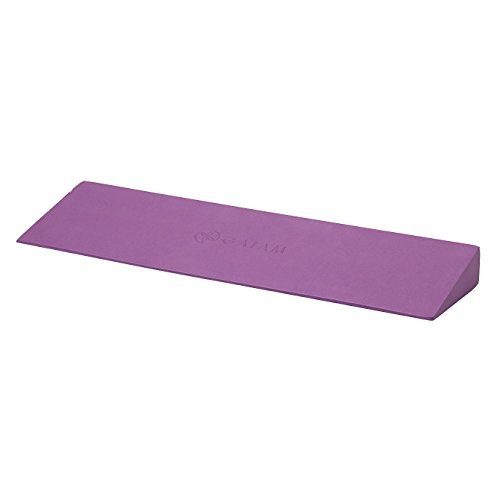
- EVA foam cushions wrists and ankles
- Lightweight and easy to carry
- 20-inch length supports floor stretches
Best For: Portable support during yoga poses and stretches
High-Capacity Travel Pick

- Five angles from 23° to 45°
- Stated 460-pound weight capacity
- Textured top and non-slip EVA base
Best For: Progressive stretching, squats, and mobility training
Stable Heel-Elevation Pick

- Fixed 15° bevel for heel elevation
- Silicone anti-slip surface with full-foot support
- Includes two wedges and a carrying bag
Best For: Heel-elevated squats, yoga stretches, and calf work
Portable Wooden Pick

- Four incline settings from 30° to 45°
- Lightweight wooden design at about 4.5 pounds
- Useful for stretching, squats, Pilates, and rehab
Best For: Portable lower-body mobility and stretching routines
Lightweight Foam Pick

- Weighs about 1 pound for easy portability
- Five listed positions for progressive stretching
- Waterproof EPP foam is easy to clean
Best For: Travel-friendly calf stretching and squat mobility
Natural Hardwood Pick

- Four angles from 20° to 40°
- Sturdy hardwood design with a 500-pound capacity
- Built-in handle and non-slip surface aid portability and stability
Best For: Adjustable wooden mobility and squat training
Portable Multi-Angle Pick

- Three wedges create five incline configurations
- Lightweight foam supports up to 480 pounds
- Includes a carry bag and wipes clean easily
Best For: Portable calf stretching, yoga mobility, and home lower-body exercises
High-Capacity Choice

- Single 16-inch calf-stretching platform
- Rated for up to 1,000 pounds
- Supports balance, flexibility, and ankle mobility work
Best For: Single-board stretching and balance exercises with a high stated weight capacity
Yoga-Friendly Versatility

- Five angle combinations from three foam wedges
- Non-slip construction supports up to 480 pounds
- Designed for yoga, therapy, and home exercise
Best For: Progressive calf, foot, and ankle stretching during yoga or rehabilitation
Adjustable Wooden Pick – StrongTek Slant Board
For shoppers comparing slant boards for yoga, the StrongTek Wooden Slant Board is a sturdy, adjustable option for calf stretching, mobility work, and supported squat variations. Its five angle settings and textured non-slip surface make it practical for users at different fitness levels.
Best For: Adjustable calf and ankle stretching at home, in the office, or while traveling.
Pros:
- Offers five incline positions from 15 to 35 degrees.
- Uses a hardwood plywood construction with anti-slip safety treads.
- Includes a side handle and requires no assembly.
- Can support stretching, squats, recovery, and mobility routines.
Cons:
- At approximately 9 pounds, it is heavier than foam wedges.
- The listed dimensions may take more storage space than a compact wedge.
This is a strong choice when adjustability, a substantial wooden platform, and portability matter more than minimum weight. Its angle range also makes it easier to progress gradually rather than starting with one fixed incline.
Lightweight Yoga Support – Gaiam Foam Wedge
The Gaiam Yoga Block Wedge is a compact alternative to traditional slant boards for yoga when the priority is easing pressure on wrists and ankles. Its lightweight EVA foam design softens harsh angles during poses and floor stretches without adding much bulk to a yoga bag.
Best For: Yoga practitioners who need portable wrist, ankle, or lower-back support.
Pros:
- Softens angles to improve comfort and stability in poses.
- Made from lightweight, durable EVA foam.
- Measures 20 by 6 by 2 inches for broad positioning options.
- Easy to transport between home and yoga classes.
Cons:
- It is a support wedge rather than an adjustable calf-stretch board.
- Its foam construction may not suit users seeking a rigid platform for squats.
Choose this wedge for gentle positional support rather than intensive incline training. It is especially convenient for yoga sessions where low weight and softer joint contact are more useful than multiple angle settings.
High-Capacity Travel Pick – Portable Wooden Incline Board
This portable wooden incline board stands out among slant boards for yoga and mobility work with five steeper angle settings, a 460-pound stated capacity, and a textured PVC surface. It is designed for calf stretching, warmups, cooldowns, squats, physiotherapy, and gradual lower-leg mobility work.
Best For: Users who want multiple higher incline settings for stretching, squats, and rehabilitation routines.
Pros:
- Provides five settings from 23 to 45 degrees.
- Supports up to 460 pounds according to the supplied specifications.
- Combines a textured PVC top with a non-slip EVA base.
- Arrives assembled and includes a training poster and instruction guide.
Cons:
- The 23-degree starting angle may feel demanding for beginners.
- It requires the support panel to be unfolded and placed securely into an angle slot before use.
This board is a good fit for buyers who want a portable, higher-angle platform that can grow with their flexibility. Check the board’s stability and selected angle before each session, especially when using it for squats or rehabilitation.
Stable Heel-Elevation Pick – Squat Wedge Block
The Squat Wedge Block is a compact heel-elevation option for slant boards for yoga, deep squats, calf stretches, and ankle-mobility exercises. Its fixed 15-degree bevel, full-foot support, and silicone anti-slip surface make it better suited to stable positioning than adjustable incline work.
Best For: Heel-elevated squats, yoga stretches, calf work, and users who prefer a pair of compact wedges.
Pros:
- Uses a 15-degree bevel designed for heel elevation and deep squats.
- Silicone surface and leaf-textured design provide grip.
- Supports up to 1,500 pounds according to the supplied specifications.
- Includes two wedges, a carrying bag, training poster, and instruction guide.
Cons:
- The incline is fixed rather than adjustable.
- Its 3.5-inch height may feel substantial for users new to heel elevation.
This is a practical pick when you want full-foot support and a stable, compact setup for squats or stretches. The pair format also allows both feet to be positioned together, while the fixed angle keeps setup simple.
Portable Wooden Pick – Adjustable Calf Stretch Board
This portable wooden slant board for yoga and lower-body training offers four incline positions for calf stretching, squats, Pilates, and mobility work. At about 4.5 pounds, it is practical for use at home, in an office, gym, or physical therapy setting.
Best For: Users who want a lightweight, adjustable board for stretching, rehabilitation exercises, and weight-bearing mobility work.
Pros:
- Four adjustable angles: 30°, 35°, 40°, and 45°.
- Lightweight wooden construction for easier portability.
- Suitable for beginners, experienced athletes, and rehabilitation routines.
- Can support calf stretching, squats, posture work, and mobility exercises.
Cons:
- Its wooden construction weighs more than the lightweight foam option in this roundup.
- The listed incline range may be less versatile for users seeking very gentle angles.
This is a straightforward choice if you prefer a traditional wooden slant board with several incline settings. Its portable size and broad exercise focus make it a versatile addition to a yoga, stretching, or physical therapy routine.
Lightweight Foam Pick – High-Capacity Squat Wedge
This compact slant board for yoga, calf stretching, and squat training uses a lightweight EPP foam design that is easy to carry and clean. Its detachable wedge setup provides multiple positions for ankle mobility, physical therapy, and progressive stretching.
Best For: Users who prioritize portability, easy cleanup, multiple angles, and a high stated weight capacity.
Pros:
- Lightweight design weighs about 1 pound.
- Supports a stated 960-pound adult weight capacity.
- Offers five listed angle positions: 8.5°, 17°, 25.5°, 34°, and 180°.
- Waterproof, oil-proof, recyclable EPP material wipes clean easily.
Cons:
- The compact 12-by-6-inch board dimensions provide less standing surface than the larger wooden boards.
- The 180° position may be less directly useful for users seeking only conventional incline angles.
This is the most travel-friendly option among these slant boards, especially for users who want a lightweight wedge that can be wiped clean. Its range of positions also makes it useful for gradually adjusting calf and ankle mobility work.
Natural Hardwood Pick – Multi-Angle Mobility Wedge
This natural hardwood slant board for yoga, heel stretching, and ankle mobility combines a sturdy base with four adjustable angles. Its built-in handle, non-slip surface, and compact footprint make it suitable for home, office, gym, and rehabilitation use.
Best For: Users seeking a sturdy wooden board with a built-in handle and incline options for mobility, balance, and squat training.
Pros:
- Four listed incline angles: 20°, 25°, 30°, and 40°.
- Natural hardwood construction with a stated 500-pound weight capacity.
- Built-in handle and compact dimensions support portability.
- Non-slip surface is designed to provide stability during exercises.
Cons:
- At about 5 pounds, it is heavier than the foam wedge.
- The product details describe a soft non-slip surface but do not specify its material.
This board is a good middle ground for shoppers who want wooden construction without giving up portability. The angle selection covers common calf, heel, squat, and ankle-mobility applications while the handle makes storage and transport more convenient.
Portable Multi-Angle Pick – 3-Piece Foam Squat Wedge Set
For shoppers comparing slant boards for yoga and mobility work, this lightweight three-piece set offers several ways to adjust the incline. The foam wedges can be used individually or combined for calf stretching, squats, and foot and ankle exercises.
Best For: Home users who want a portable, multi-angle option for calf stretching, yoga mobility work, and lower-body exercises.
Pros:
- Three-piece design supports five configurations: 8.5°, 17°, 25.5°, 34°, and 180°.
- Lightweight EPP foam construction weighs about 1 pound and supports up to 480 pounds.
- Waterproof, oil-proof surface is easy to wipe clean, and a carry bag is included.
Cons:
- The individual wedges are relatively narrow at 6.5 inches wide.
- Foam construction may feel less rigid than a solid platform.
This set stands out for flexibility and storage convenience. Its multiple incline combinations make it useful when you want to vary calf or ankle stretches, while the compact foam design suits home and travel use.
High-Capacity Choice – EVA Calf Stretch Slant Board
This single-board option is a straightforward choice among slant boards for yoga, ankle mobility, and calf stretching. Its 16-inch length provides a stable surface for balance-focused exercises, while the EVA construction is rated for up to 1,000 pounds.
Best For: Users seeking a single, high-capacity board for stretching, balance practice, and mobility training.
Pros:
- Supports up to 1,000 pounds according to the supplied specifications.
- Designed for calf stretching, ankle mobility, balance, flexibility, and fitness work.
- Long 16-inch platform provides room for positioning during exercises.
Cons:
- Only one board is included, with no listed adjustable-angle system.
- The product notes do not specify a carry bag or additional portability features.
Choose this model if you prefer a simple, single-piece setup and place a high priority on stated load capacity. It is less versatile than a multi-piece system, but its broad use case covers stretching, balance, and general fitness.
Yoga-Friendly Versatility – Yesland 3-Piece Slant Board
The Yesland set is a versatile option for shoppers looking at slant boards for yoga, physical therapy, and home exercise. Its two 8.5-degree wedges and one 17-degree wedge can be stacked into five angle combinations for progressive stretching and mobility work.
Best For: Yoga and rehabilitation users who want adjustable angles for calf, foot, ankle, and lower-body exercises.
Pros:
- Three-piece configuration offers 8.5°, 17°, 25.5°, 34°, and 180° positions.
- Non-slip EPP foam construction is rated to hold up to 480 pounds.
- Portable, waterproof, odorless, and easy to clean for home, office, gym, or yoga use.
Cons:
- The individual boards are only 6.25 inches wide.
- Foam may not provide the firm feel some users expect from rigid exercise boards.
Its adjustable setup makes this a strong fit for users who want to gradually change stretching intensity. The compact, non-slip design also makes it practical for varied indoor and outdoor routines.
How We Picked the Best Slant Boards for Yoga
We focused on the features that matter during repeated stretching and mobility sessions: a stable base, a genuinely non-slip surface, useful incline angles, durable construction, and a size that fits the intended exercise. We also considered portability and whether a board can handle more than one task, such as calf stretching, heel-elevated squats, ankle mobility drills, Pilates, or rehabilitation exercises.
Because these products use different materials and designs, capacity claims should be treated as a guide rather than a substitute for careful setup. Always use the board on a clean, level surface and follow the manufacturer’s instructions.
Quick Comparison
| Type | Best For | Typical Strengths | Potential Trade-Offs |
|---|---|---|---|
| Adjustable wooden board | Versatile home workouts | Multiple angles, sturdy feel, broad platform | Heavier and less compact |
| Foam wedge | Yoga, wrist support, and travel | Lightweight, cushioned, easy to store | Can compress or slide on smooth floors |
| Squat wedge | Heel elevation and strength training | Simple setup, often high capacity | Usually offers fewer angle adjustments |
| Multi-piece set | Custom positioning | Flexible placement for both feet | Pieces may shift if the surface is slippery |
Key Buying Factors for Slant Boards for Yoga
Angle and Adjustability
A fixed wedge is quick and uncomplicated, while an adjustable board lets you progress gradually or choose different positions for calves, ankles, squats, and balance work. Beginners may prefer a moderate angle before moving to a steeper incline.
Grip and Stability
Look for textured or non-slip contact surfaces, secure angle supports, and a base that stays planted. Wooden models may feel more stable for standing exercises; foam models can be more comfortable but need a compatible floor.
Size, Capacity, and Construction
Check the platform dimensions against your foot size and stance. Weight capacity is especially important for loaded squats or dynamic movements. Wood generally provides rigidity, while EVA foam prioritizes light weight and cushioning.
Portability and Storage
If the board will travel to a studio or office, prioritize a lightweight wedge or compact multi-piece set. For a dedicated home workout area, a larger adjustable board may offer better stability and versatility.
Who Should Buy Which Slant Boards for Yoga?
Choose an adjustable wooden board if you want one tool for calf stretching, yoga mobility, squats, and physical therapy-style exercises. A foam wedge is a practical choice for beginners, travelers, or anyone who values cushioning and easy storage. Select a high-capacity squat wedge for strength training and consistent heel elevation. A multi-piece set works well when you want separate foot positioning or different setups for stretching and balance.
For plantar fascia, Achilles, shin, or other pain-related concerns, use gentle ranges and stop if symptoms worsen. A slant board can support mobility work, but it should not replace professional assessment or a prescribed rehabilitation plan.