Running puts repeated stress on your calves, hamstrings, hips, feet, and lower back. The right yoga mat can make mobility work, post-run stretching, strength training, and balance exercises more comfortable and consistent.
We selected 10 mats with different combinations of cushioning, grip, durability, portability, and value so you can find a practical fit for your running routine and workout space.
Best 10 Yoga Mat for Runners Picks for 2026
Trail-Ready Support

- 5mm cushioning for joint support
- Lightweight for outdoor or car storage
- Durable, easy-clean closed-cell construction
Best For: Post-run recovery and outdoor stretching
Budget Cushion
Amazon Basics Extra Thick Exercise Mat

- 1/2-inch NBR foam cushions hard floors
- Textured surface adds traction
- Includes an elastic carrying strap
Best For: Affordable home stretching and recovery
Studio-Grade Stability

- Dense 6mm cushioning supports joints
- 26-inch width provides extra space
- No-slip underside and lifetime durability
Best For: Stable home recovery and mobility sessions
Plush Recovery Comfort
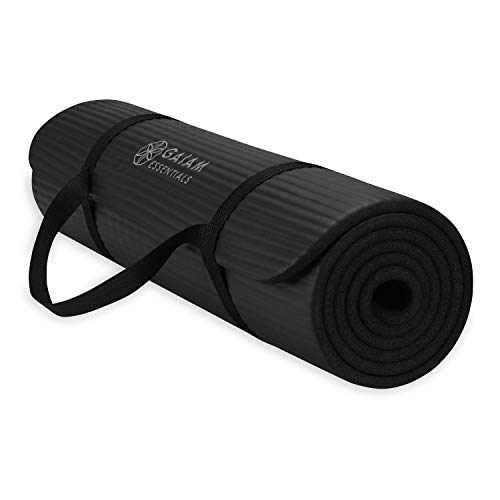
- 10mm foam cushions knees and hips
- Textured surface supports dry workouts
- Adjustable carrying strap included
Best For: Plush home recovery and low-impact exercise
Best Alignment Pick

- Strong GripForMe traction
- Alignment guidance markings
- Spacious 4.2mm design with bag
Best For: Runners wanting grip, guidance, and extra practice space
Best Hybrid Workout Mat
Peloton Reversible Workout Mat

- Two surfaces for training and yoga
- 5mm impact-absorbing thickness
- Durable tear- and scratch-resistant build
Best For: Runners combining yoga with intense home workouts
Best Stable Studio Mat

- Stable 4.7mm joint-supportive cushioning
- No-slip bottom dot pattern
- Durable, hygienic closed-cell surface
Best For: Runners practicing in studios or smaller spaces
Lightweight Everyday Pick
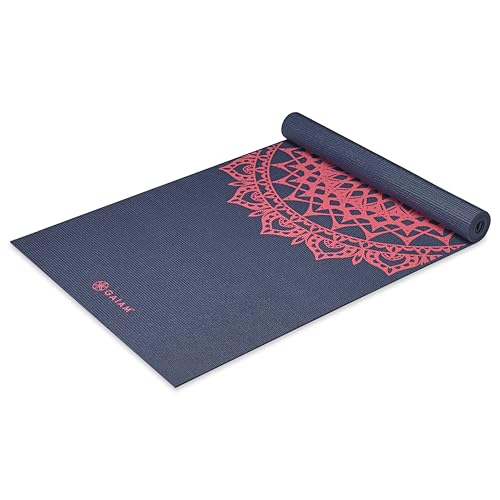
- Lightweight 2.1-pound construction
- Sticky textured non-slip surface
- Includes carrying strap and free yoga workout
Best For: Post-run stretching, Pilates, and portable everyday workouts
Eco-Conscious Grip Pick

- 100% natural tree rubber construction
- Textured grip for stability and control
- 71-inch length with responsive 4mm cushioning
Best For: Runners who prioritize traction and eco-conscious materials
Maximum Cushioning Pick

- Cushioned 5mm thickness
- Generous 71⅝-by-26¾-inch surface
- Non-slip PU and natural rubber construction
Best For: Recovery work and runners wanting extra floor cushioning
Trail-Ready Support – Manduka X Yoga Mat
For runners who want a yoga mat for runners that can move from home workouts to trail-side stretching, the Manduka X offers a practical balance of cushioning, durability, and portability. Its 5mm thickness provides joint support without the bulk of a heavily padded mat.
Best For: Post-run recovery, outdoor stretching, and mixed fitness routines.
Pros:
- 5mm cushioning helps support joints during stretching and floor exercises.
- Lightweight design is easy to keep in a car or carry to outdoor workouts.
- Closed-cell construction helps seal out sweat and grime and simplifies cleaning.
- Crosshatch texture and Double-Weave scrim support varied workouts.
Cons:
- At 71 by 24 inches, it provides less width than the Manduka PRO.
- Its 5mm cushioning is less plush than extra-thick foam options.
The Manduka X is a strong all-purpose choice for runners who need a durable mat for mobility work, yoga, and post-run stretching in several locations.
Budget Cushion – Amazon Basics Extra Thick Exercise Mat
The Amazon Basics Extra Thick Exercise Yoga Mat is a straightforward yoga mat for runners who prioritize padded support and easy transport. Its 1/2-inch NBR foam construction cushions hard floors for stretching, mobility work, and everyday exercise.
Best For: Budget-conscious runners doing recovery work and floor exercises at home.
Pros:
- 1/2-inch thickness provides cushy support and shock absorption.
- Textured surface offers added traction during dry workouts.
- Elastic carrying strap secures the rolled mat for storage and transport.
- Wipes clean easily after use.
Cons:
- Its softer foam construction may feel less firm for balance-focused poses.
- At 1 kg, it is heavier than some lightweight fitness mats.
This mat emphasizes comfort over a firm studio feel, making it a sensible value pick for runners who mainly stretch, recover, and exercise on hard indoor floors.
Studio-Grade Stability – Manduka PRO Yoga Mat
Runners seeking a yoga mat for runners with maximum stability may prefer the Manduka PRO. Its dense 6mm cushioning, 26-inch width, and no-slip bottom pattern create a steady base for longer mobility sessions and controlled floor work.
Best For: Home-based recovery sessions where stability, space, and durable construction matter most.
Pros:
- Dense 6mm cushioning supports joints while maintaining a stable feel.
- 26-inch width offers more practice space than many standard mats.
- No-slip dot pattern on the bottom helps keep the mat in place.
- Closed-cell surface helps seal out moisture, and the mat is designed for lifetime durability.
Cons:
- At 7.5 pounds, it is less convenient for carrying to outdoor sessions.
- The premium, dense construction may be more mat than a runner needs for occasional stretching.
The PRO is best suited to runners building a dedicated home recovery area and wanting a firm, spacious surface that can withstand long-term use.
Plush Recovery Comfort – Gaiam Thick Yoga Mat
The Gaiam Thick Yoga Mat is a comfort-focused yoga mat for runners who spend time stretching, doing Pilates, or recovering on hard floors. Its 10mm NBR foam offers plush cushioning for knees, hips, and other pressure points.
Best For: Low-impact recovery, beginners, and floor-based workouts at home.
Pros:
- 10mm high-density NBR foam provides substantial joint cushioning.
- Textured surface helps reduce slipping on most hard floors during dry workouts.
- Includes an adjustable carrying strap for storage and transport.
- Lightweight for its thickness and easy to wipe clean.
Cons:
- The softer foam prioritizes comfort over a firm, stable feel.
- An initial foam odor may require airing out for 24–48 hours.
- Its 68-inch listed size is shorter than several mats in this roundup.
Choose the Gaiam when cushioning is the priority, especially for post-run stretching and low-impact routines performed on wood, tile, or concrete.
Best Alignment Pick – Liforme Classic Yoga Mat
If you want a yoga mat for runners that offers extra room and strong traction for post-run stretching, the Liforme Classic is a compelling option. Its 72.8-by-26.8-inch surface and 4.2mm cushioning provide space and a balance of comfort and stability, while the alignment markings can help guide positioning.
Best For: Runners who prioritize grip, alignment guidance, and a spacious practice area.
Pros:
- GripForMe material is designed for strong traction, including sweaty or hot-yoga practices.
- Alignment markings provide visual guidance for poses and positioning.
- Longer, wider design with supportive 4.2mm thickness.
- Includes a dedicated carrying bag.
Cons:
- At 5.5 pounds, it is not the lightest option for carrying.
- Hand-wash care may require extra maintenance.
The Liforme stands out when grip and alignment are more important than minimal carry weight. Its generous dimensions are particularly useful for runners who want room to move through cooldowns and mobility work.
Best Hybrid Workout Mat – Peloton Reversible Workout Mat
For runners who want a yoga mat for runners that can also handle vigorous home workouts, the Peloton Reversible Workout Mat offers two useful surfaces. One side is built for sweaty training, while the textured side supports yoga flows and savasana, with 5mm thickness for added impact absorption.
Best For: Runners who want one reversible mat for stretching, yoga, and higher-intensity floor workouts.
Pros:
- Reversible design provides a grippy training side and a textured yoga side.
- 5mm thickness helps absorb impact during general exercises.
- Heavy-duty construction is designed to resist tears and scratches.
- Horizontal and vertical lines help with centering.
Cons:
- At about 8.2 pounds, it is relatively heavy to transport.
- Natural rubber may have a distinctive smell initially.
- May contain latex.
This is the most versatile choice of the three for runners who mix mobility sessions with demanding floor workouts. Its weight is better suited to home use than frequent travel.
Best Stable Studio Mat – Manduka PROlite Yoga Mat
The Manduka PROlite is a practical yoga mat for runners who need dependable stability for stretching, balance work, and studio sessions. Its 4.7mm cushioning supports joints, while the bottom dot pattern helps keep the 68-by-24-inch mat in place during practice.
Best For: Runners seeking a durable, hygienic mat for studio classes or compact home spaces.
Pros:
- 4.7mm high-density cushioning offers joint support and stability.
- Bottom dot pattern helps prevent sliding on studio or home floors.
- Closed-cell construction helps seal out moisture for a more hygienic surface.
- At 4.6 pounds, it is relatively manageable to carry.
Cons:
- The 68-by-24-inch dimensions provide less room than the Liforme.
- PVC construction may not suit shoppers seeking rubber or PVC-free materials.
- Recommended cleaning products are limited to Manduka’s mat wash guidance.
The PROlite is a strong fit when durability, stable footing, and studio-friendly sizing matter most. It offers supportive cushioning without the larger footprint or heavier weight of some workout mats.
Lightweight Everyday Pick – Classic Print 4mm Mat
If you want a practical yoga mat for runners to use after workouts, this Gaiam model offers a lightweight design, a sticky textured surface, and enough cushioning for yoga, Pilates, and floor exercises.
Best For: Runners who want an affordable, easy-to-carry mat for stretching, mobility work, and general fitness.
Pros:
- Lightweight 2.1-pound design with an included carrying strap.
- Textured sticky surface provides traction for yoga and floor routines.
- 4mm thickness offers cushioning without a bulky profile.
- 6P-free PVC construction and a free downloadable yoga workout are included.
Cons:
- It may have a harmless strong odor when first unwrapped and needs airing out for two to three days.
- At 68 inches long and 24 inches wide, it provides less room than some larger mats.
- Extended sun exposure can cause fading and material damage.
This is a straightforward choice for runners who prioritize portability and easy everyday use. Its moderate 4mm cushioning suits post-run stretching, while the compact dimensions make it convenient to store and carry.
Eco-Conscious Grip Pick – eKOLite Natural Rubber Mat
For runners seeking a yoga mat for runners with a more natural feel, the Manduka eKOLite combines a soft textured surface with natural rubber construction and a responsive 4mm profile for mobility sessions and controlled holds.
Best For: Runners who value natural materials, dependable traction, and a slightly longer practice surface.
Pros:
- Made from 100% natural tree rubber and non-toxic materials.
- Rippled Catch-Grip surface supports traction and stability.
- Closed-cell design helps prevent moisture and buildup.
- At 71 inches long, it offers more length than a standard 68-inch mat.
Cons:
- At 5.2 pounds, it is considerably heavier than the Gaiam option.
- Natural rubber care requires avoiding soaking, sun exposure, and soap.
- It is listed as 99% latex-free, so people with sensitivities should review the material information carefully.
The eKOLite is a strong fit when grip and material choices matter more than minimum carry weight. Its textured surface and responsive cushioning can support steady post-run mobility, but its weight and specific cleaning requirements are worth considering.
Maximum Cushioning Pick – Bala Play 5mm Mat
If cushioning is your priority in a yoga mat for runners, The Bala Play Mat provides a thicker 5mm foundation, a non-slip surface, and a generous shape for stretching, rehabilitation, Pilates, and floor-based training.
Best For: Runners who want extra cushioning and a roomy mat for recovery work, mobility drills, and varied home workouts.
Pros:
- 5mm thickness provides cushioned support for floor exercises and stretching.
- Generous 71⅝-by-26¾-inch surface gives more room to move.
- PU top coat and natural rubber base are designed for grip and easy cleaning.
- Suitable for yoga, Pilates, rehabilitation, aerobics, HIIT, and everyday movement.
Cons:
- At 6.6 pounds, it is the heaviest option in this roundup.
- The matching yoga mat strap is sold separately.
- Care instructions advise avoiding lotions and sharp objects that could stain or puncture the surface.
The Bala Play Mat makes the most sense for runners who want comfort and usable space over ultralight portability. Its thicker construction is well suited to recovery-focused floor work, though the heavier build may be less convenient for frequent transport.
How We Picked the Best Yoga Mat for Runners
We focused on features that matter during runner-specific mobility and conditioning rather than choosing mats based on yoga branding alone. Our comparison considers surface grip, cushioning, dimensions, durability, portability, cleaning needs, and intended use. We also included a range of thicknesses and prices, from simple budget mats to premium studio-quality options.
A good Yoga Mat for Runners should stay stable during calf raises, lunges, planks, and single-leg work. It should also provide enough comfort for kneeling, seated stretches, and longer recovery sessions without feeling excessively soft or unstable.
Quick Comparison
- Best overall durability: Manduka PRO or PROlite
- Best for portability: The Bala Yoga Mat
- Best for alignment-focused practice: Liforme Classic
- Best natural-material option: Manduka eKOLite
- Best budget-friendly choices: Amazon Basics or Gaiam Classic Print
- Best for larger workout coverage: Peloton Reversible Workout Mat
Key Buying Factors for a Yoga Mat for Runners
Grip and Stability
Look for a surface that resists slipping when your hands or feet are damp. Strong traction is especially useful for downward-facing stretches, lunges, planks, and balance drills. Keep in mind that some mats improve their grip after a break-in period.
Thickness and Cushioning
A 4mm to 6mm mat generally balances stability and joint comfort well. Thicker mats can feel better under sensitive knees and ankles, while thinner mats may provide more reliable balance and ground feedback. Very soft cushioning can make strength and stability exercises less precise.
Size and Portability
Standard mats work for most runners, but extra length or width can be useful for tall users and full-body floor exercises. If you carry a mat to the gym, track, or park, prioritize weight, a carrying strap, and how tightly it rolls.
Durability and Maintenance
Frequent use favors dense materials and reinforced surfaces that resist tearing, scratches, and compression. Check the manufacturer’s cleaning instructions, allow the mat to dry fully, and avoid storing it damp in a gym bag.
Who Should Buy Which Yoga Mat for Runners?
Choose a premium Manduka mat if you train frequently and want long-term durability for stretching, yoga, and strength work. Choose Liforme if visual alignment cues are important. Choose the eKOLite if you prefer a natural rubber construction and a textured feel.
Choose Amazon Basics or Gaiam if you want an affordable mat for occasional stretching, home workouts, or recovery sessions. Choose Peloton if you prefer a broad, heavy-duty surface. Choose Bala if easy transport is your priority. Before buying, match the mat’s thickness and grip to your flooring, workout style, and sensitivity to knee or ankle pressure.