The best balance board for exercise can make home workouts more engaging while challenging your core, legs, posture, and coordination. The right design depends on your experience level, training goals, available space, and preferred difficulty.
We compared wooden wobble boards, rocker-style trainers, cushioned balance pads, resistance-band models, and app-enabled options to help you choose a stable, practical fit for everyday exercise.
Best 10 Balance Board for Exercise Picks for 2026
Best Classic Wobble Board
Amazon Basics Wood Balance Trainer
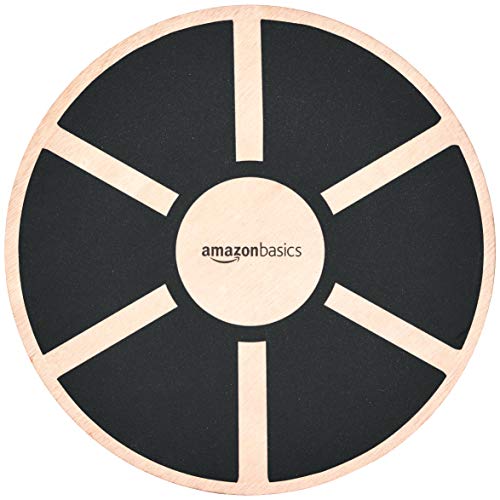
- Solid wood platform supports up to 265 pounds
- Useful for core, balance, plank, and push-up exercises
- Compact design with a non-slip surface
Best For: Straightforward home, gym, or rehab balance training
Best Multi-Function Balance Board
3-in-1 Slant and Rotation Board
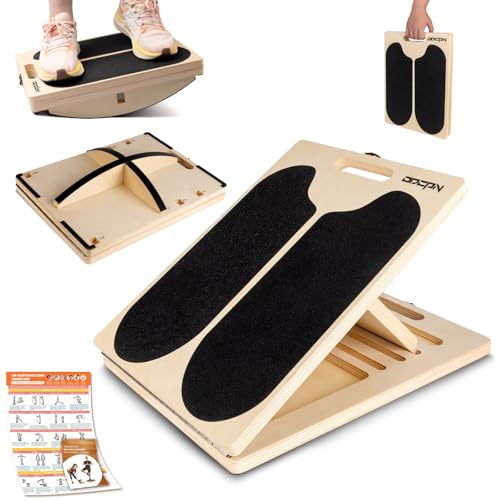
- Combines calf stretching with 180- and 360-degree balance
- Offers six adjustable slant angles
- Folds flat for storage and transport
Best For: Mobility, recovery, and progressive balance workouts
Best Cushioned Balance Trainer
ProsourceFit Exercise Balance Pad
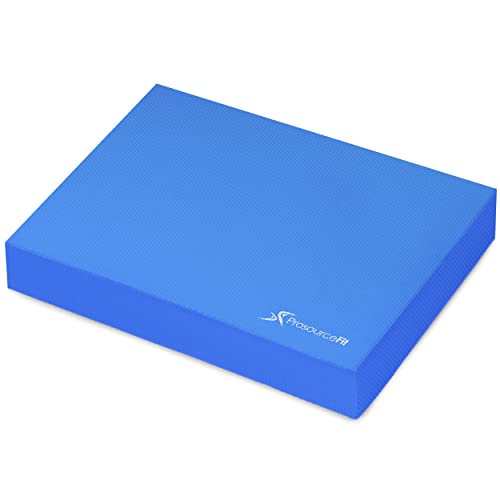
- Cushioned foam creates an unstable training surface
- Works for fitness, yoga, and physical therapy
- Lightweight, slip-resistant, and easy to clean
Best For: Low-impact stability work and portable floor exercises
Best Rocker-to-Wobble Board
StrongTek Wooden Balance Board
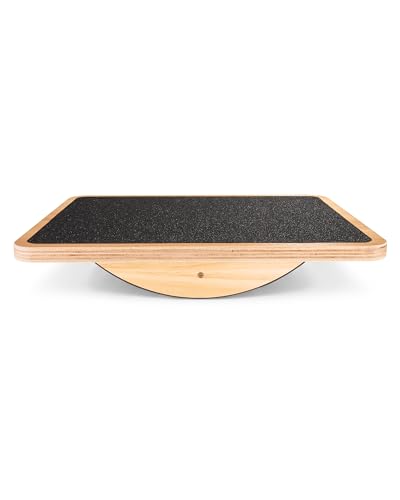
- Supports rocker and 360-degree wobble exercises
- Textured surface helps improve footing
- Supports users up to 350 pounds
Best For: Progressive home, gym, rehab, or standing-desk training
Low-Impact Cardio Pick
MERACH Ski-Style Balance Board

- Side-to-side ski motion with resistance bands
- Quiet design with LCD workout feedback
- Compact and rated for up to 300 pounds
Best For: Adults wanting low-impact cardio at home
Adjustable Surf Trainer

- Four progression options using removable stoppers
- 15-ply wood supports up to 300 pounds
- Useful for board sports and core training
Best For: Sport-specific balance and coordination practice
Stability and Rehab Option
Advanced 360° Wood Balance Board

- 360-degree half-ball base for balance work
- Textured anti-slip surface and no assembly
- Supports core, yoga, and rehabilitation exercises
Best For: Controlled stability, core, and rehab-oriented training
Smart Interactive Pick

- 12 free games plus four sports training modes
- App feedback and progress tracking
- Multiplayer support for up to four boards
Best For: Interactive home workouts for teens and adults
Versatile Therapy Pick
Professional Wooden Wobble Board

- Supports therapy and core exercises
- Anti-slip surface with floor-protection pads
- Compact design rated for up to 350 pounds
Best For: Low-tech balance, rehabilitation, and home workouts
Desk-Friendly Value
Wooden Wobble Board with Ankle Support

- Comes fully assembled
- Designed for desk, therapy, and core use
- Reinforced plywood supports up to 350 pounds
Best For: Simple balance practice at home or work
Best Classic Wobble Board – Amazon Basics Wood Balance Trainer
If you want a straightforward balance board for exercise, this Amazon Basics model provides a solid wood platform with a slip-resistant surface. Its square design works for standing balance drills as well as planks, push-ups, and targeted strength exercises.
Best For: Home workouts, gyms, rehab centers, and users seeking a basic core and balance trainer.
Pros:
- Supports balance, coordination, posture, and core-strength exercises
- Solid wood top supports up to 265 pounds
- Non-slip surface helps provide a secure grip
- Compact 15.75-by-15.75-inch footprint
Cons:
- Should only be used on dry, non-slip surfaces
- Offers a more basic design without adjustable modes
This is a practical pick for beginners and general fitness users who want a durable, uncomplicated board for exercise and balance practice.
Best Multi-Function Balance Board – 3-in-1 Slant and Rotation Board
For shoppers wanting more than a standard balance board for exercise, this 3-in-1 design combines calf stretching with 180-degree directional balance and 360-degree rotation. Six slant angles and detachable magnetic side panels make it adaptable for mobility work, recovery, and balance training.
Best For: Users combining calf stretching, ankle mobility, physical therapy-style exercises, and progressive balance training.
Pros:
- Combines slant-board stretching with 180- and 360-degree balance modes
- Six adjustable angles range from 20 to 45 degrees
- Wood construction is rated for up to 460 pounds in the product description
- Folds flat and includes a workout poster and instructions
Cons:
- More involved to set up and switch than a single-mode board
- Supplied details list conflicting maximum capacities of 460 and 300 pounds
This versatile option suits users who want one compact tool for stretching, recovery, and balance progression, though buyers should confirm the applicable weight rating before use.
Best Cushioned Balance Trainer – ProsourceFit Exercise Balance Pad
This foam balance pad is a softer alternative to a rigid balance board for exercise. Its unstable, cushioned surface can add a stability challenge to lunges, squats, planks, yoga, and core work while also serving as a knee pad or seat cushion.
Best For: Beginners, older adults, yoga users, physical therapy exercises, and anyone wanting a portable cushioned stability surface.
Pros:
- Unstable foam surface challenges balance and core control
- Suitable for fitness, yoga, and physical therapy routines
- Sweat-proof, slip-resistant TPE is easy to clean
- Lightweight 12-ounce design is easy to carry
Cons:
- Provides a different training feel from a rigid wobble board
- Foam may be less suitable for users specifically seeking rotational balance practice
The pad is a versatile choice when comfort and portability matter, especially for low-impact stability work or exercises performed on the knees and floor.
Best Rocker-to-Wobble Board – StrongTek Wooden Balance Board
The StrongTek wooden balance board for exercise offers a rocker-style starting point and can also support advanced 360-degree wobble training. Its textured surface and compact footprint make it suitable for home workouts, gym sessions, rehabilitation, or use beside a standing desk.
Best For: Beginners through advanced users who want a portable board for core activation, agility, balance, and standing-desk movement.
Pros:
- Supports basic rocking and advanced 360-degree wobble practice
- Textured surface helps provide a secure grip for bare feet
- Rated to support up to 350 pounds
- Compact 17.5-by-13.5-inch design is easy to transport
Cons:
- Requires user control and a suitable surface for safe practice
- Wooden construction weighs 4.7 pounds, making it heavier than a foam pad
This board is a strong all-purpose option for people who want to progress from simple rocking exercises to more demanding rotational balance work without a bulky setup.
Low-Impact Cardio Pick – MERACH Ski-Style Balance Board
If you want a balance board for exercise that adds cardio to your routine, the MERACH Balance Board combines a side-to-side ski motion with two resistance bands. Its low-impact movement, LCD feedback, quiet operation, and compact footprint make it practical for at-home sessions.
Best For: Adults seeking a quiet, low-impact cardio workout with step, time, and calorie tracking.
Pros:
- Side-to-side motion targets the thighs and glutes while providing cardio.
- Includes two resistance bands for added upper-body involvement.
- Quiet operation is rated below 25dB and supports up to 300 pounds.
- Compact, lightweight design arrives ready to use and stores easily.
Cons:
- The ski-like motion may require caution for beginners or users with balance issues.
- It requires two LR41 batteries for the LCD monitor.
The MERACH is more of a guided cardio machine than a traditional roller balance board. Choose it if quiet, measurable movement is your priority and you have enough stability for its lateral motion.
Adjustable Surf Trainer – 3-in-1 Wooden Balance Board
This 3-in-1 wooden balance board for exercise is designed for balance, coordination, and board-sport practice. Removable stoppers let you choose among three roller distances or remove them for a more advanced challenge, making it adaptable as your skills improve.
Best For: Adults and older users who want adjustable balance practice for surfing, snowboarding, skiing, skating, or general fitness.
Pros:
- Offers 11-, 16-, and 22-inch roller positions, plus an unrestricted setup.
- 15-ply pressed wood construction supports up to 300 pounds.
- Emery-textured board and TPE-covered roller help provide grip and smooth use.
- Can train core, leg, thigh, and waist muscle groups.
Cons:
- The roller format may be more demanding than a stationary wobble board.
- It has a relatively limited 30-day return and one-year warranty description.
With its adjustable stoppers, this model can suit beginners while leaving room for progression. It is a strong match for sport-specific balance training, though users should have adequate open space for the moving roller.
Stability and Rehab Option – Advanced 360° Wood Balance Board
For users comparing a balance board for exercise with a physical-therapy or stability tool, this advanced wooden model uses a 360-degree half-ball base and a textured, anti-slip surface. It is intended for core work, balance practice, assisted exercises, and rehabilitation-oriented training.
Best For: Adults seeking a versatile wobble board for balance training, core exercises, physical therapy, or office movement.
Pros:
- 360-degree rotation challenges balance and stabilizing muscles.
- Anti-slip gray mesh surface is designed for grip and comfort.
- Supports exercises such as yoga, push-ups, squats, and planks.
- Arrives assembled and includes carrying holes for portability.
Cons:
- The dynamic 360-degree base may be too challenging for some beginners.
- Its listed maximum weight recommendations vary in the supplied information.
- Medical or injury-related use should be guided by a qualified professional.
This board offers broader movement than a simple rocker, making it useful for progressive stability work and exercise variations. Its textured surface and no-assembly design add convenience, while the rotating base calls for controlled use.
Smart Interactive Pick – GoBalance Sport-Play
If you want a balance board for exercise that makes home workouts more engaging, the GoBalance Sport-Play combines balance training with app-based games and fitness modes. Its wide wooden surface, removable soft mat, and Bluetooth connectivity support both playful and structured workouts.
Best For: Teens and adults who want interactive balance, coordination, and core-strength training at home.
Pros:
- Includes 12 free interactive games and four sports training modes.
- Provides real-time feedback, analysis, and progress tracking through the free iOS or Android app.
- Supports multiplayer use with up to four GoBalance boards.
- Wide, anti-slip surface includes a removable TPE mat and balance cushion.
Cons:
- Requires a compatible mobile device for app features.
- The board cannot connect directly to a TV; casting or screen mirroring is required.
- Its feature-rich design may be more than needed for simple balance exercises.
This is the most engaging option for households that value feedback, variety, and shared workouts. Choose it over a basic wobble board if interactive training and multiplayer games will help you exercise consistently.
Versatile Therapy Pick – Professional Wooden Wobble Board
This wooden balance board for exercise is a straightforward choice for core work, stability practice, and rehabilitation-focused movements. Its anti-slip surface, floor-protection pads, and 350-pound weight recommendation make it suitable for home, office, or gym use.
Best For: Adults seeking a compact board for balance training, physical therapy exercises, planks, squats, or standing-desk use.
Pros:
- Supports balance, coordination, proprioception, and core-strength practice.
- Can be used for push-ups, squats, planks, physical therapy, and injury recovery routines.
- Anti-slip construction and protection pads help support safer use and reduce floor damage.
- Compact and portable for storage or transport between home, office, and gym.
Cons:
- It lacks the app-based games and feedback offered by the GoBalance model.
- The compact surface may provide less room for certain exercises.
- Users with balance issues should approach wobble-board training carefully.
This model is a practical middle ground for buyers who want more exercise versatility than a basic rocker board without adding electronics. Its therapy and workout applications make it especially useful for structured, low-tech training.
Desk-Friendly Value – Wooden Wobble Board with Ankle Support
For a balance board for exercise that can also fit into the workday, this assembled wooden wobble board supports core training, posture work, and standing-desk use. Its reinforced plywood construction and anti-slip pads are designed for convenient indoor use.
Best For: Beginners, office workers, and adults who want a simple board for balance practice, posture improvement, and reducing discomfort from prolonged sitting.
Pros:
- Arrives fully assembled for immediate use.
- Suitable for physical therapy, core-strength training, posture improvement, and balance practice.
- Double reinforcement bands support the plywood structure up to 350 pounds.
- Anti-slip and anti-scratch pads help improve grip while reducing floor wear and noise.
Cons:
- It does not include interactive games, app connectivity, or progress tracking.
- The supplied notes do not specify an item weight recommendation beyond the 350-pound capacity.
- Its simple design may be less appealing to users seeking advanced workout feedback.
This is a convenient option when ease of setup and desk compatibility matter most. It offers a simple way to add balance and movement practice at home or work without requiring electronics or assembly.
How We Picked the Best Balance Board for Exercise
We focused on the features that most affect usability and safety: board construction, grip, weight capacity, movement pattern, portability, and versatility. A good balance board should provide predictable motion, a secure standing surface, and enough durability for repeated practice.
We also considered whether each design suits beginners, rehabilitation exercises, strength training, standing-desk use, or more advanced balance work. Products with added features, such as resistance bands, interchangeable bases, or connected training games, were evaluated for practical value rather than novelty alone.
Quick Comparison
| Board Type | Best For | What to Expect |
|---|---|---|
| Rocker board | Beginners and controlled training | Movement primarily from side to side or front to back |
| 360-degree wobble board | Advanced balance and core work | More demanding movement in multiple directions |
| Balance pad | Low-impact stability and rehabilitation | Soft, cushioned instability with less fall risk |
| Resistance-band board | Combined balance and strength workouts | Upper- and lower-body exercises in one setup |
| Smart balance board | Gamified home training | App tracking, interactive challenges, and feedback |
Key Buying Factors for a Balance Board for Exercise
Movement and Difficulty
Rocker boards are generally easier to learn because they limit motion to one axis. A 360-degree wobble board creates a greater challenge and is better suited to experienced users. Adjustable or 3-in-1 designs can accommodate progression as your balance improves.
Surface Grip and Construction
Look for a textured, slip-resistant standing surface and a base that stays predictable on your floor. Wood can feel firm and responsive, while foam pads provide cushioning for physical therapy, yoga, and lower-impact stability drills.
Capacity and Stability
Check the stated weight limit, especially if you plan to use the board for dynamic exercises. A wider platform may feel more approachable, while compact boards are easier to store and carry. Use the product on a clear, level surface and keep nearby support available while learning.
Workout Features
Resistance bands add exercise variety, while app-enabled boards may help maintain motivation through games and progress tracking. These extras are worthwhile when you will use them regularly; otherwise, a durable basic board may offer better value.
Who Should Buy Which Balance Board for Exercise?
Beginners: Start with a rocker board or cushioned balance pad for easier control and gradual skill development.
Strength and core trainees: Choose a sturdy wooden wobble board or 360-degree model for squats, lunges, planks, and controlled balance drills.
Rehabilitation users: A balance pad or adjustable board can provide gentler instability, but follow guidance from a qualified clinician when recovering from injury.
Users wanting full-body workouts: A resistance-band model combines balance practice with pulling, pressing, and leg exercises.
Motivation-focused shoppers: An app-enabled board is a strong choice if interactive games and feedback will help you train consistently.