The best balance board for home workouts can add core training, ankle stability, mobility work, and low-impact movement to a small exercise space. The right design depends on whether you want simple balance practice, resistance-band exercises, rehabilitation support, or interactive training.
We selected 10 options across several styles, including wooden wobble boards, rocker boards, slant-board hybrids, ski simulators, and app-enabled trainers. Use the guide below to match capacity, movement range, accessories, and overall complexity to your routine.
Best 10 Balance Board for Home Workouts Picks for 2026
Simple Core Trainer
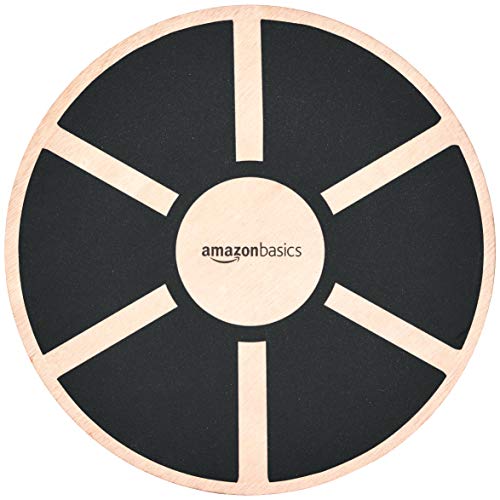
- Solid wood design supports up to 265 pounds
- Non-slip surface for balance and core drills
- Useful for planks, push-ups, and standing exercises
Best For: Basic home balance and core training
Low-Impact Cardio Pick
MERACH Rocking Balance Trainer

- Ski-like rocking motion supports cardio
- Includes resistance bands and an LCD monitor
- Quiet steel design supports up to 300 pounds
Best For: Quiet, low-impact leg and cardio workouts
Workday Movement Choice

- Supports up to 300 pounds
- 360-degree rotation with 15-degree tilt
- Handles make it portable for home or office use
Best For: Home workouts and standing-desk movement
Mobility and Stability System
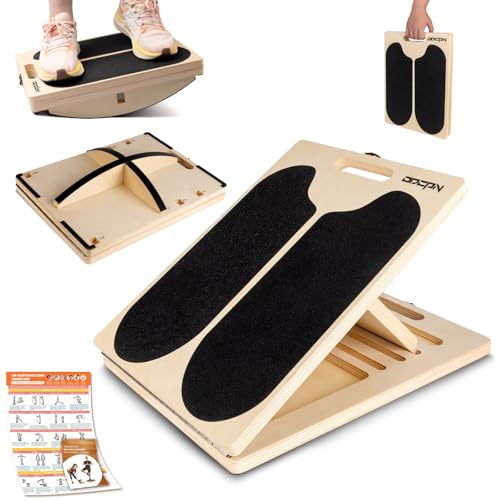
- Combines calf stretching with two balance modes
- Six adjustable slant angles from 20 to 45 degrees
- Includes side panels, poster, and instructions
Best For: Mobility, stretching, and progressive balance work
Best Overall
Professional Wooden Wobble Board

- 350-pound maximum weight recommendation
- Anti-slip surface with floor-protection pads
- Works for balance, core, and therapy exercises
Best For: Adults wanting a versatile home balance trainer
Best Full-Body Option
Ski Simulator with Resistance Bands

- Side-to-side motion works the lower body and core
- Resistance cords add chest and back engagement
- LCD tracks duration and step count
Best For: Compact, low-impact full-body home workouts
Best for 360-Degree Training

- 360-degree rotation supports multidirectional training
- Textured surface is designed for grip and durability
- Useful for fitness, yoga, and rehabilitation exercises
Best For: Core stability and multidirectional balance practice
Everyday Stability Pick

- Supports balance, core, and posture training
- Anti-slip surface and floor-protecting base pads
- Portable, no assembly, and rated for 350 pounds
Best For: Beginners, seniors, and gentle daily stability practice
Cardio Tracking Pick

- Low-impact rocking engages core, glutes, and thighs
- LCD tracks time, calories, and steps
- Quiet, portable, assembled, and rated for 300 pounds
Best For: Dynamic home cardio with simple workout tracking
Interactive Family Pick

- Bluetooth app includes 12 games and four training modes
- Supports multiplayer sessions with up to four boards
- Wide anti-slip surface with mat and cushion; rated for 450 pounds
Best For: Families and users motivated by interactive app-based training
Simple Core Trainer – Wood Wobble Balance Board
If you want a straightforward balance board for home workouts, this Amazon Basics wood wobble trainer covers core, coordination, posture, and balance exercises without extra electronics or accessories. Its square, slip-resistant surface supports standing drills, planks, push-ups, and targeted strengthening work.
Best For: Adults seeking a basic, compact board for home balance training, core work, or rehabilitation-style exercises.
Pros:
- Solid wood top supports up to 265 pounds.
- Non-slip surface helps provide a secure grip on appropriate dry, non-slip flooring.
- Works for standing poses, planks, push-ups, and targeted muscle, ligament, tendon, and joint exercises.
- Compact 15.75-by-15.75-inch footprint fits easily in a home workout space.
Cons:
- It does not include resistance bands, tracking features, or adjustable settings.
- The manufacturer warns against use on wet or smooth surfaces.
- Its 265-pound capacity is lower than some alternatives in this roundup.
This is a practical pick for shoppers who prefer a traditional wobble board and want one versatile platform for balance and core exercises. Use it on a suitable dry, non-slip surface and progress gradually.
Low-Impact Cardio Pick – MERACH Rocking Balance Trainer
For a more active balance board for home workouts, the MERACH rocking stepper adds a side-to-side, ski-like motion, resistance bands, and an LCD monitor. It is designed for low-impact cardio while engaging the legs and glutes, with a compact format that can be stored near a couch or under a bed.
Best For: Adults who want quiet, low-impact cardio and leg training with basic workout tracking.
Pros:
- Ski-inspired motion targets the thighs and glutes while supporting a low-impact workout.
- Includes two resistance bands for added exercise variety.
- LCD monitor tracks steps, time, and calories.
- Steel construction supports up to 300 pounds and operates below 25dB according to the supplied details.
Cons:
- The side-to-side motion may require caution for beginners or people with balance issues.
- It is more specialized for rhythmic cardio than traditional wobble-board drills.
- The monitor requires two LR41 batteries.
The MERACH stands out when you want balance training combined with a quiet cardio session rather than a simple stationary wobble board. Its ready-to-use design and storage-friendly size make it convenient for short home workouts.
Workday Movement Choice – Yes4All Wobble Balance Board
The Yes4All is a versatile balance board for home workouts that can also add movement to a standing desk. Its plastic platform rotates 360 degrees and tilts up to 15 degrees, allowing balance, core, mobility, and bodyweight exercises in a compact, portable design.
Best For: Adults who want one lightweight board for home workouts, office standing, and portable balance practice.
Pros:
- Heavy-duty plastic construction supports up to 300 pounds.
- Textured surface helps improve foot grip during exercises.
- 360-degree rotation and 15-degree tilt support varied movement patterns.
- Built-in handles make the 15.7-inch board easier to carry.
Cons:
- It has no included monitor or resistance bands.
- The plastic construction may appeal less to shoppers seeking a wood balance board.
- Its 30-day return and one-year warranty terms may be less extensive than some buyers prefer.
This is a strong all-purpose option for people who want to alternate between fitness sessions and active standing. The adjustable-feeling movement comes from its rotation and tilt rather than from multiple height settings.
Mobility and Stability System – 3-in-1 Slant Balance Board
This 3-in-1 board gives a balance board for home workouts extra versatility by combining calf stretching with 180-degree directional balance and 360-degree rotation. Six slant angles support different stretching levels, while the removable magnetic side panels let you switch balance modes for mobility, stability, and core work.
Best For: Adults prioritizing calf mobility, ankle recovery exercises, stretching, and progressive balance training.
Pros:
- Combines slant-board stretching with 180-degree and 360-degree balance modes.
- Offers six adjustable angles from 20 to 45 degrees.
- Wood construction and a PVC sandpaper surface provide a stable training platform, while the EVA base helps protect floors.
- Includes three side panels, a training poster, and instructions.
Cons:
- The supplied details list a 300-pound maximum, despite the product title referencing 460 pounds.
- Its broader functionality may be more than needed for shoppers seeking only a basic wobble board.
- Balance modes require switching the detachable side panels.
This is the most adaptable choice here for combining stretching and balance work. Because the supplied specifications conflict on weight capacity, verify the current listing details before purchase, especially if capacity is a key requirement.
Best Overall – Professional Wooden Wobble Board
If you want a versatile balance board for home workouts, this wooden wobble board supports basic balance practice as well as more demanding exercises. Its anti-slip surface, protection pads, and 350-pound capacity make it suitable for core work, physical therapy, and standing-desk use.
Best For: Adults seeking a durable all-purpose balance board for balance training, rehabilitation, and bodyweight exercises.
Pros:
- Supports exercises such as squats, push-ups, and planks.
- Anti-slip surface and floor-protection pads add practical safety features.
- Compact wooden design is easy to transport and store.
- Rated to support up to 350 pounds.
Cons:
- Its rocker-style design may offer less lateral motion than a gliding trainer.
- It does not include resistance bands or progress-tracking electronics.
This is a straightforward choice when you want one compact tool that can scale from beginner balance practice to core and stability exercises. The included safety features and higher weight rating add versatility for home use.
Best Full-Body Option – Ski Simulator with Resistance Bands
This ski-simulator-style trainer takes a different approach to a balance board for home workouts, using side-to-side gliding to involve the legs, glutes, and core. Included resistance cords can add upper-body work, while the integrated display tracks activity duration and step count.
Best For: Adults who want a compact, low-impact gliding workout with optional upper-body resistance.
Pros:
- Lateral gliding engages the legs, glutes, and core.
- Included resistance cords involve the chest and back.
- LCD display shows activity duration and step count.
- Six-inch-plus profile stores under many pieces of furniture.
Cons:
- Its 220-pound capacity is lower than the wooden boards in this roundup.
- The moving gliding format may be less suitable for users seeking a simple stationary rocker board.
Choose this model if workout variety and feedback matter more than traditional wobble-board simplicity. Its compact storage profile is particularly practical for apartments or shared spaces.
Best for 360-Degree Training – Advanced Wood Balance Board
With a 360-degree rotation design and a broad wooden platform, this board is built for users who want a more expansive balance board for home workouts. The textured surface supports balance drills, yoga, squats, planks, and physical-therapy exercises without requiring assembly.
Best For: Users seeking multidirectional balance training for core stability, fitness practice, or rehabilitation.
Pros:
- 360-degree rotation design encourages multidirectional balance work.
- Textured gray surface is described as anti-slip, waterproof, and wear-resistant.
- Suitable for balance drills, surfing practice, yoga, and bodyweight exercises.
- Ready to use out of the package and includes carry holes.
Cons:
- The larger 17.5-by-13.4-inch footprint may require more storage space.
- The supplied details list both a 500-pound support claim and a 350-pound maximum recommendation, so buyers should follow the stated maximum recommendation.
This model stands out for its rotating base and broad platform, making it a strong fit for multidirectional training. Its rehabilitation-oriented design also gives it appeal beyond standard fitness routines.
Everyday Stability Pick – Wooden Balance Board
If you want a straightforward balance board for home workouts, this wooden rocker board focuses on stability, core engagement, posture, and coordination without requiring setup. Its compact design also suits office, standing-desk, gym, and travel use.
Best For: Beginners, seniors, and anyone seeking gentle balance, ankle, knee, or core conditioning.
Pros:
- Supports balance training, posture work, planks, squats, and push-ups.
- Anti-slip surface and non-slip base pads help provide stability while protecting floors.
- Ready to use out of the box, with a portable design and 350-pound maximum recommended weight.
Cons:
- Offers basic rocker-board training rather than digital tracking or interactive workouts.
- The supplied notes do not specify adjustability or included accessories.
This is a practical, low-complexity choice for daily stability practice. Choose it if portability, floor-friendly construction, and gentle balance work matter more than advanced features.
Cardio Tracking Pick – Full-Body Wobble Board
For a more active balance board for home workouts, this side-to-side rocker combines low-impact cardio with core, glute, and thigh engagement. Its built-in LCD monitor, resistance bands, quiet operation, and compact design make it suitable for convenient home sessions.
Best For: Users who want a rhythmic full-body workout with basic time, calorie, and step tracking.
Pros:
- Side-to-side motion provides low-impact cardio while engaging the core, glutes, and thighs.
- LCD monitor tracks workout time, calories, and step count.
- Arrives assembled, weighs 10.4 pounds, operates below 25 dB, and supports up to 300 pounds.
Cons:
- New users or people with balance concerns may need to start slowly near a wall.
- The supplied notes do not specify the resistance-band adjustment range.
This model stands out when calorie-focused movement and progress feedback are priorities. Its rocking action is more dynamic than a basic balance trainer, but it calls for a cautious learning period.
Interactive Family Pick – GoBalance Smart Board
This app-enabled balance board brings games, feedback, and structured activities to balance board for home workouts. Bluetooth connectivity links the board to a free iOS or Android app, while the wide anti-slip surface and removable soft mat support planks and other exercises.
Best For: Teens, adults, and families who want interactive balance training, multiplayer challenges, and progress feedback.
Pros:
- Includes 12 free interactive games and four sports training modes.
- Supports real-time analysis, progress tracking, and connections for up to four boards in multiplayer mode.
- Wide wooden platform includes an anti-slip surface, removable TPE mat, and balance cushion; recommended for up to 450 pounds.
Cons:
- Requires an iOS or Android mobile device for app connectivity.
- The board cannot connect directly to a TV; casting or screen mirroring is required.
- Its interactive features may be more than needed for simple, equipment-free balance practice.
GoBalance is the most engaging option of these three for households that enjoy game-based motivation and shared challenges. Consider it when app features and multiplayer use are central to your routine.
How We Picked the Best Balance Board for Home Workouts
We compared these balance boards for home workouts by looking at construction, surface traction, weight capacity, movement style, portability, included accessories, and the types of training each design supports. We also considered how easily a board can fit into common routines, including standing-desk use, physical therapy exercises, core work, balance practice, and full-body conditioning.
Because product specifications and included accessories can vary, check the current listing for exact dimensions, materials, capacity, and warranty details before buying.
Quick Comparison
- Simple wobble boards: Best for basic balance, core activation, and compact home training.
- Rocker boards: A more predictable option for beginners, mobility work, and controlled side-to-side movement.
- Boards with resistance bands: Add upper-body and full-body exercises without requiring additional equipment.
- Slant-board hybrids: Useful when calf, ankle, and lower-leg stretching matter as much as balance training.
- Smart or LCD-equipped models: Better for users who want feedback, games, or structured motivation.
Key Buying Factors for a Balance Board for Home Workouts
Movement and Difficulty
Wobble boards generally allow multidirectional movement and can feel more challenging. Rocker boards limit motion to one axis, making them easier to control. If you are new to balance training or recovering from an injury, a stable rocker design may be a more practical starting point.
Surface Grip and Build Quality
Look for a textured, slip-resistant standing surface and a base that will not slide easily on your floor. Wooden boards can provide a firm, responsive feel, while molded plastic models may be easier to clean and more resistant to moisture. Use footwear or follow the manufacturer’s guidance, particularly during faster exercises.
Capacity, Size, and Storage
Choose a stated weight capacity that comfortably exceeds the user’s body weight and any equipment used during training. Check the board’s length and width against your available floor area, and consider whether handles, bands, or a removable base make storage easier or harder.
Accessories and Training Feedback
Resistance bands expand exercise variety, but they also add setup and storage needs. Digital displays, Bluetooth sensors, and companion apps may help with motivation and progress tracking; they are less important if you prefer straightforward, equipment-free practice.
Who Should Buy Which Balance Board for Home Workouts?
Choose a basic wooden or plastic wobble board for affordable balance work, core training, and occasional standing-desk use. Choose a rocker or slant-board design if you prioritize controlled movement, calf stretching, ankle mobility, or rehabilitation-style exercises. Choose a resistance-band model if you want one compact station for balance, pulling, pressing, and full-body workouts.
Choose a higher-capacity professional-style board for heavier users or demanding regular training, after confirming the manufacturer’s limits. Choose an app-enabled or LCD model if interactive challenges and performance feedback will help you exercise consistently. Whatever you buy, begin near a wall or sturdy support, clear the surrounding floor, and progress gradually from static balance to dynamic movements.