A balance board can improve coordination, ankle control, and core engagement, but beginners and rehabilitation users may benefit from extra stability. The best balance board with support rail offers a more controlled way to practice before progressing to a freer wobble platform.
We compared wooden and adjustable designs across the selected lineup, focusing on stability, adjustability, surface grip, training versatility, and suitability for home, office, and physical-therapy use.
Best 10 Balance Board with Support Rail Picks for 2026
Best for Beginners
Reinforced Wooden Balance Board

- 350-pound weight recommendation
- Anti-slip and floor-protective pads
- Arrives fully assembled
Best For: Beginners, rehabilitation, and standing-desk movement
Most Versatile
Sportneer 7-Mode Balance Trainer
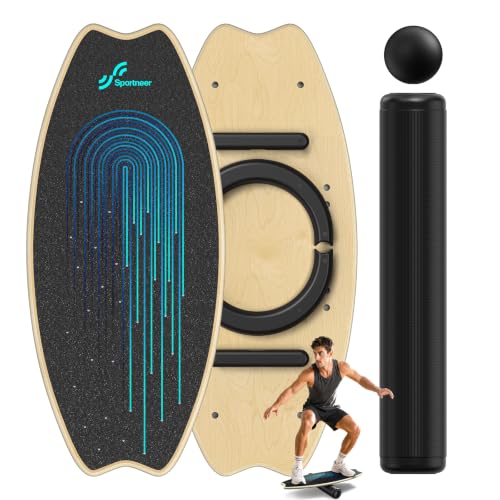
- Includes board, roller, and ball
- Seven adjustable challenge modes
- Supports up to 450 pounds
Best For: Progressive training, athletes, and board-sport practice
Best Adjustable Set

- Three stopper distance settings
- 15-ply wood supports 300 pounds
- Slip-resistant board and TPE roller
Best For: Beginners progressing toward sport-oriented balance training
Best for Standing Desks

- Multidirectional desk-friendly motion
- Wide bamboo deck
- 15-year UPLIFT Desk coverage
Best For: Active standing and gentle movement during work
Most Adjustable
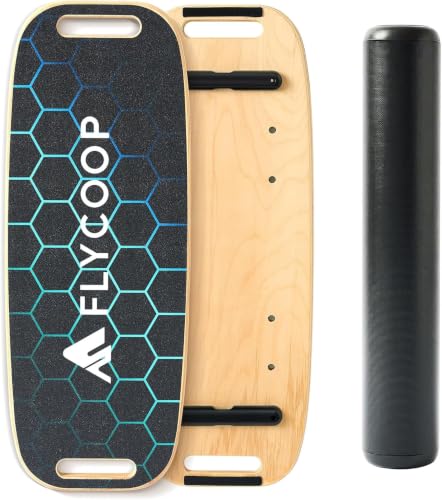
- Three adjustable stopper positions
- Non-slip surface and wood construction
- Includes roller for dynamic training
Best For: Adults progressing through adjustable balance and sports training
Best Simple Trainer
Amazon Basics Wood Wobble Board
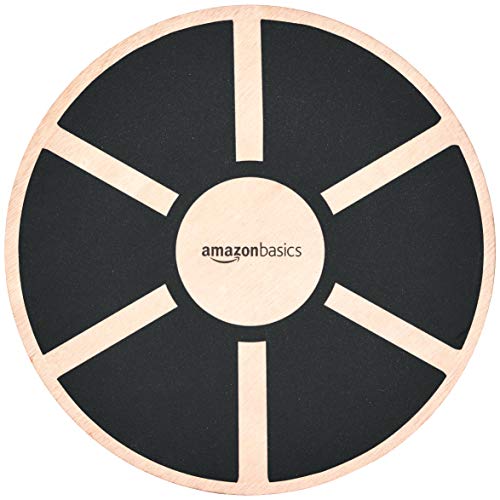
- Supports up to 265 pounds
- Suitable for planks, push-ups, and balance poses
- Includes a non-slip exercise surface
Best For: General home, gym, or rehab balance exercises
Highest Weight Capacity
StrongTek Wooden Balance Board
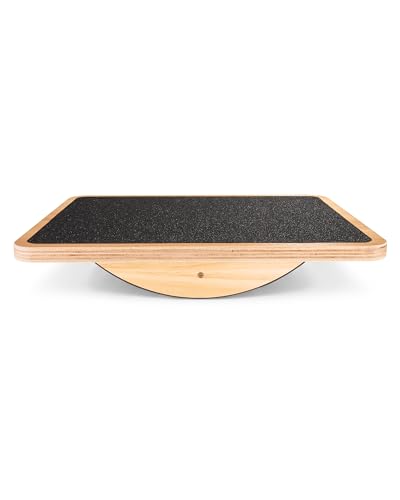
- Supports up to 350 pounds
- Offers rocker and 360-degree wobble training
- Compact design suits travel and standing desks
Best For: Users wanting a portable, high-capacity balance trainer
360° Wood Stability Pick
Advanced Rotation Balance Board

- 360° half-ball rotation for balance practice
- Anti-slip silicone surface and solid wood build
- Listed 350-pound maximum weight recommendation
Best For: Home balance, core, and rehabilitation exercises
Adjustable Training Classic

- 15-ply pressed wood board and roller
- Three difficulty positions: 13, 17, and 22 inches
- Anti-slip surfaces with a 300-pound capacity
Best For: Progressive balance and core training
Family Boardsports Trainer

- 15-ply wood construction rated for 300 pounds
- Side stoppers and multiple grip-focused surfaces
- Includes board, roller, and workout guide
Best For: Family balance and boardsports training
Best for Beginners – Reinforced Wooden Balance Board
If you want a balance board with support rail-style stability for gentle practice, this reinforced wooden wobble board is designed with a straightforward, ready-to-use setup. Its anti-slip pads, reinforced underside, and 350-pound capacity make it practical for balance work, physical therapy, core training, or use beneath a standing desk.
Best For: Beginners, older users, physical therapy, posture work, and light movement during desk hours.
Pros:
- Supports up to 350 pounds with a plywood surface and double reinforcement bands.
- Anti-slip pads help grip the floor and reduce movement during use.
- Arrives assembled and includes scratch- and noise-reducing protective pads.
- Suitable for balance training, rehabilitation, core strength, and standing-desk use.
Cons:
- Does not include an actual support rail or adjustable training modes.
- Its single-board design offers less challenge variety than roller-based sets.
This is a sensible choice when stability and convenience matter more than advanced balance drills. It is especially appealing for controlled home rehabilitation or low-impact desk movement.
Most Versatile – Sportneer 7-Mode Balance Trainer
For shoppers comparing a balance board with support rail options, the Sportneer offers adjustable progression without a rail. Its board, roller, ball, seven challenge modes, and removable magnetic stoppers let beginners and experienced users customize the difficulty for core, stability, and sport-specific training.
Best For: Athletes, beginners who want adjustable difficulty, board-sport practice, and varied balance workouts.
Pros:
- Includes a balance board, roller, and solid rubber ball for multiple training styles.
- Seven modes and four removable magnetic stoppers provide adjustable challenge levels.
- Birch construction supports up to 450 pounds.
- Matte surface is designed for a non-skid grip with bare feet or shoes.
Cons:
- It does not include a support rail for assisted practice.
- The roller-and-ball setup may require more coordination than a simple wobble board.
Among these options, this is the strongest fit for users who want one kit that can evolve with their skills. The adjustable modes also make it more adaptable than a fixed, single-surface board.
Best Adjustable Set – 3-in-1 Wooden Balance Trainer
This 3-in-1 wooden trainer is a practical alternative for anyone searching for a balance board with support rail-style beginner assistance. Two removable stoppers create three distance settings—11, 16, or 22 inches—or can be removed for advanced riding, while the textured board and TPE-covered roller support controlled practice.
Best For: Beginners and intermediate users training for surfing, snowboarding, skiing, skateboarding, or general coordination.
Pros:
- Offers three adjustable stopper positions plus an advanced no-stopper setup.
- 15-ply pressed wood supports up to 300 pounds.
- Emery polishing paper helps provide a slip-resistant standing surface.
- Thick TPE roller covering is designed for smooth use.
Cons:
- It does not include a support rail or a separate balance ball.
- Its 300-pound capacity is lower than the Sportneer model in this roundup.
- The listed warranty is limited to a 30-day return and one-year warranty.
With its removable stoppers, this set offers a clear learning path from assisted positioning to freer movement. It is a good match for users who want sport-oriented practice in a compact wooden kit.
Best for Standing Desks – UPLIFT Motion-X Balance Board
If your priority is active standing rather than roller practice, the UPLIFT Motion-X is a desk-focused alternative to a balance board with support rail. Its 27-by-12.5-inch bamboo deck supports rocking, tilting, and swiveling motion while you work, with floor-friendly grips intended for controlled movement.
Best For: Standing-desk users seeking gentle motion, circulation support, and subtle core engagement during work.
Pros:
- Supports multidirectional rocking, tilting, and swiveling.
- Wide 27-by-12.5-inch deck provides room for a natural standing stance.
- Thick bamboo construction offers a smooth, durable surface.
- Floor-friendly grips and a 15-year UPLIFT Desk coverage add practical appeal.
Cons:
- It does not include a support rail, roller, ball, or adjustable challenge modes.
- Its 250-pound maximum weight recommendation is the lowest among these products.
- The optional motion-board mat is sold separately.
This is the most desk-specific option in the group. Choose it when you want controlled movement and reduced standing stiffness during work, rather than a more athletic balance-training setup.
Most Adjustable – 3-Mode Roller Balance Board
If you want a balance board with support rail-style stability options, this adjustable model offers three training modes through its built-in stoppers. The roller setup adds a more dynamic challenge for adult balance and sports training.
Best For: Adults who want adjustable difficulty and roller-based training for balance-focused sports or fitness.
Pros:
- Adjustable stoppers provide three training modes.
- Non-slip surface helps keep feet positioned securely.
- Wood construction supports up to 300 pounds.
- Can be used with the included roller for surfing, skating, snowboarding, skiing, and fitness practice.
Cons:
- Designed for adults rather than a broad all-ages audience.
- The roller-based design may require more balance control than a simple rocker board.
This is the most customizable choice of the three, especially if you want to progress gradually. Choose it when adjustable movement and dynamic roller exercises matter more than a simple, compact platform.
Best Simple Trainer – Amazon Basics Wood Wobble Board
For shoppers seeking a straightforward balance board with support rail-style confidence, this Amazon Basics wood wobble trainer keeps the setup simple. Its square platform is suitable for standing exercises, planks, push-ups, and core-focused routines.
Best For: Home gyms, rehab centers, and individuals who want a basic wobble board for general exercise and core training.
Pros:
- Supports up to 265 pounds.
- Non-slip surface provides a secure grip.
- Works for balance poses, push-ups, planks, and targeted strengthening exercises.
- Backed by an Amazon Basics 1-year limited warranty.
Cons:
- Must be used on a dry, non-slip surface; it is not intended for wet or smooth surfaces.
- Offers a single basic wobble-board setup rather than adjustable modes or included accessories.
This is a practical pick if you value an uncomplicated board for everyday exercise. It lacks the roller and progression features of more specialized models, but its broad exercise use makes it easy to add to a home workout space.
Highest Weight Capacity – StrongTek Wooden Balance Board
This StrongTek board is a compact option for shoppers comparing a balance board with support rail-style stability to a traditional rocker design. Its textured surface and hardwood plywood construction support both basic rocking and more advanced 360-degree wobble training.
Best For: Adults, kids, athletes, and desk users who want a portable board with a high stated weight capacity.
Pros:
- Supports up to 350 pounds.
- Textured surface offers a secure, comfortable grip.
- Compact and portable for home, gym, travel, or standing-desk use.
- Designed for basic rocker work or advanced 360-degree wobble training.
Cons:
- Does not include a support rail or additional training accessories.
- The advanced 360-degree mode may be challenging for beginners.
StrongTek stands out for its high weight rating, portable size, and choice between rocker and 360-degree movement. It is a versatile option when you want one board for conditioning, rehabilitation-oriented exercise, or occasional standing-desk use.
360° Wood Stability Pick – Advanced Rotation Balance Board
If you want a balance board with support rail-style stability features, this wood trainer uses a 360° half-ball base and a static silicone lip that can tilt up to 25 degrees. Its grippy surface and ready-to-use design make it practical for balance practice, core work, and rehabilitation exercises.
Best For: Home users, beginners, and rehabilitation-focused training involving balance, coordination, and stabilizing muscles.
Pros:
- Solid wood construction with a high-grade gray mesh silicone anti-slip surface.
- 360° rotation design supports balance and coordination practice.
- Arrives assembled and supports up to 350 pounds according to the listed specifications.
- Can be used for exercises such as squats, planks, push-ups, yoga, and physical therapy.
Cons:
- Its 360° movement may feel challenging for users who need a fixed support rail.
- The listed dimensions may provide less standing area than a longer roller-style board.
This is the most rehabilitation-oriented option in the group, with a grippy surface and multidirectional movement. Choose it if you value compact versatility and a higher listed weight capacity over a traditional roller setup.
Adjustable Training Classic – Philosophy Gym Balance Board
For shoppers comparing a balance board with support rail options, this Philosophy Gym trainer offers adjustable roller spacing rather than a rail. The three positions—13, 17, and 22 inches—let you vary the challenge while the pressed-wood board and roller provide a traditional balance-training setup.
Best For: Athletes and experienced users training balance, core stability, or cross-training for board sports and gymnastics.
Pros:
- 15-ply pressed wood construction supports up to 300 pounds.
- Three roller distances provide adjustable difficulty levels.
- Anti-slip surfaces cover both the rocker board and wooden roller.
- Useful for surfing, skateboarding, snowboarding, gymnastics, and general core training.
Cons:
- It does not include a support rail or fixed handhold.
- The roller format may require more balance control than a supported wobble board.
- The supplied dimensions and listed item dimensions are inconsistent, so verify the intended size before ordering.
This is a strong choice for progressive training because the roller position can be changed as your balance improves. It is better suited to active practice than to users specifically seeking a hand-supported beginner board.
Family Boardsports Trainer – Zukam Wooden Balance Board
If you are looking for a balance board with support rail-style safety considerations but prefer a boardsports trainer, this Zukam set combines a rocker board, fabric-encased roller, and workout guide. Its side stoppers, grip-taped underside, and anti-slip top are designed to improve control during practice.
Best For: Families and boardsports participants training balance, coordination, core strength, and muscle memory.
Pros:
- 15-ply pressed wood construction supports up to 300 pounds.
- Anti-slip top, grip-taped underside, side stoppers, and covered roller add grip-focused features.
- Suitable for surfing, snowboarding, skiing, skateboarding, and stand-up paddle training.
- Includes the board, roller, and workout guide, plus a stated one-year guarantee.
Cons:
- It does not include a support rail or handhold for assisted practice.
- The roller-based design may be less suitable for users seeking rehabilitation-focused stability.
- The supplied overall item dimensions appear inconsistent with the separate board and roller measurements.
This set stands out for boardsports practice and family use, especially if the included workout guide is useful to you. Its grip features and side stoppers offer added control, but it remains a dynamic roller trainer rather than a supported balance board.
How We Picked the Best Balance Board with Support Rail Options
We evaluated each board for the features that matter most during balance training: platform size, construction, traction, movement range, adjustability, and ease of progression. We also considered whether a design is better suited to beginners, rehabilitation exercises, standing desks, or advanced core workouts.
Because support rails are not included with every balance board, check the product specifications carefully. Some models provide fixed or adjustable stabilizers, while others are open platforms intended for users who already have dependable balance. A nearby handrail, countertop, or wall may be necessary when learning on a board without built-in support.
Quick Comparison
| Best For | Look For | Most Suitable Design |
|---|---|---|
| Beginners and rehabilitation | Limited tilt and stable contact points | Board with stoppers or support nearby |
| Progressive training | Multiple modes or adjustable rollers | Adjustable wobble trainer |
| Standing desks | Wide platform and controlled movement | Ergonomic anti-fatigue board |
| Advanced workouts | 360-degree movement and strong grip | Freestanding wobble board |
Key Buying Factors for a Balance Board with Support Rail
Stability and Progression
Choose a board with adjustable stoppers, a restricted rocker motion, or another stabilizing feature if you are new to balance training. These designs make it easier to learn controlled weight shifts. Advanced users may prefer unrestricted 360-degree movement for a greater challenge.
Surface Grip and Platform Size
A slip-resistant surface helps keep feet positioned during slow exercises. A wider platform generally feels more forgiving, while a compact board may be easier to store and more demanding to control. Match the surface to your footwear, exercise style, and available space.
Construction and Weight Limit
Wooden boards can provide a firm, responsive feel, but inspect the stated weight capacity and base materials before buying. Look for rounded edges, secure hardware, and a platform that does not flex unexpectedly. If several people will use it, select a model rated for the heaviest user.
Intended Setting
For a standing desk, prioritize a stable, wide board that permits subtle movement over long periods. For fitness or therapy, prioritize adjustable difficulty and a secure grip. Always use a clear area and hold a support rail, countertop, or other stable surface when necessary.
Who Should Buy Which Balance Board with Support Rail?
Beginners: Choose a board with stoppers, limited motion, or access to a reliable support rail. A gradual learning curve is more useful than maximum instability.
Rehabilitation users: Favor predictable movement, solid construction, and adjustable difficulty. Follow a clinician’s recommendations if recovering from an injury or managing a balance condition.
Standing-desk users: Look for a broad, ergonomic platform designed for controlled movement and anti-fatigue support rather than aggressive wobbling.
Experienced athletes: Select a durable 360-degree model or a multi-mode trainer that can challenge ankle stability, coordination, and core control.
Whichever model you choose, begin with short sessions, keep the board on a stable floor, and increase difficulty only after you can maintain control comfortably.