The best fitness tracker for cycling should make rides easier to measure without distracting you from the road. GPS accuracy, heart-rate data, battery life, comfort, and sensor compatibility all matter more than a long list of generic wellness features.
We selected 10 options ranging from full-featured smartwatches and screenless recovery wearables to budget-friendly trackers and dedicated ANT+ heart-rate monitors, so you can match the device to your riding style and budget.
Best 10 Fitness Tracker for Cycling Picks for 2026
Best Apple Option

- Real-time workout metrics
- 18-hour battery with fast charging
- Fall and crash detection
Best For: iPhone users wanting cycling and smartwatch features
Best Screenless Tracker

- Screen-free, lightweight design
- Up to a week of battery life
- Smartphone-based GPS geotagging
Best For: Riders who want discreet tracking without a display
Best Budget Smartwatch

- Cycling mode among 120 sports modes
- 1.83-inch HD display
- 5–7 days of active-use battery
Best For: Casual cyclists wanting an affordable connected watch
Best Recovery-Focused Wearable
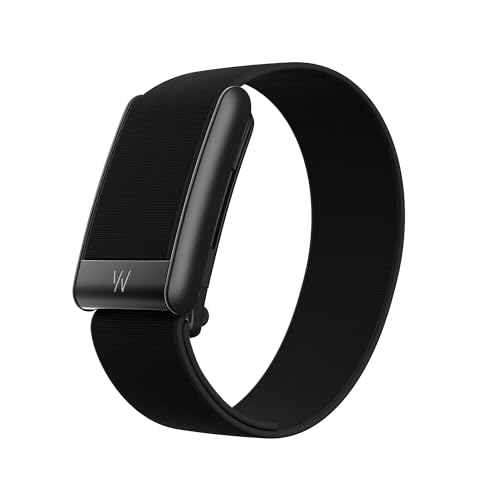
- 14+ days of battery life
- Continuous strain and recovery tracking
- 12-month membership included
Best For: Cyclists focused on training load, sleep, and recovery
Best Cycling Heart Rate Monitor

- Bluetooth and ANT+ connectivity
- Lightweight, adjustable optical sensor
- Up to 24-hour battery life
Best For: Cyclists focused on heart-rate training and app connectivity
Best Long-Battery Fitness Tracker
AKUMAKA Screenless Health Band

- 170+ workout modes
- IP68 water resistance
- 20–30 day stated battery life
Best For: Cyclists wanting discreet, long-term activity and health tracking
Best Display Fitness Tracker for Cycling
ST-CARE C60 AMOLED Fitness Tracker

- 1.10-inch AMOLED touchscreen
- 25 sport modes with distance tracking
- 10–14 day stated regular-use battery
Best For: Casual cyclists who want visible workout metrics and smart reminders
Long-Range Ride Companion
Lightweight 170+ Sport Smart Bracelet

- 170+ modes include cycling
- 40–60-day battery claim
- IP68 and smartphone GPS
Best For: Cyclists wanting broad tracking with minimal charging
Swim-Ready Training Pick
Zeacool 25-Sport AMOLED Tracker

- 25 selectable sport modes
- 5 ATM waterproof rating
- AMOLED screen and phone GPS
Best For: Multisport users who also value water resistance
Connected Cycling Starter
Bakoor AMOLED Activity Tracker

- 25 sport modes with cycling support
- Connected phone GPS
- Up to seven days of battery
Best For: Casual cyclists wanting basic ride and wellness tracking
Best Apple Option – Apple Watch SE 3 GPS
The Apple Watch SE 3 is a versatile fitness tracker for cycling and everyday workouts, with real-time workout metrics, GPS connectivity through the GPS model, and broad health-tracking features. It is especially practical for iPhone users who also want calls, texts, music, and safety tools from their wrist.
Best For: iPhone users seeking a cycling-capable smartwatch with health insights and smart features.
Pros:
- Tracks workouts with real-time metrics and supports a range of activities.
- Offers all-day, 18-hour battery life and fast charging.
- Includes fall and severe car-crash detection with emergency assistance features.
Cons:
- Its 18-hour battery life may require daily charging.
- GPS connectivity and full connected features are designed around an iPhone or Wi-Fi connection.
The SE 3 is a strong all-around choice when cycling is part of a broader fitness routine. Choose it if you value a full smartwatch experience more than extended battery life.
Best Screenless Tracker – Google Fitbit Air
Google Fitbit Air is a discreet fitness tracker for cycling that keeps the focus on your ride rather than a display. It relies on smartphone GPS for geotagging, while its lightweight design, heart-rate monitoring, and weeklong battery make it suited to continuous activity and sleep tracking.
Best For: Cyclists who prefer a comfortable, screen-free tracker and use a smartphone for GPS.
Pros:
- Screenless, lightweight design is intended for continuous wear.
- Battery lasts up to a week, with five minutes of charging providing up to one day.
- Tracks heart rate, activity, sleep, temperature variation, and SpO2-related metrics.
Cons:
- GPS geotagging is provided via a smartphone rather than built in.
- No display means ride information cannot be viewed directly on the tracker.
Fitbit Air makes sense for riders who want passive tracking and comfort instead of on-bike navigation or live stats. It is less suitable if you want a standalone cycling computer.
Best Budget Smartwatch – TG08 120-Sport Smartwatch
This TG08 smartwatch is a budget-friendly fitness tracker for cycling with a dedicated cycling mode among its 120 sports modes. Its large display shows notifications and fitness information, while heart-rate and sleep monitoring add useful everyday wellness tracking.
Best For: Casual cyclists who want a display, cycling mode, notifications, and basic health tracking at a lower-cost level.
Pros:
- Includes cycling among 120 sports modes.
- Provides a 1.83-inch HD display with customizable watch faces.
- Offers Bluetooth calls, music control, heart-rate monitoring, and sleep tracking.
- Claims 5–7 days of active-use battery life.
Cons:
- Its IP67 rating is intended for splashes, sweat, and brief submersion rather than extended water exposure.
- The supplied notes do not identify built-in GPS for independent route tracking.
The TG08 is a practical everyday smartwatch for riders who want basic cycling activity tracking alongside notifications and calls. Consider another option if standalone GPS route data is essential.
Best Recovery-Focused Wearable – WHOOP 5.0/MG
WHOOP 5.0/MG is a screenless fitness tracker for cycling built around continuous health, strain, sleep, and recovery insights rather than on-bike navigation. The included 12-month WHOOP One membership adds personalized coaching and helps cyclists understand how training load and daily habits affect readiness.
Best For: Training-focused cyclists who want continuous recovery analysis and personalized coaching.
Pros:
- Tracks heart rate, HRV, respiratory rate, VO2 Max, strain, recovery, sleep, and more.
- Provides 14+ days of battery life for continuous wear.
- Includes a 12-month WHOOP One membership with the device.
- Screenless design supports all-night sleep tracking and reduces distractions.
Cons:
- It has no display for viewing cycling metrics directly on the wrist.
- Its cycling value depends on using the WHOOP app and its coaching ecosystem.
WHOOP 5.0/MG is best viewed as a training and recovery companion, not a replacement for a cycling computer. It is compelling for riders who prioritize readiness and long-term workload insights.
Best Cycling Heart Rate Monitor – Scosche Rhythm+ 2.0 Armband
For cyclists who want focused workout data without wearing a full smartwatch, the Scosche Rhythm+ 2.0 is a practical fitness tracker for cycling. Its optical sensor sends real-time heart-rate data to compatible phones, watches, fitness equipment, and apps through Bluetooth or ANT+.
Best For: Cyclists and athletes who prioritize accurate heart-rate monitoring, app connectivity, and a lightweight alternative to a chest strap.
Pros:
- Supports both Bluetooth Smart and ANT+ connections for broad device compatibility.
- Lightweight, adjustable armband can be worn on the forearm, bicep, or tricep.
- Offers up to 24 hours of battery life and an IP68 waterproof design.
- HRV mode provides RR interval data for compatible training and recovery apps.
Cons:
- It is primarily a heart-rate armband rather than a standalone cycling watch.
- It does not provide built-in GPS or an on-device cycling display in the supplied specifications.
The Rhythm+ 2.0 is a strong choice when heart-rate accuracy and reliable wireless pairing matter more than navigation or smartwatch features. Pair it with a cycling app, watch, or bike computer for a focused training setup.
Best Long-Battery Fitness Tracker – AKUMAKA Screenless Health Band
The AKUMAKA health band is a low-maintenance fitness tracker for cycling and everyday activity. It records heart rate, steps, distance, calories, stress, and sleep, while its companion app provides trends and reports for Android and iPhone users.
Best For: Riders who want broad health and activity tracking in a discreet, screenless band with an unusually long stated battery life.
Pros:
- Offers more than 170 workout modes, including hiking and gym activities.
- Tracks heart rate, blood oxygen, blood pressure, stress, sleep, steps, distance, and calories.
- IP68 water resistance supports workouts, handwashing, and rainy conditions.
- Claims 20–30 days of battery life and includes two nylon straps.
Cons:
- No GPS is listed, so cycling route and location tracking require a connected smartphone or another device.
- The screenless design is less suitable for viewing live ride metrics directly on the wrist.
- The supplied details describe health readings, but they do not establish medical accuracy.
This band makes the most sense for cyclists who mainly want passive health and activity tracking rather than live navigation or an on-bike data display. Its long stated battery life can reduce charging interruptions between rides.
Best Display Fitness Tracker for Cycling – ST-CARE C60 AMOLED Fitness Tracker
The ST-CARE C60 combines a visible 1.10-inch AMOLED touchscreen with everyday activity and workout tracking, making it a versatile fitness tracker for cycling. It records exercise time, heart rate, distance, steps, and calories, with detailed data available in the Keep Health app.
Best For: Casual cyclists who want an on-wrist color display, multiple sport modes, health tracking, and smartwatch-style reminders.
Pros:
- Bright 1.10-inch AMOLED touchscreen provides an easy-to-read interface.
- Includes 25 sport modes and records workout time, heart rate, and distance.
- 5 ATM waterproofing supports use in rain and during water-related activities.
- Offers magnetic charging and a stated regular-use battery life of 10–14 days.
Cons:
- The supplied information does not list built-in GPS for independent route tracking.
- Its cycling features appear oriented toward basic workout metrics rather than advanced bike-computer functions.
- Health measurements such as blood pressure and body temperature should be treated as wellness information, not a medical diagnosis.
The C60 is a good fit for riders who value a readable screen and straightforward activity metrics. Choose it for general fitness and casual cycling rather than dedicated navigation or advanced cycling analytics.
Long-Range Ride Companion – Lightweight 170+ Sport Smart Bracelet
For cyclists who want a fitness tracker for cycling with minimal charging, this lightweight smart bracelet records cycling and more than 170 other sport modes. It also adds continuous wellness tracking, smartphone-connected GPS, and IP68 protection for everyday rides.
Best For: Cyclists prioritizing very long battery life, broad activity tracking, and a lightweight design.
Pros:
- Supports 170+ sport modes, including cycling, while recording distance, calories, duration, and steps.
- Up to 40–60 days of battery life and approximately two-hour charging.
- IP68 waterproof construction helps handle sweat, rain, splashes, and swimming.
- Tracks heart rate, blood pressure, blood oxygen, and sleep, with smartphone GPS connectivity.
Cons:
- GPS is provided through a connected smartphone rather than built in.
- The supplied notes do not specify a dedicated cycling display or cycling navigation features.
This is a strong low-maintenance option for riders who want broad workout coverage and infrequent charging. Its cycling data is useful for general activity tracking, but cyclists seeking advanced bike-specific metrics may need a more specialized device.
Swim-Ready Training Pick – Zeacool 25-Sport AMOLED Tracker
The Zeacool is a practical fitness tracker for cycling and other workouts, with selectable sport modes, route recording through a connected phone, and a bright 1.10-inch AMOLED touchscreen. Its 5 ATM rating also suits riders who train in changing weather or include swimming in their routine.
Best For: Multisport users who want a vivid display, strong water resistance, and everyday health tracking.
Pros:
- Offers 25 sport modes and records steps, distance, calories, and exercise data in the Keep Health app.
- Connected GPS can support workout route recording through a smartphone.
- 5 ATM waterproofing is designed for swimming, rain, bathing, and everyday water exposure.
- Includes a 1.10-inch AMOLED display plus sleep, heart-rate, blood-oxygen, and blood-pressure monitoring.
Cons:
- Battery life is listed at approximately 10–14 days in regular use, shorter than some simpler bands.
- GPS depends on a connected smartphone.
Choose this model if a readable screen and water resistance matter as much as cycling logs. It provides a balanced multisport feature set, though riders wanting highly detailed cycling analytics should confirm whether the app offers the metrics they need.
Connected Cycling Starter – Bakoor AMOLED Activity Tracker
For shoppers seeking an affordable-looking fitness tracker for cycling and daily activity, this Bakoor model combines 25 sport modes with connected GPS, an AMOLED touchscreen, and smartphone notifications. It is designed for routine ride logging rather than standalone cycling navigation.
Best For: Casual cyclists who want basic workout metrics, phone-connected routes, and smart reminders.
Pros:
- 25 sport modes track steps, calories, distance, heart rate, and exercise time.
- Connected GPS can record workout routes using a smartphone.
- IP68 water resistance supports use in rain and during everyday activities.
- Offers a 1.10-inch AMOLED screen, notifications, sedentary and hydration reminders, and up to seven days of battery life.
Cons:
- GPS functionality is via a smartphone, not standalone satellite tracking.
- Battery life is shorter than the other listed trackers at up to seven days.
- The product has no warranty according to the supplied details.
This tracker makes sense for casual riders who want cycling activity records alongside basic smartwatch conveniences. Its connected GPS and seven-day battery are adequate for routine use, but dedicated cyclists may prefer a device with longer endurance or more specialized ride metrics.
How We Picked the Best Fitness Tracker for Cycling
We focused on the features cyclists use most: ride tracking, GPS or connected-sensor support, heart-rate monitoring, water resistance, battery practicality, comfort, and phone compatibility. We also considered whether each device suits outdoor rides, indoor training, recovery tracking, or casual activity monitoring.
Because these products serve different purposes, the list includes both standalone watches and screenless trackers. A smartwatch may provide maps, notifications, and on-device workout controls, while a dedicated armband can deliver heart-rate data without adding a large wrist device.
Quick Comparison
| Best For | Look For | Product Types |
|---|---|---|
| GPS ride tracking | Built-in GPS, route recording, workout modes | Apple Watch SE 3, compatible smartwatches |
| Training intensity | Reliable optical or chest-compatible heart-rate data | Scosche Rhythm, fitness watches |
| Recovery and sleep | Continuous wear, sleep analysis, recovery insights | WHOOP 5.0/MG, screenless trackers |
| Budget activity tracking | Heart rate, steps, sleep, waterproofing | Affordable AMOLED and screen-based trackers |
Key Buying Factors for a Fitness Tracker for Cycling
GPS and Ride Recording
Built-in GPS is useful when you want distance, speed, and route data without carrying your phone. If a tracker lacks GPS, check whether it can use connected GPS through a smartphone. For indoor cycling, GPS matters less than workout timing and sensor support.
Heart-Rate Accuracy and Sensor Compatibility
Heart-rate data helps gauge effort, but wrist sensors can lose accuracy during hard intervals or when the device fits poorly. An ANT+ and Bluetooth-compatible armband, such as the Scosche option, may be preferable for structured training and broad device compatibility.
Battery Life, Comfort, and Water Resistance
Frequent riders should check claimed battery life with GPS enabled, not only standby time. A lightweight, secure fit is important on long rides, while water resistance helps with sweat and changing weather. Water-resistance ratings are not identical, so review the manufacturer’s limits before swimming.
App Quality and Subscription Costs
Consider how clearly the companion app presents routes, trends, sleep, and training data. Also check for recurring fees: some recovery-focused wearables require a membership for their main insights, while basic trackers generally offer core data without a subscription.
Who Should Buy Which Fitness Tracker for Cycling?
Choose the Apple Watch SE 3 if you want a polished smartwatch with workout features, notifications, and an established phone ecosystem. Choose WHOOP 5.0/MG if recovery, sleep, and continuous wear matter more than a display or on-device ride navigation.
Choose the Scosche Rhythm armband if accurate, low-distraction heart-rate tracking is your priority or you already use a cycling computer. Choose a budget AMOLED or smart bracelet tracker if you mainly want everyday activity, sleep, and heart-rate readings at a lower price.
Before buying, confirm phone compatibility, GPS behavior, charging requirements, and whether advertised health measurements are intended for general wellness rather than medical diagnosis.